How To Do Exponents On A Scientific Calculator
For homeowners, real estate investors, and HVAC contractors alike, understanding the math behind heating and cooling systems is crucial. From calculating BTUs needed for a space to determining energy savings with a higher SEER rating, a scientific calculator is an indispensable tool. A fundamental operation within these calculations is exponents. This article provides a clear guide on how to use exponents on a scientific calculator, specifically focusing on its application within the HVAC context.
Understanding Exponents and Their Importance in HVAC
Exponents, also known as powers, represent repeated multiplication of a base number. For instance, 23 (2 cubed) means 2 * 2 * 2 = 8. In HVAC, exponents often appear when calculating areas (square footage), volumes (cubic feet), and especially when working with energy efficiency formulas. Understanding exponents is vital for accurately assessing system performance and cost savings.
Why Are Exponents Important in HVAC Calculations?
- Area Calculations: Determining the square footage of a room or a house relies on multiplying length and width. This is the most basic application of exponents (power of 2).
- Volume Calculations: Calculating the cubic footage of a room is crucial for determining the correct BTU output for an HVAC unit. Volume requires exponents (power of 3).
- Energy Efficiency Formulas: Some advanced HVAC efficiency formulas involve exponents to accurately model heat transfer and energy consumption.
- Financial Projections: Calculating the present or future value of energy savings over time may involve exponential calculations related to interest rates or inflation.
Step-by-Step Guide: Using Exponents on a Scientific Calculator
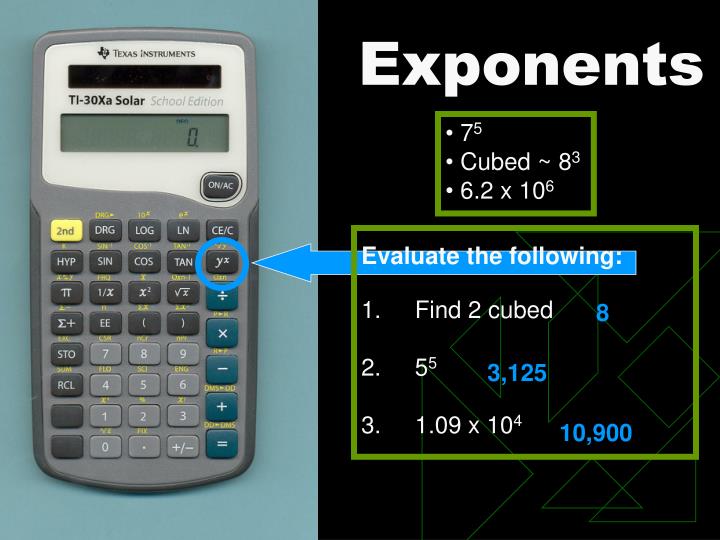
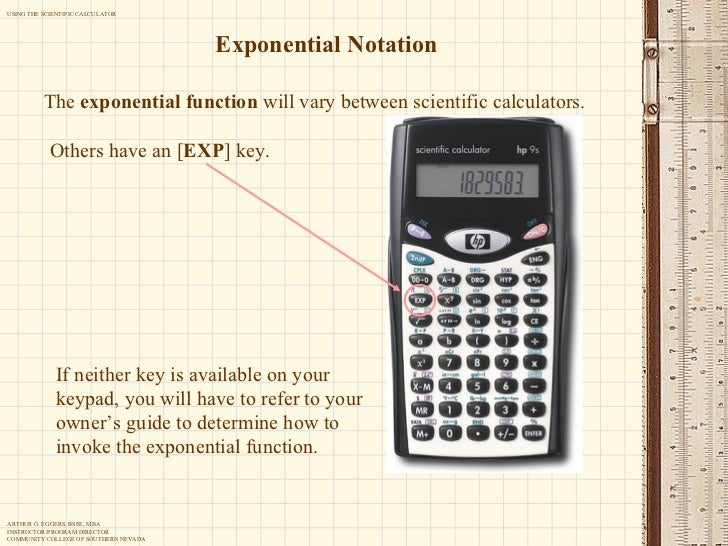
Most scientific calculators have dedicated buttons for performing exponential calculations. The specific button may vary depending on the model, but common options include:
- xy: This is the most common exponent button. It raises the base 'x' to the power of 'y'.
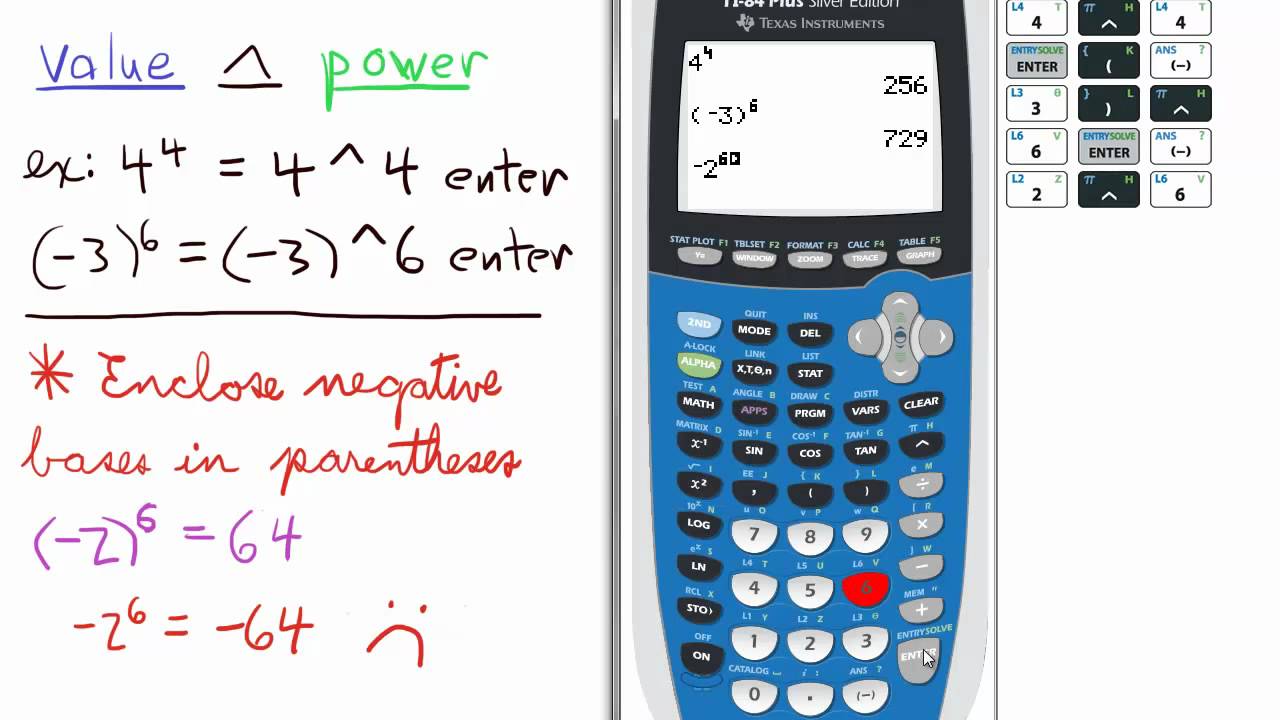
- ^: Some calculators use the caret symbol (^) to indicate exponentiation.
- 10x: This button calculates 10 raised to the power of 'x' (useful for scientific notation).
- ex: This button calculates the mathematical constant 'e' (approximately 2.71828) raised to the power of 'x'. This is useful for advanced calculations and understanding things like refrigerant decay over time.
Here's a general step-by-step guide using the xy button:
- Enter the Base Number (x): Type the base number into the calculator. For example, if you want to calculate 23, enter '2'.
- Press the Exponent Button (xy): Locate and press the exponent button (xy, ^, etc.).
- Enter the Exponent (y): Type the exponent number. In the example of 23, enter '3'.
- Press the Equals (=) Button: Press the equals button (=) to calculate the result. The calculator will display the answer, which in this case would be '8'.
Example 1: Calculating Area
Let's say you have a room that is 12 feet long and 15 feet wide. To calculate the area (square footage), you multiply length by width: 12 * 15 = 180 square feet. While this is a simple multiplication, it lays the groundwork for understanding more complex area calculations that might involve squaring numbers (raising them to the power of 2). For instance, calculating the area of a circle requires squaring the radius. If the radius is 5 feet, the area is π * 52. Using the calculator, you would enter 5, press xy, enter 2, press =, and then multiply by π (usually found as a second function on your calculator).
Example 2: Calculating Volume
To calculate the volume of a room that is 12 feet long, 15 feet wide, and 8 feet high, you multiply length * width * height: 12 * 15 * 8 = 1440 cubic feet. In some HVAC calculations, you might need to calculate the volume of a sphere or a cylinder (e.g., ductwork). These calculations involve raising numbers to the power of 3.
Example 3: Calculating HVAC System Capacity
While the calculations involved in determining the required BTU output for a system go far beyond simple exponents, exponents play a part in more complex equations that HVAC engineers and sophisticated contractors may use. Remember, using a professional for load calculations ensures accuracy, but understanding the principles yourself is empowering.
Practical HVAC Applications of Exponents
Beyond basic area and volume calculations, exponents are used in more advanced HVAC applications, especially when dealing with energy efficiency and long-term cost analysis.
Compound Interest for Energy Savings
Calculating the future value of energy savings involves compound interest formulas, which rely on exponents. The formula is:
FV = PV * (1 + r)n
Where:
- FV = Future Value
- PV = Present Value (e.g., annual energy savings)
- r = Interest Rate (e.g., rate of return on investment or inflation rate)
- n = Number of Years
For example, if you save $500 per year with a new HVAC system, and you want to know the future value of those savings after 10 years, assuming a 5% annual rate of return, you would calculate:
FV = $500 * (1 + 0.05)10
Using the calculator:
- Enter 1.05
- Press xy
- Enter 10
- Press = (Result: approximately 1.62889)
- Multiply by $500 (Result: approximately $814.45)
Therefore, the future value of your savings after 10 years is approximately $814.45 (not accounting for taxes, etc.)
Depreciation Calculations
Real estate investors often need to calculate the depreciation of HVAC systems for tax purposes. Some depreciation methods, such as the declining balance method, involve exponential calculations. These methods allow for larger deductions in the early years of an asset's life.
Choosing the Right Scientific Calculator for HVAC Work
While most scientific calculators will suffice for basic exponent calculations, consider these features when choosing a calculator for HVAC work:
- Large Display: Easier to read results, especially when working with complex formulas.
- Solar Power: Reduces battery dependence and environmental impact.
- Multiple Memory Functions: Allows you to store intermediate results for complex calculations.
- Statistical Functions: Useful for analyzing energy consumption data and performing regression analysis.
- Trigonometric Functions: While less common, trigonometric functions may be needed for advanced HVAC calculations related to ductwork angles or solar angles.
- Cost: Scientific calculators range from under $15 to over $50. A mid-range calculator typically offers the best balance of features and price.
Common Mistakes to Avoid
- Incorrect Button Usage: Ensure you are using the correct exponent button (xy, ^, 10x, ex) for the specific calculation.
- Order of Operations: Remember to follow the correct order of operations (PEMDAS/BODMAS) when performing complex calculations. Exponents should be calculated before multiplication, division, addition, and subtraction.
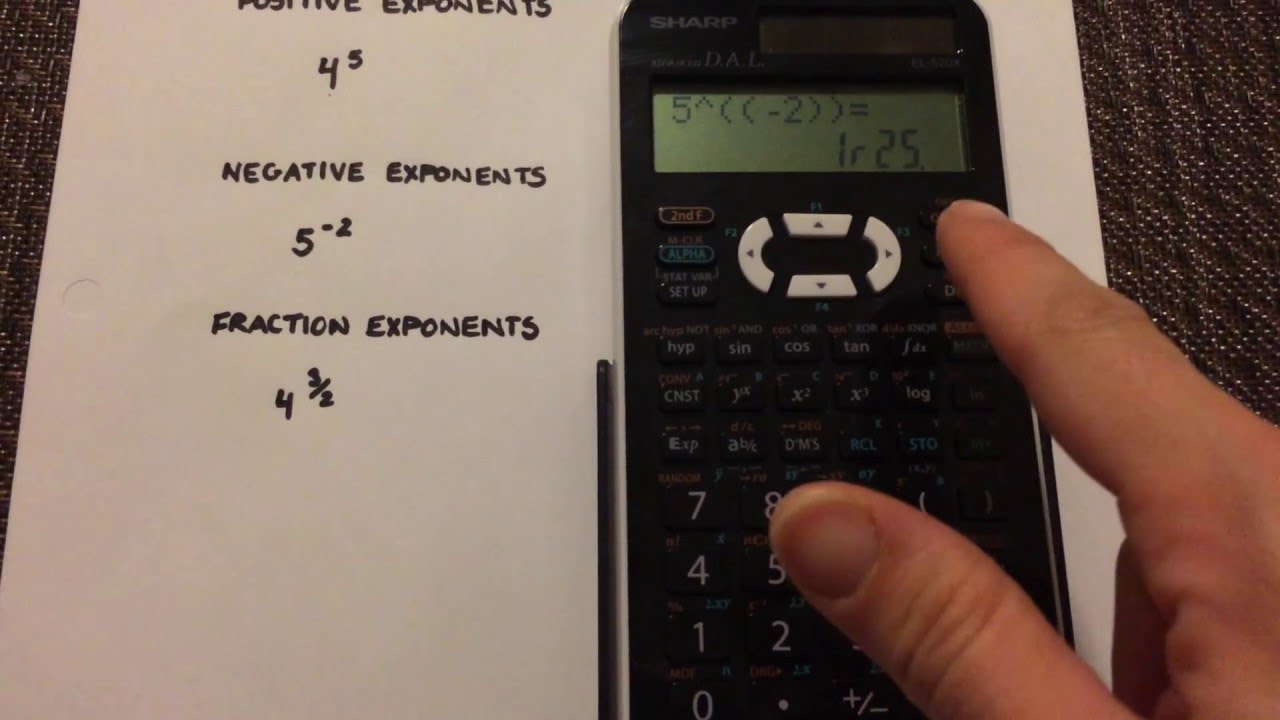
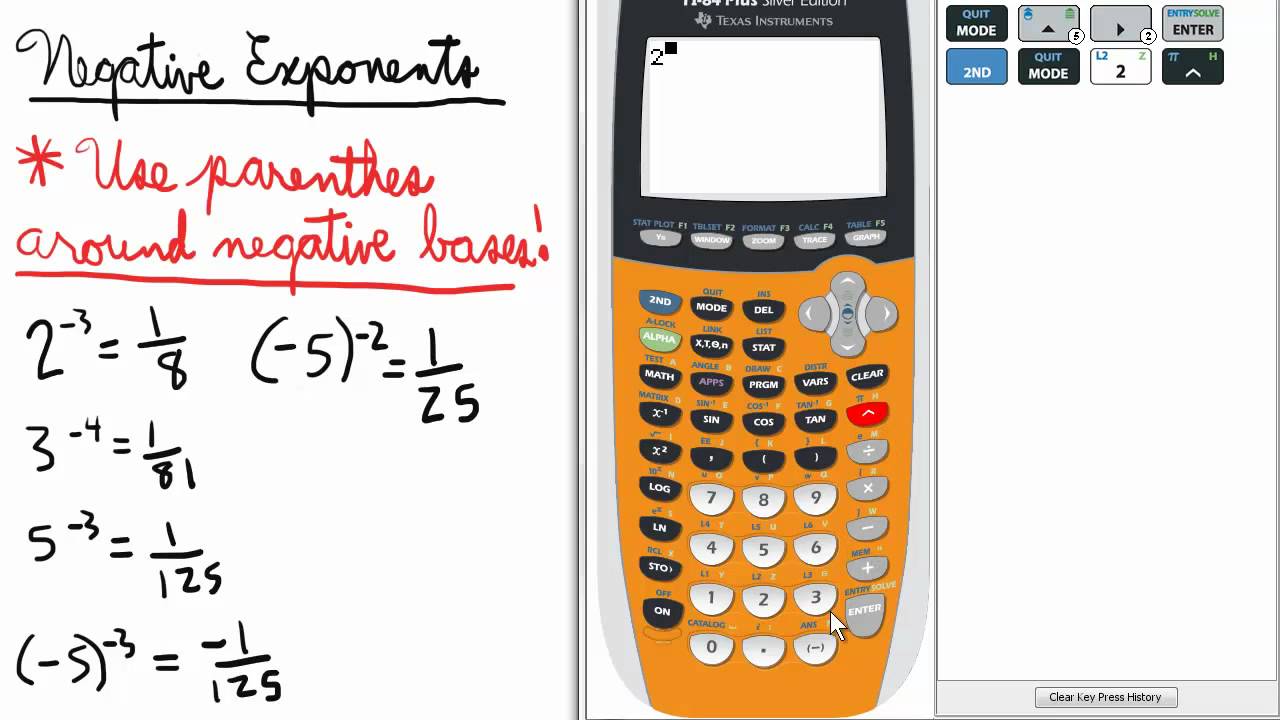
- Negative Exponents: When using negative exponents, pay close attention to the sign. For example, 2-1 is equal to 1/2 or 0.5.
- Parentheses: Use parentheses to group terms correctly, especially when dealing with complex expressions involving exponents.
Integrating Exponents with HVAC System Selection
Understanding exponents can indirectly influence HVAC system selection. While you won't directly calculate AFUE, SEER, or HSPF using exponents in a typical scenario, you'll use them to understand the financial implications of choosing a system with a higher rating. For example:
A higher SEER (Seasonal Energy Efficiency Ratio) rating means a more efficient air conditioner. While the SEER rating itself isn't calculated with exponents for the end-user, the long-term energy savings *can* be calculated and presented with the help of exponential functions (as illustrated with compound interest above).
Consider two AC units:
- Unit A: SEER 14, cost $3,000, estimated annual operating cost $800
- Unit B: SEER 18, cost $4,000, estimated annual operating cost $600
Unit B costs $1,000 more upfront, but saves $200 per year in operating costs. Using compound interest or a simple payback calculation (which doesn't use exponents but highlights the concept), you can determine how long it will take for the savings to offset the higher initial cost. More sophisticated analyses, including the exponential ones mentioned previously, let you model returns in more detail.
Conclusion
Mastering exponents on a scientific calculator is a valuable skill for anyone involved in HVAC, from homeowners making informed decisions to contractors performing complex calculations. By understanding the fundamentals and practicing with real-world examples, you can confidently tackle calculations related to energy efficiency, cost savings, and system performance. While professional assistance is always recommended for critical calculations, a solid understanding of exponents empowers you to make better decisions and communicate effectively with HVAC professionals. Choosing an HVAC system is a major investment; make sure you understand all the math involved to maximize its value.