How To Figure Out What Size Ac Unit You Need

How To Calculate the Right Size AC Unit For Your Home
Choosing the right air conditioner size is crucial for efficient cooling, comfort, and long-term cost savings. An oversized unit will cycle on and off frequently, leading to temperature fluctuations, humidity issues, and higher energy bills. An undersized unit will struggle to cool your home effectively, especially during peak summer months. This comprehensive guide will walk you through the process of determining the appropriate AC unit size for your specific needs.
Understanding AC Capacity: BTUs and Tonnage
Air conditioning capacity is measured in British Thermal Units (BTUs). One BTU represents the amount of energy required to raise the temperature of one pound of water by one degree Fahrenheit. AC units are commonly described in terms of "tons," where one ton equals 12,000 BTUs. So, a 3-ton AC unit has a cooling capacity of 36,000 BTUs.
Choosing the correct BTU/tonnage is paramount. Too small and you'll be sweating through the summer; too large and you'll experience short cycling.
Factors Influencing AC Size
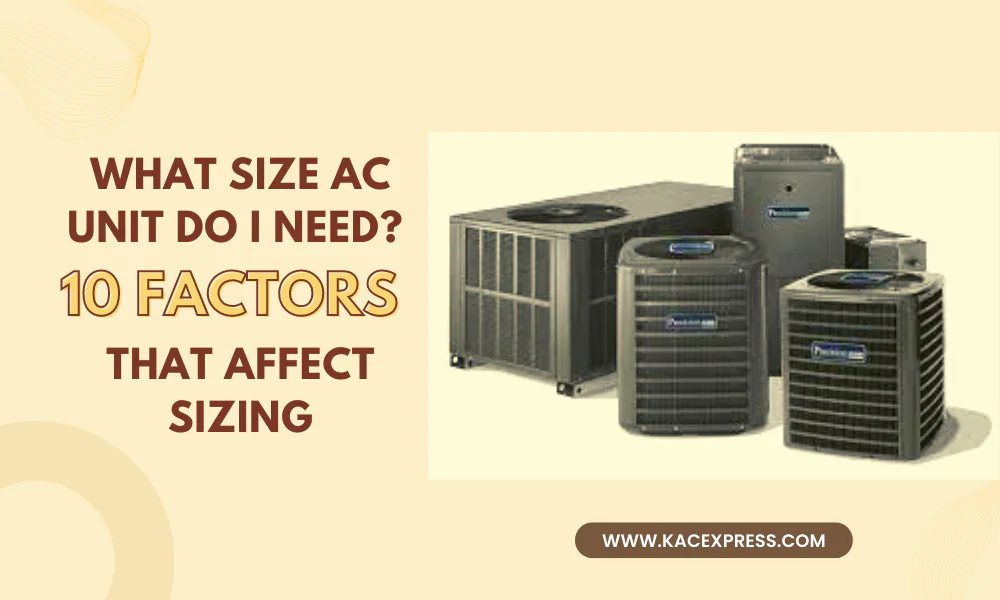
Several factors influence the appropriate AC unit size for your home. Ignoring these elements can result in inaccurate calculations and poor cooling performance.
- Square Footage: The size of your home is a primary consideration. Generally, you'll need approximately 20 BTUs per square foot of living space. However, this is a rough estimate and needs further refinement.
- Climate: Hotter climates require larger AC units. Areas with high humidity also place a greater demand on cooling systems.
- Insulation: Proper insulation minimizes heat gain and loss, reducing the AC's workload. Well-insulated homes require smaller units.
- Windows and Doors: The number and type of windows and doors significantly impact heat gain. Energy-efficient windows and proper sealing are essential.
- Sun Exposure: Homes with southern or western exposure receive more direct sunlight, increasing the cooling load.
- Ceiling Height: Higher ceilings increase the volume of air that needs to be cooled.
- Number of Occupants: More occupants generate more heat, requiring a larger AC unit.
- Appliances and Lighting: Heat-generating appliances (ovens, computers) and incandescent lighting contribute to the cooling load.
- Ductwork: Inefficient or leaky ductwork can significantly reduce cooling efficiency and necessitate a larger AC unit.
Manual J Calculation: The Gold Standard
The most accurate method for determining AC unit size is a Manual J load calculation. This comprehensive assessment considers all the factors mentioned above and provides a precise BTU requirement for your home. Manual J calculations are usually performed by HVAC professionals.
While it is possible to perform a simplified Manual J calculation yourself using online tools or worksheets, the results may not be as accurate as those obtained by a trained professional.
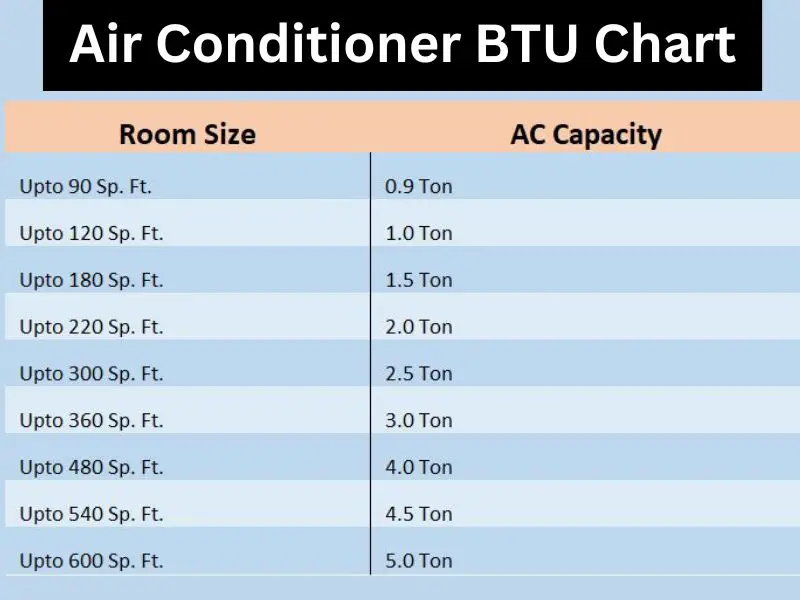
Simplified AC Sizing Chart
As a general guideline, you can use the following chart to estimate the AC unit size based on square footage. However, remember to adjust for other factors like climate, insulation, and window efficiency.
| Square Footage | Approximate AC Size (Tons) | Approximate AC Size (BTUs) |
|---|---|---|
| 600-750 | 1.5 | 18,000 |
| 750-1000 | 2.0 | 24,000 |
| 1000-1200 | 2.5 | 30,000 |
| 1200-1400 | 3.0 | 36,000 |
| 1400-1600 | 3.5 | 42,000 |
| 1600-2000 | 4.0 | 48,000 |
| 2000-2500 | 5.0 | 60,000 |
Important Note: This chart provides a rough estimate only. Always consult with an HVAC professional for an accurate assessment of your cooling needs.
Understanding SEER, EER, and Other Efficiency Ratings
Once you've determined the appropriate AC size, consider its energy efficiency. Key ratings include:
- SEER (Seasonal Energy Efficiency Ratio): Measures the cooling efficiency over an entire cooling season. Higher SEER ratings indicate greater efficiency. The minimum SEER rating currently mandated in the United States is 14 in most regions.
- EER (Energy Efficiency Ratio): Measures the cooling efficiency at a specific operating point (e.g., a specific temperature and humidity level). EER is often used for commercial applications.
- HSPF (Heating Seasonal Performance Factor): This applies to heat pumps and measures their heating efficiency. A higher HSPF rating indicates greater heating efficiency.
Investing in a high-SEER AC unit can significantly reduce your energy bills over the long term. Look for models with Energy Star certification for optimal energy savings.
Popular AC Brands and Models
Several reputable HVAC brands offer a wide range of AC units. Here are a few popular options:
- Carrier: Known for its high-efficiency models and advanced technology. Carrier offers a range of SEER ratings and features like variable-speed compressors.
- Trane: Another leading brand with a reputation for reliability and durability. Trane AC units are available in various sizes and efficiency levels.
- Lennox: Offers innovative and energy-efficient AC solutions, including solar-ready models.
- Rheem: A popular choice for its affordability and solid performance. Rheem AC units are available in a range of SEER ratings.
- Goodman: A budget-friendly option with a good reputation for value. Goodman AC units are often chosen for rental properties or starter homes.
When selecting a specific model, consider factors like SEER rating, noise level, warranty, and available features. Read online reviews and compare specifications to make an informed decision.
Professional Installation is Essential
Even the best AC unit will perform poorly if it's not installed correctly. Proper installation is crucial for optimal efficiency, performance, and longevity. Hire a qualified and licensed HVAC contractor to install your new AC system.
A professional installer will ensure that the AC unit is properly sized, connected to the ductwork, and charged with the correct amount of refrigerant. They will also test the system to ensure it's operating efficiently and safely.
Understanding Warranties and Maintenance
AC units typically come with a manufacturer's warranty that covers parts and labor for a specified period. Be sure to read the warranty terms carefully and register your AC unit to ensure coverage. Most warranties require professional installation and regular maintenance to remain valid.
Regular maintenance is essential for extending the life of your AC unit and maintaining its efficiency. Schedule annual maintenance checks with a qualified HVAC technician. Common maintenance tasks include:
- Cleaning or replacing air filters
- Cleaning the condenser coil
- Checking refrigerant levels
- Inspecting electrical connections
- Lubricating moving parts
DIY AC Maintenance Tips
While professional maintenance is essential, you can also perform some basic tasks yourself to keep your AC unit running smoothly:
- Change air filters regularly: Dirty air filters restrict airflow and reduce efficiency. Replace them every 1-3 months, depending on usage and air quality.
- Keep the outdoor unit clear: Remove any leaves, debris, or vegetation that may be blocking airflow to the condenser coil.
- Clean the fins: Use a fin comb to straighten any bent fins on the condenser coil.
Cost Considerations
The cost of a new AC unit varies depending on the size, efficiency, brand, and installation complexity. Generally, expect to pay between $3,000 and $7,000 for a complete AC replacement, including equipment and labor. Higher-efficiency models and more complex installations will typically cost more.
Get multiple quotes from different HVAC contractors to compare pricing and services. Be sure to ask for a detailed breakdown of the costs, including equipment, labor, and any additional fees.
Conclusion
Choosing the right size AC unit is a critical investment that can significantly impact your comfort, energy bills, and the lifespan of your system. By carefully considering all the factors discussed in this guide and consulting with an HVAC professional, you can ensure that you select the perfect AC unit for your home.