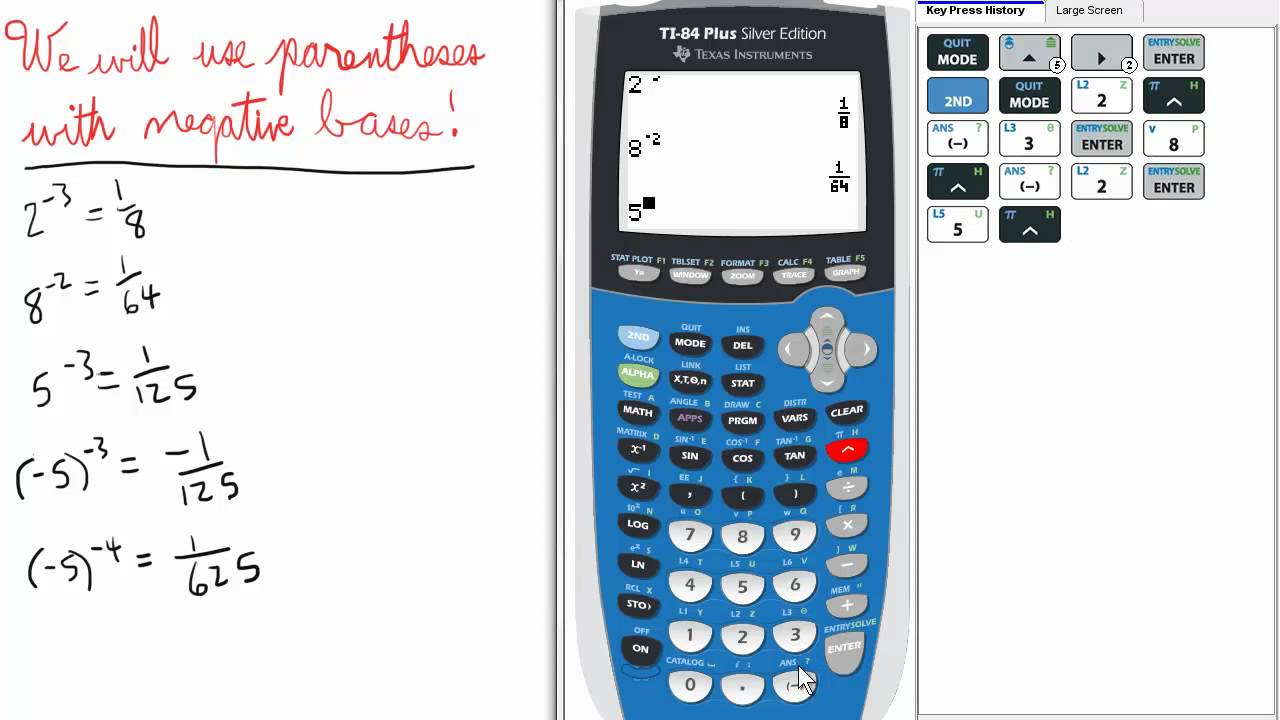
How To Put An Exponent In A Calculator

In the world of HVAC (Heating, Ventilation, and Air Conditioning), precision is paramount. From calculating heat loads to determining airflow rates, understanding and applying mathematical principles is crucial for success. One fundamental mathematical operation that frequently arises is exponentiation – raising a number to a power. While complex calculations are often handled by specialized software, HVAC professionals must still be proficient in using calculators to solve problems involving exponents. This article provides a comprehensive guide on how to use exponents on a calculator, highlighting its relevance within the HVAC industry and outlining career paths where these skills are essential.
Understanding Exponents and Their Importance in HVAC
An exponent indicates how many times a base number is multiplied by itself. For example, 53 (5 to the power of 3) means 5 x 5 x 5, which equals 125. Exponents appear frequently in HVAC calculations. Consider these scenarios:
- Area Calculations: Calculating the area of a square or cube, or the surface area of a coil
- Volume Calculations: Determining the volume of a duct, a room, or a container.
- Airflow Calculations: Understanding relationships between pressure, volume, and temperature.
- Heat Transfer Calculations: Calculating radiant heat transfer, which is proportional to the fourth power of temperature.
- Electrical Calculations: Determining power dissipation in electrical components, which involves squaring current or voltage.
Mastering exponents allows HVAC technicians and engineers to perform accurate calculations, leading to efficient system design, optimal performance, and reduced energy consumption.
How to Input Exponents in a Calculator
The method for entering exponents depends on the type of calculator you are using. Here's a breakdown for common types:
Scientific Calculators
Scientific calculators are the most versatile for handling exponents. Look for the following keys:
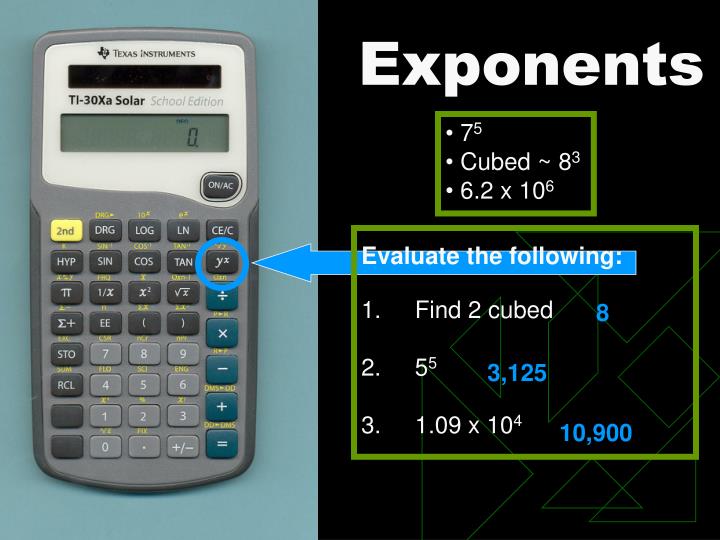
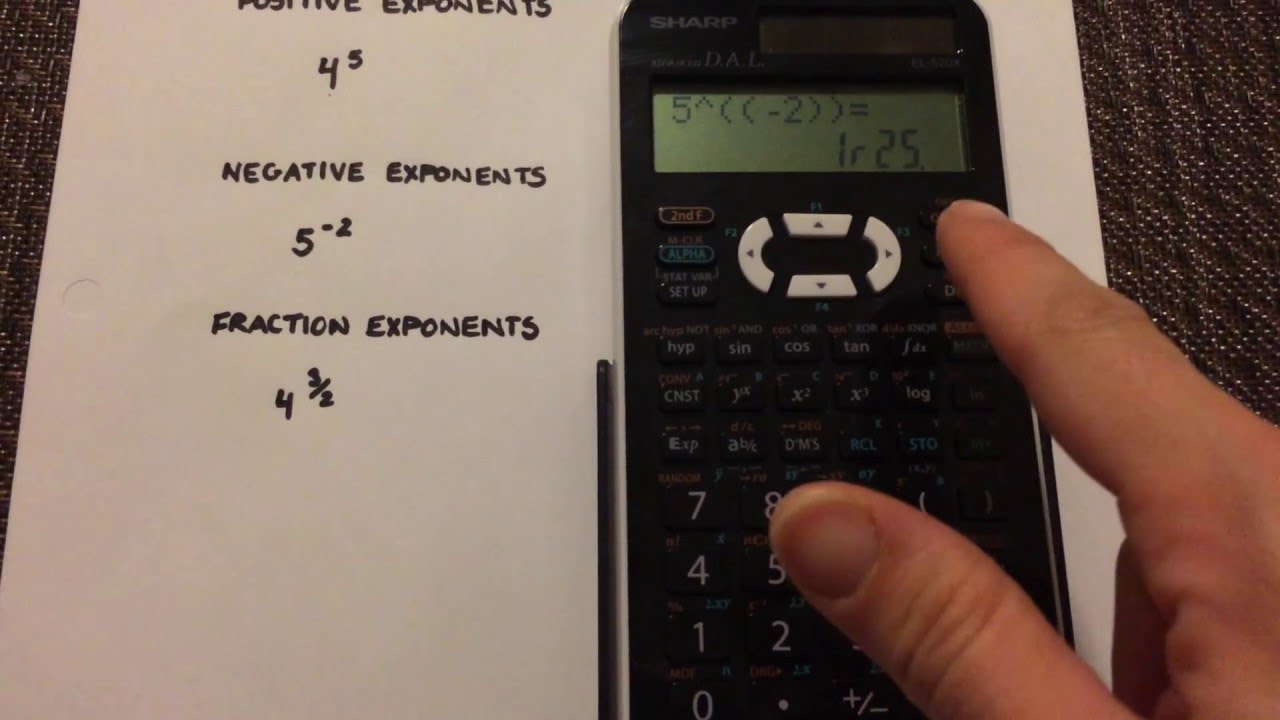
- yx or xy: This key is the most common for general exponents. To calculate 53, you would typically press: 5, then the yx or xy key, then 3, and finally the equals (=) key. The display should show 125.
- ^: Some calculators use a caret symbol (^) to denote exponents. The process is similar: 5, then ^, then 3, then =.
- x2: This key is specifically for squaring a number (raising it to the power of 2). To calculate 52, you would press 5, then the x2 key.
- x3: This key is specifically for cubing a number (raising it to the power of 3). To calculate 53, you would press 5, then the x3 key.
- 10x: This key is for calculating powers of 10. For example, to find 104, press 4 and then the 10x key.
- ex: This key calculates the exponential function (e raised to the power of x), where 'e' is Euler's number (approximately 2.71828). This is useful in advanced calculations related to heat transfer and thermodynamics.
Example: Calculating the area of a square duct with sides of 12 inches. Since area = side2, enter 12, then x2, then =. The answer is 144 square inches.
Basic Calculators
Basic calculators typically lack dedicated exponent keys. They are generally unsuitable for calculations requiring exponents other than squaring. In a pinch, for simple squaring calculations (power of 2), you can multiply the number by itself. For example, to calculate 52, you can enter 5 x 5 =.
Calculator Apps and Online Calculators
Most calculator apps on smartphones and online calculators provide scientific calculator functionality. Look for the same keys mentioned above (yx, xy, ^, x2, etc.). These can be convenient for on-the-go calculations. Many HVAC apps incorporate these calculation capabilities directly.
Real-World HVAC Applications of Exponents and Calculators
Let's explore some specific HVAC scenarios where exponents are crucial:
- Calculating Heat Loss Through Walls: The rate of heat transfer through a wall depends on the temperature difference raised to a power. While complex software often handles these calculations, a technician might use a calculator to verify specific components or estimate heat loss for a quick assessment.
- Determining Duct Friction Loss: Friction loss in ductwork is related to airflow velocity squared. Technicians use calculators to determine the optimal duct size and fan power to minimize energy waste.
- Analyzing Compressor Performance: Compressor efficiency is often expressed using equations involving exponents. Engineers analyze compressor performance data to optimize system design.
- Radiant Heat Transfer Calculations: Radiant heat transfer is proportional to the fourth power of temperature (T4). For example, calculating heat loss from a furnace.
Example: A technician needs to calculate the radiant heat loss from a furnace operating at 400°F. The formula involves T4, where T is the absolute temperature in Rankine. The technician would convert 400°F to Rankine (400 + 460 = 860°R). Then, using a scientific calculator, they would calculate 8604, which equals a large number (approximately 5.47 x 10¹¹). This result would then be used in the complete radiant heat loss equation.
HVAC Career Paths and the Importance of Mathematical Skills
A strong foundation in mathematics, including exponents, opens doors to various rewarding careers in the HVAC industry. Here are some examples:
- HVAC Technician: Install, maintain, and repair HVAC systems. Need to understand basic calculations for load calculations, refrigerant charging, and airflow adjustments. According to the Bureau of Labor Statistics, the median annual wage for HVACR mechanics and installers was $59,620 in May 2023. Job outlook is projected to grow 6 percent from 2022 to 2032, about as fast as the average for all occupations.
- HVAC Design Engineer: Design HVAC systems for residential, commercial, and industrial buildings. Require a strong understanding of thermodynamics, fluid mechanics, and heat transfer. Salary ranges vary widely based on experience and location, but a typical range is $70,000 to $120,000 per year.
- HVAC Service Manager: Oversee teams of technicians and manage service operations. Need to understand technical aspects of HVAC systems and manage budgets. The median salary for service managers can range from $65,000 to $95,000 per year.
- HVAC Sales Engineer: Sell HVAC equipment and systems to clients. Need to understand technical specifications and perform calculations to demonstrate the value of products. A sales engineer's salary often includes a base salary plus commission, with total earnings potentially exceeding $100,000 per year.
- HVAC Instructor: Teach HVAC principles and practices to students and apprentices. Require a thorough understanding of the subject matter and the ability to explain complex concepts clearly. Salary depends on the institution and experience level, but typically ranges from $50,000 to $80,000 per year.
Certifications: Earning certifications can significantly boost career prospects and earning potential.
- NATE (North American Technician Excellence): Demonstrates competency in HVACR service and installation.
- EPA 608 Certification: Required for handling refrigerants.
- HVAC Excellence: Offers certifications for various HVAC specialties.
Tips for Improving Your Calculator Skills in HVAC
Here are some tips to enhance your calculator proficiency and mathematical skills:
- Practice Regularly: Solve example problems involving exponents and other HVAC calculations.
- Take Advantage of Online Resources: Utilize online calculators, tutorials, and educational videos.
- Attend Training Courses: Enroll in HVAC training programs that emphasize mathematical skills.
- Use HVAC-Specific Calculators and Apps: Explore specialized calculators and apps designed for HVAC calculations.
- Understand the Underlying Principles: Don't just memorize formulas; understand the concepts behind them. This will help you apply the formulas correctly and troubleshoot problems effectively.
- Double-Check Your Work: Always verify your calculations to minimize errors.
The Future of HVAC and the Importance of Adaptability
The HVAC industry is constantly evolving with new technologies and regulations. Smart thermostats, energy-efficient equipment, and sustainable building practices are becoming increasingly prevalent. As the industry advances, professionals must adapt and embrace new skills.
While software and automation are playing a larger role, a solid understanding of fundamental principles, including exponents and mathematical calculations, remains essential. Technicians and engineers need to interpret data, troubleshoot problems, and make informed decisions based on sound mathematical reasoning.
The demand for skilled HVAC professionals continues to grow, driven by factors such as population growth, climate change, and the need for energy-efficient buildings. Investing in your mathematical skills and pursuing relevant certifications will position you for a successful and rewarding career in this dynamic industry. The ability to apply mathematical concepts like exponents correctly on a calculator and beyond is more than just a technical skill; it's a critical asset for problem-solving and critical thinking in any HVAC role.