How To Read Ac Manifold Gauge
.jpg)
Welcome to your comprehensive guide on how to read an AC manifold gauge! Whether you're a homeowner trying to understand your system's health, a DIY enthusiast looking to troubleshoot issues, or an aspiring HVAC technician, this article will provide you with the knowledge you need. However, remember that working with refrigerant can be dangerous and requires proper training and certification. If you're uncomfortable with any of these steps, please contact a qualified HVAC professional.
Understanding the AC Manifold Gauge Set
Before we dive into reading the gauges, it's important to understand the different components of a manifold gauge set and what they measure.
Components of a Manifold Gauge Set:
- High-Pressure Gauge (Typically Red): This gauge measures the pressure on the high side of the AC system, typically between the compressor and the condenser.
- Low-Pressure Gauge (Typically Blue): This gauge measures the pressure on the low side of the AC system, typically between the evaporator and the compressor.
- Compound Gauge: The low-pressure gauge is often a compound gauge, meaning it measures both pressure (PSI) and vacuum (inches of mercury - inHg). This is crucial for evacuation (removing air and moisture) of the system.
- Manifold Body: The central block that houses the gauges and valve controls.
- Hoses (Red, Blue, Yellow): These hoses connect the manifold to the system's service ports and a refrigerant source or vacuum pump.
- Service Ports (High-Side and Low-Side): These are access points on the AC system where you connect the manifold hoses. They often have Schrader valves (similar to tire valves).
- Valve Handles: Control the flow of refrigerant or vacuum through the manifold.
Essential Tools and Materials
Before you begin, make sure you have all the necessary tools and materials on hand:
- AC Manifold Gauge Set
- Refrigerant (Appropriate type for your system - check the unit's nameplate)
- Safety Glasses
- Gloves (Refrigerant-resistant)
- Adjustable Wrench or Crescent Wrench
- Refrigerant Leak Detector (Optional but recommended)
- Vacuum Pump (If evacuating the system)
- Charging Cylinder or Scale (If adding refrigerant)
- Service Port Adapters (If needed)
Safety Precautions
Working with HVAC systems involves potential hazards. Prioritize safety at all times!
- Wear safety glasses and gloves: Refrigerant can cause frostbite and eye damage.
- Work in a well-ventilated area: Refrigerant fumes can displace oxygen.
- Never overcharge the system: This can damage the compressor and other components.
- Be careful when handling refrigerant cylinders: They are under high pressure.
- Do not mix different types of refrigerants: This can create dangerous chemical reactions.
- If you're unsure about any step, stop and consult a qualified HVAC professional.
Step-by-Step Guide to Reading an AC Manifold Gauge
- Connect the Manifold Gauge Set:
- Identify the high-side and low-side service ports on your AC system. Typically, the high-side port is smaller than the low-side port.
- Connect the red hose to the high-side service port.
- Connect the blue hose to the low-side service port.
- Connect the yellow hose to your refrigerant source (if adding refrigerant) or a vacuum pump (if evacuating the system). If you are just observing the pressures without adding or removing refrigerant, leave the yellow hose disconnected.
- Open the Valves (Slightly):
- Slowly open both the high-side (red) and low-side (blue) valves on the manifold gauge set. Only open them enough to read the gauges. You don't need to fully open them unless you're actively adding or removing refrigerant.
- Read the Gauges:
- Note the pressure readings on both the high-pressure and low-pressure gauges.
- Pay attention to the units of measurement (PSI).
- Compare the readings to the manufacturer's specifications for your AC system. This information is usually found on a sticker on the unit.
- Interpreting the Readings:
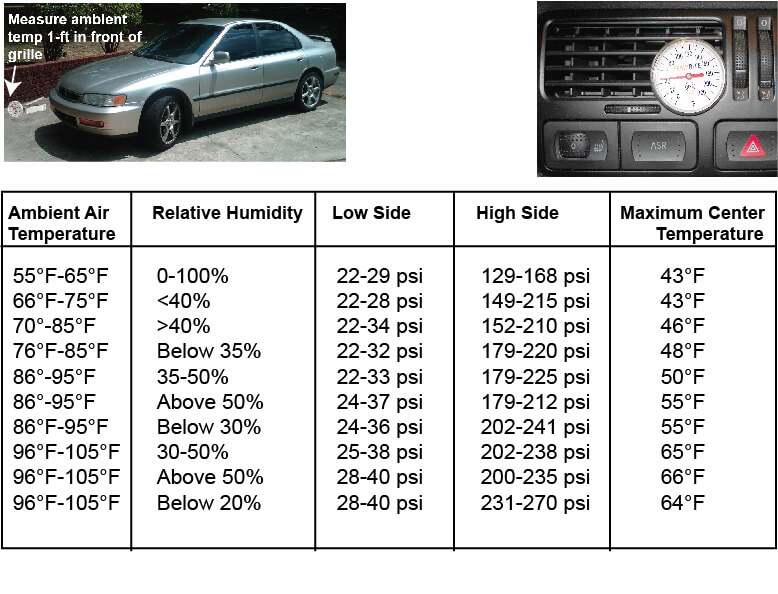
- Normal Operating Pressures: Normal pressures vary depending on the refrigerant type, outdoor temperature, and indoor temperature. General guidelines for R-410A, a common refrigerant, are:
- Low-Side: 110-150 PSI
- High-Side: 300-400 PSI
- Low Low-Side Pressure: Could indicate a refrigerant leak, a restriction in the system, or a faulty expansion valve.
- High Low-Side Pressure: Could indicate overcharging, a restricted return line, or a faulty compressor.
- Low High-Side Pressure: Could indicate a refrigerant leak, a restriction in the system, or a faulty compressor.
- High High-Side Pressure: Could indicate overcharging, a restricted condenser coil, or a non-condensables (air) in the system.
- Equalized Pressures (System Off): After the system has been off for at least 15 minutes, the pressures on both gauges should equalize. This pressure is related to the temperature of the refrigerant. If the equalized pressure is significantly lower than expected for the ambient temperature, it strongly suggests a refrigerant leak.
- Normal Operating Pressures: Normal pressures vary depending on the refrigerant type, outdoor temperature, and indoor temperature. General guidelines for R-410A, a common refrigerant, are:
- Close the Valves:
- Once you've taken your readings, close both the high-side (red) and low-side (blue) valves on the manifold gauge set.
- Disconnect the Hoses:
- Carefully disconnect the hoses from the service ports. A small amount of refrigerant may escape, so be prepared.
Common AC Problems and Pressure Readings
Here's a table summarizing some common AC problems and the pressure readings you might observe:
| Problem | Low-Side Pressure | High-Side Pressure |
|---|---|---|
| Refrigerant Leak | Low | Low |
| Overcharge | High | High |
| Restricted Evaporator Coil | Low | Normal to Low |
| Restricted Condenser Coil | Normal to High | High |
| Compressor Issues (Inefficient) | High | Low |
| Non-Condensables in System (Air) | Normal to High | Very High |
| Clogged Filter Drier | Low | Low |
When to Call a Professional
While reading an AC manifold gauge can provide valuable information, some repairs are best left to the professionals. Consider contacting a qualified HVAC technician if:
- You suspect a refrigerant leak. Handling refrigerant requires specialized equipment and certification.
- You need to add or remove refrigerant. This requires precise measurements and can be dangerous if not done correctly.
- You suspect a compressor problem. Compressor repairs are complex and often require specialized tools and knowledge.
- You are uncomfortable working with electrical components or refrigerant.
- You are unsure about any step in the troubleshooting or repair process.
Estimating Repair Costs
Repair costs can vary depending on the severity of the problem, the cost of parts, and the labor rates in your area. Here are some rough estimates:
- Refrigerant Recharge: $150 - $500+ (depending on the amount of refrigerant needed and leak repair if necessary)
- Leak Repair: $200 - $1000+ (depending on the location and complexity of the leak)
- Compressor Replacement: $800 - $2500+
- Evaporator Coil Replacement: $600 - $1500+
- Condenser Coil Replacement: $800 - $2000+
- Filter Drier Replacement: $100 - $300
These are just estimates. It's always best to get quotes from multiple HVAC professionals before making a decision.
Final Thoughts
Understanding how to read an AC manifold gauge is a valuable skill for homeowners and DIY enthusiasts. It allows you to diagnose potential problems early and make informed decisions about repairs. Remember to prioritize safety and consult a qualified HVAC professional when necessary. By combining your knowledge with professional expertise, you can keep your AC system running efficiently and effectively for years to come. Good luck!
Disclaimer: This article is for informational purposes only and should not be considered a substitute for professional advice. HVAC systems can be dangerous, and it is essential to follow all safety precautions and consult with a qualified technician when necessary. The author and publisher are not responsible for any damages or injuries resulting from the use of this information.