How To Use Ac Manifold Gauge Set R134a
Frequently Asked Questions: Using an R134a Manifold Gauge Set
This guide addresses common questions about using an R134a manifold gauge set, a tool crucial for diagnosing and servicing air conditioning systems using R134a refrigerant. Whether you're a homeowner tackling minor AC maintenance or a facility manager overseeing a larger system, understanding this tool is essential.
Q1: What is an R134a manifold gauge set, and what does it do?
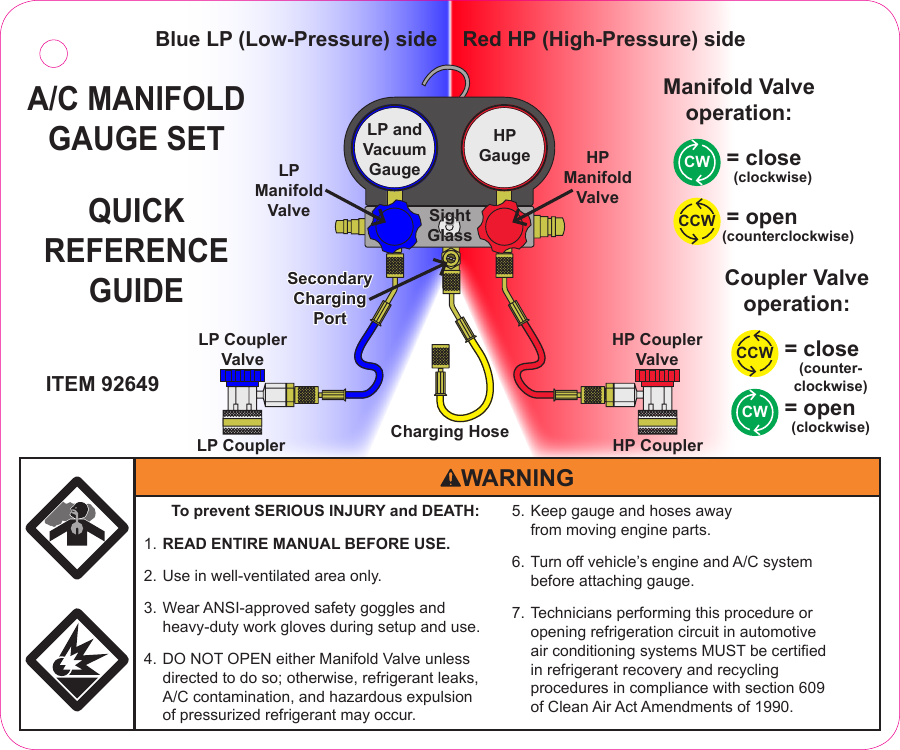
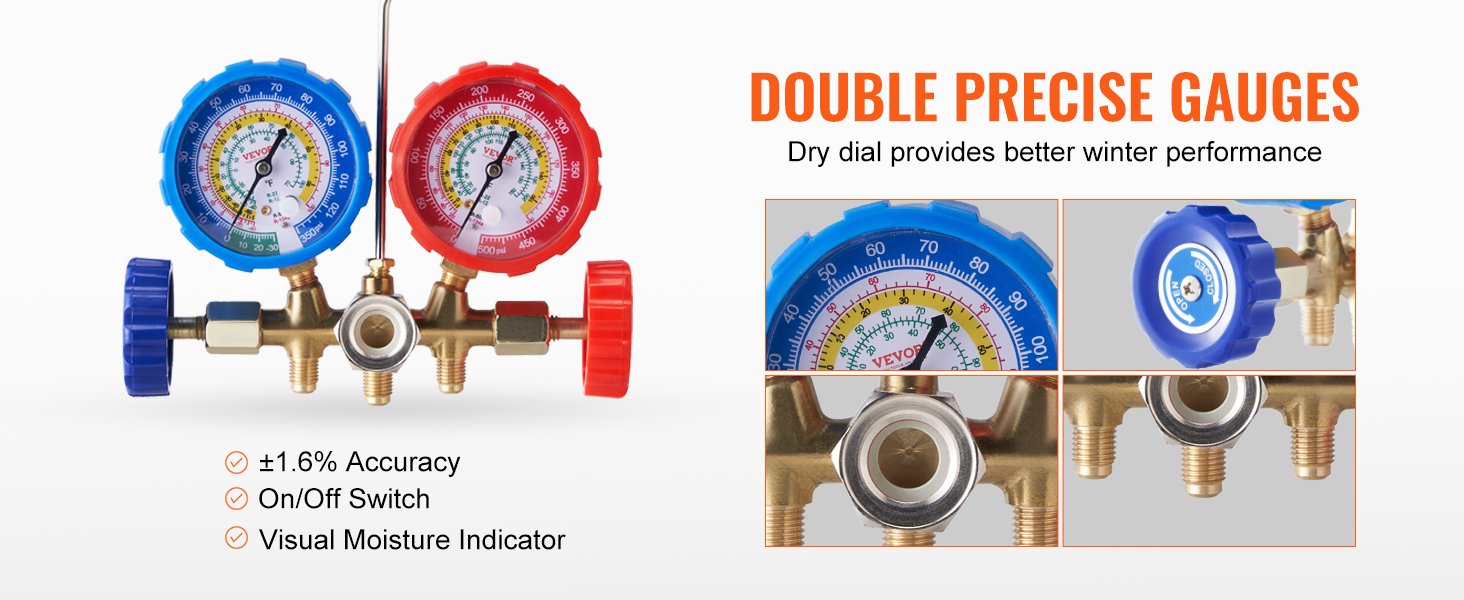
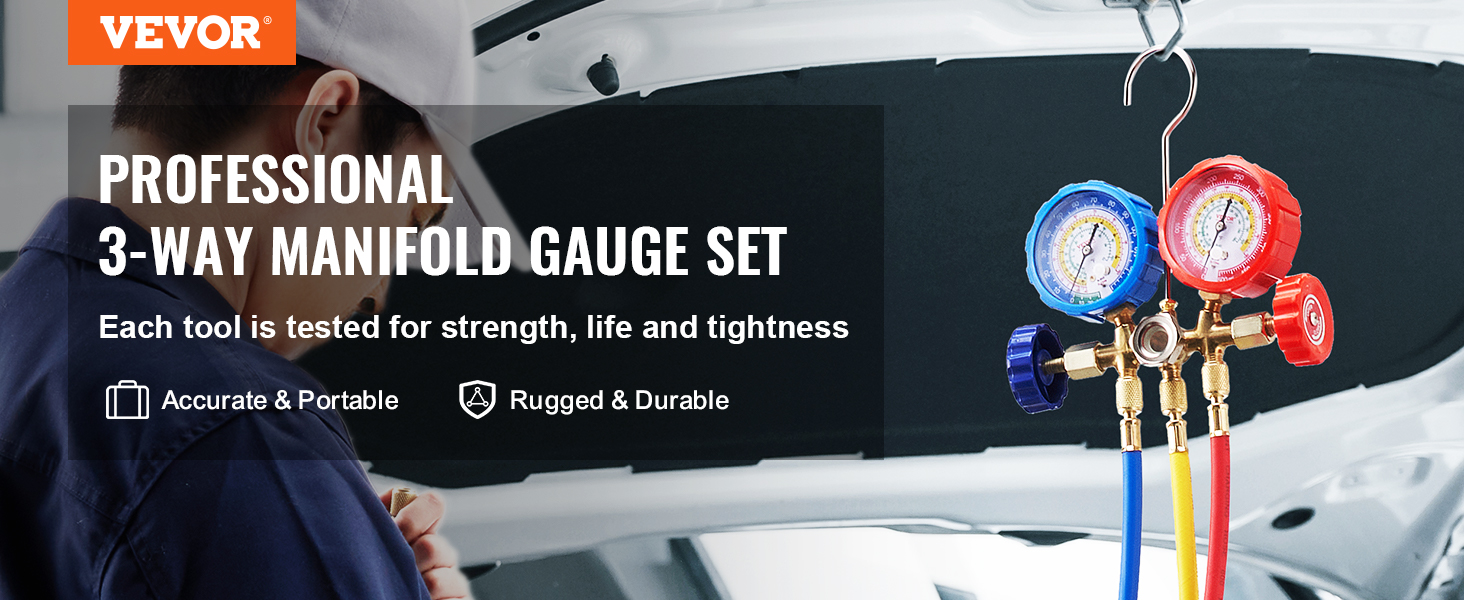
An R134a manifold gauge set is a diagnostic tool used to measure the pressure in an air conditioning (AC) system that uses R134a refrigerant. It consists of two gauges – a high-pressure gauge (usually red) and a low-pressure gauge (usually blue) – connected to a manifold with hoses and valves.
- It allows you to read the pressure on both the high and low sides of the AC system.
- It helps diagnose problems such as low refrigerant levels, compressor issues, and restrictions in the system.
- It also allows you to add refrigerant to the system or recover refrigerant (though recovery typically requires additional equipment).
Q2: What safety precautions should I take before using an R134a manifold gauge set?
Safety is paramount when working with refrigerants and AC systems. Always follow these precautions:
- Wear safety glasses: Refrigerant can cause serious eye damage.
- Wear gloves: Refrigerant can cause frostbite on contact with skin.
- Work in a well-ventilated area: Refrigerant can displace oxygen and cause asphyxiation in confined spaces.
- Never overcharge the system: Overcharging can damage the compressor and other components.
- Be aware of potential leaks: Refrigerant leaks are harmful to the environment and can be dangerous.
- Consult the vehicle or equipment manufacturer's service manual: It contains specific instructions and warnings for your particular system.
- Proper disposal of refrigerant is critical: Ensure you know local regulations and how to safely dispose of old refrigerant.
- If you are not comfortable or familiar with HVAC repair, consult a qualified professional. Incorrect use can damage your system.
Q3: How do I connect an R134a manifold gauge set to my AC system?
Connecting the gauge set involves a few key steps. Ensure the system is off before proceeding.
- Identify the service ports: Locate the high-side and low-side service ports on your AC system. They usually have different sizes to prevent accidental connection. They are often marked with "H" and "L" or indicated by color.
- Connect the hoses:
- Connect the blue hose to the low-side service port.
- Connect the red hose to the high-side service port.
- Connect the yellow hose to the refrigerant source (refrigerant tank or recovery machine). Do not connect the yellow hose until you are ready to charge or recover.
- Purge the hoses: Before connecting to the refrigerant source, slightly loosen the hose connection at the manifold and allow a small amount of refrigerant to escape, purging air and moisture from the hoses. Then, retighten. This prevents contaminants from entering the system.
- Ensure tight connections: Make sure all connections are secure to prevent leaks.
Q4: How do I read the gauges on an R134a manifold gauge set?
Reading the gauges correctly is vital for accurate diagnosis. Here's how:
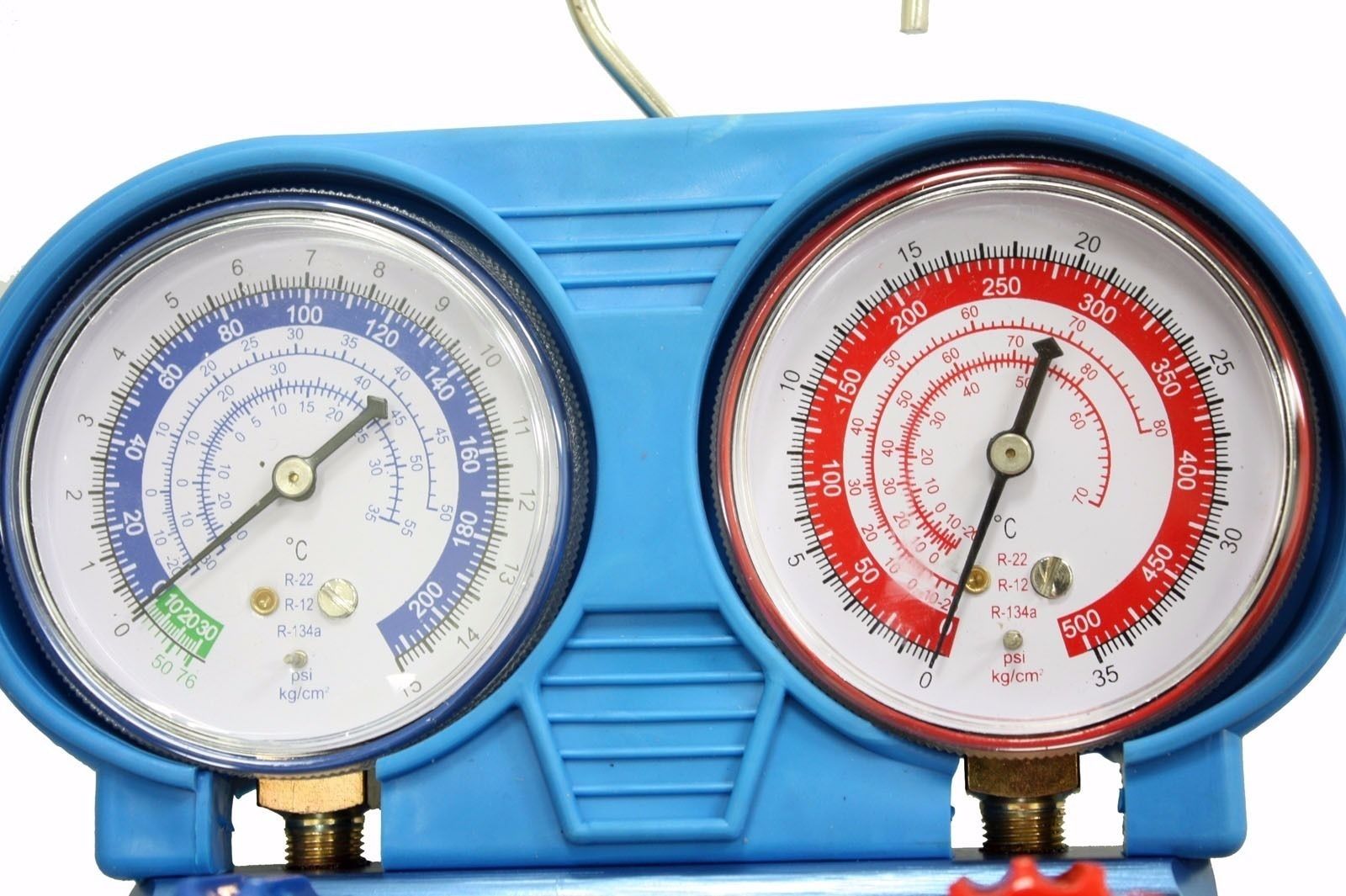
- Understand the scales: Each gauge has a scale that indicates pressure, typically in PSI (pounds per square inch).
- Note the ambient temperature: The ideal pressure readings depend on the ambient temperature. Refer to a pressure-temperature chart for R134a, which you can often find online or in the gauge set instructions.
- Observe the readings:
- The low-side pressure typically ranges from 25-45 PSI, depending on the ambient temperature and system load.
- The high-side pressure typically ranges from 150-250 PSI, also depending on the ambient temperature and system load.
- Interpret the readings:
- Low readings on both sides may indicate low refrigerant.
- High readings on both sides may indicate overcharging or a restriction in the system.
- Unusually high high-side pressure and low low-side pressure may indicate a compressor issue.
- Compare to specifications: Always compare your readings to the manufacturer's specifications for your specific AC system. These specifications can be found in the repair manual for the equipment.
Q5: How do I add refrigerant to an AC system using an R134a manifold gauge set?
Adding refrigerant requires careful attention to avoid overcharging. Only add refrigerant if you have determined that the system is low, and only add enough to reach the manufacturer's specified pressure range.
- Connect the refrigerant tank: Connect the yellow hose from the manifold to the R134a refrigerant tank.
- Purge the yellow hose: Loosen the connection at the manifold slightly to release any air from the hose, then retighten.
- Start the engine and turn on the AC: Set the AC to its highest setting with the fan on maximum.
- Open the low-side valve: Slowly open the low-side valve on the manifold to allow refrigerant to enter the system. Monitor the low-side pressure gauge.
- Monitor the gauges: Watch both the low-side and high-side gauges carefully. Refer to the pressure-temperature chart to determine the correct pressure for the ambient temperature.
- Add refrigerant in small increments: Add refrigerant slowly and in small increments, allowing the system to stabilize between additions. This prevents overcharging.
- Close the low-side valve: Once the system reaches the correct pressure, close the low-side valve.
- Disconnect the hoses: Turn off the engine and AC. Carefully disconnect the hoses from the service ports, being mindful of any residual refrigerant.
Important note: Charging through the low side with the system running is generally acceptable for smaller top-offs. However, for larger charges, consider using a charging cylinder and introducing the refrigerant as a vapor through the low side with the system *off*. Consult the manufacturer's instructions or a qualified technician for best practices.
Q6: What does it mean if the gauge readings are fluctuating rapidly?
Fluctuating gauge readings can indicate several potential issues:
- Air in the system: Air in the AC system can cause erratic pressure readings. Evacuate the system with a vacuum pump to remove air and moisture before recharging.
- Restricted airflow: A blocked condenser or evaporator coil can cause pressure fluctuations. Inspect and clean these components.
- Compressor issues: A failing compressor can cause unstable pressure readings. A compressor performance test may be needed.
- Moisture in the system: Moisture can react with the refrigerant and cause pressure fluctuations. Use a vacuum pump to evacuate the system and replace the receiver drier or accumulator.
- Improper gauge set connection: Ensure the hoses are securely connected to the service ports.
Q7: What other tools might I need when working with an R134a AC system?
While the manifold gauge set is essential, several other tools can be helpful for AC service:
- Vacuum pump: Used to evacuate air and moisture from the system before charging.
- Refrigerant recovery machine: Used to safely remove refrigerant from the system. Important: You need certification in many areas to operate this machine.
- Refrigerant leak detector: Used to locate refrigerant leaks in the system.
- Thermometer: Used to measure the temperature of the air exiting the vents, providing information about system performance.
- Fin comb: Used to straighten bent fins on the condenser and evaporator coils, improving airflow.
- Service valve core removal tool: Allows you to replace valve cores without losing refrigerant.
- Pressure-temperature (PT) chart: Provides the ideal pressure range for R134a at various ambient temperatures.
- Service manual: Contains the specific instructions and specifications for your AC system, including refrigerant charge amounts.
Disclaimer: Working with refrigerant and AC systems can be dangerous. If you are not comfortable performing these procedures, it is best to consult a qualified HVAC technician. This guide provides general information and should not be considered a substitute for professional advice.