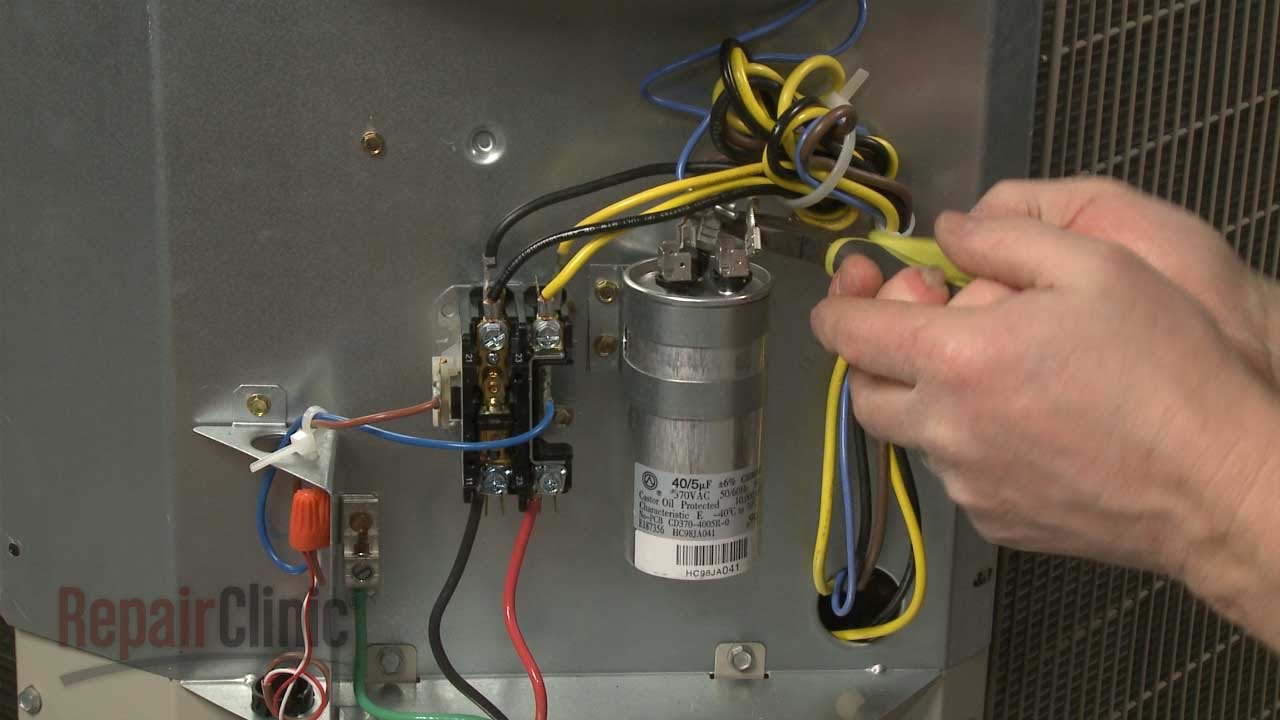
How To Wire An Air Conditioner Capacitor

Understanding and Wiring Your Air Conditioner Capacitor: A Comprehensive Guide
The capacitor in your air conditioner is a small but vital component responsible for providing the initial jolt of energy needed to start the compressor and fan motors. A failing capacitor can lead to inefficient cooling, increased energy bills, and eventually, a complete system breakdown. While professional HVAC technicians should always be the first choice for complex repairs, understanding the basics of capacitor wiring can empower you to troubleshoot minor issues and communicate effectively with service providers.
What is an Air Conditioner Capacitor?
Think of a capacitor like a rechargeable battery. It stores electrical energy and releases it quickly to give powerful motors the push they need to get going. Without a functioning capacitor, the motor might hum, struggle, or fail to start altogether. There are typically two types of capacitors found in air conditioners:
- Start Capacitors: Provide a high burst of energy for a short period to start the motor. They are typically disconnected from the circuit once the motor is running.
- Run Capacitors: Provide continuous energy to keep the motor running efficiently. They are designed for continuous use and are more durable than start capacitors.
Most modern air conditioners use a dual-run capacitor, which combines the functions of both start and run capacitors into a single unit, simplifying the wiring and reducing space.
Safety First: Disconnecting Power is Paramount
Before you even think about touching any wires, disconnect the power to your air conditioner. This is absolutely critical to prevent electric shock. Locate the outdoor disconnect box near the unit (usually a gray metal box) and turn the breaker to the OFF position. You can also disconnect the main breaker at your home's electrical panel for added safety. Verify that the power is off using a non-contact voltage tester. Never assume the power is off – always test it.
Identifying the Capacitor Terminals
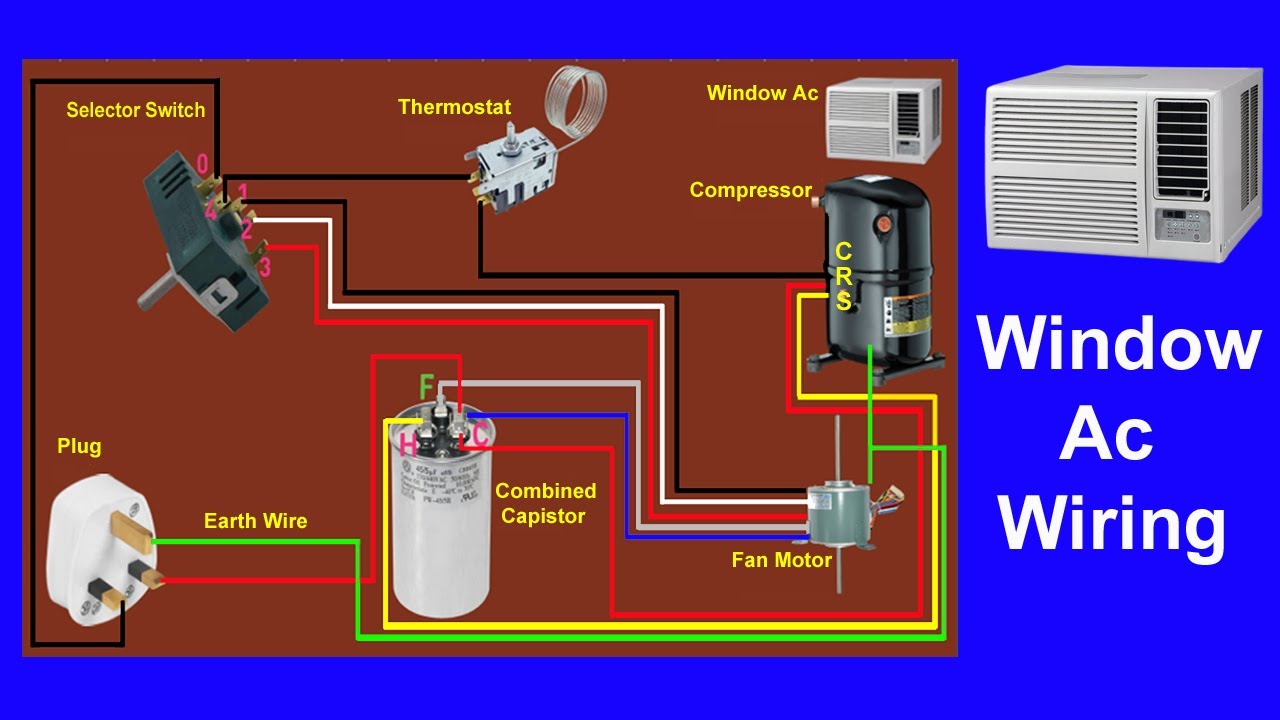
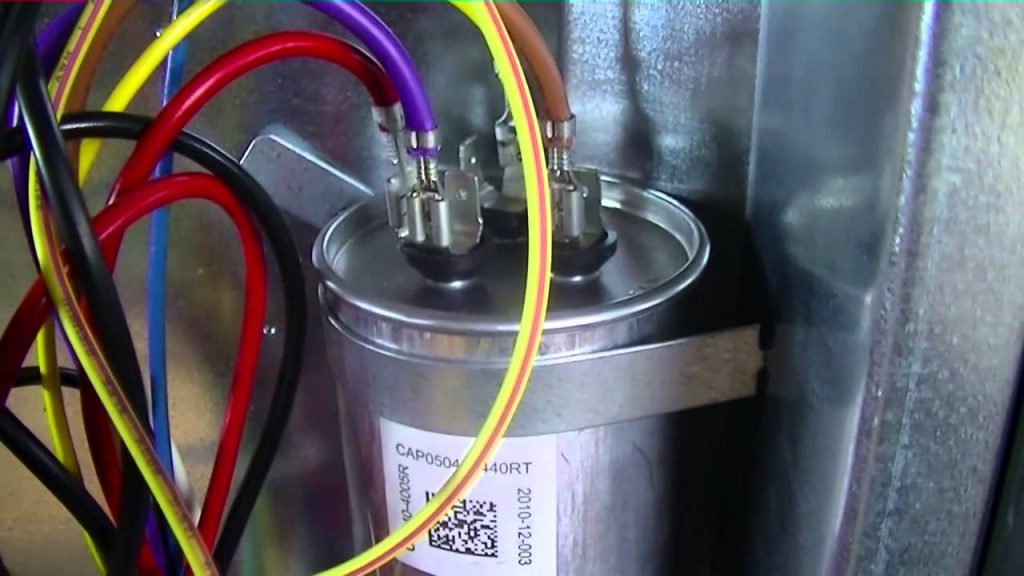
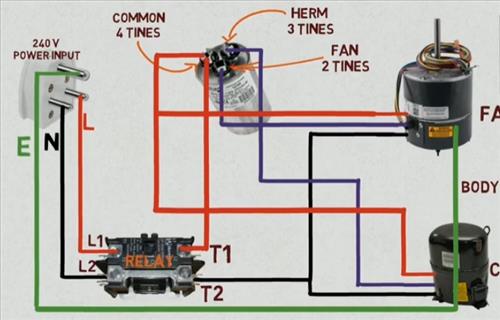
Air conditioner capacitors typically have three terminals, each labeled with specific markings:
- "C" or "COM" (Common): This is the common terminal and connects to the power source.
- "H" or "HERM" (Hermetically Sealed Compressor): This terminal connects to the compressor motor.
- "F" or "FAN": This terminal connects to the fan motor.
The capacitor will also have a microfarad (µF) rating and a voltage rating. These values are critical when selecting a replacement capacitor. Always replace a capacitor with one that has the same microfarad rating and equal or higher voltage rating. Using a capacitor with the wrong rating can damage your air conditioner.
Step-by-Step Guide to Wiring an Air Conditioner Capacitor
Important: These steps are a general guide. Always refer to your air conditioner's wiring diagram for specific instructions and wire colors.
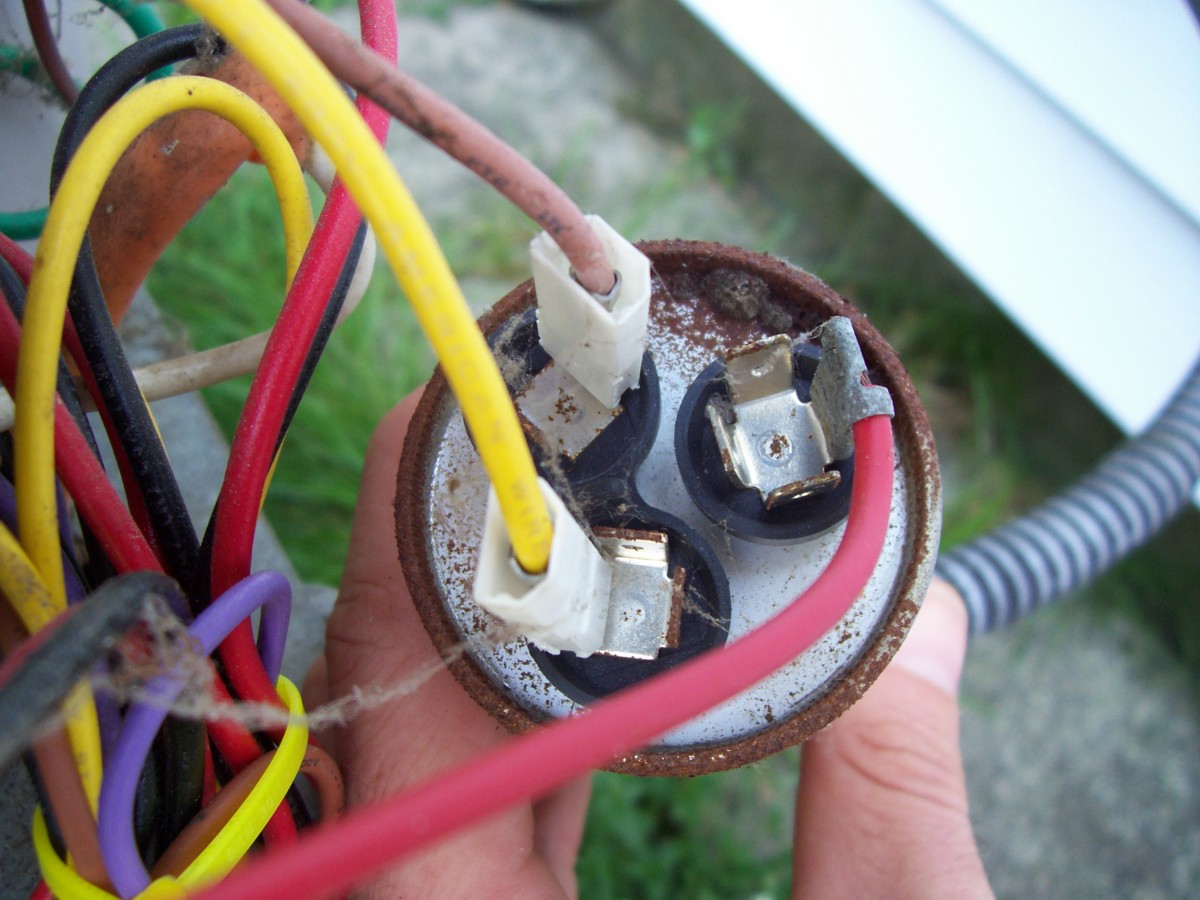
- Document the Existing Wiring: Before disconnecting anything, take clear pictures of the existing wiring connections to the capacitor. This will be invaluable when reconnecting the wires. You can also draw a simple diagram showing the wire colors and terminal connections.
- Discharge the Capacitor (Use Extreme Caution): Even after disconnecting power, the capacitor can still hold a charge, which can deliver a painful and potentially dangerous shock. Use a screwdriver with an insulated handle to carefully short across the capacitor terminals. Important: Only do this if you are comfortable and understand the risk. If you are unsure, consult a qualified HVAC technician.
- Disconnect the Wires: Carefully disconnect the wires from the capacitor terminals. Use pliers to gently pull the connectors off the terminals. Avoid pulling on the wires themselves, as this can damage them.
- Install the New Capacitor: Place the new capacitor in the same mounting bracket as the old one. Ensure it is securely fastened.
- Reconnect the Wires: Using your pictures or diagram as a guide, reconnect the wires to the correct terminals on the new capacitor. Make sure the connectors are firmly seated on the terminals.
- Double-Check Your Work: Before restoring power, carefully double-check all connections to ensure they are secure and correct.
- Restore Power: Turn the breaker back ON at the disconnect box and/or the main electrical panel.
- Test the Air Conditioner: Turn on your air conditioner and observe its operation. Listen for any unusual noises or vibrations. If the air conditioner starts and runs smoothly, you have successfully replaced the capacitor.
Troubleshooting Common Capacitor Problems
If your air conditioner still doesn't work after replacing the capacitor, consider these common issues:
- Incorrect Wiring: Double-check your wiring against your pictures or diagram. A single misplaced wire can prevent the system from working.
- Blown Fuse or Tripped Breaker: The capacitor failure may have caused a short circuit, blowing a fuse or tripping a breaker. Check and replace any blown fuses or reset tripped breakers.
- Faulty Contactor: The contactor is a relay that switches power to the compressor and fan motors. A faulty contactor can prevent the air conditioner from starting.
- Overload Protector Tripped: The compressor has an internal overload protector that trips if it overheats. Let the unit cool down for a while and try again. If it continues to trip, there may be a more serious problem with the compressor.
When to Call a Professional HVAC Technician
While replacing a capacitor can be a relatively straightforward task, there are situations where it's best to call a professional:
- You are uncomfortable working with electricity. Safety is paramount, and it's better to be safe than sorry.
- You can't identify the correct capacitor or wiring diagram. Using the wrong capacitor or wiring it incorrectly can damage your air conditioner.
- The air conditioner still doesn't work after replacing the capacitor. This may indicate a more serious problem that requires specialized knowledge and equipment.
- You suspect there may be other issues with the compressor or fan motor. A professional can diagnose and repair these issues.
Choosing the Right Air Conditioner: AFUE, SEER, and HSPF Explained
When considering a new air conditioner, understanding efficiency ratings is crucial for making an informed decision. Here's a breakdown of the key metrics:
- SEER (Seasonal Energy Efficiency Ratio): Measures the cooling efficiency of an air conditioner. The higher the SEER rating, the more efficient the unit. Look for models with SEER ratings of 15 or higher for optimal energy savings.
- AFUE (Annual Fuel Utilization Efficiency): Measures the heating efficiency of a furnace or boiler. The higher the AFUE rating, the more efficient the unit. This is only relevant if you are considering a furnace replacement.
- HSPF (Heating Seasonal Performance Factor): Measures the heating efficiency of a heat pump. The higher the HSPF rating, the more efficient the unit.
Popular HVAC Brands and Models (Examples)
Several reputable HVAC brands offer a range of air conditioners with varying features and price points. Here are a few examples:
- Carrier: Known for its high-efficiency models and advanced features like Wi-Fi connectivity and zoning. Models like the Carrier Infinity 26 offer exceptional SEER ratings.
- Trane: Offers durable and reliable air conditioners with a focus on performance and longevity. The Trane XV20i is a popular choice for its variable-speed compressor and high SEER rating.
- Lennox: Known for its innovative technology and energy-efficient designs. The Lennox SL28XCV is one of the quietest and most efficient air conditioners on the market.
- Goodman: Provides more affordable options without sacrificing essential features. Goodman offers solid warranties and reliable performance.
Note: Pricing varies significantly based on brand, model, installation complexity, and location. Always get quotes from multiple contractors before making a decision.
Understanding Warranties and Maintenance
A good warranty can provide peace of mind and protect your investment. Look for air conditioners with warranties that cover parts and labor for several years. Regular maintenance is also essential for extending the life of your air conditioner and maintaining its efficiency. This includes:
- Regularly cleaning or replacing air filters. Dirty air filters restrict airflow and reduce efficiency.
- Cleaning the outdoor unit's coils. Dirt and debris can accumulate on the coils, reducing their ability to transfer heat.
- Inspecting and cleaning the condensate drain line. A clogged drain line can lead to water damage.
- Scheduling annual professional maintenance. A qualified HVAC technician can inspect the system, identify potential problems, and perform necessary maintenance.
By understanding the basics of capacitor wiring, efficiency ratings, and proper maintenance, you can make informed decisions about your air conditioning system and ensure its long-term performance and efficiency.