Is Hfc-134a The Same As R134a
You might be wondering if HFC-134a and R134a are the same thing. The short answer is: Yes, they are. This article will delve into the details to explain why these two designations are used interchangeably, what R134a/HFC-134a is, its applications, environmental considerations, and what alternatives are available.
Understanding Refrigerant Nomenclature
Refrigerants are assigned designations using a standardized system. These designations help to identify the chemical composition and properties of the refrigerant. The "R" in R134a stands for "Refrigerant." The numbers that follow represent the specific chemical compound.
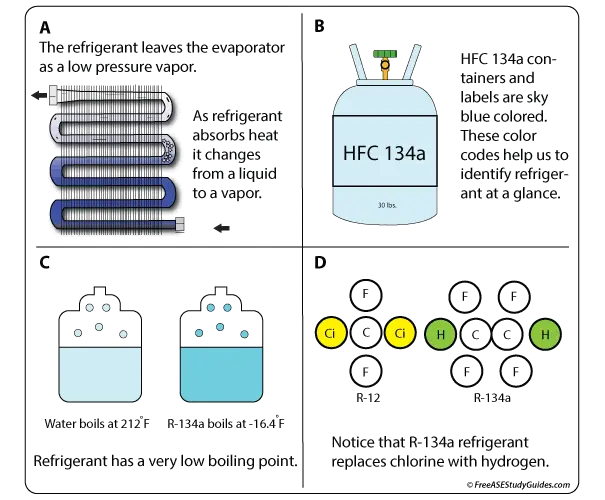
HFC-134a is simply the chemical name designation. HFC stands for Hydrofluorocarbon. This tells us that the compound is made up of hydrogen, fluorine, and carbon atoms. The "134a" specifies the arrangement and number of these atoms in the molecule.
Therefore, R134a is just a simplified way of referring to the refrigerant with the chemical name HFC-134a. Think of it like this: HFC-134a is the formal, scientific name, while R134a is the common, everyday name. They both refer to the same substance.
What is R134a/HFC-134a?
R134a, also known as HFC-134a, is a non-ozone depleting hydrofluorocarbon (HFC) refrigerant. It was widely adopted as a replacement for older refrigerants like CFC-12 (R-12), which were found to be harmful to the ozone layer.
To understand this better, imagine the Earth's atmosphere has a sunscreen layer – the ozone layer. CFCs were damaging this sunscreen, letting harmful UV rays through. R134a was developed as a more ozone-friendly alternative.
Key Properties of R134a/HFC-134a:
- Non-Ozone Depleting: Unlike its predecessors, R134a doesn't significantly deplete the ozone layer.
- Relatively Low Toxicity: It's considered to have low toxicity, making it safer for handling.
- Suitable Thermodynamic Properties: It has properties that make it effective for use in refrigeration and air conditioning systems. Think of refrigerant as the 'blood' of your AC system, carrying heat from inside to outside; R134a does this job reasonably well.
- Stable: It's chemically stable under normal operating conditions.
Applications of R134a/HFC-134a
R134a has found widespread use in various applications, primarily in refrigeration and air conditioning. Here are some of the most common uses:
- Automotive Air Conditioning: It was the standard refrigerant in car air conditioning systems for many years.
- Domestic Refrigeration: Used in refrigerators and freezers.
- Commercial Refrigeration: Found in supermarket display cases, cold storage facilities, and vending machines.
- Industrial Cooling: Used in chillers and other industrial cooling equipment.
- Air Conditioning Systems: Used in some residential and commercial air conditioning units, although it's increasingly being replaced by newer refrigerants.
Environmental Concerns and Global Warming Potential (GWP)
While R134a is non-ozone depleting, it has a significant Global Warming Potential (GWP). GWP is a measure of how much a given mass of a greenhouse gas contributes to global warming over a specific period compared to the same mass of carbon dioxide (CO2).
R134a's GWP is relatively high. This means that if it leaks into the atmosphere, it can contribute significantly to global warming. This is why there's a growing push to replace R134a with refrigerants that have lower GWPs.
Think of it like this: even though R134a doesn't directly damage the 'sunscreen' (ozone layer), it acts like a blanket trapping heat in the atmosphere, contributing to global warming.
Regulations and Phasing Out: Due to its high GWP, many countries are phasing out or restricting the use of R134a. Regulations like the European Union's F-Gas Regulation and the Kigali Amendment to the Montreal Protocol are driving the transition towards lower-GWP alternatives.
Alternatives to R134a/HFC-134a
Because of the environmental concerns associated with R134a, research and development efforts have focused on finding more environmentally friendly alternatives. Here are some of the most promising refrigerants:
HFO-1234yf
HFO-1234yf is a hydrofluoroolefin (HFO) refrigerant with a very low GWP. It's being increasingly used in automotive air conditioning systems as a direct replacement for R134a. It has a GWP that is significantly lower than R134a, making it a much more environmentally friendly option.
The "HFO" part means it contains a double bond, making it less stable in the atmosphere and therefore less likely to contribute to global warming. It breaks down faster.
R-450A and R-513A
These are blends of HFCs and HFOs designed to replace R134a in various applications, including commercial refrigeration and chillers. They offer a balance of performance and lower GWP compared to R134a.
R-290 (Propane)
R-290 is a natural refrigerant, which means it's a naturally occurring substance. It has excellent thermodynamic properties and a very low GWP. However, it's flammable, so it requires special safety precautions and is typically used in smaller, sealed systems like domestic refrigerators and small commercial units.
CO2 (R-744)
CO2 is another natural refrigerant with a very low GWP. It's being used in some commercial refrigeration and heat pump applications. While it requires systems designed to operate at higher pressures, it offers a sustainable alternative to HFCs.
Retrofitting R134a Systems
In some cases, it may be possible to retrofit existing R134a systems to use alternative refrigerants. However, this is not always straightforward and requires careful consideration.
Factors to Consider When Retrofitting:
- Compatibility: The alternative refrigerant must be compatible with the existing system components (e.g., compressor, seals, lubricants).
- Performance: The alternative refrigerant should provide similar or better cooling performance.
- Safety: Safety considerations, especially flammability, must be addressed.
- Cost: The cost of the retrofit, including refrigerant, components, and labor, should be evaluated.
It's crucial to consult with a qualified HVAC/R technician before attempting to retrofit an R134a system. They can assess the system and recommend the best course of action.
Handling R134a/HFC-134a Safely
While R134a has relatively low toxicity, it's important to handle it safely. Here are some basic safety precautions:
- Ventilation: Work in a well-ventilated area to avoid inhaling concentrated vapors.
- Personal Protective Equipment (PPE): Wear appropriate PPE, such as gloves and eye protection, to prevent skin and eye contact.
- Leak Detection: Use a refrigerant leak detector to identify and repair any leaks promptly.
- Proper Disposal: Never release refrigerant into the atmosphere. Recover and recycle or dispose of it properly according to local regulations.
- Professional Servicing: Leave refrigerant handling and system repairs to qualified HVAC/R technicians.
Conclusion
R134a and HFC-134a are indeed the same refrigerant, with "R134a" being the common name and "HFC-134a" the chemical name. While it served as a significant improvement over earlier ozone-depleting refrigerants, its high Global Warming Potential has led to its phasing out in favor of more environmentally friendly alternatives.
Understanding the properties, applications, and environmental impact of R134a, as well as the available alternatives, is crucial for making informed decisions about refrigeration and air conditioning systems. As regulations tighten and technology advances, the transition to lower-GWP refrigerants will continue to accelerate.
Whether you are a homeowner, a technician, or a business owner, staying informed about these changes is essential for protecting the environment and ensuring the long-term sustainability of refrigeration and air conditioning technologies.