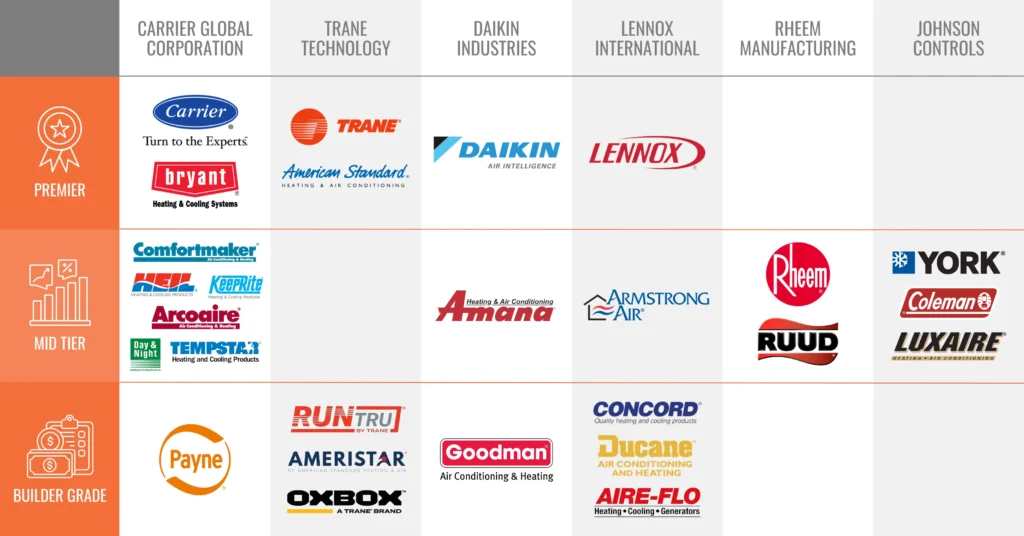
Largest Hvac Companies In The World
Imagine this: It's a sweltering summer afternoon, and your air conditioner suddenly decides to take a vacation, leaving you stranded in a stuffy, uncomfortable home. This is a common problem for homeowners, and before you call one of the largest HVAC companies in the world, there are a few things you can check yourself. This guide will walk you through some basic troubleshooting steps to potentially save you time and money.
Diagnosis: Is It Really Broken?
Before jumping to conclusions, let's make sure the system is actually malfunctioning. Start with these basic checks:
Step 1: The Thermostat
This might seem obvious, but it's the most common culprit. Make sure your thermostat is:
- Set to COOL mode: Ensure the thermostat isn't accidentally set to HEAT or OFF.
- Set to a temperature lower than the room temperature: If the room is 80°F, set the thermostat to 75°F or lower.
- Powered on: Check the batteries. A low or dead battery can prevent the thermostat from communicating with the AC unit. Replace the batteries, wait a few minutes, and see if the AC kicks on.
- Cleaned: Dust and debris can sometimes interfere with the thermostat's sensors. Gently wipe the thermostat with a clean, dry cloth.
Step 2: The Circuit Breaker
Your AC unit requires a significant amount of power. A tripped circuit breaker is a frequent cause of AC failure. Here's what to do:
- Locate your electrical panel: Usually found in the basement, garage, or utility room.
- Identify the AC breaker: It's usually labeled "AC," "Air Conditioner," or something similar.
- Check the breaker: If it's in the "OFF" or "Tripped" position (usually in the middle), flip it completely to the "OFF" position, then back to the "ON" position. This resets the breaker.
- Wait and listen: Give the AC unit a few minutes to power back on.
Important: If the breaker trips again immediately, do not keep resetting it. This indicates a more serious electrical problem that requires professional attention.
Step 3: The Outdoor Unit (Condenser)
The outdoor unit, often called the condenser, is responsible for releasing heat. Inspect it for these issues:
- Check for obstructions: Make sure there are no bushes, vines, or other debris blocking airflow around the unit. Clear away any obstructions at least two feet around the unit.
- Inspect the fan: Ensure the fan blades are not damaged or blocked. Remove any leaves, twigs, or other debris that might be preventing the fan from spinning freely.
- Listen for unusual noises: Grinding, squealing, or rattling sounds can indicate a mechanical problem.
Step 4: The Air Filter
A dirty air filter is a very common cause of AC problems. It restricts airflow, forcing the system to work harder and potentially causing it to overheat and shut down.
- Locate the air filter: Usually found in the return air vent inside your home or in the air handler unit.
- Inspect the filter: If it's visibly dirty, dusty, or clogged, it needs to be replaced.
- Replace the filter: Use the correct size filter, as indicated on the filter frame. Replace your air filter every 1-3 months, depending on usage and air quality.
DIY Fixes: What You Can Handle
If you've gone through the diagnostic steps and identified a simple issue, here are some basic DIY fixes you can try:
Fix 1: Clearing Obstructions Around the Outdoor Unit
What you'll need: Gardening gloves, pruning shears (if necessary).
Steps:
- Put on your gardening gloves to protect your hands.
- Carefully remove any bushes, vines, weeds, or other vegetation that are growing too close to the outdoor unit. Use pruning shears to trim back branches if necessary.
- Clear away any debris, such as leaves, twigs, or trash, that may be blocking airflow around the unit.
- Ensure there is at least two feet of clear space around the entire unit.
Fix 2: Cleaning the Outdoor Unit's Fins (Carefully!)
What you'll need: Garden hose with a gentle spray nozzle.
Steps:
- Turn off the power to the AC unit at the breaker. Safety first!
- Carefully inspect the fins on the outside of the unit. These fins help to dissipate heat. They can become clogged with dirt and debris over time.
- Using a garden hose with a gentle spray nozzle, carefully rinse the fins from the inside out. Avoid using a high-pressure nozzle, as this can damage the delicate fins.
- Allow the unit to dry completely before turning the power back on at the breaker.
Fix 3: Replacing the Air Filter
What you'll need: New air filter of the correct size.
Steps:
- Locate the air filter compartment. This is usually in the return air vent inside your home or in the air handler unit.
- Remove the old air filter. Note the direction of the airflow arrow on the filter frame.
- Insert the new air filter, making sure the airflow arrow is pointing in the correct direction.
- Close the filter compartment.
When to Call the Professionals (The Largest HVAC Companies in the World – or Your Local Expert)
While some issues can be resolved with simple DIY fixes, there are many situations where it's best to call a qualified HVAC technician. Trying to fix complex problems yourself can be dangerous and could potentially void your warranty. Here are some red flags that warrant professional intervention:
- The breaker trips repeatedly: This indicates a serious electrical problem that needs to be addressed by a qualified electrician or HVAC technician.
- You hear unusual noises: Grinding, squealing, hissing, or rattling sounds from the AC unit can indicate a mechanical failure or refrigerant leak.
- The unit is leaking refrigerant: Refrigerant is a hazardous substance, and a leak can be harmful to your health and the environment.
- The unit is not cooling properly, even after cleaning the filter and clearing obstructions: This could indicate a problem with the compressor, evaporator coil, or other internal components.
- You suspect a refrigerant leak: Look for signs such as ice buildup on the refrigerant lines or a sweet, oily smell near the unit.
- You are uncomfortable working with electrical components or refrigerant: It's always best to err on the side of caution and call a professional if you're unsure about what you're doing.
- Your AC unit is old: Older units become less efficient and require more frequent repairs. Consider replacing your unit with a newer, more energy-efficient model if it's nearing the end of its lifespan.
Choosing a Professional: When selecting an HVAC company, consider the following factors:
- Licensing and insurance: Ensure the company is properly licensed and insured.
- Experience and reputation: Look for a company with a good track record and positive customer reviews.
- Certifications: Look for technicians who are certified by organizations such as NATE (North American Technician Excellence).
- Warranty: Make sure the company offers a warranty on their work.
- Price: Get quotes from several companies before making a decision. Don't always go with the cheapest option, as quality and reliability are important factors to consider.
Preventative Maintenance: Avoiding Future Problems
The best way to avoid AC problems is to perform regular preventative maintenance. Here are some tips:
- Change your air filter regularly: As mentioned earlier, this is one of the most important things you can do to keep your AC unit running efficiently.
- Schedule annual maintenance: Have a qualified HVAC technician inspect your unit annually to identify and address potential problems before they become major issues.
- Keep the outdoor unit clean: Clear away any debris that may be blocking airflow around the unit.
- Consider a smart thermostat: Smart thermostats can help you optimize your AC usage and save energy.
By following these tips, you can keep your AC unit running smoothly and efficiently, and avoid the need to call one of the largest HVAC companies in the world for simple problems. Remember, a little preventative maintenance can go a long way in extending the life of your AC unit and keeping your home comfortable all summer long.
Disclaimer: This guide provides general troubleshooting advice. Always consult with a qualified HVAC technician for specific problems or concerns. Working with electrical components and refrigerant can be dangerous, so proceed with caution and prioritize safety.