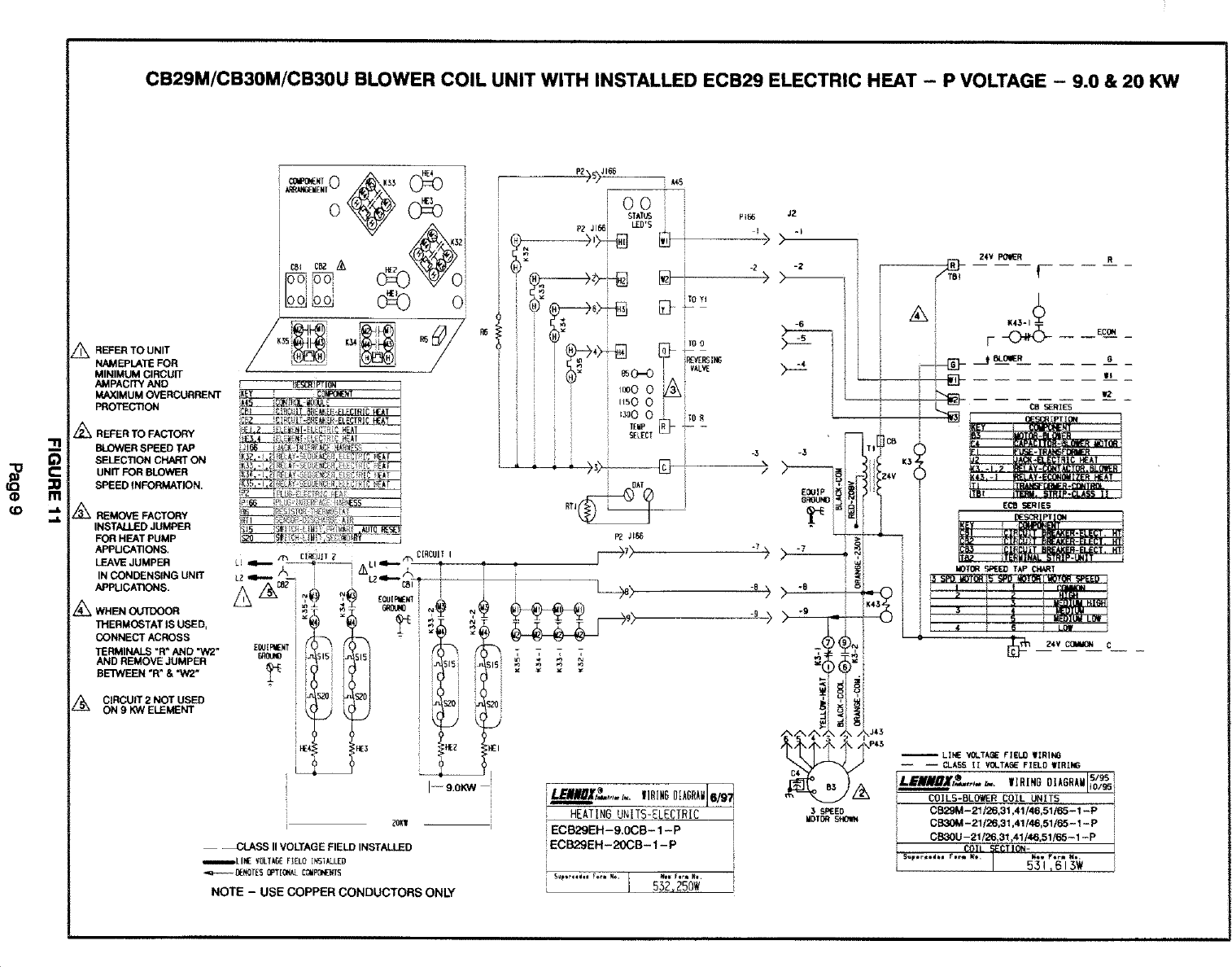
Lennox Furnace Wiring Diagram

Frequently Asked Questions about Lennox Furnace Wiring Diagrams
Understanding the wiring in your Lennox furnace can seem daunting, but it's crucial for troubleshooting and performing basic maintenance. This FAQ addresses common questions about Lennox furnace wiring diagrams to help you navigate the system with confidence. Remember that working with electrical components can be dangerous. Always turn off the power to your furnace at the breaker box before working on it. If you are not comfortable working with electricity, it is best to consult a qualified HVAC technician.
Question 1: What exactly is a Lennox Furnace Wiring Diagram and why do I need one?
A Lennox furnace wiring diagram is a visual representation of all the electrical components within your furnace and how they are interconnected. Think of it as a roadmap for the electrical system. It shows you:
- Each component (e.g., transformer, blower motor, igniter, gas valve, control board).
- The wires connecting these components.
- The wire colors, which are critical for identification.
- The voltage and amperage ratings for specific components and circuits.
You might need a wiring diagram for several reasons:
- Troubleshooting: When your furnace isn't working correctly, the diagram helps you trace the electrical circuit to identify the faulty component. For instance, if the igniter isn't firing, you can use the diagram to check the wiring and voltage to the igniter circuit.
- Repairing: If a wire is damaged or disconnected, the diagram shows you where it should be reconnected.
- Replacing Components: When replacing a part like the control board or blower motor, the diagram ensures you wire the new component correctly. Incorrect wiring can damage the new part or the entire furnace.
- Installing Add-ons: If you're adding features like a smart thermostat or a whole-house humidifier, you'll need the diagram to understand how to integrate them into the existing electrical system.
Without a diagram, troubleshooting electrical problems becomes significantly more difficult and potentially dangerous. Always consult the wiring diagram before making any electrical connections or modifications to your furnace.
Question 2: Where can I find the wiring diagram for my specific Lennox furnace model?
Finding the correct wiring diagram is crucial because wiring can vary significantly between different Lennox furnace models. Here are the most common places to look:
- Inside the Furnace Control Panel: Many Lennox furnaces have the wiring diagram printed on a sticker or folded sheet of paper and attached to the inside of the control panel door. This is usually the first place you should look. Always turn off the power before opening the control panel.
- Furnace Installation and Operation Manual: The manual that came with your furnace often contains the wiring diagram. Check the sections on troubleshooting or maintenance.
- Lennox Website: You can often find the wiring diagram on the Lennox website by searching for your specific furnace model number. The model number is usually located on a data plate inside the furnace. You'll likely need to create an account to access technical documents.
- HVAC Technician: If you can't find the diagram yourself, a qualified HVAC technician can usually provide it or point you in the right direction. They often have access to a database of wiring diagrams.
- Online HVAC Forums and Communities: Sometimes, other users on HVAC forums have scanned or uploaded wiring diagrams for specific models. However, always verify the accuracy of any diagram found online with other sources before using it.
When searching for the diagram online, be as specific as possible with your model number. For example, instead of just searching for "Lennox furnace wiring diagram," search for "Lennox G61MPV-36B-110 wiring diagram." This will greatly increase your chances of finding the correct diagram for your furnace.
Question 3: What are the key components identified in a typical Lennox Furnace Wiring Diagram?
A Lennox furnace wiring diagram will typically identify the following key components. Understanding what these components do will help you interpret the diagram.
- Transformer: This reduces the incoming line voltage (usually 120V AC) to a lower voltage (typically 24V AC) required for the control circuits.
- Control Board: This is the "brain" of the furnace. It controls the sequencing of operations, monitors safety switches, and communicates with the thermostat.
- Thermostat: Sends signals to the control board to initiate heating or cooling cycles.
- Blower Motor: Circulates air throughout your home. It can have multiple speeds, controlled by different wiring configurations.
- Inducer Motor: A small motor that vents combustion gases from the furnace. It's a crucial safety component.
- Gas Valve: Controls the flow of gas to the burners.
- Igniter (Hot Surface Igniter or Spark Igniter): Ignites the gas to produce a flame.
- Flame Sensor: Detects the presence of a flame. If no flame is detected, it shuts off the gas valve for safety.
- Limit Switches: Safety devices that shut down the furnace if it overheats.
- Pressure Switch: Detects proper draft in the vent system. If the draft is insufficient, it prevents the furnace from operating.
- Rollout Switch: A safety switch that detects flames rolling out of the combustion chamber.
- Capacitors: Used to start and run motors, like the blower motor and inducer motor.
- Wiring and Connectors: The wires themselves, and the connectors used to join them together. Wire colors are significant for identifying circuits.
The diagram will show how these components are connected using wires of different colors. Pay close attention to the wire colors, as they are standardized and will help you trace circuits. Also, learn the symbols used for each component. There are standard symbols for resistors, capacitors, motors, etc., that are commonly used across most electrical diagrams.
Question 4: How do I interpret the wire colors and symbols used in a Lennox Furnace Wiring Diagram?
Understanding the wire colors and symbols is essential for accurately using a wiring diagram.
Wire Colors:
- Red: Typically indicates hot wires or power supply.
- Black: Often used for hot wires as well, but can also be used for neutral in some cases.
- White: Typically used for neutral wires.
- Green or Bare Copper: Always used for ground wires.
- Yellow, Blue, Orange, Brown: These are commonly used for control wires, such as those connecting the thermostat to the control board, or for different motor speeds. The specific function of each color will vary depending on the furnace model, so always refer to the diagram key.
Symbols:
Wiring diagrams use standard electrical symbols to represent components. Some common symbols include:
- Circle with an "M": Motor
- Rectangle with diagonal lines: Resistor
- Two parallel lines: Capacitor
- Coil symbol: Inductor or transformer winding
- Diamond with a line through it: Thermostat
- Switch symbol: Switch (limit switch, pressure switch, etc.)
- Ground symbol: Ground connection
- Fuse symbol: Fuse
- Diode symbol: Diode
Most wiring diagrams will have a legend or key that explains the symbols and wire color codes used in that specific diagram. Always refer to this key to ensure you are interpreting the diagram correctly. Many diagrams will also label the voltage of different circuits (e.g., 120V, 24V).
Question 5: What are some common issues I can diagnose with a Lennox Furnace Wiring Diagram?
A wiring diagram can help you diagnose a variety of furnace problems. Here are a few examples:
- Furnace won't turn on: Use the diagram to trace the power supply from the breaker to the transformer and then to the control board. Check for blown fuses, tripped breakers, or loose connections. Always use a multimeter to check for voltage at different points in the circuit.
- Blower motor not working: Use the diagram to check the wiring to the blower motor and its capacitor. A faulty capacitor is a common cause of blower motor failure. Check the motor windings for continuity.
- Igniter not working: Use the diagram to trace the igniter circuit back to the control board. Check for voltage at the igniter during the ignition sequence. A broken igniter or a faulty control board can be the cause.
- Flame sensor not working: Use the diagram to locate the flame sensor and its wiring. A dirty flame sensor is a common problem. Clean it with fine steel wool. If the wiring is intact and the sensor is clean, the sensor itself may be faulty.
- Furnace cycles on and off rapidly (short cycling): This could be due to a faulty limit switch. Use the diagram to locate the limit switches and check their continuity. Also, ensure that the furnace is not overheating due to restricted airflow (dirty filter, blocked vents).
When troubleshooting, always work systematically and methodically. Start by checking the simplest things first, like the power supply and fuses. Use your wiring diagram as a guide to trace the circuit and identify the potential causes of the problem.
Question 6: What safety precautions should I take when working with a Lennox Furnace Wiring Diagram and the furnace itself?
Working with electricity can be dangerous. Always prioritize safety. Here are some essential precautions:
- Turn off the power: The most important safety precaution is to turn off the power to the furnace at the breaker box before working on it. Verify that the power is off using a non-contact voltage tester.
- Work in a well-lit area: Good visibility is crucial for avoiding mistakes.
- Use insulated tools: Use tools with insulated handles to protect yourself from electric shock.
- Wear safety glasses: Protect your eyes from debris and sparks.
- Avoid working in wet conditions: Water and electricity are a dangerous combination.
- Don't work alone: It's always a good idea to have someone else present in case of an emergency.
- Double-check your work: Before turning the power back on, carefully review your wiring to ensure that everything is connected correctly.
- Know your limits: If you are not comfortable working with electricity, it is best to consult a qualified HVAC technician.
- Discharge Capacitors: Before touching any components on the control board, especially capacitors, discharge them using a resistor. Capacitors can store a dangerous electrical charge even when the power is off.
- Properly Ground: Ensure the furnace is properly grounded to prevent electrical shock.
Ignoring safety precautions can lead to serious injury or even death. If you are unsure about any aspect of the work, consult a qualified HVAC technician. A professional can diagnose the problem accurately and perform the repairs safely and efficiently.
Question 7: Can I modify the wiring of my Lennox furnace to add features or customize its operation?
While it might be tempting to modify your furnace wiring to add features or customize its operation, it's generally not recommended unless you have extensive knowledge of HVAC systems and electrical wiring. Modifying the wiring can:
- Void the warranty: Unauthorized modifications can void your furnace's warranty.
- Create safety hazards: Incorrect wiring can lead to electrical shock, fire, or damage to the furnace.
- Compromise performance: Modifying the wiring can disrupt the intended operation of the furnace, leading to reduced efficiency or even complete failure.
- Violate building codes: Certain modifications may violate local building codes.
If you want to add features like a smart thermostat, whole-house humidifier, or air purifier, consult with a qualified HVAC technician. They can assess your furnace and recommend compatible devices and wiring configurations that meet safety standards and building codes. They can also ensure that the modifications are done correctly and without compromising the furnace's performance or warranty.
It's always better to err on the side of caution and consult with a professional rather than attempting to modify the wiring yourself. The potential risks far outweigh the benefits, and a qualified technician can ensure that any modifications are done safely and correctly.