Longest Stair Stringer

Frequently Asked Questions About Longest Stair Stringers
Planning a staircase? One of the most critical components is the stringer, the structural backbone that supports the treads and risers. When it comes to longer staircases, understanding the limitations and best practices for longest stair stringers is essential for safety and longevity. This FAQ addresses common questions to help you make informed decisions.
Question 1: What is the maximum length a stair stringer can be before needing support?
This is a crucial question because exceeding the recommended unsupported span can compromise the staircase's integrity. Unfortunately, there's no single, universally applicable "maximum length" due to several factors:
- Material: Wood, steel, and concrete stringers have vastly different load-bearing capacities. Wood, the most common material for residential staircases, has a shorter maximum span than steel.
- Stringer Dimensions: A thicker, wider stringer can span a greater distance than a thinner, narrower one. Consider the actual dimensions of the lumber being used.
- Load Requirements: Commercial staircases designed for heavy traffic need more support than residential stairs used by a small family.
- Building Codes: Local building codes often specify maximum unsupported spans for stair stringers. Always check your local building codes! They will supersede any general guidelines.
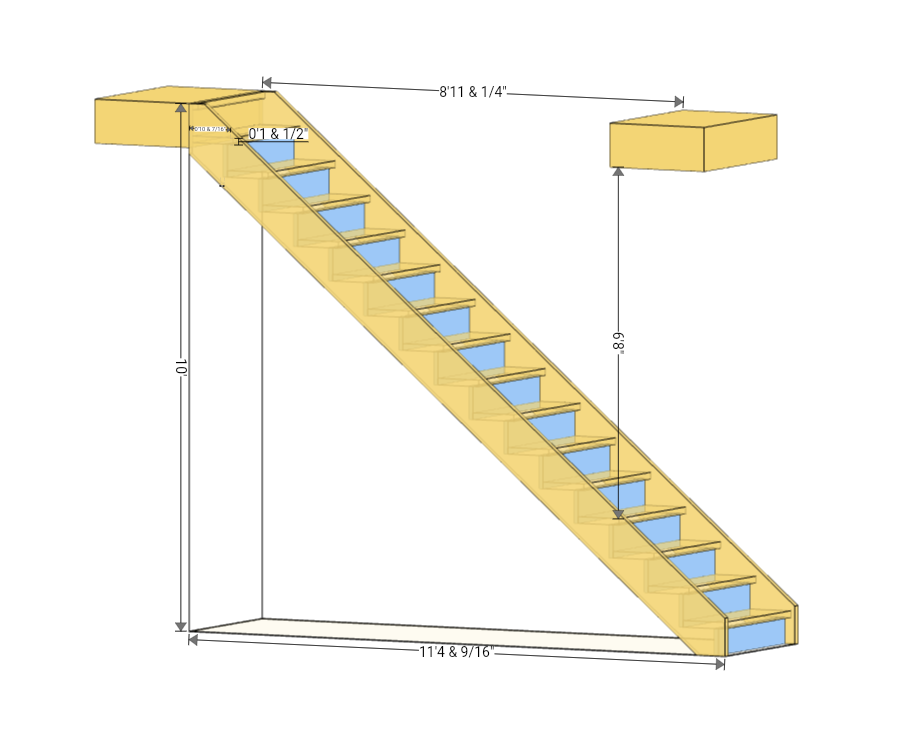
As a general guideline, for typical residential wood staircases with properly sized stringers (often 2x12 lumber), an unsupported span of 8-10 feet is often considered a maximum. However, this is a very rough estimate. For longer runs, intermediate support is absolutely necessary. For steel stringers, the span can be considerably longer, and engineering calculations are always required. For concrete, the span is usually dictated by the design to be very long, as the concrete is very strong and heavy.
Crucially, consult with a qualified structural engineer or experienced carpenter to determine the appropriate span for your specific staircase project. They can perform calculations based on your specific materials, dimensions, and load requirements.
Question 2: What are the best ways to support a long stair stringer?
When your staircase exceeds the maximum unsupported span, you'll need to provide additional support. Here are several common methods:
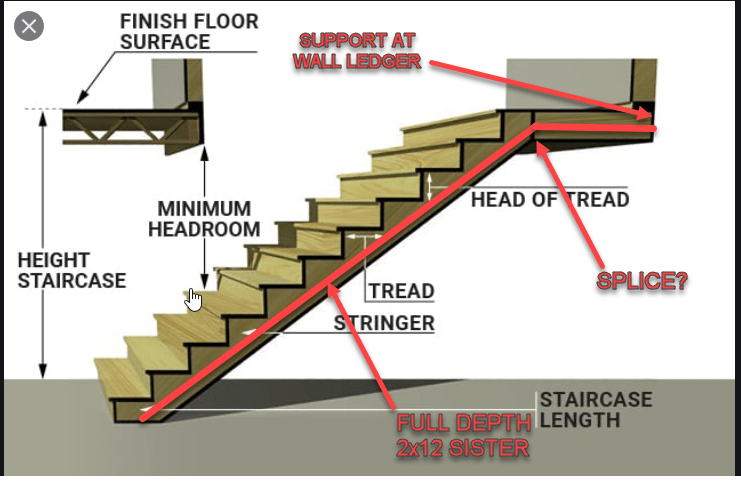
- Center Support Beam: This involves installing a beam (usually wood or steel) directly underneath the stringer, running parallel to it. This provides continuous support along the length of the stringer. The support beam rests on posts anchored to the floor and, if necessary, to the ceiling below.
- Mid-Span Posts: Similar to the center support beam, but instead of a continuous beam, you use strategically placed posts to support the stringer at intervals. The spacing of these posts depends on the load and stringer dimensions.
- Wall Attachment: If the stringer runs alongside a wall, you can attach it to the wall using appropriate fasteners. This transfers some of the load to the wall structure. However, the wall itself must be structurally sound enough to handle the additional load. Do not assume that all walls can support a staircase stringer.
- Landing Platforms: Incorporating landing platforms into the staircase design can break up long runs and provide support for the stringers. Each landing essentially acts as an intermediate support point.
The best support method depends on the specific design of your staircase and the surrounding structure. A structural engineer can help you determine the most effective and structurally sound option. Improper support can lead to sagging, bouncing, and even structural failure of the staircase.
Question 3: What type of wood is best for a long stair stringer?
The choice of wood for stair stringers is crucial for their strength, durability, and resistance to warping or splitting. Here are some of the best wood options:
- Southern Yellow Pine: This is a common and relatively affordable option. It's known for its strength and availability. However, it can be more prone to knots and imperfections. Choose a higher grade (e.g., #1 or select structural) for stringers.
- Douglas Fir: Another excellent choice, Douglas Fir is strong, stable, and relatively easy to work with. It's also more resistant to rot and decay than some other softwoods.
- Oak: A hardwood option that offers exceptional strength and durability. Oak is more expensive than softwoods but provides a more robust and long-lasting stringer. Red oak is a common and economical choice.
- Maple: Another hardwood option, maple is known for its hardness and smooth grain. It's a good choice for stairs that will be heavily used.
- Engineered Lumber (LVL, PSL): Laminated Veneer Lumber (LVL) and Parallel Strand Lumber (PSL) are engineered wood products that offer superior strength and stability compared to solid lumber. They are less prone to warping and splitting and can span longer distances with less deflection. These are highly recommended for long stair stringers.
When selecting wood, consider the following:
- Grade: Choose a grade appropriate for structural applications (e.g., #1, select structural, or better).
- Moisture Content: Ensure the wood is properly dried to minimize warping and shrinking.
- Defects: Avoid wood with excessive knots, splits, or other defects that could weaken the stringer.
For very long spans or high-load applications, engineered lumber is generally the preferred choice due to its superior strength and stability. Always consult with a lumber professional to determine the best wood for your specific needs.
Question 4: How do I calculate the correct rise and run for my staircase with a long stringer?
Accurate rise and run calculations are essential for a safe and comfortable staircase. Here's a simplified overview of the process:
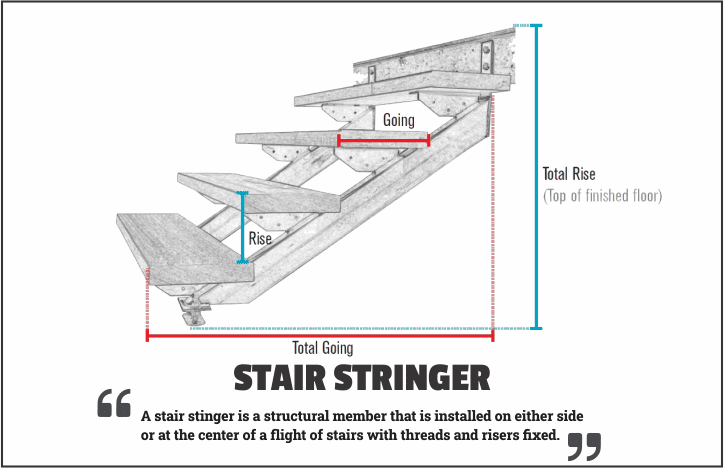
- Determine Total Rise: Measure the vertical distance from the finished floor of the lower level to the finished floor of the upper level. This is your total rise.
- Determine Desired Riser Height: The riser height is the vertical distance between each step. Building codes typically specify a range for riser height (e.g., 7-8 inches). Choose a riser height within this range that feels comfortable and results in a whole number of steps.
- Calculate Number of Risers: Divide the total rise by the desired riser height. Round up to the nearest whole number. This is the number of risers you'll need.
- Calculate Actual Riser Height: Divide the total rise by the number of risers. This will give you the precise riser height for each step.
- Determine Tread Depth (Run): The tread depth is the horizontal distance of each step. Building codes also typically specify a minimum tread depth (e.g., 10-11 inches).
- Consider Nosing: The nosing is the overhang of the tread beyond the riser. Include the nosing in your tread depth measurement.
- Calculate Total Run: Multiply the tread depth by the number of treads (which is one less than the number of risers). This is the total horizontal distance the staircase will cover.
For a long staircase, it's especially important to maintain consistent rise and run dimensions throughout the entire flight. Even small variations can become noticeable and create tripping hazards. Use a stair gauge or stair calculator to accurately mark the rise and run on the stringers. Double-check your measurements at each step to ensure consistency.
If your staircase includes landings, break up the total rise and run into sections for each flight of stairs. Calculate the rise and run separately for each flight, ensuring that the sum of the rises equals the total rise and the sum of the runs accounts for the full horizontal distance.
Question 5: Can I use multiple stringers for a wider staircase to avoid extremely long single stringers?
Yes, using multiple stringers is a common and often preferred method for wider staircases. Instead of relying on a single, very wide stringer, you can distribute the load across multiple stringers spaced evenly beneath the treads.
Here are the benefits of using multiple stringers:
- Increased Strength and Stability: Distributing the load across multiple stringers provides greater overall strength and stability compared to a single stringer of the same total width.
- Reduced Deflection: Multiple stringers are less likely to deflect or sag under load than a single stringer.
- Easier Handling and Installation: Smaller, individual stringers are easier to handle and install than a large, heavy stringer.
- Better Material Utilization: You can often use standard lumber sizes more efficiently by using multiple stringers.
When using multiple stringers, ensure that they are:
- Properly Spaced: Space the stringers evenly across the width of the staircase. The spacing should be determined based on the load requirements, tread material, and stringer dimensions.
- Level and Aligned: Ensure that all stringers are perfectly level and aligned with each other. This is critical for a stable and comfortable staircase.
- Securely Fastened: Attach the treads and risers securely to each stringer using appropriate fasteners (e.g., screws, nails, construction adhesive).
For wider staircases, it's common to use three or even four stringers. A structural engineer or experienced carpenter can help you determine the optimal number and spacing of stringers for your specific project.
Question 6: How do I prevent my long stair stringer from warping or twisting over time?
Warping and twisting are common concerns with wood stair stringers, especially in environments with fluctuating humidity levels. Here are some preventative measures:
- Use Kiln-Dried Lumber: Kiln-dried lumber has been dried to a specific moisture content, which reduces the likelihood of warping and shrinking.
- Acclimate the Lumber: Before installing the stringers, allow the lumber to acclimate to the environment in which it will be used for several days. This allows the wood to adjust to the local humidity levels.
- Seal the Wood: Apply a sealant or finish to the stringers to protect them from moisture. This helps to prevent the wood from absorbing moisture and warping.
- Proper Storage: Store the lumber properly before installation. Keep it flat and supported to prevent it from bending or twisting.
- Adequate Ventilation: Ensure that the area around the staircase is well-ventilated. This helps to prevent moisture buildup.
- Proper Installation: Install the stringers correctly, ensuring that they are securely fastened and properly supported. This helps to prevent them from moving and warping.
- Consider Engineered Lumber: As mentioned before, engineered lumber like LVL or PSL is much less prone to warping and twisting than solid lumber.
Regularly inspect your stair stringers for signs of warping or twisting. If you notice any problems, address them promptly to prevent further damage. This might involve adding additional support, adjusting fasteners, or replacing damaged sections of the stringer.
Question 7: What are the building code requirements for stair stringers and their support?
Building codes vary by location, but they all address stair stringers and their support to ensure safety and structural integrity. Here are some common code requirements:
- Maximum Riser Height and Minimum Tread Depth: Codes specify limits on riser height and tread depth to ensure comfortable and safe use.
- Minimum Stringer Size: Codes may specify a minimum size for stair stringers based on the span and load requirements.
- Maximum Unsupported Span: As discussed earlier, codes often limit the maximum unsupported span for stair stringers.
- Handrail Requirements: Codes specify requirements for handrails, including height, grip size, and continuity.
- Guardrail Requirements: Codes specify requirements for guardrails on open sides of staircases to prevent falls.
- Load Requirements: Codes specify the minimum load that staircases must be able to support.
- Fire Resistance: In some cases, codes may require staircases to have a certain level of fire resistance.
It is essential to consult your local building codes and obtain any necessary permits before starting your staircase project. Building code officials can provide guidance on specific requirements and ensure that your staircase meets all applicable standards. Failure to comply with building codes can result in costly rework and potential safety hazards. Ignoring codes can also have legal ramifications. Remember that the International Residential Code (IRC) is the standard reference in the US, but each jurisdiction modifies it.
Always prioritize safety and consult with qualified professionals to ensure that your long stair stringers are properly designed, supported, and installed. This will result in a staircase that is not only beautiful but also safe and durable for years to come.