Major Components Of An Air Conditioner
Air conditioning systems are complex machines, but understanding their core components can empower you to troubleshoot minor issues, communicate effectively with HVAC technicians, and make informed decisions about maintenance or replacement. This guide breaks down the major parts of an air conditioner in a clear and accessible way.
The Refrigerant: The Heat Carrier
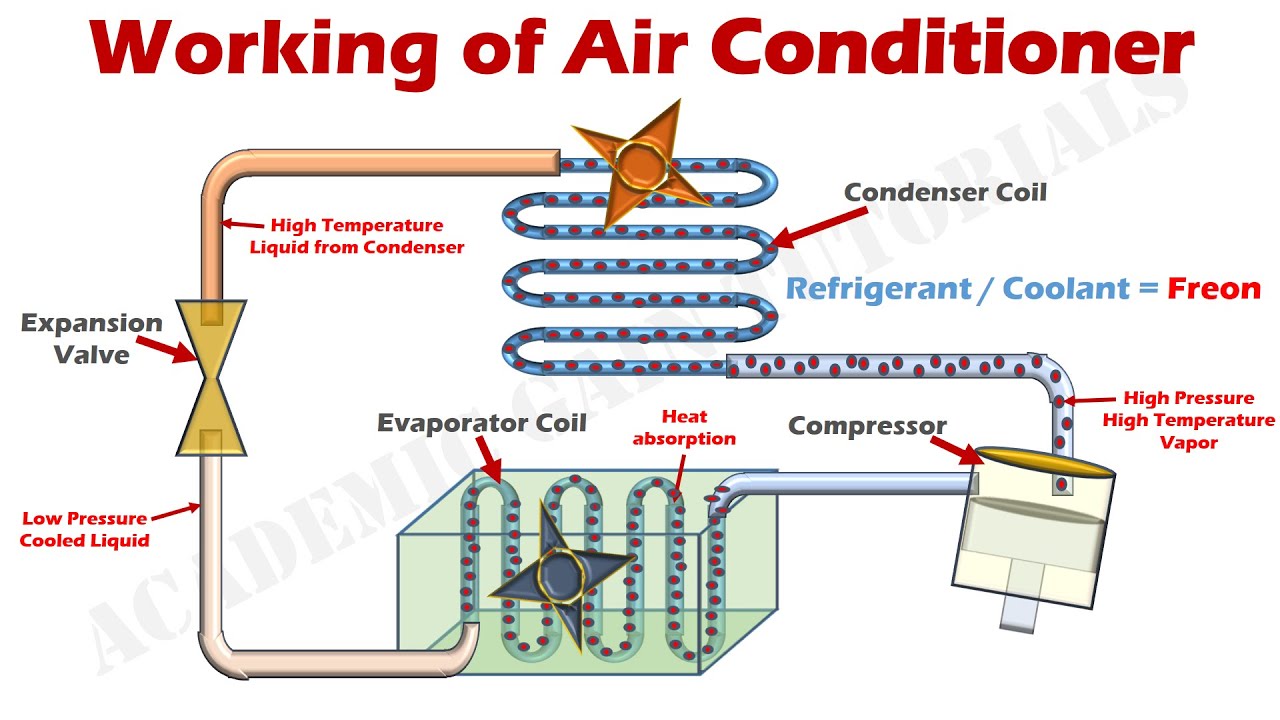
The refrigerant is arguably the most important component. Think of refrigerant as the "blood" of your AC system, carrying heat from inside your home to the outside. It's a special chemical substance that easily changes between liquid and gas states, absorbing heat during evaporation and releasing heat during condensation.
Modern AC systems use refrigerants like R-410A, which are designed to be less harmful to the ozone layer than older refrigerants. Older systems may still use R-22, which is being phased out.
How it works: The refrigerant cycles through the system, absorbing heat inside your home (making it cooler) and then releasing that heat outside.
The Compressor: The Heart of the System
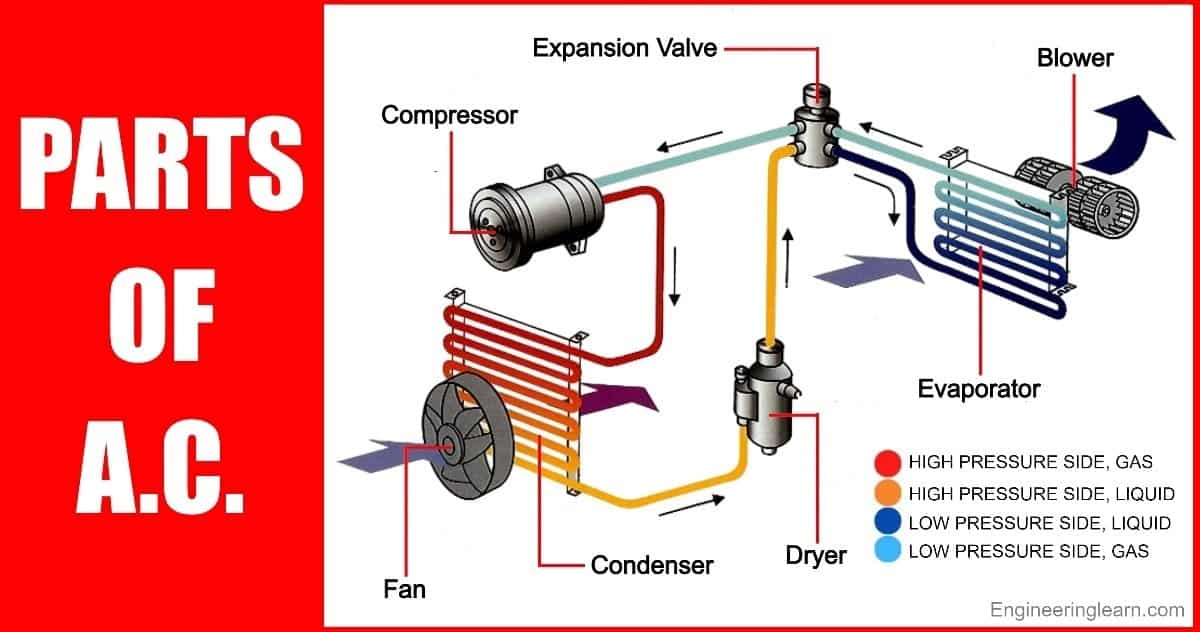
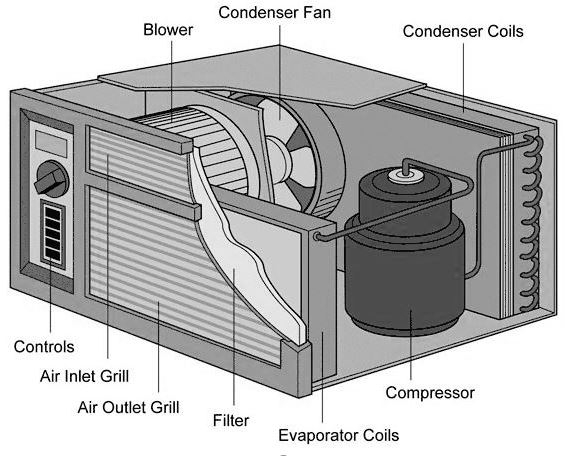
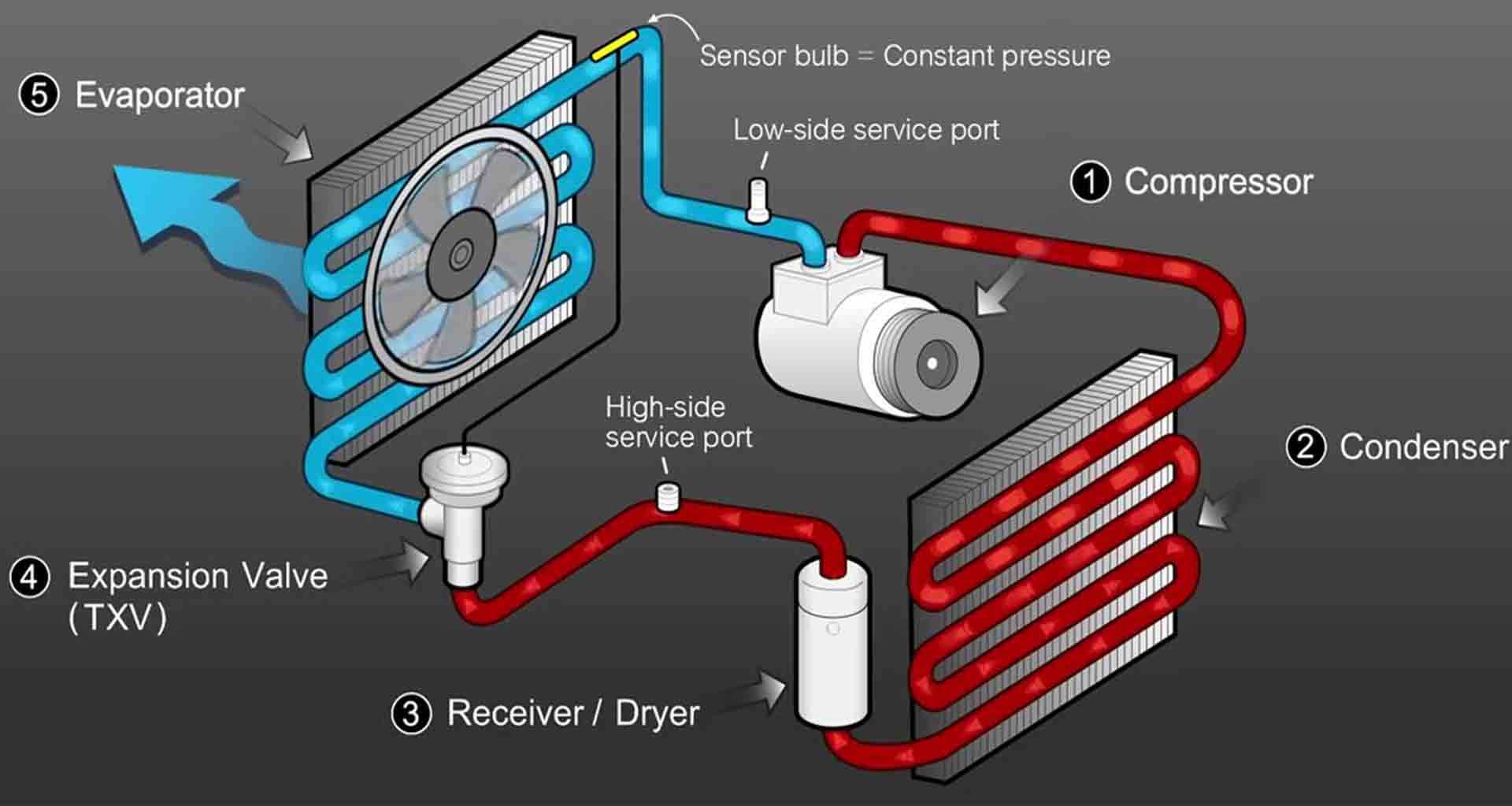
The compressor is the "heart" of the AC system. It's a pump that circulates the refrigerant and increases its pressure and temperature. This pressurized refrigerant is essential for the system to efficiently transfer heat.
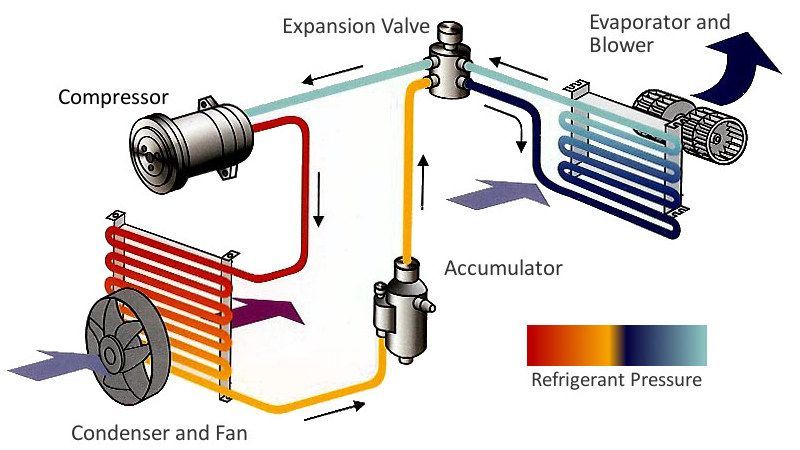
Function: The compressor receives low-pressure, low-temperature refrigerant gas from the evaporator. It then compresses this gas, increasing its pressure and temperature. This hot, high-pressure gas is then sent to the condenser.
A faulty compressor can lead to a complete AC failure, and compressor replacement is often a significant expense. Recognizing signs of compressor failure, such as unusual noises or reduced cooling capacity, is crucial.
The Condenser: Releasing Heat Outside
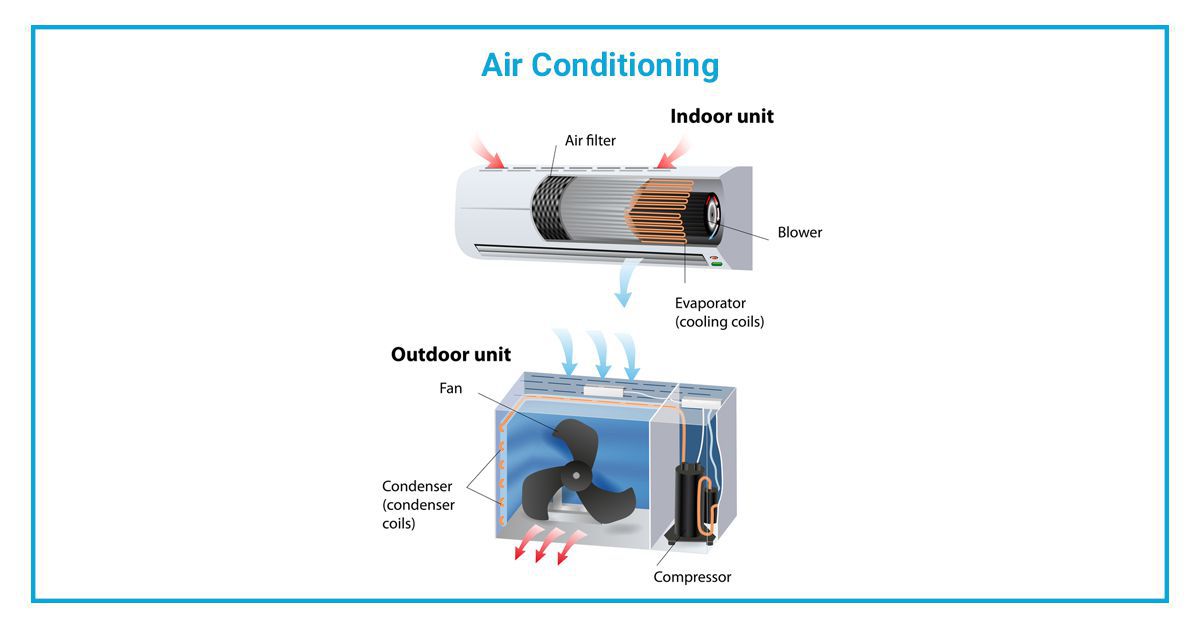
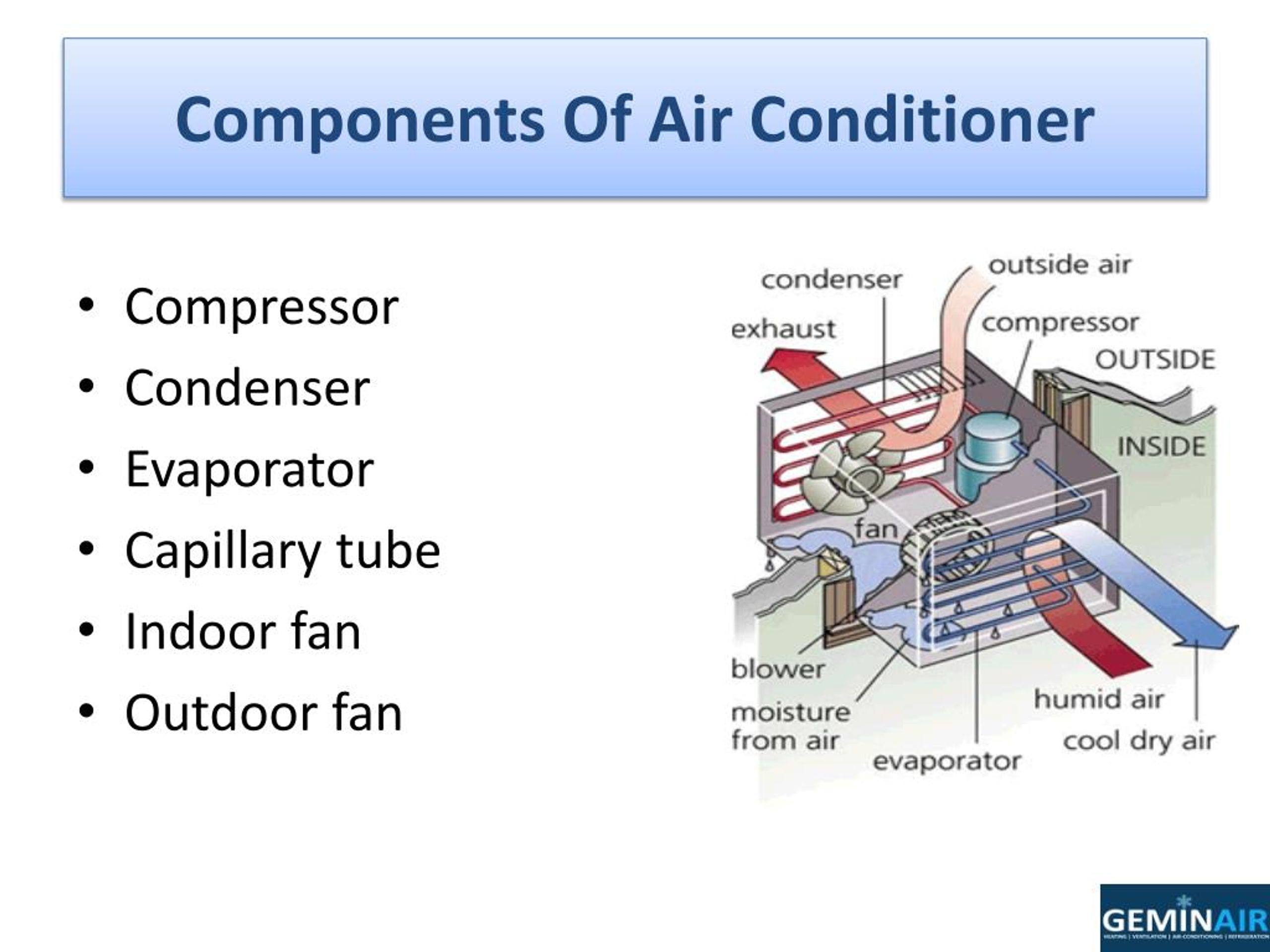
The condenser is usually located in the outdoor unit. Its primary job is to release the heat absorbed by the refrigerant inside your home. This is done through a process called condensation, where the hot, high-pressure refrigerant gas is cooled and converted back into a liquid.
Components of the condenser:
- Condenser coil: A series of tubes with fins that dissipate heat.
- Condenser fan: Blows air across the condenser coil to help cool the refrigerant.
How it works: The hot, high-pressure refrigerant gas enters the condenser coil. The condenser fan blows air across the coil, cooling the refrigerant. As the refrigerant cools, it condenses back into a high-pressure liquid, releasing heat into the surrounding air.
Keeping the condenser coil clean and free of debris is vital for efficient operation. Blocked coils restrict airflow, reducing the AC's cooling capacity and increasing energy consumption.
The Evaporator: Absorbing Heat Inside
The evaporator is typically located inside the indoor unit, usually within the air handler. Its function is to absorb heat from the air circulating through your home, cooling the air in the process. This is achieved through the evaporation of the refrigerant.
Components of the evaporator:
- Evaporator coil: A series of tubes with fins that absorb heat from the air.
- Expansion valve (or metering device): Controls the flow of refrigerant into the evaporator coil.
How it works: Low-pressure, low-temperature liquid refrigerant flows into the evaporator coil. As warm air from your home blows across the coil, the refrigerant absorbs heat and evaporates into a gas. This process cools the air, which is then circulated back into your home.
A dirty evaporator coil can significantly reduce cooling efficiency and even lead to ice buildup. Regular filter changes and professional cleaning can help prevent these issues.
The Expansion Valve (or Metering Device): Controlling Refrigerant Flow
The expansion valve, also known as a metering device, is a critical component located between the condenser and the evaporator. Its purpose is to regulate the flow of refrigerant into the evaporator coil, ensuring that the refrigerant enters at the correct pressure and temperature for optimal heat absorption.
Types of expansion valves:
- Thermostatic Expansion Valve (TXV): Automatically adjusts the refrigerant flow based on the evaporator's superheat (the temperature of the refrigerant gas leaving the evaporator).
- Fixed Orifice: A simple, non-adjustable valve with a fixed opening size.
- Electronic Expansion Valve (EEV): Uses electronic controls to precisely regulate refrigerant flow for maximum efficiency.
Function: The expansion valve reduces the pressure of the liquid refrigerant coming from the condenser, turning it into a low-pressure, low-temperature mixture of liquid and gas. This mixture is then ready to absorb heat in the evaporator.
A malfunctioning expansion valve can cause either overfeeding (too much refrigerant) or underfeeding (too little refrigerant) of the evaporator, both of which can negatively impact cooling performance.
The Air Handler: Circulating Air
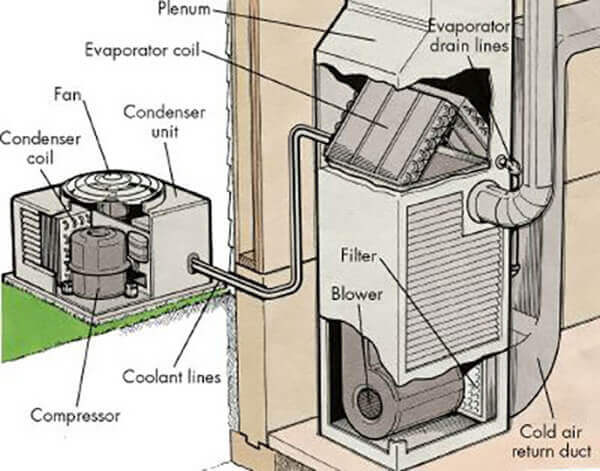
The air handler is the indoor unit that circulates air throughout your home. It houses the evaporator coil, a blower fan, and air filters.
Components of the air handler:
- Blower fan: Pulls air from your home, passes it over the evaporator coil, and then pushes the cooled air back into your home through the ductwork.
- Air filter: Removes dust, pollen, and other particles from the air before it circulates through the system.
- Evaporator coil: (As described above) Absorbs heat from the air.
Function: The air handler takes warm air from your home, filters it, cools it by passing it over the evaporator coil, and then distributes the cooled air back into your home through the ductwork.
Regular air filter changes are essential for maintaining good air quality and preventing the evaporator coil from becoming clogged with dust and debris. A dirty air filter can also reduce airflow and increase energy consumption.
Ductwork: The Air Distribution System
Ductwork is the network of channels that distributes conditioned air from the air handler throughout your home. It also returns air from your home back to the air handler to be re-conditioned.
Types of ductwork:
- Sheet metal ductwork: Durable and airtight, but can be more expensive to install.
- Flexible ductwork: Easier to install in tight spaces, but less durable and more prone to leaks.
Function: Ductwork delivers cooled air to different rooms in your home and returns warm air back to the air handler for cooling.
Leaky or poorly insulated ductwork can significantly reduce the efficiency of your AC system, as conditioned air can escape before reaching its intended destination. Sealing and insulating ductwork can improve energy efficiency and reduce your cooling costs.
Thermostat: The Control Center
The thermostat is the control center of your AC system. It senses the temperature in your home and signals the AC system to turn on or off to maintain the desired temperature.
Types of thermostats:
- Manual thermostats: Simple and inexpensive, but require manual adjustments.
- Programmable thermostats: Allow you to set different temperature schedules for different times of the day, saving energy.
- Smart thermostats: Connect to your home Wi-Fi network and can be controlled remotely using a smartphone or tablet. They often offer advanced features such as learning capabilities and energy monitoring.
Function: The thermostat allows you to set your desired temperature. When the temperature in your home rises above the setpoint, the thermostat signals the AC system to turn on. When the temperature reaches the setpoint, the thermostat signals the AC system to turn off.
Proper thermostat placement is important for accurate temperature readings. Avoid placing the thermostat near windows, doors, or other sources of drafts.
Safety Controls and Other Components
In addition to the main components, air conditioning systems also include a variety of safety controls and other components that help ensure safe and efficient operation. These include:
- Safety switches: Protect the system from damage in case of overpressure, overheating, or other malfunctions.
- Filter drier: Removes moisture and contaminants from the refrigerant.
- Electrical components: Wires, capacitors, relays, and other electrical components that control the operation of the system.
Understanding these major components of your air conditioning system allows you to better understand how it works, troubleshoot minor issues, and communicate effectively with HVAC professionals. This knowledge empowers you to make informed decisions about maintaining and repairing your AC system, ensuring optimal comfort and energy efficiency for years to come.