Natural Gas Pipe Size Btu Chart
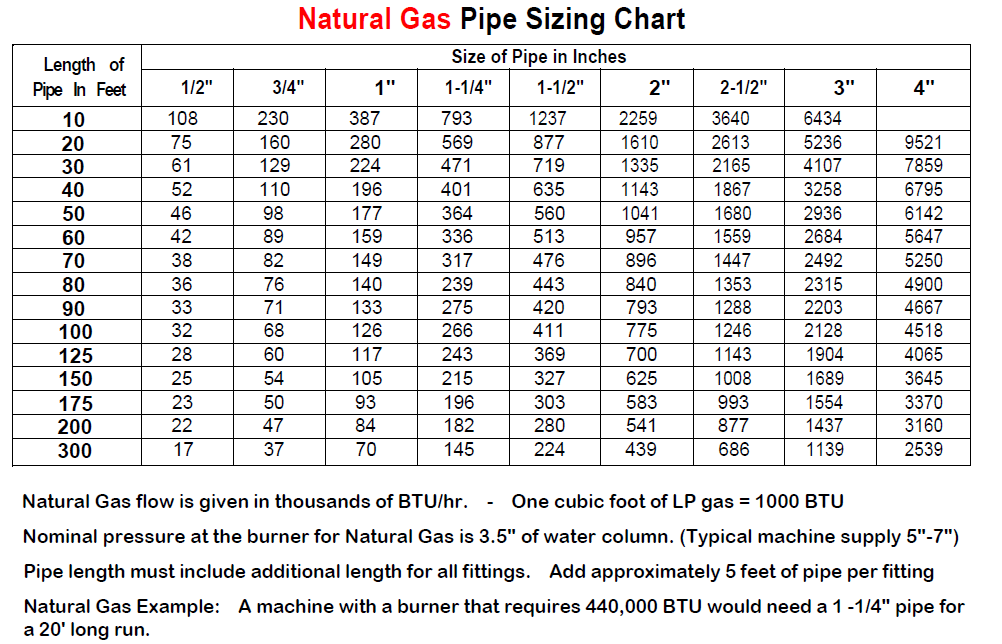
Choosing the right HVAC system for your home involves more than just picking a brand or model. It's about ensuring that every component, from the furnace itself to the gas pipes that fuel it, is properly sized for optimal performance and safety. This guide delves into the critical aspect of natural gas pipe sizing, providing you with the information you need to make informed decisions.
Understanding the Basics: BTU and Natural Gas
Before diving into pipe sizing charts, it’s essential to understand the key concepts involved.
- BTU (British Thermal Unit): A BTU measures the amount of heat required to raise the temperature of one pound of water by one degree Fahrenheit. In HVAC, it represents the heating or cooling capacity of a unit. The higher the BTU rating, the more powerful the system.
- Natural Gas: A common fuel source for furnaces and other appliances. It’s measured in cubic feet (CF) and contains a specific amount of energy, typically around 1,000 BTU per cubic foot (BTU/CF). This value can vary slightly depending on the gas supplier and location.
- Gas Pressure: Natural gas is delivered to your home at a specific pressure, usually measured in inches of water column (WC). Common pressures are 7 inches WC for residential applications.
The size of the gas pipe needed is directly related to the BTU requirements of your appliances and the distance the gas needs to travel. Undersized pipes can lead to insufficient gas supply, resulting in poor appliance performance and potential safety hazards. Oversized pipes, while not inherently dangerous, can be unnecessarily expensive to install.
The Natural Gas Pipe Size BTU Chart: A Quick Reference
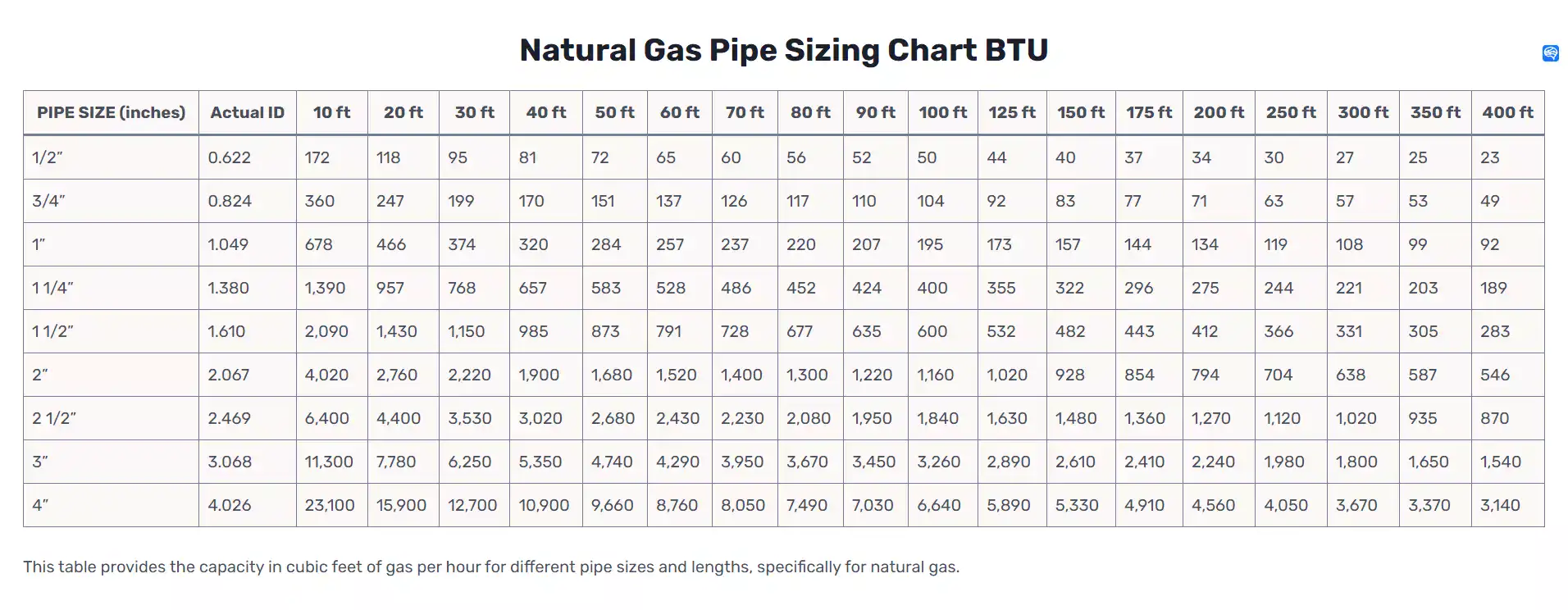
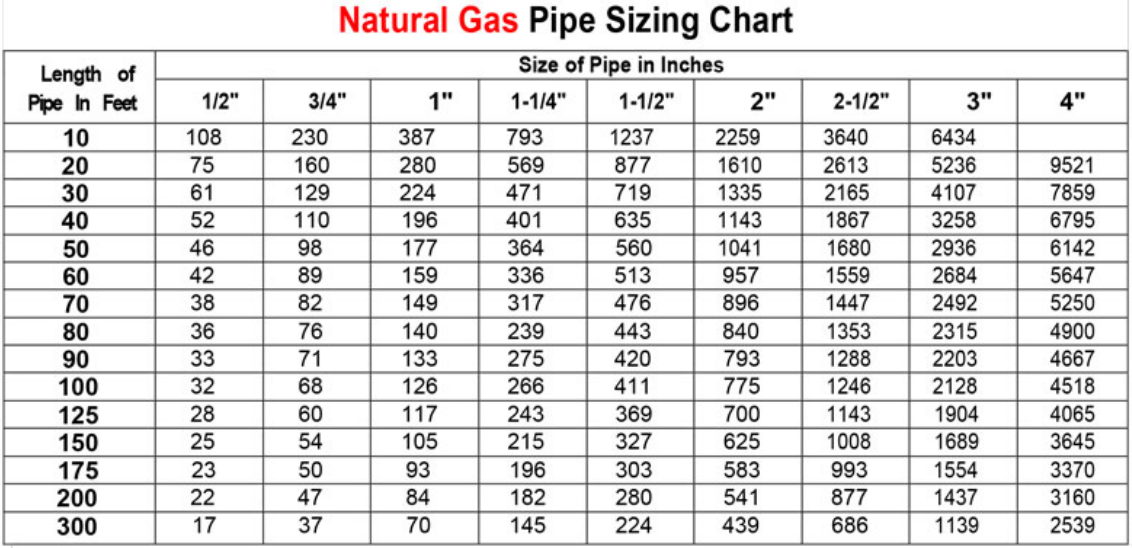
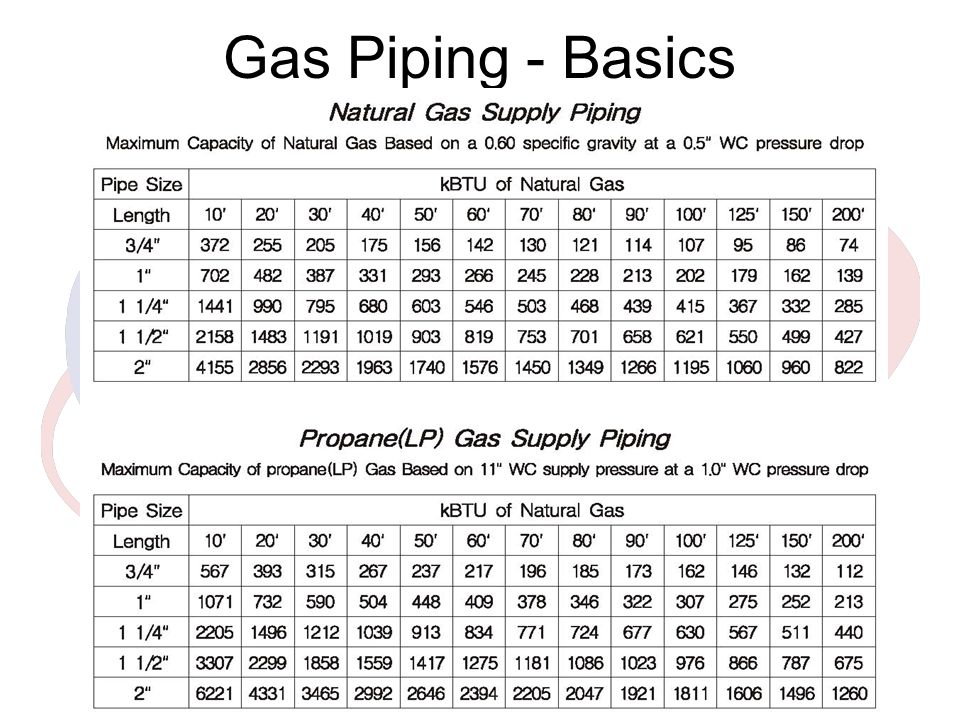
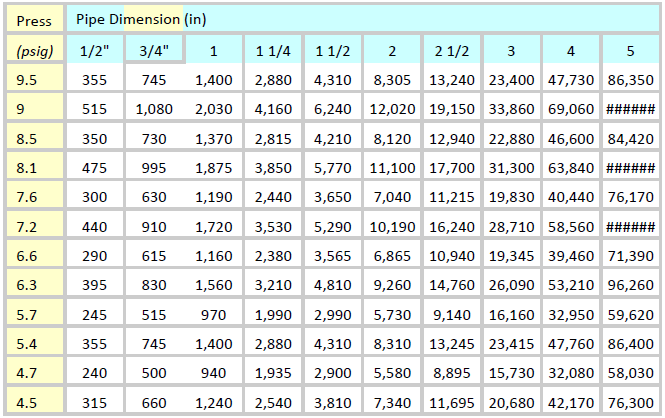
A natural gas pipe size BTU chart provides a quick way to determine the appropriate pipe size based on the BTU load, pipe length, and gas pressure. These charts are based on established engineering principles and are typically included in plumbing and HVAC codes. Remember that local codes always supersede general guidelines. Always consult with a licensed professional.
Here’s a simplified example of what a chart might look like (this is for illustrative purposes only and should not be used for actual installations):
| Pipe Length (Feet) | BTU Load (Thousands) | Pipe Size (Inches) |
|---|---|---|
| 20 | 100 | 1/2 |
| 40 | 100 | 3/4 |
| 20 | 200 | 3/4 |
| 40 | 200 | 1 |
Note: Actual charts are more complex and take into account various factors like pipe material, number of fittings, and specific gas pressure.
Factors Affecting Pipe Size
Several factors influence the required gas pipe size:
- BTU Input of Appliances: The total BTU input of all gas appliances connected to the pipe. This includes furnaces, water heaters, stoves, and fireplaces.
- Pipe Length: The distance the gas travels from the meter to the appliance. Longer distances require larger pipes to compensate for pressure drop.
- Gas Pressure: The pressure at which the gas is delivered. Higher pressures allow for smaller pipe sizes.
- Pipe Material: The material used for the pipe (e.g., black iron, copper, polyethylene). Each material has different flow characteristics.
- Number of Fittings: Elbows, tees, and other fittings increase resistance to gas flow, requiring adjustments to pipe size.
- Specific Gravity of Gas: Natural gas isn't pure methane; the specific gravity represents how it behaves in relation to the above factors.
How to Use a Natural Gas Pipe Size Chart
- Determine the BTU Input of Each Appliance: Check the appliance's nameplate or manufacturer's specifications for the BTU input rating.
- Calculate the Total BTU Load: Add up the BTU input of all appliances connected to the gas line.
- Measure the Pipe Length: Measure the distance from the gas meter to the farthest appliance. Include vertical runs.
- Consult a Pipe Size Chart: Use a reliable pipe size chart (typically found in plumbing codes or engineering manuals) that corresponds to your gas pressure and pipe material.
- Account for Fittings: Add equivalent lengths for each fitting to the total pipe length. Consult a fitting equivalent length table (available in plumbing codes).
- Select the Appropriate Pipe Size: Find the corresponding pipe size on the chart based on the total BTU load and adjusted pipe length.
Common HVAC Systems and Their BTU Requirements
Here's a general overview of common HVAC system types and their approximate BTU ranges. Remember that specific requirements vary based on home size, climate, and insulation levels.
- Furnaces: 40,000 - 120,000 BTU/hour. Look for models with high AFUE (Annual Fuel Utilization Efficiency) ratings, indicating greater energy efficiency. Brands like Carrier, Trane, and Lennox offer a range of high-efficiency furnaces.
- Water Heaters: 30,000 - 60,000 BTU/hour. Tankless water heaters often have higher BTU requirements due to their on-demand heating.
- Fireplaces: 20,000 - 40,000 BTU/hour.
Example HVAC Systems and Gas Pipe Considerations
Let's say you're installing a new 80,000 BTU furnace and a 40,000 BTU water heater, totaling 120,000 BTU. The distance from the gas meter to the furnace is 30 feet, and to the water heater is 20 feet. You'll need to consult a pipe sizing chart to determine the appropriate pipe size for each appliance run, taking into account the length of the pipe and any fittings. It’s common to run a larger main line from the meter and then branch off with smaller lines to individual appliances.
AFUE, SEER, and HSPF: Efficiency Ratings to Consider
When choosing an HVAC system, pay attention to these efficiency ratings:
- AFUE (Annual Fuel Utilization Efficiency): Applies to furnaces. A higher AFUE rating means the furnace converts more fuel into usable heat, saving you money on energy bills. Look for models with AFUE ratings of 90% or higher.
- SEER (Seasonal Energy Efficiency Ratio): Applies to air conditioners. A higher SEER rating means the air conditioner is more energy-efficient. Current minimum standard is 14 SEER, but higher efficiency models can reach 20 SEER or more.
- HSPF (Heating Seasonal Performance Factor): Applies to heat pumps. A higher HSPF rating means the heat pump is more energy-efficient during the heating season.
Brands like Mitsubishi Electric and Daikin are known for their high SEER and HSPF rated heat pump systems.
Warranty and Maintenance
HVAC systems represent a significant investment, so it's crucial to understand the warranty and maintenance requirements.
- Warranty: Typically covers parts and labor for a specific period, often 5-10 years for parts and 1-2 years for labor. Read the fine print carefully to understand what is covered and what is not. Lennox and Carrier offer robust warranty options, but registration within a certain time frame is often required.
- Maintenance: Regular maintenance, such as cleaning or replacing filters, checking refrigerant levels, and inspecting the system for leaks, can extend the life of your HVAC system and improve its efficiency. Annual professional servicing is highly recommended.
Cost Considerations
The cost of an HVAC system varies depending on the size, type, efficiency, and brand. Expect to pay several thousand dollars for a new furnace or air conditioner, including installation costs.
- Furnace: $3,000 - $7,000 installed.
- Air Conditioner: $3,500 - $8,000 installed.
- Heat Pump: $4,000 - $10,000 installed.
Consider the long-term cost of ownership, including energy bills and maintenance costs, when making your decision. Investing in a more efficient system upfront can save you money over the long run.
Professional Installation is Key
Proper installation is essential for the safe and efficient operation of your HVAC system. Always hire a licensed and experienced HVAC contractor to install your system. They will be able to properly size the gas pipes, ensure that the system is installed according to code, and provide ongoing maintenance and repair services.
Incorrect gas pipe sizing can lead to dangerous situations. Always prioritize safety and consult with qualified professionals.
Brands and Models: A Brief Comparison
Here's a quick overview of some popular HVAC brands and models:
- Carrier: Known for innovation and high-efficiency systems. Their Infinity series offers advanced features and smart home integration.
- Trane: Renowned for durability and reliability. Their XV series features variable-speed technology for enhanced comfort and efficiency.
- Lennox: Offers a wide range of options, from budget-friendly to high-end systems. Their Signature series is known for its quiet operation and energy savings.
- Rheem: A popular brand offering a balance of price and performance. Their Prestige series features advanced features and energy-efficient designs.
- Goodman: A value-oriented brand offering affordable options. While not as feature-rich as some other brands, Goodman systems are generally reliable.
- Mitsubishi Electric: Specializes in ductless mini-split systems, known for their energy efficiency and zoning capabilities.
- Daikin: A global leader in HVAC technology, offering a wide range of energy-efficient and innovative products.
When comparing models, consider the AFUE, SEER, and HSPF ratings, as well as features like variable-speed blowers, smart thermostats, and zoning capabilities.
Conclusion
Selecting the right HVAC system and ensuring proper natural gas pipe sizing are crucial for comfort, safety, and energy efficiency. By understanding the principles outlined in this guide and consulting with qualified professionals, you can make informed decisions that will benefit you for years to come. Always prioritize safety and adhere to local codes and regulations when installing or modifying gas lines.