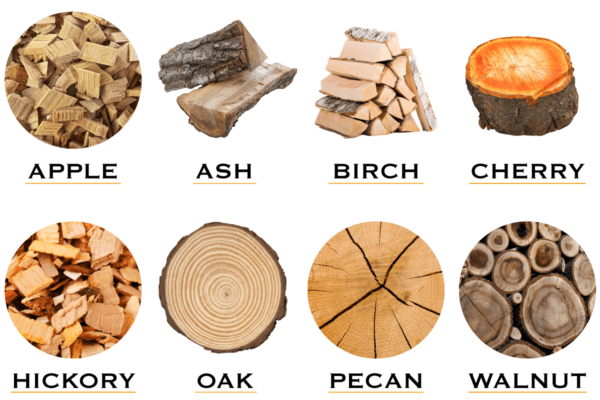
Oak Vs Hickory Firewood

As an HVAC professional, I'm often asked about ways to efficiently heat homes, especially during the colder months. While modern HVAC systems are fantastic, many homeowners supplement their heating with a wood-burning stove or fireplace. Choosing the right firewood is crucial for efficient heating and a pleasant experience. Two popular choices are oak and hickory, both known for their high heat output. But which one is better? Let's dive into a detailed comparison.
Oak vs. Hickory: A Detailed Comparison for Firewood
Understanding the characteristics of each wood type will help you make the best choice for your heating needs. We'll examine factors like heat output, burn time, smoke production, and ease of splitting.
Heat Output (BTUs)
BTU (British Thermal Unit) is the standard measure of heat energy. Higher BTU ratings mean more heat produced per unit of wood. Both oak and hickory are top contenders in this category.
- Oak: Seasoned oak typically yields around 24-28 million BTUs per cord. Red oak is slightly less dense than white oak.
- Hickory: Hickory is a powerhouse, often producing 27-30 million BTUs per cord. It's one of the densest hardwoods available.
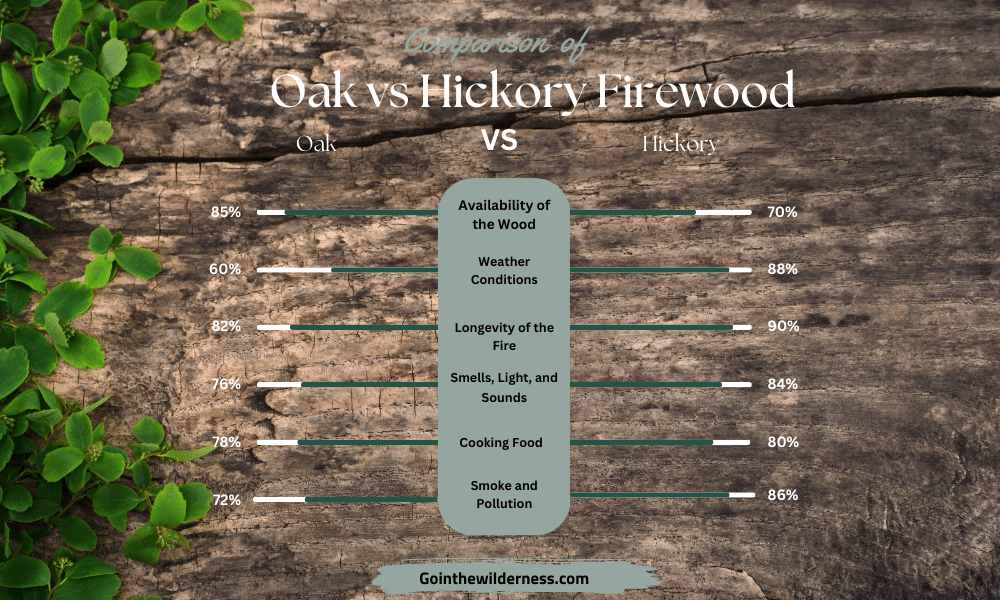
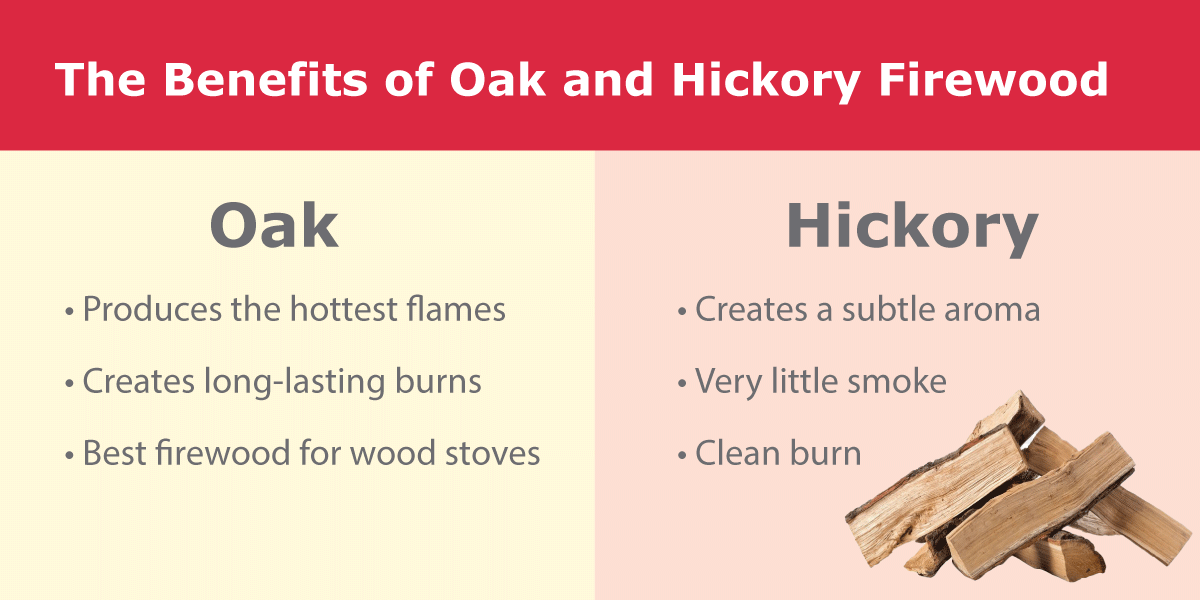
Verdict: Hickory generally edges out oak in terms of heat output. If maximum heat is your primary goal, hickory is the slightly better choice. However, the difference isn't dramatic; both provide excellent heat.
Burn Time
How long the wood burns is another critical factor. A longer burn time means less frequent loading of your stove or fireplace.
- Oak: Oak is a dense wood and burns for a long time. A good, hot fire can be sustained for several hours with oak. White oak tends to burn longer than red oak due to its tighter grain structure.
- Hickory: Hickory burns extremely hot and relatively slow, rivaling even oak in burn time. Its density contributes to a long-lasting fire.
Verdict: Both offer excellent burn times. The difference is minimal, and proper seasoning plays a more significant role than the wood type itself.
Smoke Production
Smoke is a byproduct of burning wood. Excessive smoke can be a nuisance and indicates inefficient combustion. Properly seasoned wood is key to minimizing smoke.
- Oak: Well-seasoned oak burns relatively cleanly, producing a moderate amount of smoke.
- Hickory: Hickory can produce a bit more smoke than oak, especially if not fully seasoned.
Verdict: Oak generally produces slightly less smoke, especially when burning the same amount of wood.
Ease of Splitting
Splitting firewood can be physically demanding. Easier splitting saves time and effort.
- Oak: Oak can be challenging to split, particularly red oak with its stringy grain. White oak is typically easier to split when green but becomes very tough when dry.
- Hickory: Hickory is notoriously difficult to split. Its dense, interlocked grain makes it a tough customer.
Verdict: Oak is generally easier to split than hickory, although both can be challenging, especially if you're not experienced. Using a hydraulic splitter is highly recommended for both wood types.
Seasoning Time
Seasoning is the process of drying firewood to reduce its moisture content. Properly seasoned wood burns hotter, cleaner, and more efficiently.
- Oak: Oak requires a longer seasoning time than many other hardwoods. It typically takes 12-24 months to dry adequately.
- Hickory: Hickory also needs a significant seasoning period, typically 9-18 months.
Verdict: Both oak and hickory require substantial seasoning time. Plan ahead and start seasoning your wood well in advance of the heating season.
Smell
The aroma of burning wood is a subjective factor, but it can enhance the overall experience.
- Oak: Oak has a pleasant, slightly smoky aroma.
- Hickory: Hickory has a distinctive, savory aroma that many people find appealing. It's often used for smoking meats due to its unique flavor profile.
Verdict: Hickory often wins in this category, with its strong, desirable scent. If you enjoy a flavorful aroma, hickory is the better choice.
Safety Tips for Burning Firewood
Burning firewood safely is paramount. Here are some essential safety tips:
- Install and maintain smoke detectors: Ensure you have working smoke detectors on every level of your home, especially near sleeping areas.
- Have your chimney inspected and cleaned annually: Creosote buildup in your chimney can lead to dangerous chimney fires. Contact a qualified chimney sweep for inspection and cleaning.
- Use a fireplace screen: A fireplace screen prevents sparks and embers from escaping into your room.
- Never leave a fire unattended: Always supervise a fire, especially when children or pets are present.
- Dispose of ashes properly: Allow ashes to cool completely before disposing of them in a metal container away from flammable materials.
- Ensure proper ventilation: Avoid blocking air vents in your home when using a wood-burning stove or fireplace. Carbon monoxide poisoning is a serious risk.
- Install a carbon monoxide detector: Have a working carbon monoxide detector near sleeping areas.
Troubleshooting Common Firewood Problems
Here are some common issues you might encounter when burning firewood and how to address them:
- Problem: Difficulty starting the fire. Solution: Use dry kindling and small pieces of wood to get the fire going. Ensure the wood is properly seasoned.
- Problem: Excessive smoke. Solution: Ensure the wood is properly seasoned. Improve ventilation by opening the damper fully.
- Problem: Fire burns out quickly. Solution: Use larger pieces of wood. Ensure the wood is dense and properly seasoned.
- Problem: Popping and sparking. Solution: This is often caused by moisture in the wood. Ensure the wood is properly seasoned.
When to Call a Professional
While some aspects of firewood preparation and burning are DIY-friendly, certain situations require professional assistance.
- Chimney inspection and cleaning: Always hire a certified chimney sweep for chimney inspection and cleaning. This is crucial for safety and efficiency.
- Wood stove installation: Proper installation of a wood stove is essential for safety and efficiency. Contact a qualified HVAC technician or wood stove installer.
- Major chimney repairs: If your chimney is damaged or deteriorating, consult a masonry professional for repairs.
Cost Considerations
The cost of firewood varies depending on location, availability, and the type of wood. Generally, oak and hickory tend to be more expensive than softer woods like pine or fir. When comparing prices, consider the following:
- Price per cord: This is the most common way to price firewood.
- Seasoning: Seasoned wood will cost more than green wood.
- Delivery fees: Factor in delivery costs if you're having the wood delivered.
Estimate: Expect to pay anywhere from $200-$400+ per cord for seasoned oak or hickory, depending on your location and supplier. Always get quotes from multiple suppliers before making a purchase. Buying in bulk can often save you money.
Conclusion
Both oak and hickory are excellent choices for firewood, offering high heat output and long burn times. Hickory generally produces slightly more heat and has a more desirable aroma, while oak is typically easier to split and produces less smoke. The best choice for you will depend on your specific needs and preferences. Regardless of which wood you choose, remember that proper seasoning is crucial for safe and efficient burning. Always prioritize safety and consult with professionals when needed.