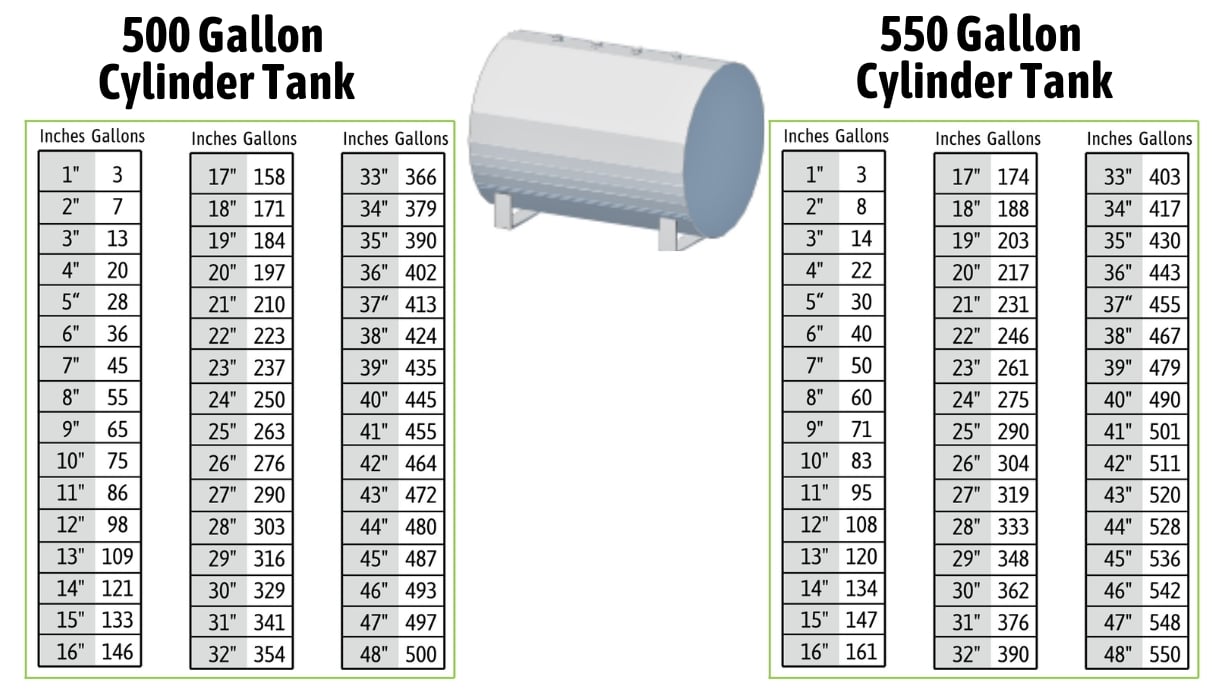
Oil Chart For A 275 Gallon Tank

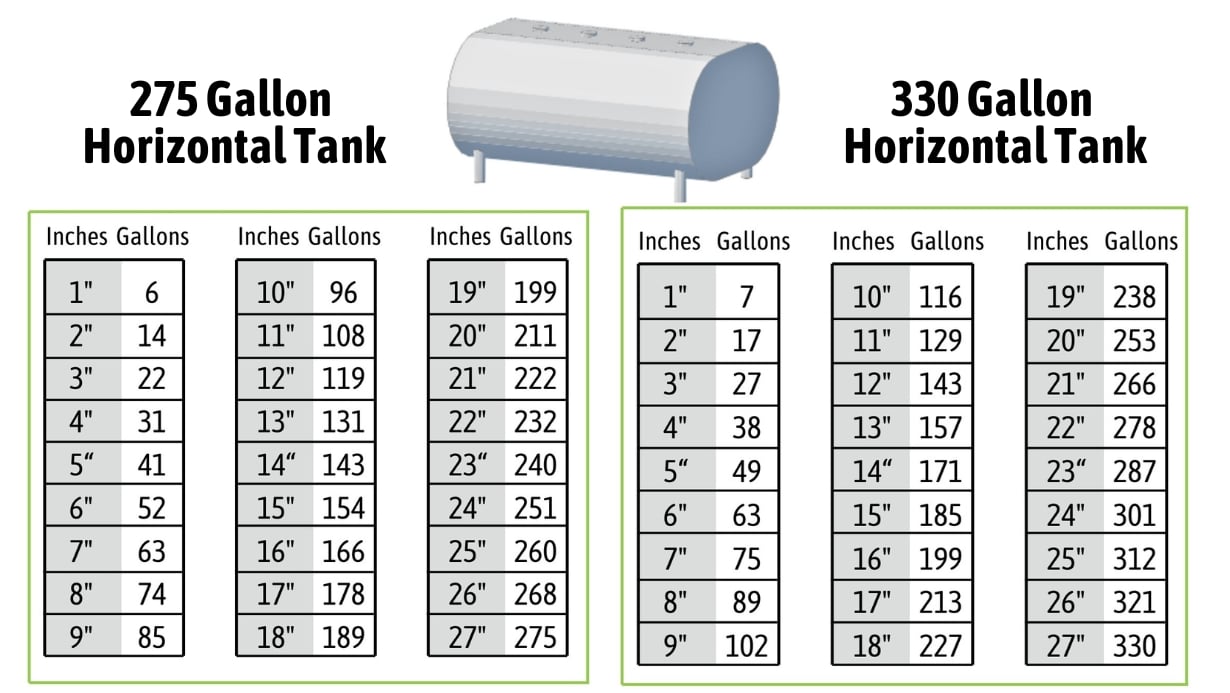
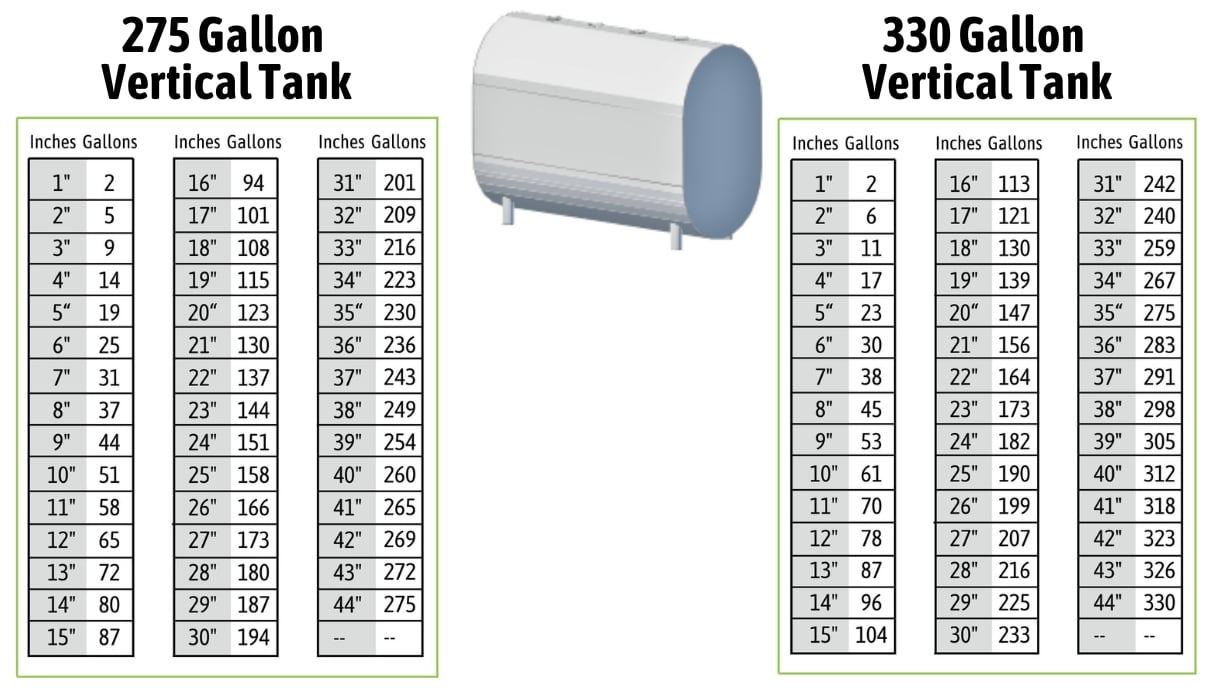
Heating your home with oil often involves using a 275-gallon tank, a common size that balances capacity with space requirements. Understanding how much oil you need at different points, and how to manage your consumption, is crucial for efficient and comfortable heating. This guide provides a comprehensive overview of oil charts for 275-gallon tanks and related information to help you make informed decisions about your heating oil needs.
Understanding the 275-Gallon Oil Tank
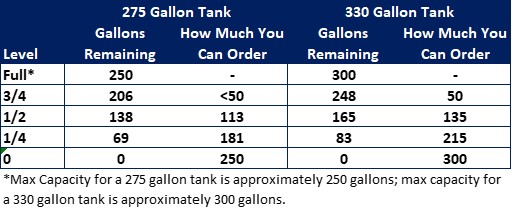
A standard 275-gallon oil tank isn't actually filled to its full capacity. Due to safety and expansion considerations, they typically hold around 250-265 gallons of usable oil. This difference is important to keep in mind when estimating how long your tank will last.
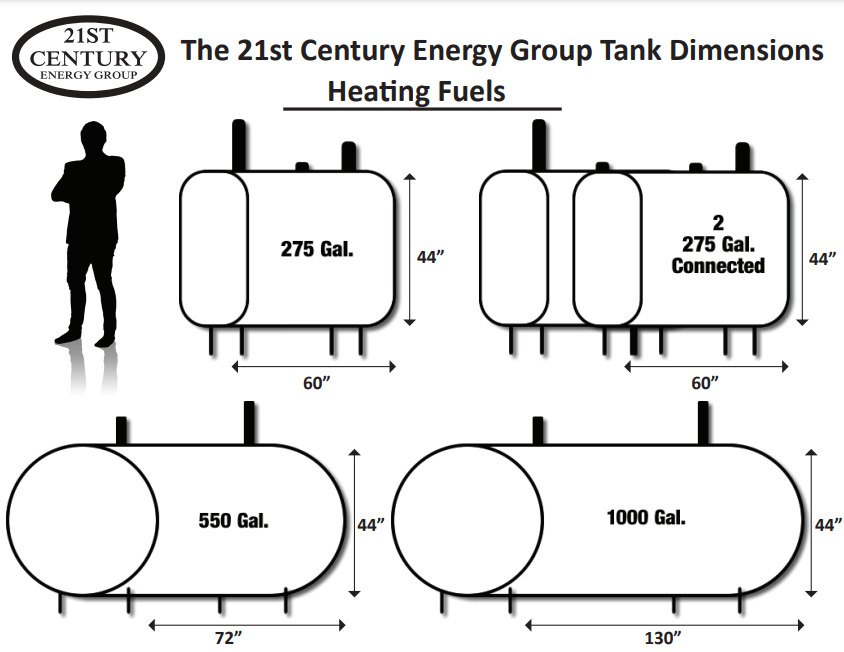
Dimensions: These tanks typically measure around 44 inches long, 27 inches wide, and 60 inches tall, but variations exist. Always measure your tank if you're unsure.
Material: Most residential tanks are made of steel, though newer, more durable plastic (polyethylene) options are also available. Steel tanks are susceptible to rust, especially on the inside, which can lead to leaks and fuel contamination. Polyethylene tanks offer better corrosion resistance.
Orientation: 275-gallon tanks come in both horizontal and vertical orientations. The orientation affects the physical footprint but not the actual capacity. Horizontal tanks are more common.
Why Use an Oil Chart?
An oil chart provides a quick reference to estimate the amount of oil remaining in your tank based on the level displayed on the gauge. It's a valuable tool for:
- Monitoring Fuel Consumption: Tracking how quickly you're using oil helps you anticipate future needs and budget accordingly.
- Planning for Refills: Knowing your tank level allows you to schedule refills before you run out, avoiding the inconvenience and potential costs of an emergency delivery and system priming.
- Detecting Potential Leaks: A sudden drop in oil level, without a corresponding increase in heating demand, could indicate a leak. Early detection is crucial to minimize environmental damage and repair costs.
Creating or Obtaining an Oil Chart
While pre-made oil charts exist, creating a custom chart specific to your tank is the most accurate approach. Here’s how:
Methods to calculate your Oil Chart:
- Manual Measurement and Calculation (Most Accurate):
- Empty the tank completely (only if safe and practical – this usually requires professional assistance). This is generally not recommended unless you're replacing the tank.
- Add oil in known increments (e.g., 5 gallons, 10 gallons). Carefully record the gauge reading after each addition.
- Create a table: List the gauge reading and the corresponding volume of oil in the tank. This becomes your custom oil chart.
- Using Tank Dimensions and Geometry (Approximation):
- Determine the tank's dimensions: Measure the length and diameter (or width and height for a rectangular tank).
- Calculate the volume for different levels: Use geometric formulas to calculate the volume of oil at various heights in the tank. These calculations can be complex, especially for horizontal cylindrical tanks, requiring knowledge of partial cylinder volume formulas. Online calculators are available to assist with these calculations.
- Create a table: List the gauge reading (converted to inches of oil height) and the corresponding calculated volume.
- Using a Generic Oil Chart (Least Accurate):
- Find a chart: Search online for "275-gallon oil tank chart."
- Compare with your tank: Ensure the dimensions listed on the chart are similar to your tank's.
- Use with caution: Understand that the readings may not be precise.
This is the most accurate approach, but it requires some effort.
This method requires the tank's dimensions and basic geometry.
These charts are available online, but their accuracy is limited because they don't account for variations in tank dimensions.
Gauge Readings: The oil gauge usually displays a percentage of full (e.g., ¼, ½, ¾, Full). Translate these percentages into gallons using your chosen method.
Example Oil Chart (Approximation)
This is a simplified example for a standard 275-gallon tank holding approximately 265 gallons of usable oil. Your actual values may vary.
| Gauge Reading | Approximate Gallons |
|---|---|
| Full | 265 |
| ¾ | 199 |
| ½ | 133 |
| ¼ | 66 |
| Empty | 0 |
Important Note: Due to the shape of the tank and the way the gauge operates, the relationship between the gauge reading and the actual oil level is not always linear. The gauge may show "full" even if it's slightly below capacity, and the readings may be less accurate at the lower end of the tank.
Factors Affecting Oil Consumption
Many factors influence how quickly you use heating oil. Understanding these factors helps you anticipate your oil needs and potentially reduce consumption.
- Weather Conditions: Colder temperatures naturally lead to higher oil consumption. Track weather forecasts to anticipate increased demand.
- Home Insulation: Poor insulation allows heat to escape, forcing your furnace to work harder and consume more oil. Upgrading insulation can significantly reduce energy consumption.
- Thermostat Settings: Lowering your thermostat, even by a few degrees, can save a substantial amount of oil over the heating season. Consider using a programmable thermostat to automatically adjust temperatures.
- Furnace Efficiency: Older furnaces are less efficient than newer models. If your furnace is old or inefficient, consider replacing it with a more energy-efficient model. Look for furnaces with high Annual Fuel Utilization Efficiency (AFUE) ratings.
- Hot Water Usage: If your oil-fired furnace also heats your domestic hot water, your hot water usage will affect oil consumption, even during warmer months.
- Home Size and Layout: Larger homes and homes with poor layouts (e.g., poorly insulated additions) will require more heating.
- Drafts: Drafts around windows and doors allow heat to escape, increasing oil consumption. Seal any drafts with weather stripping or caulk.
Tips for Extending Your Oil Supply
Here are some practical tips to help you conserve heating oil and extend your supply:
- Lower your thermostat: Even a few degrees can make a difference.
- Improve insulation: Insulate your attic, walls, and floors.
- Seal drafts: Caulk and weather-strip around windows and doors.
- Service your furnace: Regular maintenance ensures optimal efficiency. A clogged filter, for example, can significantly reduce performance.
- Use space heaters wisely: Only heat the rooms you're using. Be careful with space heaters and follow safety precautions.
- Consider a smart thermostat: These thermostats learn your heating patterns and adjust automatically to save energy.
- Install storm windows: Storm windows add an extra layer of insulation.
- Close off unused rooms: Prevent heat from escaping into unoccupied areas.
- Dress warmly: Wearing sweaters and layers can allow you to lower your thermostat.
Recognizing Potential Problems
Pay attention to any unusual signs that could indicate a problem with your oil tank or heating system:
- Sudden drop in oil level: This could indicate a leak.
- Unusual odors: A fuel oil smell could indicate a leak or spill.
- Visible rust or corrosion on the tank: This can weaken the tank and lead to leaks.
- Water in the oil tank: Water contamination can damage your furnace.
- Furnace malfunctions: Frequent breakdowns could indicate a problem with the oil supply or the furnace itself.
If you suspect a leak or any other problem, contact a qualified heating oil technician immediately. Do not attempt to repair the tank yourself.
Professional Oil Tank Monitoring
For added peace of mind, consider professional oil tank monitoring services. These services use sensors to track your oil level in real-time and alert you when it's time for a refill. Some systems can even detect leaks automatically.
Conclusion
Understanding your 275-gallon oil tank and using an oil chart are essential for managing your heating oil supply effectively. By monitoring your consumption, implementing energy-saving measures, and addressing potential problems promptly, you can ensure a comfortable and cost-effective heating season. Remember to prioritize safety and consult with qualified professionals for any maintenance or repairs.