Pipe Sizing Chart For Natural Gas
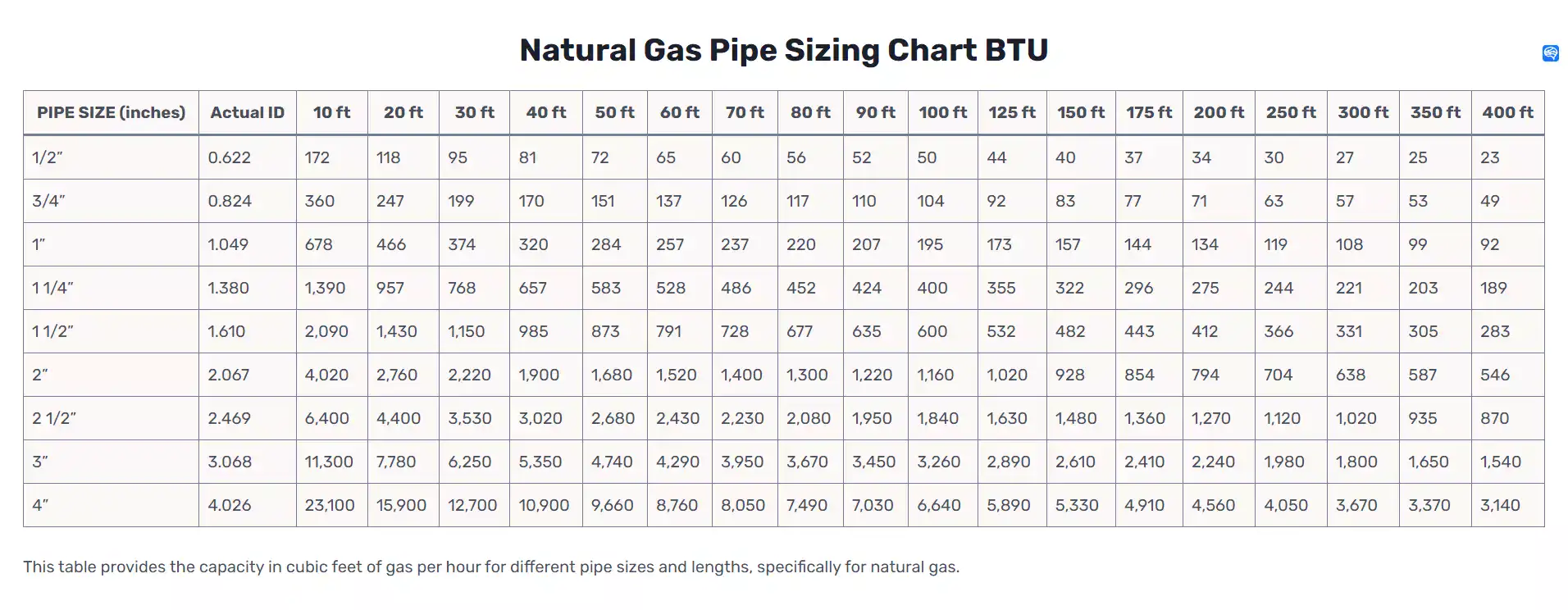
Natural gas is a common and efficient fuel source for heating homes and businesses. Ensuring a safe and effective natural gas system requires precise pipe sizing. Incorrect sizing can lead to insufficient gas supply, appliance malfunction, and potentially dangerous situations. This article provides a comprehensive overview of natural gas pipe sizing charts, their application, and their importance in the HVAC industry.
Understanding Natural Gas Pipe Sizing
Natural gas pipe sizing isn't just about picking a random pipe diameter; it's a calculation-intensive process that considers several crucial factors:
- Gas type: Natural gas composition can vary slightly, impacting its heating value and flow characteristics. While variations are usually minor, understanding the gas provider's specifications is ideal.
- Gas pressure: Natural gas is typically delivered at a specific pressure, usually measured in inches of water column (WC) or pounds per square inch (PSI). This pressure is then regulated down for appliance use.
- Appliance BTU input: Each gas appliance has a British Thermal Unit (BTU) input rating, indicating the amount of gas it consumes per hour. This is a critical factor in determining the total gas demand.
- Pipe length: The longer the pipe run, the greater the pressure drop due to friction. Accurately measuring the pipe length, including all fittings, is essential.
- Specific gravity of gas: Natural gas typically has a specific gravity of around 0.60, but this can vary slightly depending on the composition.
- Allowable pressure drop: A certain amount of pressure drop is acceptable, but it must be within the appliance manufacturer's specifications.
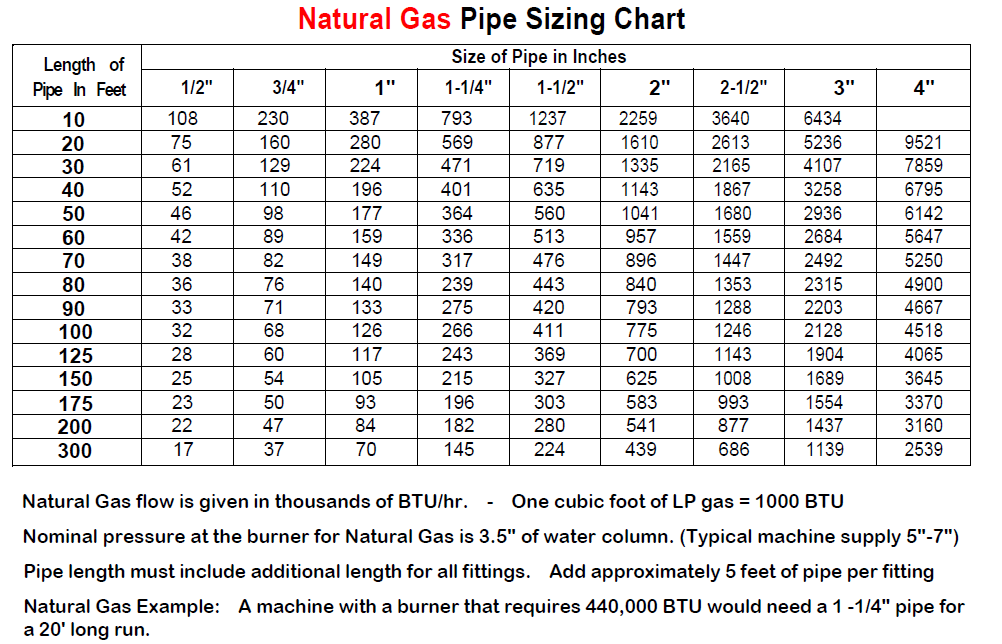
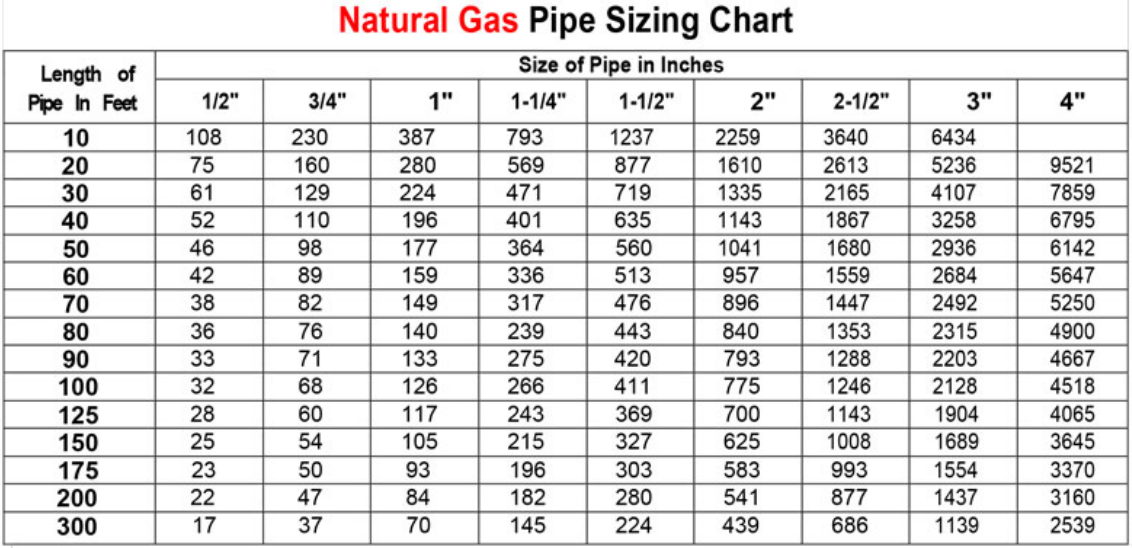
Natural gas pipe sizing charts, often found in the National Fuel Gas Code (NFGC) and manufacturer's literature, are based on these parameters and provide a quick reference for determining the appropriate pipe size. These charts are generally organized by pipe material (e.g., steel, copper) and pressure. The NFGC is updated regularly, ensuring the safest and most effective guidelines.
How to Use a Natural Gas Pipe Sizing Chart
Using a natural gas pipe sizing chart involves a systematic approach:
- Determine the gas pressure: Identify the gas pressure at the meter outlet. This is usually provided by the gas company.
- Calculate the total BTU demand: Add up the BTU input ratings of all gas appliances connected to the pipe system.
- Measure the pipe length: Accurately measure the total length of the pipe run from the meter to the furthest appliance. Account for equivalent lengths of fittings (e.g., elbows, tees). Each fitting adds resistance to gas flow, and an equivalent length is added to the total run to account for this.
- Select the appropriate chart: Choose the chart corresponding to the pipe material and gas pressure.
- Find the pipe size: Locate the row corresponding to the pipe length and the column corresponding to the total BTU demand. The intersection of the row and column indicates the minimum acceptable pipe size.
Example: Let's say you have a gas furnace with a 100,000 BTU/hr input, a water heater with a 40,000 BTU/hr input, and a gas range with a 30,000 BTU/hr input. The total BTU demand is 170,000 BTU/hr. If the longest pipe run is 50 feet and the gas pressure is 7 inches WC, you would use the appropriate chart for steel pipe at 7 inches WC. You would find the row for 50 feet and the column closest to 170,000 BTU/hr. The intersection would indicate the minimum required pipe size, perhaps 3/4 inch.
Important Note: Always err on the side of caution and choose a slightly larger pipe size if the chart indicates a value close to the boundary between two sizes. Undersized pipes can cause appliance malfunction and safety hazards.
Career Opportunities in Natural Gas Systems
The HVAC industry offers diverse career paths involving natural gas systems, from installation and maintenance to design and inspection. According to the Bureau of Labor Statistics, the median annual wage for HVAC technicians was $51,390 in May 2022. The job outlook for HVAC technicians is projected to grow 6 percent from 2022 to 2032, about as fast as the average for all occupations. This growth is driven by the increasing demand for energy-efficient heating and cooling systems and the need to replace aging equipment.
Here are some potential career paths:
- HVAC Installer: Installs and connects gas piping systems, ensuring proper sizing and leak-free connections. This role requires a strong understanding of pipe sizing charts and relevant codes.
- HVAC Service Technician: Troubleshoots and repairs gas-fired appliances, including furnaces, water heaters, and boilers. Understanding gas pressure, flow, and combustion principles is crucial.
- HVAC Design Engineer: Designs complete HVAC systems for residential and commercial buildings, including gas piping layouts and sizing calculations.
- HVAC Inspector: Inspects gas piping installations to ensure compliance with safety codes and regulations.
- Gas Fitter: Specializes in the installation, repair, and maintenance of gas piping systems. Many jurisdictions require specific licensing for gas fitters.
Real-World Example: Maria, a recent HVAC graduate, started her career as an installer's helper. She quickly learned the importance of accurate pipe sizing and the use of natural gas pipe sizing charts. After gaining experience and obtaining her certifications, she transitioned to a service technician role, where she now diagnoses and repairs gas-fired heating systems.
Certifications and Training
Obtaining relevant certifications can significantly enhance career prospects and demonstrate competence in natural gas systems. Some important certifications include:
- NATE (North American Technician Excellence): Offers certifications in various HVAC specialties, including gas heating. NATE certification demonstrates a technician's knowledge and skills to employers and customers.
- EPA Section 608 Certification: While primarily focused on refrigerant handling, the core knowledge of HVAC principles gained in preparing for this exam is beneficial.
- Manufacturer-Specific Training: Many manufacturers offer training programs on their gas-fired appliances. Completing these programs can provide valuable knowledge and skills for servicing specific equipment.
- Gas Piping Certifications/Licenses: Many states and municipalities require specific licenses or certifications for individuals working on gas piping systems. These often involve passing an exam and demonstrating practical experience.
Statistics: According to recent surveys, NATE-certified technicians often command higher salaries and are more likely to be employed than non-certified technicians.
Tools and Technology for Pipe Sizing
While pipe sizing charts remain essential, technology offers advanced tools for simplifying and automating the process:
- HVAC Design Software: Programs like Wrightsoft and Elite Software incorporate pipe sizing calculations based on NFGC guidelines. These tools can automate the process and provide accurate results.
- Online Pipe Sizing Calculators: Numerous online calculators are available for quick pipe sizing estimations. However, it's crucial to verify the accuracy and reliability of these tools before relying on them.
- Digital Manometers: Used to accurately measure gas pressure in piping systems.
- Combustible Gas Leak Detectors: Essential for identifying gas leaks in piping systems.
Common Mistakes to Avoid
Incorrect pipe sizing can have serious consequences. Here are some common mistakes to avoid:
- Ignoring fitting equivalent lengths: Failing to account for the added resistance of fittings can lead to undersized pipes.
- Using outdated charts: Ensure you are using the latest version of the NFGC and manufacturer's charts. Codes and regulations are updated periodically.
- Failing to consider elevation changes: Elevation changes can affect gas pressure, especially in long vertical runs.
- Assuming constant gas pressure: Gas pressure can fluctuate, especially during peak demand periods. Check with the gas company for pressure variations.
- Neglecting appliance manufacturer's specifications: Always follow the appliance manufacturer's instructions for gas pressure and piping requirements.
The Future of Natural Gas in HVAC
The role of natural gas in HVAC is evolving. While natural gas remains a dominant fuel source, there's a growing emphasis on energy efficiency and alternative energy sources.
Trends:
- High-Efficiency Gas Furnaces: Manufacturers are developing increasingly efficient gas furnaces with advanced combustion technologies.
- Hybrid Heating Systems: Combining gas furnaces with heat pumps can provide optimal energy efficiency and cost savings.
- Renewable Natural Gas (RNG): RNG, produced from organic waste, offers a sustainable alternative to traditional natural gas.
- Hydrogen Blending: Research is underway to explore blending hydrogen with natural gas in existing pipelines.
As the HVAC industry continues to evolve, professionals must stay informed about the latest technologies and regulations related to natural gas systems. Understanding pipe sizing principles and utilizing advanced tools will remain essential skills for success in this field. By prioritizing safety, efficiency, and sustainability, HVAC professionals can contribute to a more comfortable and environmentally responsible future.
The HVAC industry provides good paying jobs for skilled workers. According to recent data, experienced HVAC technicians with specialized skills, such as expertise in natural gas systems and advanced certifications, can earn salaries exceeding $70,000 per year. Employers actively seek out qualified individuals with a strong understanding of natural gas pipe sizing and safety practices.