Plate Heat Exchanger Vs Shell And Tube
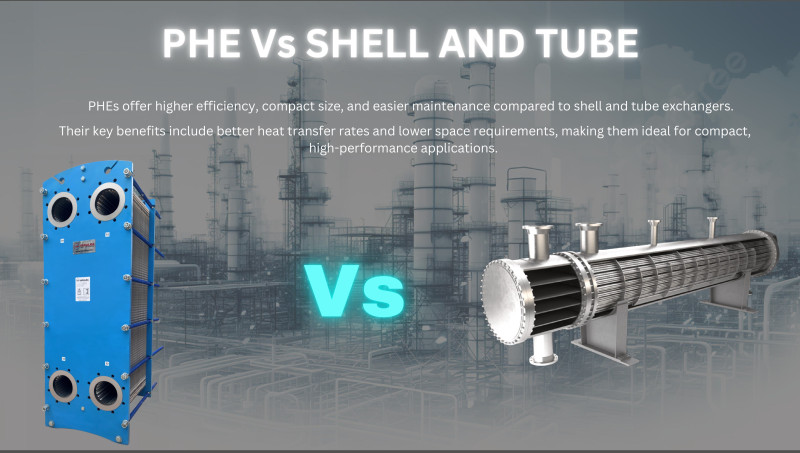
Heat exchangers are essential components in many industrial processes, from power generation to food processing. They transfer heat between two or more fluids without allowing them to mix. Two common types are the plate heat exchanger (PHE) and the shell and tube heat exchanger (STHE). This guide will provide a comprehensive comparison to help you understand the differences and choose the best option for your specific needs.
Understanding the Basics
Before diving into the comparison, let's define each type:
Shell and Tube Heat Exchangers
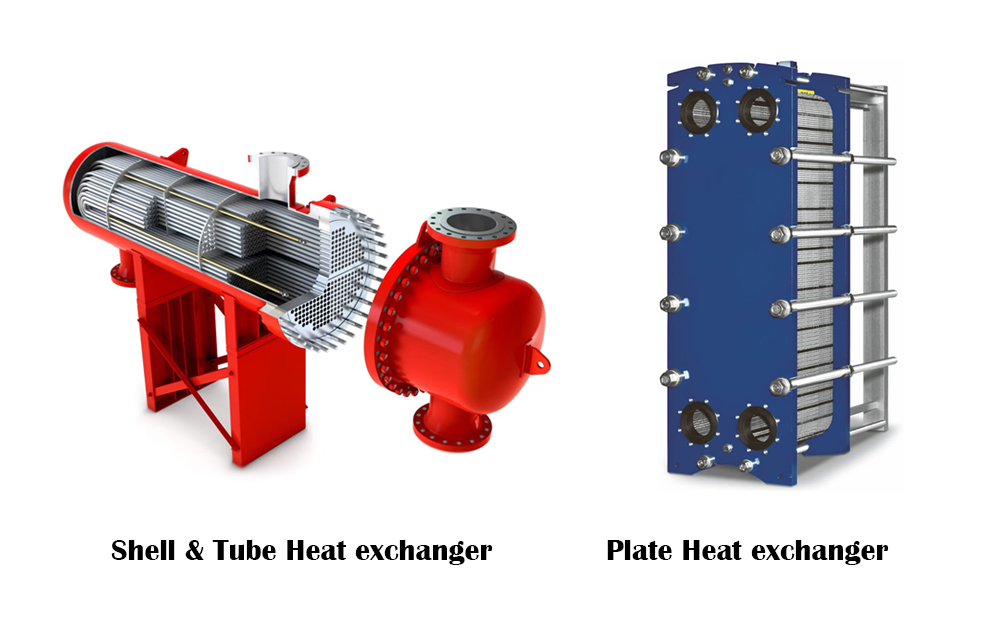
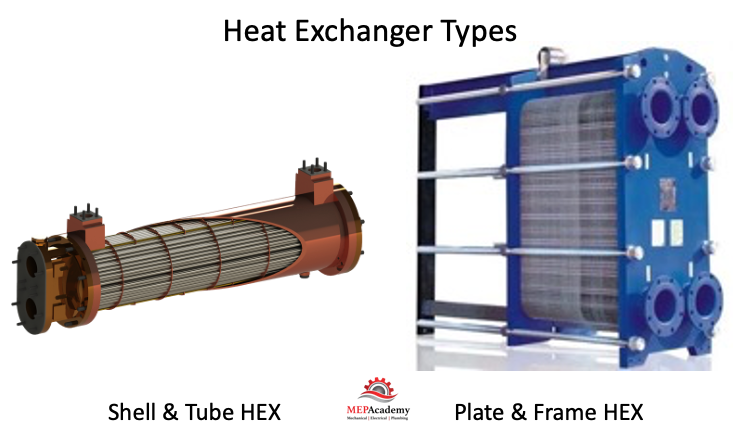
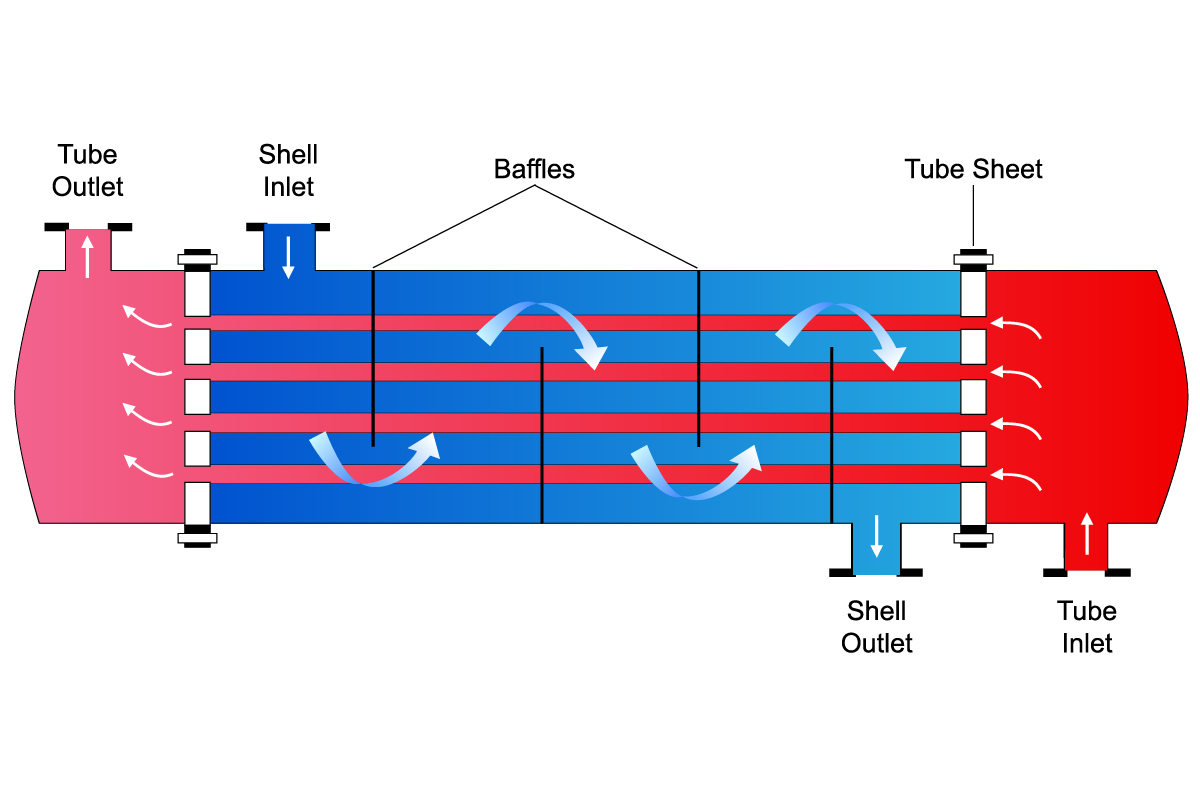
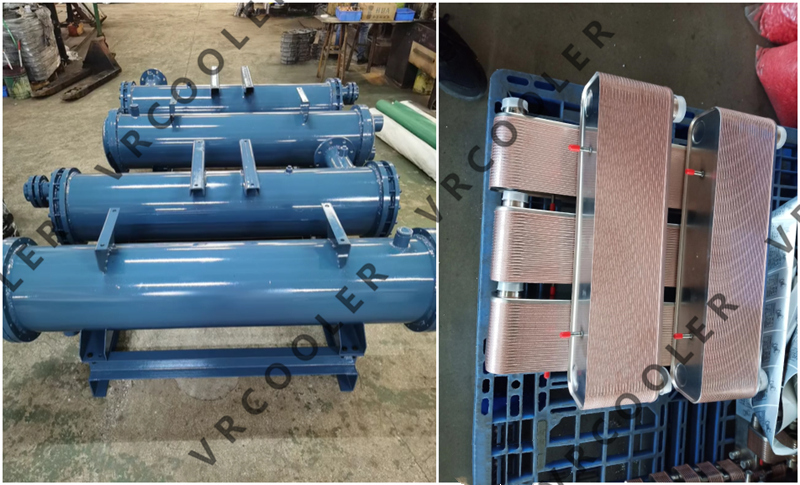
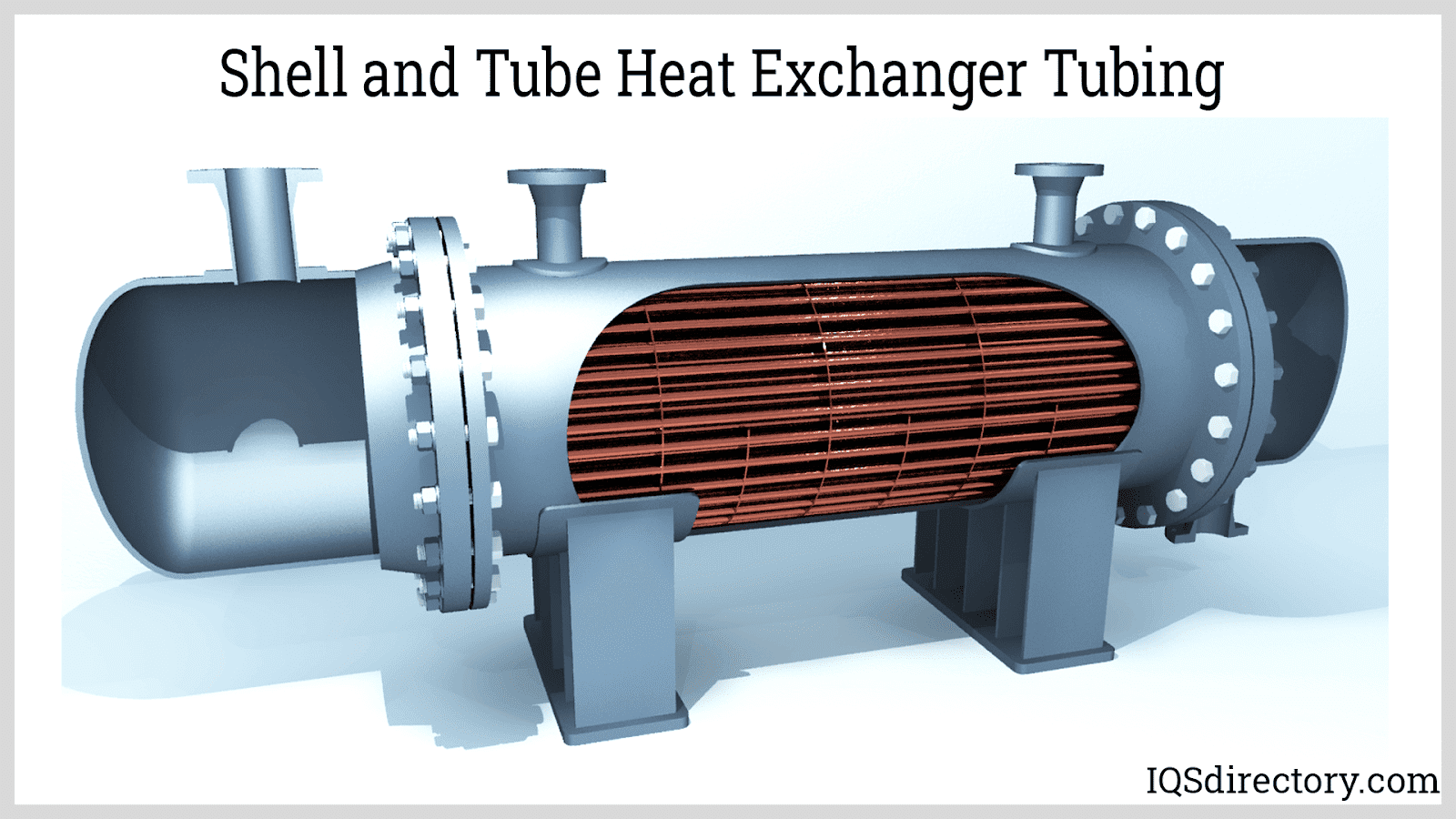
A shell and tube heat exchanger consists of a bundle of tubes enclosed within a cylindrical shell. One fluid flows through the tubes, while the other flows around the outside of the tubes within the shell. Baffles are often used inside the shell to direct the flow of the shell-side fluid, increasing its velocity and heat transfer efficiency.
Think of it like this: Imagine a bunch of straws (tubes) bundled together inside a larger pipe (shell). One fluid goes through the straws, and another goes around the outside of the straws inside the larger pipe.
Plate Heat Exchangers
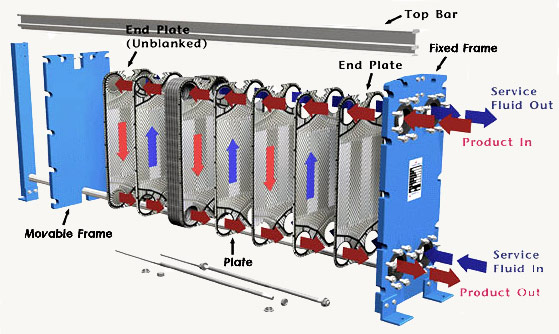
A plate heat exchanger is made up of a series of thin, corrugated metal plates that are stacked and bolted together. Gaskets seal the spaces between the plates, creating channels for the fluids to flow through. The fluids flow in alternating channels, allowing heat to be transferred through the plates.
Think of it this way: Imagine a stack of waffles, with one fluid flowing through the valleys of one waffle and another fluid flowing through the valleys of the next waffle. The heat transfers through the metal of the waffles.
Detailed Comparison: Plate Heat Exchanger vs. Shell and Tube
Now, let's delve into a detailed comparison based on several key factors:
Heat Transfer Efficiency
Plate Heat Exchangers: Generally offer higher heat transfer efficiency compared to shell and tube exchangers. This is due to the larger surface area available for heat transfer and the turbulent flow induced by the corrugated plate design. The close proximity of the fluids also enhances heat exchange.
Shell and Tube Heat Exchangers: Have lower heat transfer efficiency relative to plate exchangers. The flow patterns are not always as efficient, and the surface area-to-volume ratio is typically lower.
Space Requirements
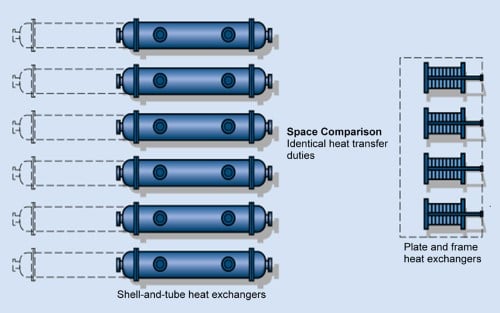
Plate Heat Exchangers: Are typically more compact than shell and tube exchangers for the same heat duty. This is a significant advantage when space is limited.
Shell and Tube Heat Exchangers: Tend to be bulkier and require more floor space.
Maintenance and Cleaning
Plate Heat Exchangers: Can be easier to clean and maintain, especially if they are the gasketed type. The plates can be easily separated for inspection and cleaning. Chemical cleaning is also frequently used.
Shell and Tube Heat Exchangers: Can be more difficult to clean, particularly the inside of the tubes. Mechanical cleaning methods, such as tube brushing, or chemical cleaning, are typically required.
Pressure and Temperature Limitations
Plate Heat Exchangers: Generally have lower pressure and temperature limits compared to shell and tube exchangers. The gaskets used in plate exchangers can be a limiting factor, although welded plate designs offer higher temperature and pressure capabilities.
Shell and Tube Heat Exchangers: Can handle higher pressures and temperatures, making them suitable for more demanding applications. The robust construction of the shell and tubes allows for these higher operating conditions.
Fluid Compatibility
Plate Heat Exchangers: The choice of gasket material in plate exchangers is crucial for fluid compatibility. Certain fluids can degrade or damage certain gasket materials. Welded plate heat exchangers offer broader fluid compatibility.
Shell and Tube Heat Exchangers: Offer greater flexibility in terms of material selection for both the tubes and the shell, making them compatible with a wider range of fluids, including corrosive or abrasive substances.
Cost
Plate Heat Exchangers: Can be more expensive than shell and tube exchangers for smaller duties, but may become more cost-effective for larger duties due to their higher efficiency and smaller footprint.
Shell and Tube Heat Exchangers: Are generally less expensive upfront, especially for smaller applications.
Applications
Plate Heat Exchangers: Are widely used in applications such as:
- Food and beverage processing
- HVAC (Heating, Ventilation, and Air Conditioning)
- Chemical processing
- Pharmaceuticals
- Dairy industry
Shell and Tube Heat Exchangers: Are typically used in applications such as:
- Power generation
- Oil and gas refining
- Chemical processing
- Petrochemicals
- Heavy industry
Fouling
Plate Heat Exchangers: Can be more susceptible to fouling, especially when handling fluids containing suspended solids or high concentrations of dissolved minerals. The narrow channels between the plates can become easily clogged. However, designs with wider channels are available to mitigate this.
Shell and Tube Heat Exchangers: Are generally more resistant to fouling due to the larger tube diameters and the ability to use mechanical cleaning methods.
Design Flexibility
Plate Heat Exchangers: Offer less design flexibility compared to shell and tube exchangers. The plate configuration is relatively fixed, although the number of plates can be adjusted to meet specific heat transfer requirements.
Shell and Tube Heat Exchangers: Offer greater design flexibility in terms of tube diameter, tube length, baffle spacing, and shell diameter, allowing them to be tailored to a wider range of applications.
Summary Table
To summarize the key differences:
| Feature | Plate Heat Exchanger | Shell and Tube Heat Exchanger |
|---|---|---|
| Heat Transfer Efficiency | Higher | Lower |
| Space Requirements | More Compact | Bulkier |
| Maintenance and Cleaning | Easier (typically) | More Difficult |
| Pressure and Temperature Limits | Lower (typically) | Higher |
| Fluid Compatibility | Gasket Material Dependent | More Flexible |
| Cost | Higher (smaller duties), potentially lower(larger duties) | Lower (typically) |
| Fouling | More Susceptible (typically) | More Resistant |
| Design Flexibility | Less Flexible | More Flexible |
Making the Right Choice
The choice between a plate heat exchanger and a shell and tube heat exchanger depends on a variety of factors, including:
- Application: Consider the specific requirements of your application, such as the fluids being used, the operating temperature and pressure, and the desired heat transfer rate.
- Space constraints: If space is limited, a plate heat exchanger may be the better choice.
- Budget: Compare the initial cost of each type of exchanger, as well as the long-term operating and maintenance costs.
- Fluid properties: Consider the viscosity, corrosivity, and fouling potential of the fluids.
- Maintenance requirements: Evaluate the ease of cleaning and maintenance for each type of exchanger.
Consider this: If you need high efficiency in a compact space and have relatively clean fluids at moderate temperatures and pressures, a plate heat exchanger is often a good choice. If you need to handle high temperatures and pressures, or have fluids that are prone to fouling, a shell and tube heat exchanger may be more suitable.
Beyond the Basics: Emerging Technologies
While plate and shell-and-tube designs are established, new technologies continue to evolve. For example, welded plate heat exchangers offer higher temperature and pressure capabilities compared to gasketed versions. Also, enhanced tube designs within shell and tube exchangers are constantly being developed to improve heat transfer efficiency.
Stay informed: Keep up with the latest advancements in heat exchanger technology to ensure you are making the most informed decision for your specific application.
Consulting with Experts
Choosing the right heat exchanger can be a complex decision. It is often best to consult with experienced engineers or heat exchanger suppliers who can help you evaluate your specific needs and recommend the most appropriate solution. They can perform detailed calculations, assess fluid compatibility, and provide valuable insights to ensure optimal performance and reliability.
Remember: A well-chosen heat exchanger can improve the efficiency of your process, reduce energy consumption, and minimize downtime. Taking the time to carefully evaluate your options and consult with experts is a worthwhile investment.