Propane Vs Electric Heat Cost Calculator

Choosing the right heating system for your home is a big decision. Cost is naturally a major factor, and comparing propane and electric heat can be tricky. This guide will break down the factors involved in a Propane vs. Electric Heat Cost Calculator, helping you understand the different variables and make an informed choice.
Understanding the Basics
Before diving into the calculations, let's define the different types of heating systems we'll be comparing:
- Propane Heat: Uses propane gas, typically stored in a tank, to fuel a furnace or space heater. The furnace then heats air, which is distributed throughout your home via ductwork.
- Electric Heat: Comes in various forms, including electric furnaces (similar to propane furnaces but use electricity), baseboard heaters, space heaters, and heat pumps.
The efficiency of these systems is crucial. Efficiency tells you how much of the fuel (propane or electricity) is converted into usable heat. Higher efficiency means less wasted energy and lower heating bills.
Key Factors Affecting Heating Costs
Several factors influence the overall cost of heating your home. It's important to consider these when comparing propane and electric heat.
1. Fuel Costs (Propane and Electricity)
The price of propane and electricity fluctuates based on market conditions, location, and seasonal demand. Here's what to keep in mind:
- Propane Price: Propane prices are typically measured in dollars per gallon. They can vary significantly depending on your supplier and the volume you purchase. Signing a contract with your propane supplier may lock in a lower rate.
- Electricity Price: Electricity prices are measured in cents per kilowatt-hour (kWh). Your local utility company sets these rates, which can vary based on time of day (if you have a time-of-use plan) and overall demand.
Tip: Check your current propane bill and electricity bill to determine the current price you are paying for each fuel. This is the starting point for your cost comparison.
2. Heating System Efficiency
Efficiency is a critical factor in determining heating costs. The more efficient the system, the less fuel it uses to produce the same amount of heat.
- AFUE (Annual Fuel Utilization Efficiency): This rating applies to furnaces (both propane and electric). It indicates the percentage of fuel that is converted into usable heat. For example, an 80% AFUE furnace converts 80% of the fuel into heat, while 20% is lost. Higher AFUE ratings (e.g., 90% or higher) indicate more efficient furnaces.
- HSPF (Heating Seasonal Performance Factor): This rating applies to heat pumps. It measures the heating efficiency of a heat pump over an entire heating season. Higher HSPF ratings indicate more efficient heat pumps.
- SEER (Seasonal Energy Efficiency Ratio): Primarily used for cooling efficiency, SEER also affects a heat pump's overall efficiency. A higher SEER rating means the heat pump is more efficient in both heating and cooling modes.
- Electric Resistance Heaters: Baseboard heaters and space heaters are typically close to 100% efficient in converting electricity to heat *at the point of use*. However, this does not account for the energy loss during electricity generation and transmission. In addition, they often only heat a limited area of the house.
Important Note: When comparing efficiencies, make sure you are comparing apples to apples. AFUE applies to furnaces, while HSPF applies to heat pumps. Electric resistance heaters have a different efficiency context as mentioned above.
3. Climate and Insulation
Your local climate significantly impacts your heating needs. Colder climates require more heating, leading to higher energy consumption. The quality of your home's insulation also plays a vital role.
- Climate: The colder your climate, the more heating you'll need. Colder regions will naturally see higher heating bills, regardless of the fuel source.
- Insulation: Poor insulation allows heat to escape, forcing your heating system to work harder and consume more fuel. Improving insulation in your attic, walls, and windows can significantly reduce your heating costs.
Think of insulation as a blanket for your house. The thicker the blanket (better insulation), the less heat escapes.
4. Usage Habits
Your heating habits directly affect your energy consumption. Setting your thermostat lower when you're away from home or asleep can save a significant amount of energy.
- Thermostat Settings: Lowering your thermostat by a few degrees can result in substantial savings over the heating season.
- Programmable Thermostats: Using a programmable thermostat allows you to automatically adjust your thermostat settings based on your schedule.
- Zoning: Zoning allows you to heat only the areas of your home that you are using, rather than heating the entire house.
Calculating Heating Costs: A Step-by-Step Guide
Now, let's walk through the process of calculating the estimated heating costs for propane and electric heat.
Step 1: Determine Your Heating Load
The first step is to estimate your home's heating load, which is the amount of heat required to maintain a comfortable temperature during the heating season. This is the most difficult value to estimate accurately. Here's a simplified approach:
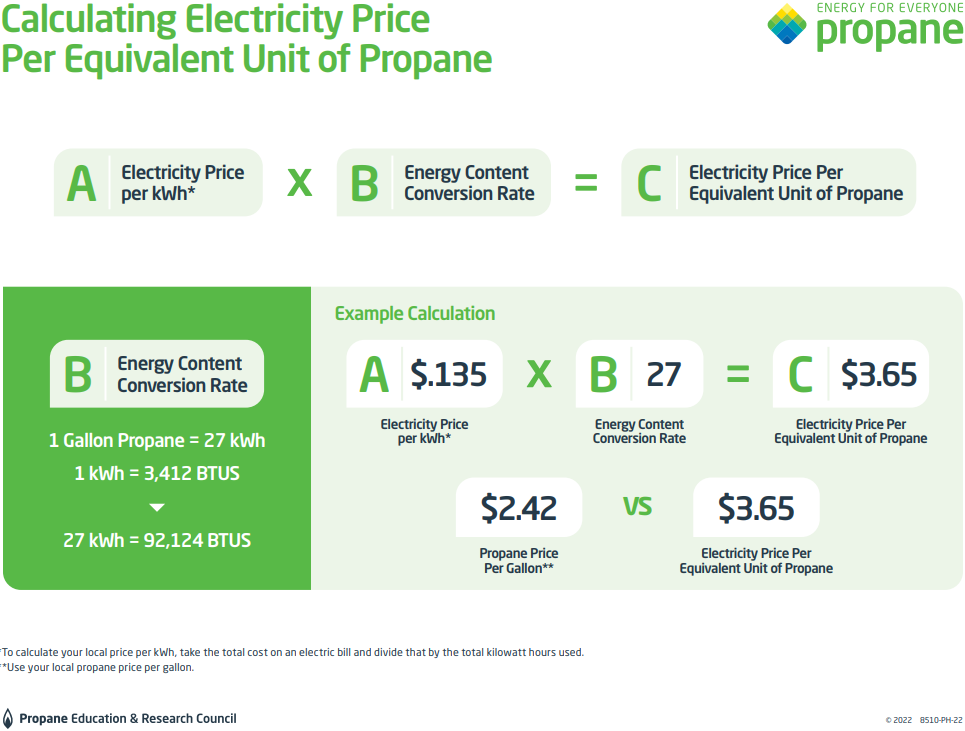
Option A (Using Historical Data): If you have past heating bills, analyze your energy consumption during the heating season (typically November to March). Convert your propane consumption to BTU (British Thermal Units - a measure of heat) using the conversion factor of 91,500 BTU per gallon of propane. Convert your electricity consumption to BTU using the conversion factor of 3,412 BTU per kWh.
Option B (Consult a Professional): The most accurate way to determine your heating load is to have a professional HVAC contractor perform a heat loss calculation. This calculation takes into account factors such as your home's size, insulation levels, window efficiency, and climate.
For this example, let's *assume* your home requires 100 million BTU of heat per heating season.
Step 2: Calculate Fuel Consumption
Once you know your heating load, you can calculate the amount of propane or electricity required to meet that load. This involves using the efficiency ratings of the heating systems.
Propane Calculation:
- Choose an AFUE rating for the propane furnace. Let's assume an 80% AFUE furnace.
- Divide the heating load by the AFUE to determine the total BTU input required: 100,000,000 BTU / 0.80 = 125,000,000 BTU.
- Divide the total BTU input by the BTU content of propane (91,500 BTU/gallon) to determine the gallons of propane required: 125,000,000 BTU / 91,500 BTU/gallon = approximately 1366 gallons.
Electricity Calculation (Electric Furnace):
- Choose an AFUE rating for the electric furnace. Let's assume a 95% AFUE furnace (electric furnaces are often more efficient).
- Divide the heating load by the AFUE to determine the total BTU input required: 100,000,000 BTU / 0.95 = approximately 105,263,158 BTU.
- Divide the total BTU input by the BTU content of electricity (3,412 BTU/kWh) to determine the kWh required: 105,263,158 BTU / 3,412 BTU/kWh = approximately 30,851 kWh.
Electricity Calculation (Heat Pump): This calculation is more complex as heat pump efficiency (HSPF) varies with outdoor temperature. Let's assume an *average* HSPF of 3.0. A heat pump with an HSPF of 3.0 moves 3 units of heat for every 1 unit of electricity consumed.
- Divide the total BTU's required by the HSPF. Remember to convert HSPF to a decimal by dividing by 3.412: 3/3.412 = 0.88
- 100,000,000 BTU / 0.88 = approximately 113,636,363 BTU input required.
- Divide the total BTU input by the BTU content of electricity (3,412 BTU/kWh) to determine the kWh required: 113,636,363 BTU / 3,412 BTU/kWh = approximately 33,305 kWh.
Important Note: Heat pumps become less efficient as the outdoor temperature drops. In extremely cold climates, they may rely on auxiliary electric resistance heat, which is much less efficient. This increases the overall electricity consumption.
Step 3: Calculate Total Cost
Multiply the fuel consumption by the price per unit to determine the total heating cost.
Propane Cost:
- Assume a propane price of $3.00 per gallon.
- Multiply the gallons of propane required (1366 gallons) by the price per gallon: 1366 gallons * $3.00/gallon = $4098.
Electric Furnace Cost:
- Assume an electricity price of $0.15 per kWh.
- Multiply the kWh required (30,851 kWh) by the price per kWh: 30,851 kWh * $0.15/kWh = $4627.65.
Heat Pump Cost:
- Assume an electricity price of $0.15 per kWh.
- Multiply the kWh required (33,305 kWh) by the price per kWh: 33,305 kWh * $0.15/kWh = $4995.75
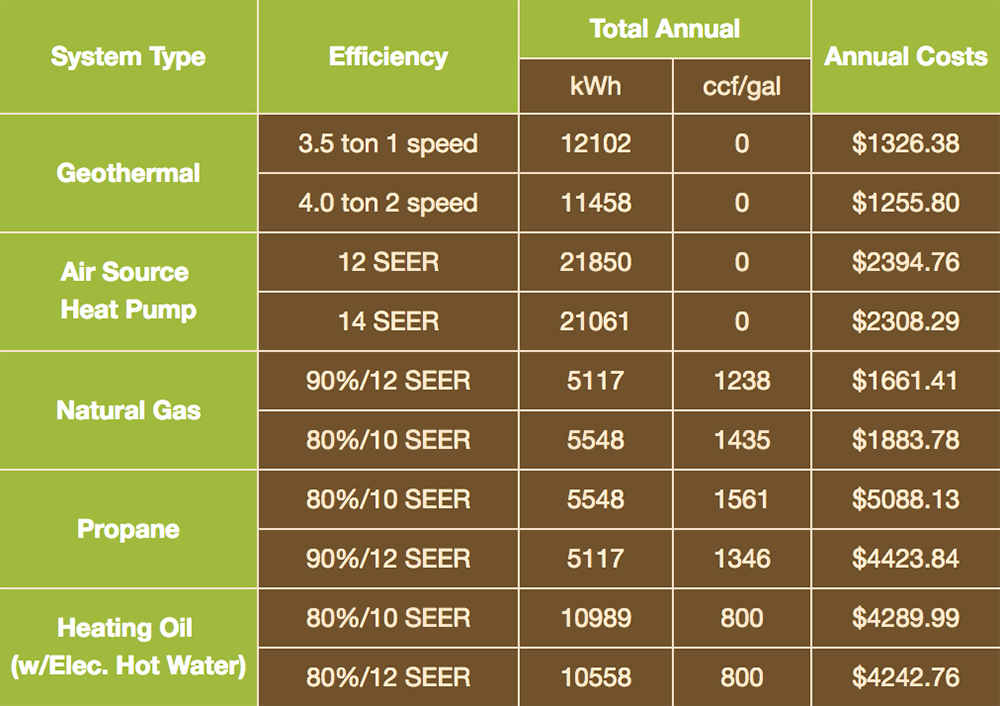
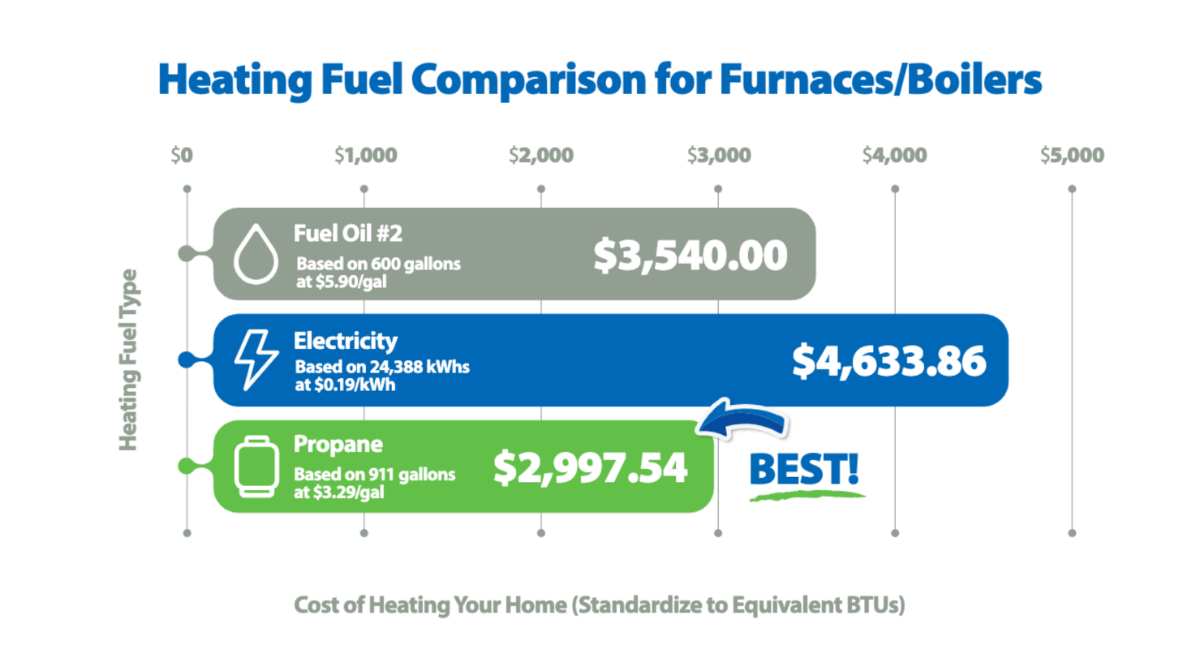
Based on these calculations, in *this specific scenario*, propane heat ($4098) appears to be the least expensive option, followed by electric furnace ($4627.65) and heat pump ($4995.75). *However*, remember that these are just estimates, and the actual costs can vary significantly based on the factors discussed earlier.
Beyond Cost: Other Considerations
While cost is a major factor, it's essential to consider other aspects when choosing between propane and electric heat.
- Environmental Impact: Propane is a cleaner-burning fossil fuel than coal, which is still used in some regions to generate electricity. However, electricity generated from renewable sources (solar, wind, hydro) has a much lower environmental impact.
- Availability: Propane requires a tank on your property, which needs to be filled periodically. Electricity is readily available in most areas.
- Safety: Propane is flammable and requires proper venting to prevent carbon monoxide poisoning. Electric heat is generally considered safer in terms of fire and carbon monoxide risk.
- Maintenance: Both propane and electric heating systems require regular maintenance to ensure optimal performance and safety.
- Upfront Costs: The initial cost of installing a propane furnace can be higher than installing an electric furnace. However, the long-term operating costs may be lower, depending on fuel prices and efficiency. Heat pumps have higher upfront costs.
Conclusion
Choosing between propane and electric heat involves careful consideration of various factors, including fuel costs, system efficiency, climate, and usage habits. Use the Propane vs. Electric Heat Cost Calculator as a starting point, but don't rely solely on calculations. Get quotes from local HVAC contractors, analyze your energy consumption patterns, and consider the environmental and safety aspects before making a final decision. Consider all factors carefully, and make the best choice for *your* specific needs and circumstances.