Ratio Of Specific Heats For Air
Understanding the behavior of air is crucial for efficient HVAC (Heating, Ventilation, and Air Conditioning) system design, operation, and maintenance. One fundamental property that governs how air responds to changes in temperature and pressure is the ratio of specific heats, often denoted as γ (gamma) or k. This seemingly simple value has profound implications for everything from compressor performance to airflow calculations. This article will delve into the ratio of specific heats for air, explaining its significance in HVAC applications for homeowners, technicians, and facility managers alike.
What is Specific Heat?
Before diving into the ratio, let's define specific heat. Specific heat is the amount of heat required to raise the temperature of one unit mass (e.g., one kilogram or one pound) of a substance by one degree Celsius (or Fahrenheit). In simpler terms, it indicates how easily a substance heats up or cools down. Substances with high specific heat require more energy to change their temperature, while those with low specific heat change temperature more readily.
Air, being a mixture of gases (primarily nitrogen and oxygen), has two important specific heat values:
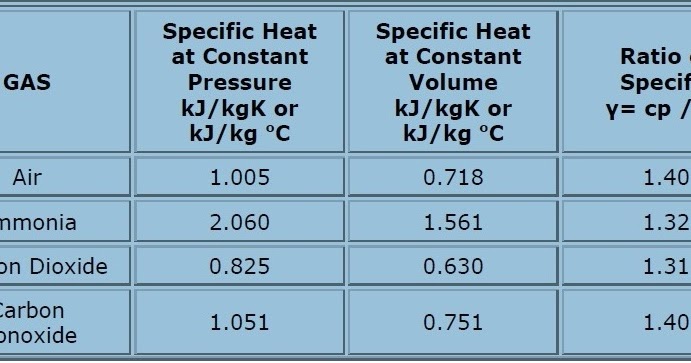
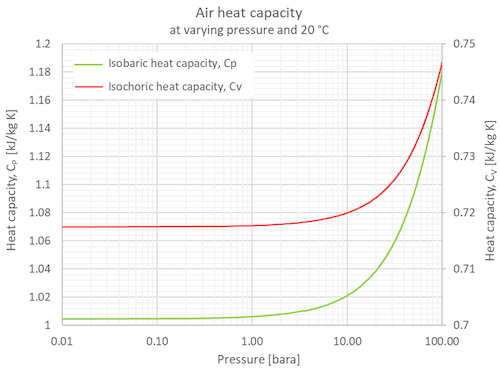
- Specific Heat at Constant Pressure (Cp): This refers to the heat required to raise the temperature of air by one degree while keeping the pressure constant. In HVAC systems, this is relevant when air is flowing through ducts or across coils at relatively constant pressure.
- Specific Heat at Constant Volume (Cv): This is the heat required to raise the temperature of air by one degree while keeping the volume constant. This scenario is less common in typical HVAC applications but is crucial in understanding thermodynamic processes within compressors.
The Ratio of Specific Heats (γ or k)
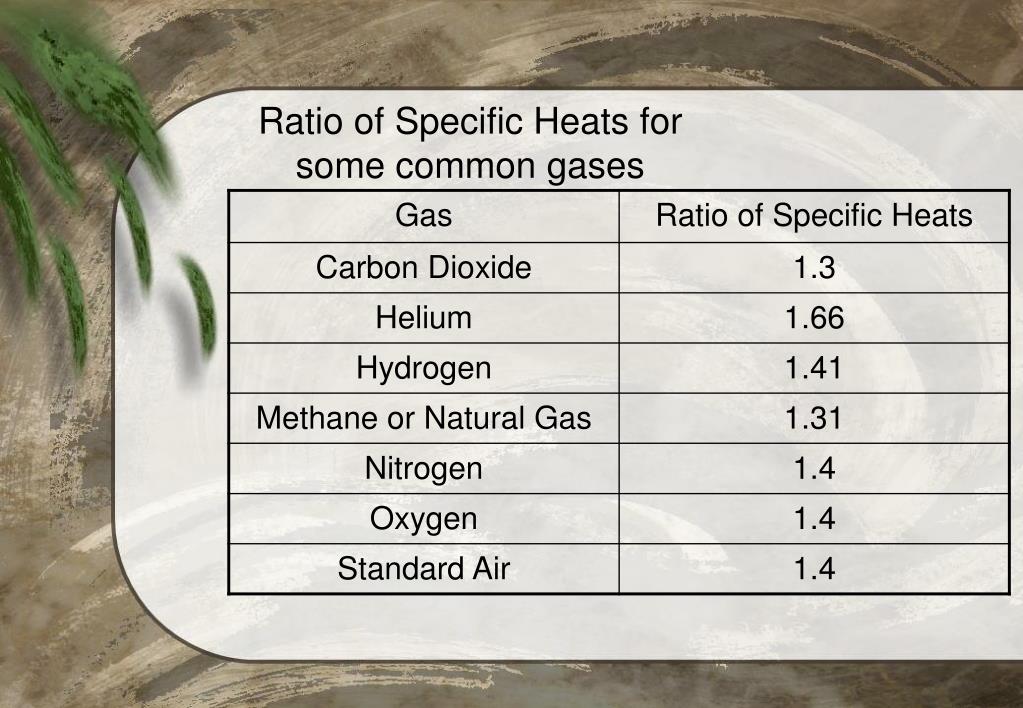
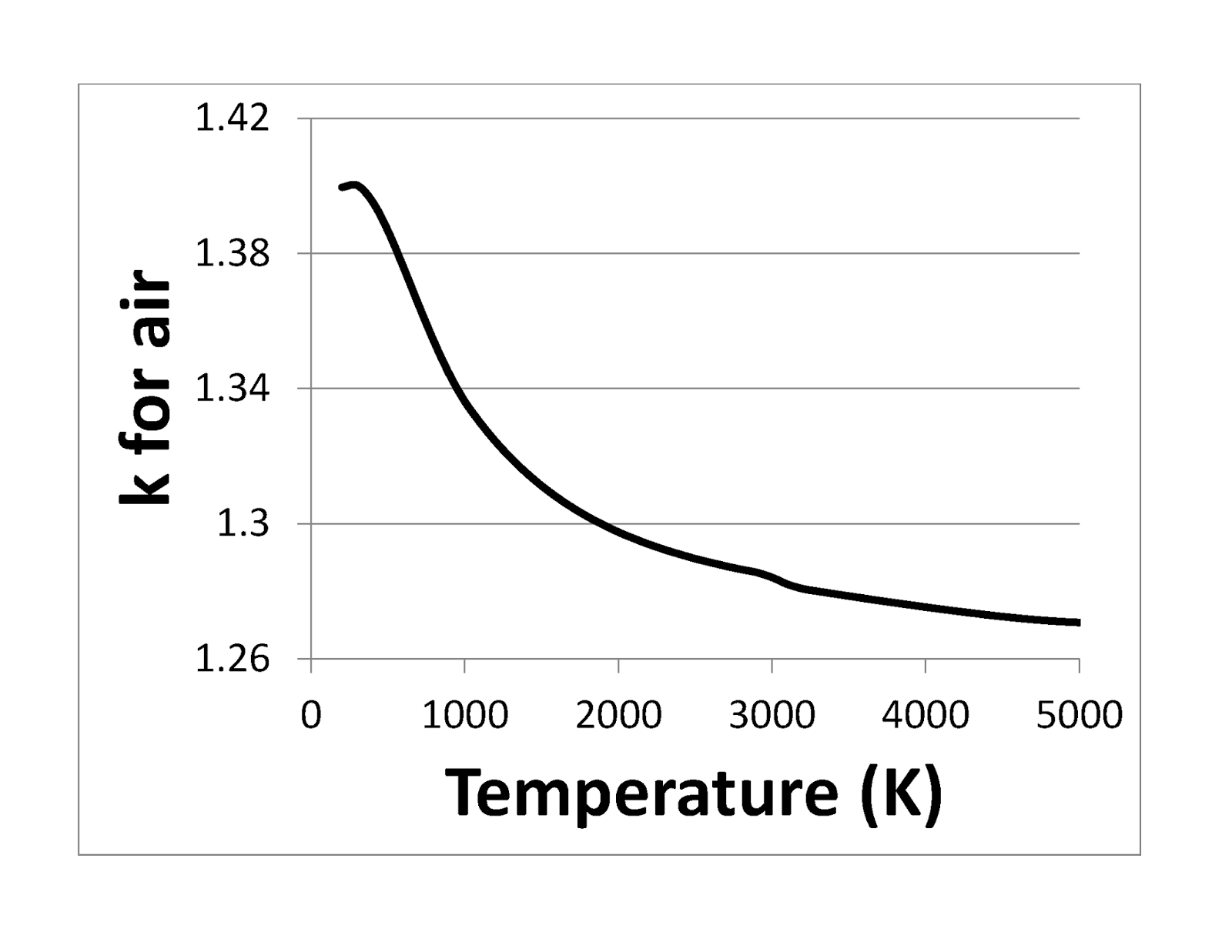
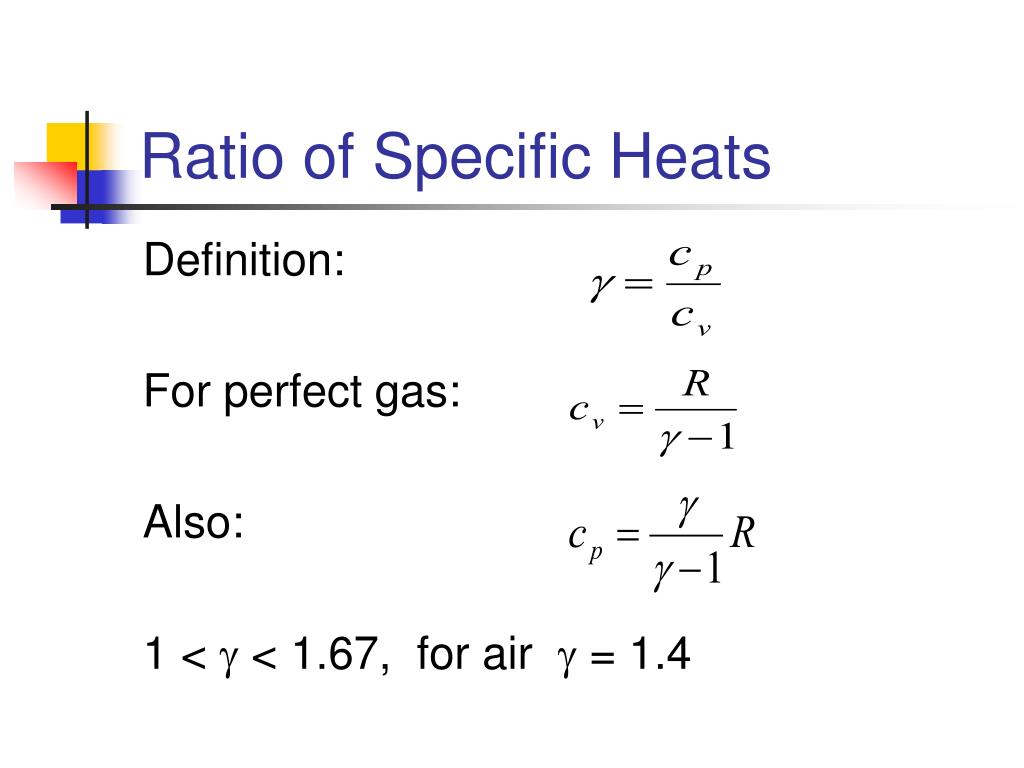
The ratio of specific heats (γ = Cp/Cv) is the value obtained by dividing the specific heat at constant pressure (Cp) by the specific heat at constant volume (Cv). For dry air at standard atmospheric conditions (approximately 25°C or 77°F), the ratio of specific heats is approximately 1.4.
Why is this ratio important? Because it appears in various thermodynamic equations that govern the behavior of air in HVAC systems. It helps predict how air will behave under different pressure and temperature conditions, particularly in processes involving compression and expansion.
Significance in HVAC Systems
The ratio of specific heats plays a vital role in several aspects of HVAC system design and operation:
1. Compressor Design and Performance
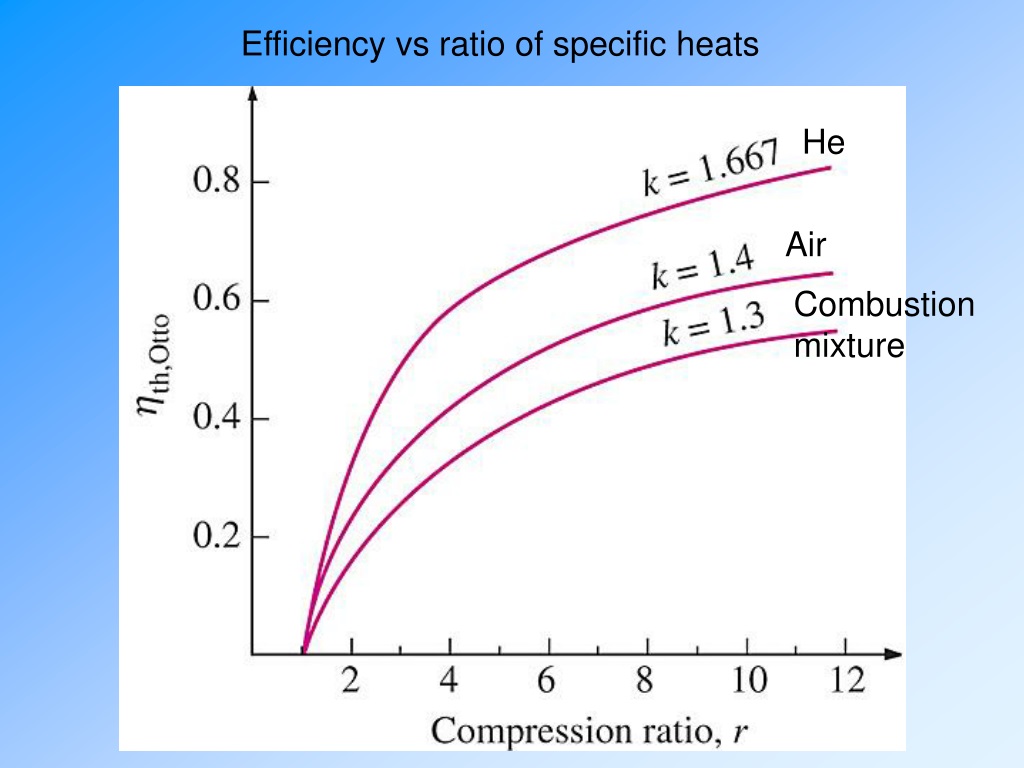
Compressors are the heart of air conditioning and heat pump systems. They compress refrigerant, increasing its pressure and temperature. The efficiency of a compressor is heavily influenced by the compression process, which can be approximated as either isentropic (ideal, no entropy increase) or polytropic (more realistic, with some entropy increase). The ratio of specific heats appears directly in the equations describing these compression processes. For example, the theoretical power required to compress a gas is directly related to γ. A compressor designed without considering the correct γ value for the refrigerant (or, in some specialized cases, compressed air systems) will operate inefficiently and may even be damaged.
Consider a scenario where an HVAC technician is replacing a compressor. Using the wrong type of compressor, with an incorrect compression ratio based on an inaccurate γ assumption, could lead to:
- Increased energy consumption.
- Reduced cooling or heating capacity.
- Premature compressor failure.
2. Nozzle and Orifice Design
Nozzles and orifices are used to control airflow and create pressure drops in HVAC systems. The flow rate through these components depends on the pressure difference and the properties of the air, including the ratio of specific heats. Accurately calculating the flow rate is essential for proper system balancing and ensuring that air is distributed correctly throughout the building. For instance, in Variable Air Volume (VAV) systems, precise airflow measurement at each zone is critical, and γ is a factor in the calculations.
3. Speed of Sound and Airflow Calculations
The speed of sound in air is also dependent on the ratio of specific heats. This parameter is important in analyzing airflow in ducts, especially when dealing with high-velocity systems or situations where noise is a concern. Understanding the speed of sound helps engineers design ductwork that minimizes pressure drop and noise generation. For example, designing for airflow around sharp bends or restrictions requires considering how sound waves might reflect and amplify noise, a calculation involving γ.
4. Expansion Valves and Refrigerant Metering
In refrigeration cycles, expansion valves (or metering devices) reduce the pressure of the refrigerant before it enters the evaporator. The behavior of the refrigerant during this expansion process is influenced by its thermodynamic properties, including a ratio analogous to the ratio of specific heats for air. This parameter affects the refrigerant flow rate and the overall efficiency of the cooling cycle.
5. HVAC System Modeling and Simulation
Engineers use computer models to simulate the performance of HVAC systems under various conditions. These models rely on accurate thermodynamic properties of air and refrigerants, including the ratio of specific heats. Using incorrect values can lead to inaccurate predictions of system performance and energy consumption. For example, a building energy model used to optimize energy usage needs accurate data, and an incorrect γ could result in inefficient HVAC scheduling.
Practical Implications for Different Audiences
For Homeowners
While homeowners may not need to calculate the ratio of specific heats directly, understanding its impact can help them make informed decisions about their HVAC systems. For example, when selecting a new air conditioner or heat pump, homeowners should focus on systems with high SEER (Seasonal Energy Efficiency Ratio) or HSPF (Heating Seasonal Performance Factor) ratings. These ratings reflect the overall energy efficiency of the system, which is influenced by factors such as compressor performance, which is, in turn, dependent on the principles described by γ.
Furthermore, regular maintenance, such as cleaning air filters and ensuring proper airflow, can help maintain the efficiency of the system. A clogged air filter restricts airflow, affecting the pressure and temperature distribution within the system, and potentially negating any fine-tuning done based on γ calculations during installation.
For HVAC Technicians and Installers
HVAC technicians need a thorough understanding of thermodynamic principles, including the ratio of specific heats, to properly diagnose and repair HVAC systems. When troubleshooting compressor problems, understanding the compression process and the factors that affect it is essential. This includes verifying proper refrigerant charge, checking for leaks, and ensuring that the system is operating within its design parameters. Furthermore, accurate airflow measurement and ductwork design require consideration of the ratio of specific heats.
For Facility Managers
Facility managers are responsible for maintaining the HVAC systems in large buildings. They need to understand how these systems operate to optimize energy consumption and ensure occupant comfort. Monitoring system performance, analyzing energy bills, and implementing energy-saving measures are all essential tasks. Understanding the thermodynamic principles that govern HVAC system behavior, including the ratio of specific heats, can help facility managers make informed decisions about system upgrades and maintenance strategies. Regular system audits, focusing on component efficiencies related to thermodynamic principles, can save considerable energy and operational costs.
Conclusion
The ratio of specific heats for air (γ) is a fundamental property that plays a crucial role in HVAC system design, operation, and maintenance. While homeowners may not need to calculate this value directly, understanding its impact can help them make informed decisions about their systems. HVAC technicians and facility managers need a more in-depth understanding of this parameter to properly diagnose problems, optimize performance, and ensure energy efficiency. By appreciating the importance of the ratio of specific heats, we can work towards creating more efficient and sustainable HVAC systems for the future.