Residential Hot Water Recirculating System Diagram

Understanding Residential Hot Water Recirculating Systems: A Guide to Efficiency and Savings
Tired of waiting minutes for hot water to reach your faucet? A residential hot water recirculating system can solve that problem, and more importantly, save you money on your energy and water bills. This comprehensive guide will break down the mechanics of these systems, explore different types, and explain how they can integrate with your smart home for maximum efficiency.
What is a Hot Water Recirculating System?
Simply put, a hot water recirculating system keeps hot water readily available at your faucets. Instead of waiting for the water in your pipes to heat up, the system continuously circulates hot water from your water heater through a loop of plumbing back to the heater. This ensures that hot water is always nearby, eliminating the cold water "slug" that often goes down the drain while you wait.
The core components of a recirculating system include:
- Water Heater: The source of hot water for the entire system.
- Pump: A small pump that circulates the hot water through the plumbing loop.
- Piping Loop: The existing or newly installed plumbing that connects the water heater to the furthest fixture and back.
- Check Valve (optional): Prevents backflow of cold water into the hot water lines.
- Timer or Thermostat (optional): Allows you to control when the system operates, maximizing energy savings.
Types of Hot Water Recirculating Systems
There are two primary types of residential hot water recirculating systems:
Dedicated Return Line Systems
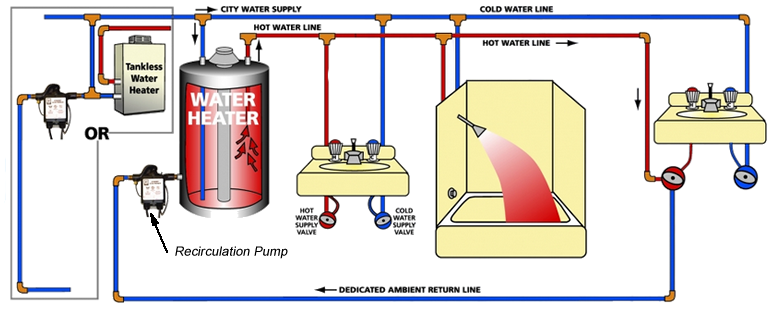
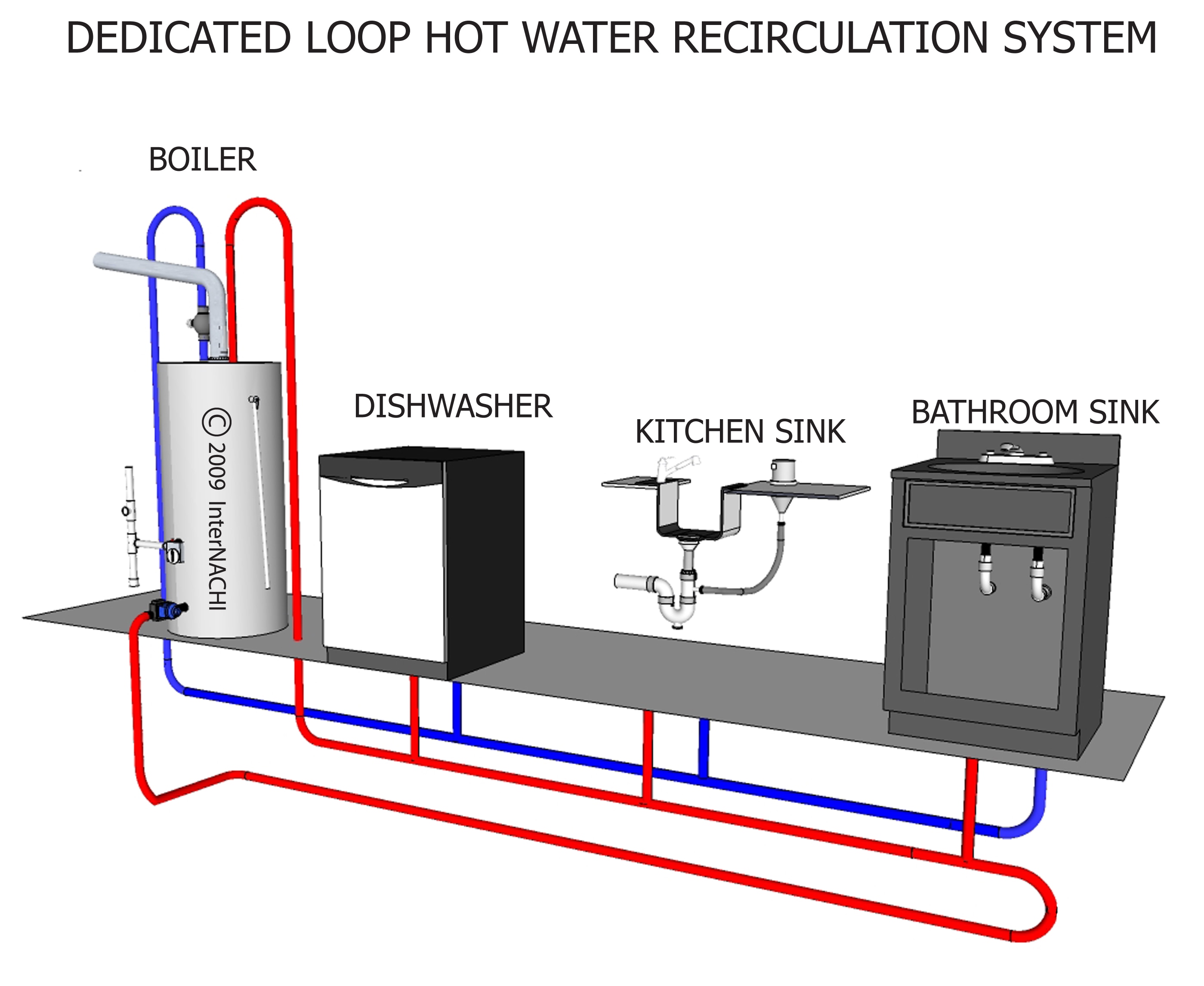
These systems require a dedicated return line running from the furthest fixture back to the water heater. This is the most efficient type of system because it provides a separate pathway for the recirculated water, minimizing any mixing with the cold water lines.
Pros:
- Maximum efficiency and performance.
- Minimal temperature fluctuations.
- Best for larger homes or homes with long plumbing runs.
Cons:
- Requires new plumbing, which can be expensive and disruptive to install in existing homes.
- Higher initial cost compared to comfort systems.
Comfort Systems (Under-Sink or Existing Line Systems)
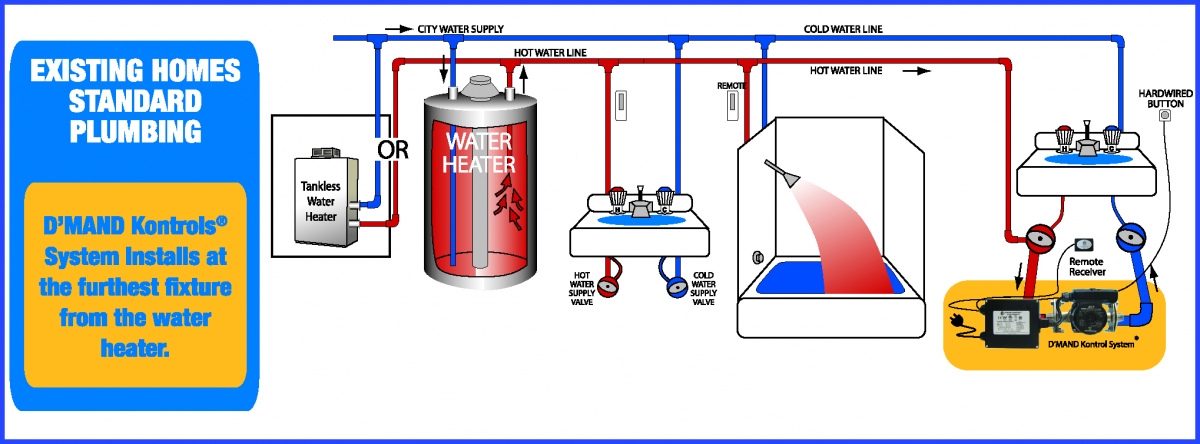
These systems utilize the existing cold water line as the return line. A small valve installed under the sink of the furthest fixture allows a small amount of hot water to bleed into the cold water line, creating a circulating loop. These are often referred to as "on-demand" systems, as they may include a button or sensor to activate the pump only when needed.
Pros:
- Relatively easy and inexpensive to install in existing homes.
- No need to run new plumbing.
- Ideal for smaller homes or apartments.
Cons:
- Less efficient than dedicated return line systems.
- Can cause the cold water line to become slightly warm.
- May not be suitable for homes with very long plumbing runs.
Hot Water Recirculating System Diagram: Visualizing the Setup
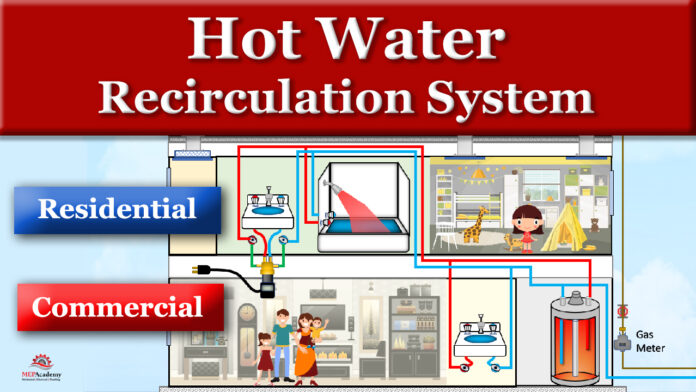
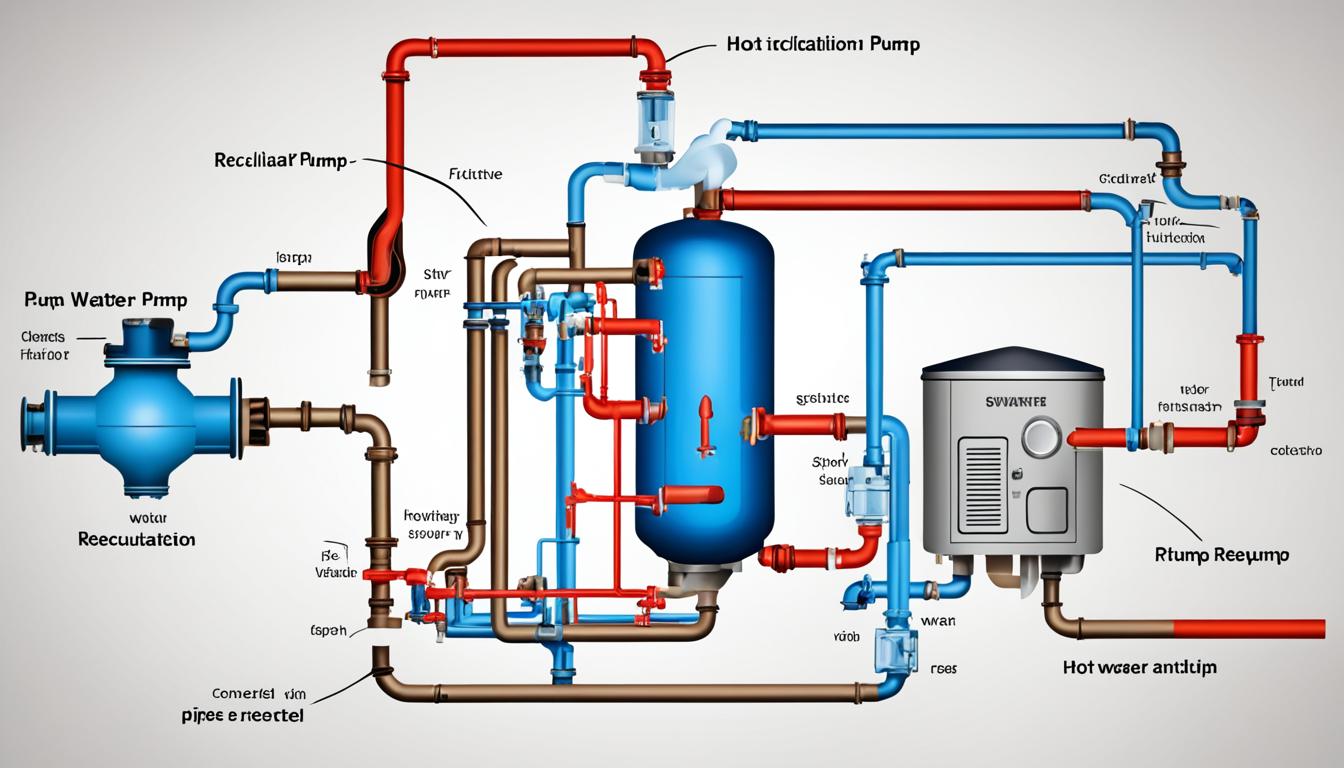
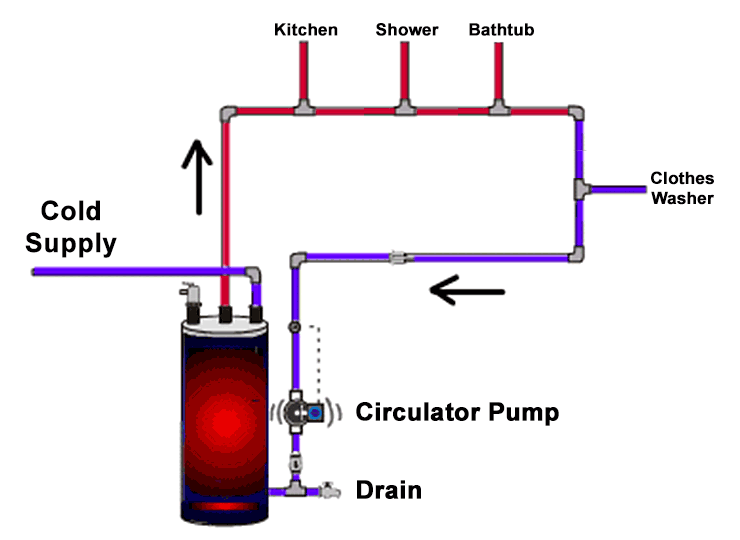
Understanding the system setup is crucial for proper installation and maintenance. Here's a simplified representation of both system types:
Dedicated Return Line System Diagram
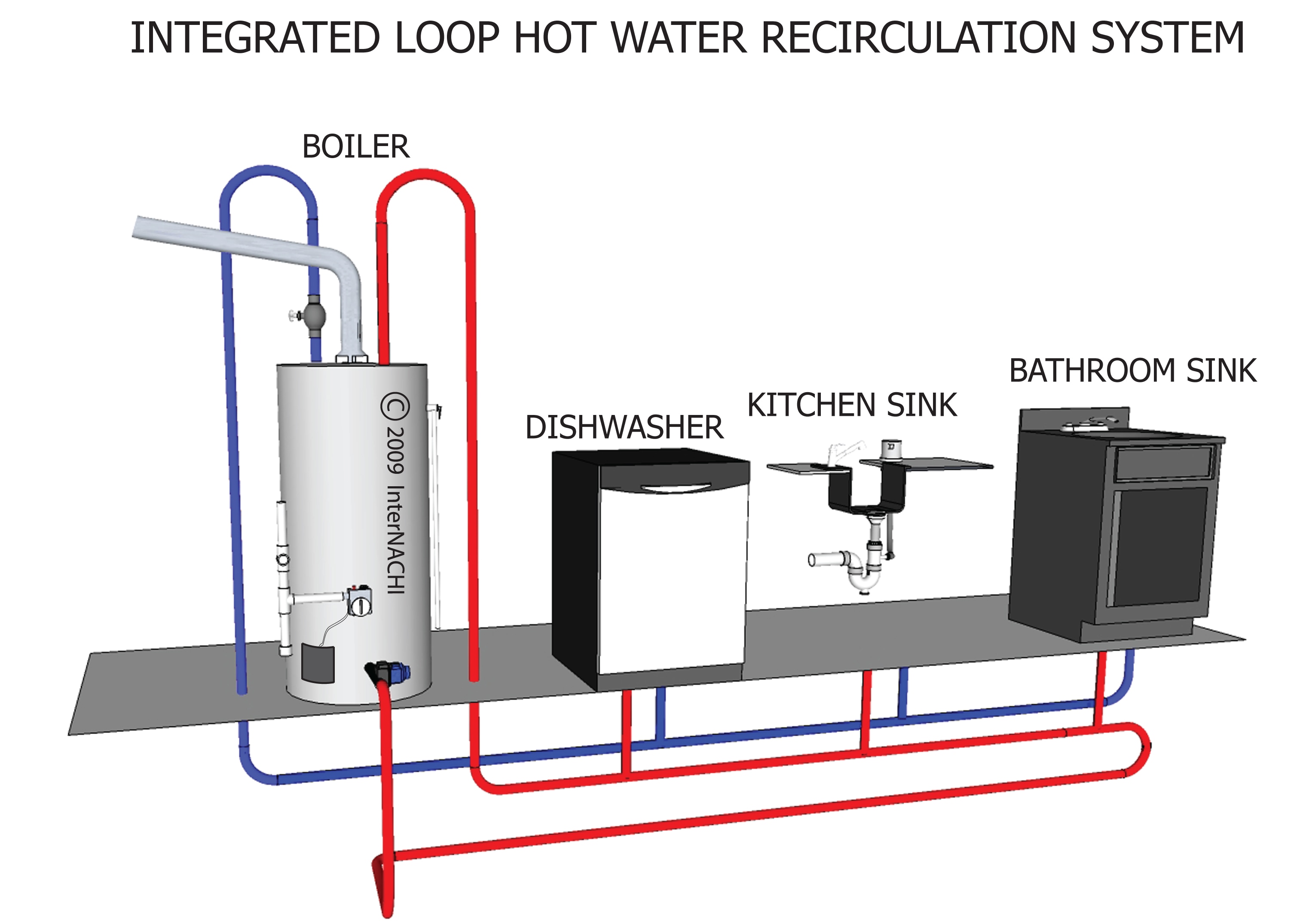
Imagine a closed-loop. At one end, you have your water heater. A pipe (the hot water supply line) runs from the water heater to your fixtures. From the furthest fixture, a *separate* pipe (the dedicated return line) runs *back* to the water heater. The pump is installed on this return line, circulating the hot water. A check valve is often placed near the water heater to prevent backflow.
Comfort System Diagram
Again, start with your water heater and the hot water supply line running to your fixtures. At the furthest fixture, a small valve connects the hot water supply line to the *cold water supply line*. When the pump is activated, it pushes hot water towards the fixture, and that water then flows *back* to the water heater *through the cold water line*. This is why it's important to only activate these systems when needed, as constantly running them can lead to warm cold water.
Benefits of Installing a Hot Water Recirculating System
Beyond the convenience of instant hot water, these systems offer several significant advantages:
- Water Conservation: No more wasted water while waiting for it to heat up. This can save a considerable amount of water over time, especially in larger households.
- Energy Savings: While the pump itself consumes some electricity, the reduction in water heating demand can lead to overall energy savings. You're not constantly reheating water that goes unused down the drain. According to the Energy Star program, optimizing your water heating system is a key step in reducing your home's energy consumption.
- Reduced Plumbing Wear and Tear: Constant expansion and contraction of pipes due to temperature fluctuations can lead to leaks and other plumbing problems. Recirculating systems help maintain a more consistent temperature, reducing stress on your pipes.
- Increased Comfort: Enjoy the luxury of instant hot water for showers, washing dishes, and other everyday tasks.
Calculating ROI and Energy Savings
The return on investment (ROI) for a hot water recirculating system depends on several factors, including:
- Water usage habits: Households that frequently use small amounts of hot water will see the greatest savings.
- Water heater efficiency: Older, less efficient water heaters will result in higher energy savings.
- System type: Dedicated return line systems generally offer better energy savings than comfort systems.
- Local water and energy costs: Areas with higher utility rates will see a faster ROI.
As a general rule, you can expect to save anywhere from 5% to 15% on your water heating bill with a properly installed and operated recirculating system. To estimate your potential savings, track your water usage for a month before and after installation. Also, check with your local utility company for rebates or incentives on energy-efficient upgrades.
Example: A family of four uses an average of 60 gallons of hot water per day. A hot water recirculating system could save them 10 gallons of water per day, or 3,650 gallons per year. At an average water and sewer rate of $0.01 per gallon, this translates to a savings of $36.50 per year on water alone. Additionally, the reduction in water heating demand could save them another $50-$100 per year on their energy bill. Over time, these savings can easily offset the cost of the system.
Smart Home Integration for Enhanced Efficiency
Integrating your hot water recirculating system with your smart home can further optimize its performance and energy savings. Here are a few ways to do it:
- Smart Thermostats: Control the system's operating schedule based on your actual needs. For example, you can set it to run only during peak usage times, such as morning and evening showers.
- Motion Sensors: Activate the pump only when someone is nearby, ensuring that hot water is available when needed without wasting energy.
- Voice Control: Use voice commands to turn the system on or off remotely.
- Leak Detection Sensors: Receive alerts if a leak is detected in the system, allowing you to address the problem quickly and prevent water damage.
By combining a hot water recirculating system with smart home technology, you can create a truly efficient and convenient water heating solution.
Installation and Maintenance
While some homeowners may be comfortable installing a comfort system themselves, dedicated return line systems typically require professional installation. It's essential to hire a qualified HVAC contractor with experience in plumbing and water heating systems.
Proper maintenance is also crucial for ensuring the long-term performance of your recirculating system. This includes:
- Regularly inspecting the pump for leaks or malfunctions.
- Flushing the water heater annually to remove sediment buildup.
- Checking the check valve (if applicable) to ensure proper operation.
- Replacing the pump as needed (typically every 5-10 years).
Rebates and Incentives
Many utility companies and government agencies offer rebates and incentives for installing energy-efficient water heating systems. Check with your local utility company and the DSIRE (Database of State Incentives for Renewables & Efficiency) website to see what programs are available in your area. These incentives can significantly reduce the upfront cost of the system and make it even more affordable.
Conclusion: Is a Hot Water Recirculating System Right for You?
A residential hot water recirculating system can be a valuable investment for homeowners looking to save water, energy, and money. By understanding the different types of systems, calculating your potential savings, and integrating with smart home technology, you can make an informed decision and enjoy the benefits of instant hot water for years to come. Consult with a qualified HVAC contractor to determine the best system for your home and start saving today!