Scotch Super 33 Vs Super 88

Choosing the right electrical tape in HVAC work is crucial for safety, reliability, and code compliance. Two popular choices, Scotch Super 33+ and Scotch Super 88, often lead to questions about their differences and appropriate applications. This guide will provide a detailed comparison to help HVAC professionals, students, and employers make informed decisions.
Understanding Electrical Tape in HVAC Systems
Electrical tape isn't just about insulation; it's a critical component of any HVAC system's electrical safety. It's used to:
- Insulate electrical connections, preventing shorts and shocks.
- Protect wires and cables from abrasion, moisture, and chemicals.
- Color-code wires for easy identification during maintenance and troubleshooting.
- Bundling wires to create an organized and secure wiring system.
Using the correct type of electrical tape ensures longevity and reduces the risk of electrical failures, which can lead to costly downtime and potentially dangerous situations.
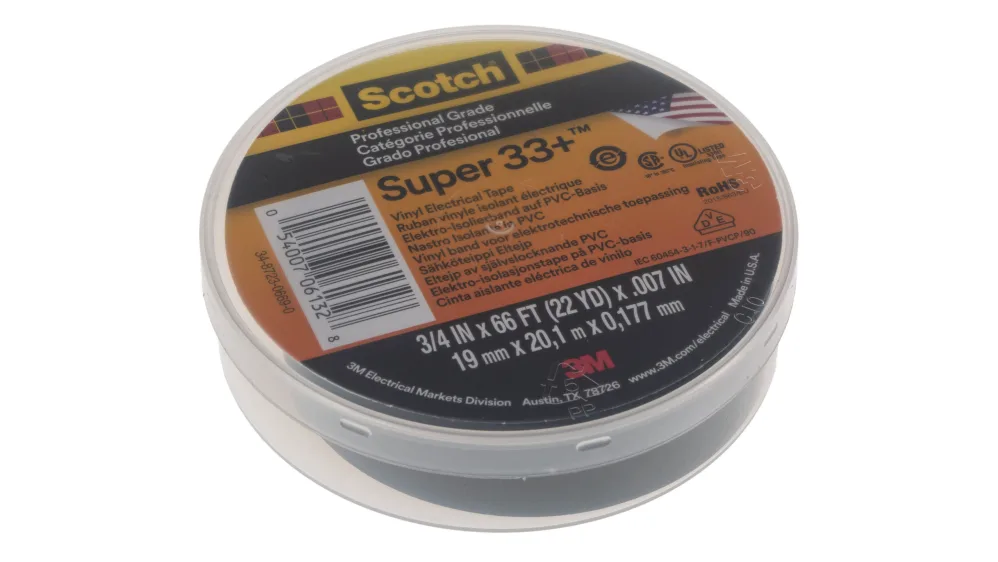
Scotch Super 33+ Electrical Tape: The General-Purpose Workhorse
Scotch Super 33+ is a premium-grade, all-weather vinyl electrical tape. It's known for its flexibility, adhesion, and wide temperature range.
Key Features of Super 33+:
- Temperature Rating: -0°F to 220°F (-18°C to 105°C).
- Voltage Rating: Up to 600V.
- Material: Vinyl (PVC).
- Adhesive: Rubber-based.
- Thickness: Typically 7 mils (0.007 inches).
- Approvals: UL Listed, CSA Certified.
Super 33+ is suitable for a wide range of HVAC applications, including insulating wires and cables, making splices, and providing a protective jacket. Its flexibility allows it to conform easily to irregular shapes, making it ideal for tight spaces.
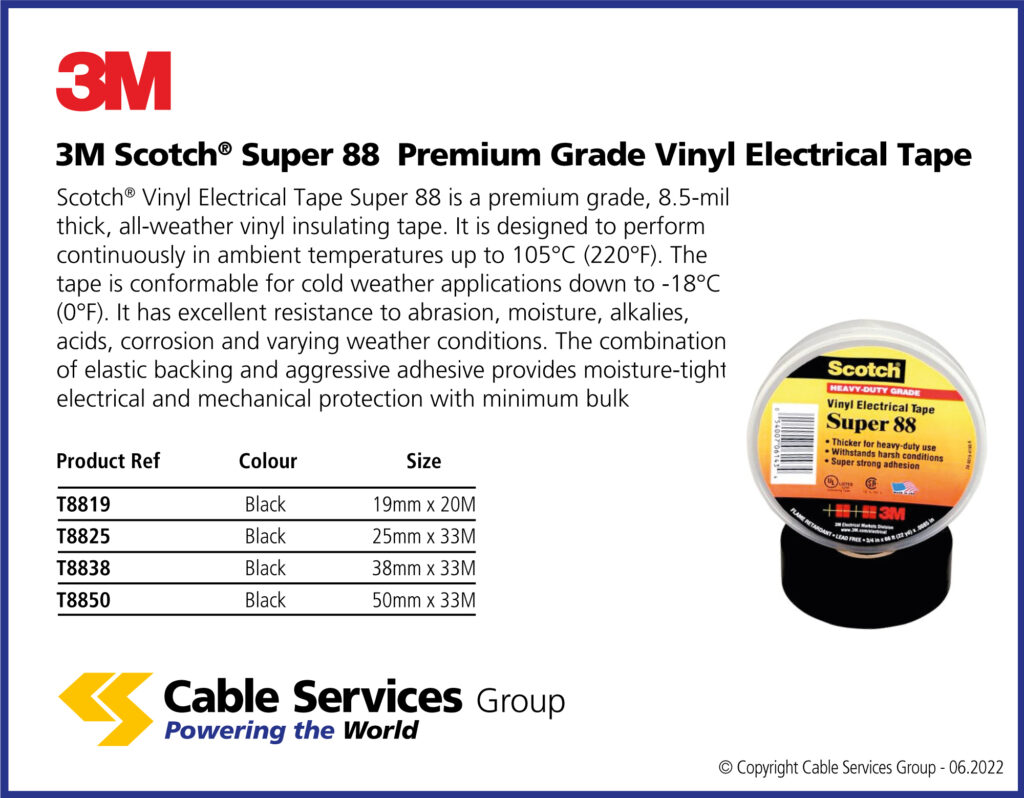
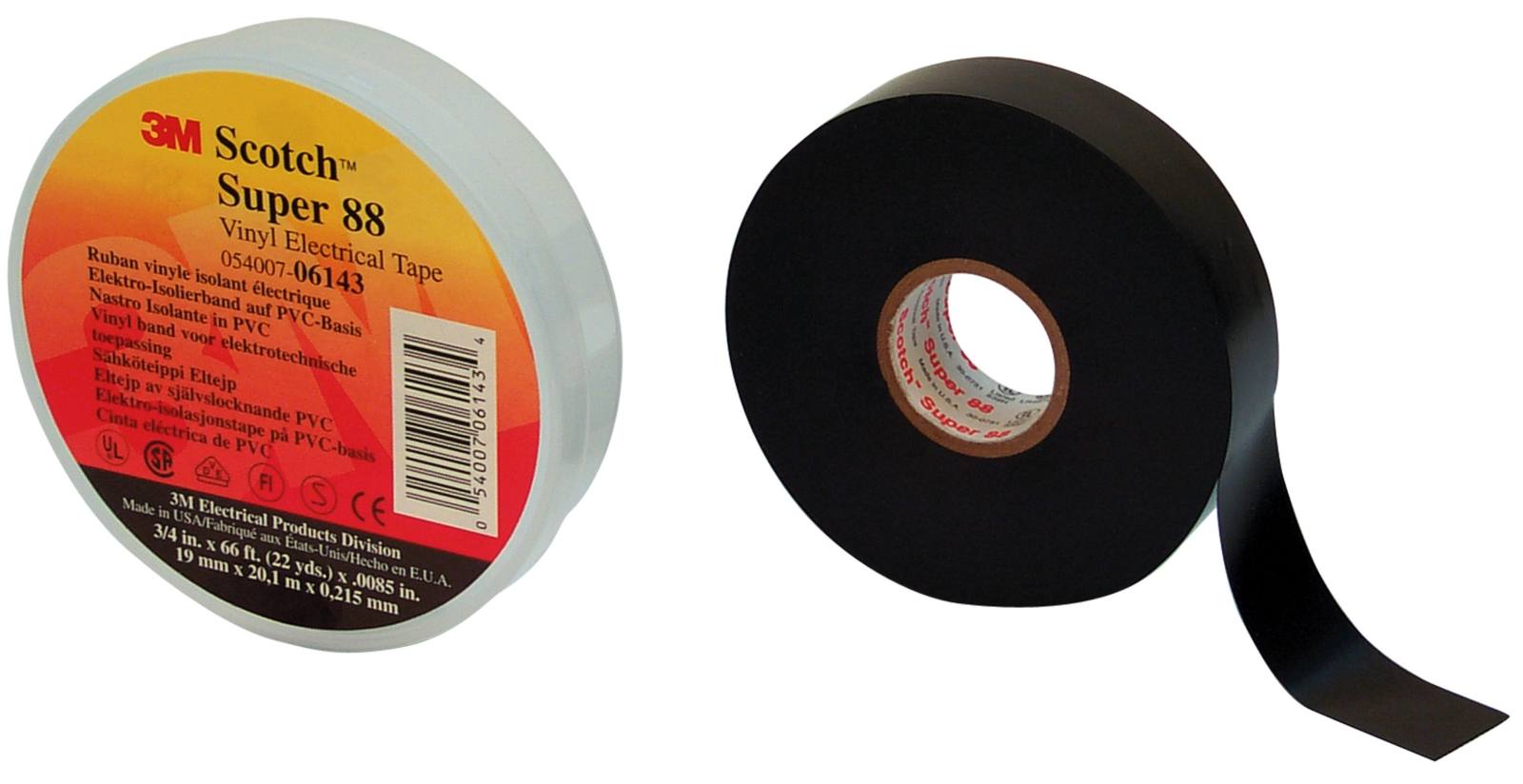
Scotch Super 88 Electrical Tape: The Heavy-Duty Champion
Scotch Super 88 is designed for more demanding applications where superior performance and durability are required. It offers enhanced resistance to abrasion, moisture, and UV exposure.
Key Features of Super 88:
- Temperature Rating: -0°F to 220°F (-18°C to 105°C).
- Voltage Rating: Up to 600V.
- Material: Vinyl (PVC).
- Adhesive: Rubber-based.
- Thickness: Typically 8.5 mils (0.0085 inches).
- Approvals: UL Listed, CSA Certified.
Notice that both tapes have similar temperature and voltage ratings. The critical difference lies in the thickness. Super 88's greater thickness provides superior protection against physical damage and environmental factors. It is the preferred choice for:
- Direct burial applications
- Underground installations
- Exposure to harsh chemicals or solvents
- High-stress environments where abrasion is a concern
Side-by-Side Comparison: Super 33+ vs. Super 88
Here's a table summarizing the key differences:
| Feature | Scotch Super 33+ | Scotch Super 88 |
|---|---|---|
| Thickness | 7 mils | 8.5 mils |
| Abrasion Resistance | Good | Excellent |
| Moisture Resistance | Good | Excellent |
| UV Resistance | Good | Excellent |
| Typical Applications | General-purpose insulation, splicing, color-coding | Direct burial, underground, harsh environments |
Making the Right Choice for Your HVAC Application
The best choice between Super 33+ and Super 88 depends on the specific requirements of the application. For most indoor HVAC wiring and general insulation, Super 33+ is an excellent and cost-effective option. However, when dealing with outdoor installations, direct burial, or environments where the tape will be exposed to harsh conditions, Super 88 is the more robust and reliable choice.
Consider the long-term cost as well. While Super 88 is generally more expensive per roll, its superior durability can reduce the need for frequent replacements, potentially saving money in the long run.
The Importance of Proper Application
Regardless of which tape you choose, proper application is crucial for achieving optimal performance. Always follow these best practices:
- Clean and dry the surface before applying the tape.
- Apply the tape with a half-lapped overlap, ensuring complete coverage.
- Stretch the tape slightly during application to create a tight, waterproof seal.
- Avoid trapping air bubbles beneath the tape.
- For high-voltage applications, use multiple layers of tape for added insulation.
HVAC Career Paths and the Value of Knowledge
Understanding the nuances of materials like electrical tape is a hallmark of a skilled HVAC technician. A successful career in HVAC offers diverse opportunities, from installation and maintenance to system design and sales.
Career Paths in HVAC:
- HVAC Installer: Installs new heating, ventilation, and air conditioning systems. According to the Bureau of Labor Statistics, the median annual wage for HVAC installers and mechanics was $51,390 in May 2021. The job outlook is projected to grow 5 percent from 2021 to 2031.
- HVAC Technician: Maintains and repairs existing HVAC systems, diagnosing problems and performing necessary repairs.
- HVAC Service Manager: Oversees a team of technicians, managing schedules, customer service, and inventory.
- HVAC Sales Engineer: Designs and sells HVAC systems to commercial and industrial clients.
Certifications to Enhance Your Career:
- NATE (North American Technician Excellence): Demonstrates competency in specific HVAC areas.
- EPA 608 Certification: Required for handling refrigerants.
- HVAC Excellence: Another respected certification program for HVAC professionals.
These certifications, along with a solid understanding of materials and best practices, can significantly increase your earning potential and career advancement opportunities. Employers often seek candidates with certifications, as it indicates a commitment to professional development and a higher level of expertise.
HVAC Industry Trends and the Future of the Trade
The HVAC industry is constantly evolving, driven by technological advancements and changing environmental regulations. Staying up-to-date with the latest trends is essential for long-term success.
Key Trends in HVAC:
- Smart HVAC Systems: Integration of internet-connected thermostats and control systems for improved energy efficiency and remote monitoring.
- Energy-Efficient Technologies: Growing demand for high-efficiency HVAC equipment that reduces energy consumption and lowers utility bills.
- Refrigerant Regulations: Phasing out of ozone-depleting refrigerants and adoption of more environmentally friendly alternatives.
- Increased Focus on Indoor Air Quality: Growing awareness of the importance of clean and healthy indoor air, leading to demand for advanced filtration and ventilation systems.
Embracing these trends and continuously expanding your knowledge will ensure that you remain a valuable asset in the HVAC industry.
Conclusion
Choosing between Scotch Super 33+ and Super 88 electrical tape is a matter of understanding the specific demands of the application. While Super 33+ is a reliable all-purpose tape, Super 88 provides superior protection in harsh environments. By carefully considering the factors outlined in this guide and adhering to best practices, HVAC professionals can ensure the safety, reliability, and longevity of their electrical installations. Moreover, continuous learning, professional certifications, and adaptation to industry trends are vital components to a successful and rewarding career in the HVAC field.