Single Stage Vs Two Stage Ac

Choosing the right air conditioning system for your home can feel overwhelming. Understanding the differences between single-stage and two-stage AC units is a crucial step in making an informed decision. This guide breaks down the key distinctions, benefits, and drawbacks of each type, empowering you to select the system that best fits your needs and budget.
Understanding the Basics: Single-Stage AC Systems
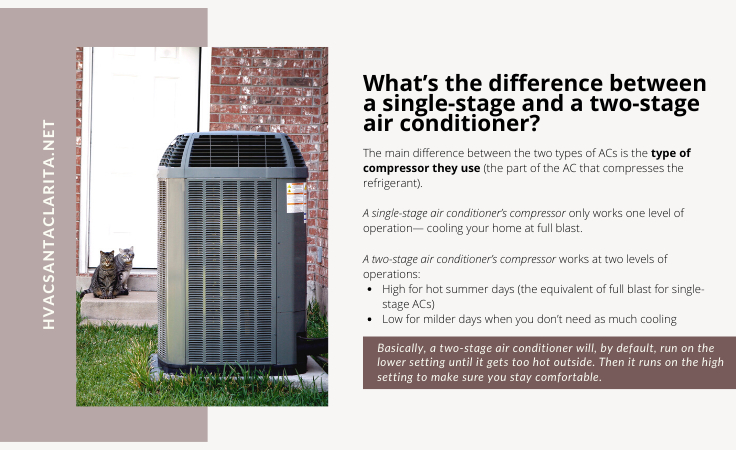
A single-stage air conditioner operates at only one speed: full blast. Think of it like a light switch – it's either on or off. When the thermostat detects the temperature is above your set point, the AC kicks on and runs at its maximum cooling capacity until the desired temperature is reached. Then, it shuts off completely.
How Single-Stage AC Works
The fundamental principle involves a refrigerant cycle. Think of refrigerant as the "blood" of your AC system, carrying heat from inside your home to the outside. The compressor, the heart of the system, pressurizes this refrigerant, causing it to heat up. This hot, high-pressure refrigerant then flows to the outdoor coil, where it releases its heat into the outside air. As it cools, it becomes a liquid again and flows back inside to the indoor coil (the evaporator). Here, it absorbs heat from your indoor air, cooling it down, before returning to the compressor to start the cycle anew. With a single-stage unit, this cycle always operates at the same, maximum intensity, regardless of how much cooling is actually needed.
Pros of Single-Stage AC
- Lower Initial Cost: Single-stage AC units are generally less expensive to purchase and install than two-stage models. This makes them an attractive option for budget-conscious homeowners.
- Simpler Design: Their straightforward design makes them generally easier to repair and maintain. Fewer components mean less that can potentially go wrong.
- Readily Available: Single-stage units are widely available from various manufacturers and retailers, providing ample choices.
Cons of Single-Stage AC
- Less Efficient: Operating at full capacity all the time means they consume more energy, leading to higher electricity bills.
- Temperature Swings: The on-off nature of single-stage AC can result in noticeable temperature fluctuations. The room might feel too cold right after the unit starts, and then gradually warm up until it kicks on again.
- Higher Humidity: Because they cycle on and off frequently, they don't run long enough to effectively remove humidity from the air, leading to a potentially stuffy and uncomfortable indoor environment.
- Noisier Operation: Starting and stopping abruptly at full power can be noisy and disruptive.
- Shorter Lifespan: The constant strain of repeatedly starting and stopping at full capacity can potentially shorten the lifespan of the unit.
Delving into Two-Stage AC Systems
A two-stage air conditioner offers two cooling speeds: high and low. This allows the unit to operate at a lower, more energy-efficient speed when less cooling is required, and switch to high gear only when the demand increases. Imagine a car that can cruise on the highway or accelerate to pass – a two-stage AC offers similar flexibility.
How Two-Stage AC Works
The refrigerant cycle is similar to that of a single-stage unit, but the compressor is designed to operate at two different speeds. Most of the time, a two-stage AC unit will run on its lower setting, consuming less energy and providing more consistent cooling. When the temperature difference between your desired setting and the actual room temperature is significant (e.g., on a very hot day), the unit will automatically switch to its higher setting to quickly cool the space. Some advanced two-stage systems can even modulate their output between the two stages, offering even finer control and efficiency.
Pros of Two-Stage AC
- Greater Energy Efficiency: Running mostly on low speed significantly reduces energy consumption and lowers utility bills.
- More Consistent Temperatures: The ability to operate at a lower speed for longer periods reduces temperature swings, creating a more comfortable and even indoor climate.
- Improved Humidity Control: Longer run times at the lower speed allow the system to effectively remove humidity from the air, leading to a drier and more comfortable indoor environment. This is because the evaporator coil has more time to cool and condense moisture.
- Quieter Operation: Running on low speed is significantly quieter than operating at full blast.
- Potentially Longer Lifespan: Less stress on the compressor from frequent starting and stopping can potentially extend the unit's lifespan.
Cons of Two-Stage AC
- Higher Initial Cost: Two-stage AC units are typically more expensive to purchase and install than single-stage models.
- More Complex Design: The more complex design can potentially lead to more complicated and expensive repairs. However, modern units are generally reliable.
- Requires Professional Installation: Proper installation is crucial for optimal performance. It's essential to choose a qualified and experienced HVAC technician.
Single-Stage vs. Two-Stage: A Detailed Comparison
Let's break down the key differences between single-stage and two-stage AC systems in a table format for easy comparison:
| Feature | Single-Stage AC | Two-Stage AC |
|---|---|---|
| Cooling Stages | One (Full Blast) | Two (High & Low) |
| Energy Efficiency | Lower | Higher |
| Temperature Consistency | Less Consistent (Temperature Swings) | More Consistent |
| Humidity Control | Poorer | Better |
| Noise Level | Louder (Especially during start/stop) | Quieter |
| Initial Cost | Lower | Higher |
| Repair Complexity | Simpler | More Complex |
| Lifespan | Potentially Shorter | Potentially Longer |
Which Type is Right for You? Factors to Consider
The best choice for your home depends on several factors:
- Budget: If you have a limited budget, a single-stage AC might be the more affordable option upfront. However, consider the long-term cost of higher energy bills.
- Climate: If you live in a region with long, hot, and humid summers, a two-stage AC will likely provide better comfort and energy savings.
- Home Size and Insulation: The size of your home and the quality of its insulation play a significant role in determining your cooling needs. A well-insulated home might benefit more from the efficiency of a two-stage system.
- Comfort Preferences: If you prioritize consistent temperatures and humidity control, a two-stage AC is the better choice.
- Long-Term Savings: While the initial investment is higher, a two-stage AC can save you money on energy bills over the long run.
SEER (Seasonal Energy Efficiency Ratio): This rating measures an AC unit's cooling efficiency. A higher SEER rating indicates greater energy efficiency. When comparing AC units, pay close attention to the SEER rating. Two-stage units typically have higher SEER ratings than single-stage models.
Installation and Maintenance
Regardless of which type of AC you choose, proper installation and regular maintenance are essential for optimal performance and longevity.
- Professional Installation: Always hire a qualified and experienced HVAC technician to install your AC system. Proper installation ensures the unit operates efficiently and safely.
- Regular Maintenance: Schedule regular maintenance appointments with your HVAC technician to inspect and clean your AC unit. This includes cleaning or replacing air filters, inspecting coils, and checking refrigerant levels.
- Air Filter Replacement: Replace your air filter regularly (typically every 1-3 months) to maintain good airflow and prevent dust and debris from damaging the system.
Final Thoughts
Choosing between a single-stage and two-stage AC unit is a significant decision that impacts your comfort, energy consumption, and budget. While single-stage units offer a lower initial cost, two-stage units provide superior comfort, energy efficiency, and humidity control. Carefully consider your individual needs and circumstances before making a decision. Consult with a qualified HVAC professional to get personalized recommendations and ensure proper installation for optimal performance. By understanding the differences between these systems, you can make an informed choice and enjoy a cool and comfortable home for years to come. Remember to factor in not just the price, but the *value* each system provides.