Single Zone Radiant Floor Heating Diagram

Radiant floor heating offers a comfortable and energy-efficient way to heat your home. Unlike traditional forced-air systems that blow warm air through ducts, radiant floor heating warms the floor itself, which then radiates heat upwards, creating a consistent and even temperature throughout the room. This guide focuses specifically on single-zone radiant floor heating systems, providing a detailed explanation of their components and how they function, all while offering a simplified and easy-to-understand approach.
Understanding Single-Zone Radiant Floor Heating
A single-zone radiant floor heating system controls the temperature of one area – one zone – in your home. This could be a bathroom, a small apartment, or a single room addition. The simplicity of a single-zone system makes it relatively straightforward to install and maintain compared to multi-zone setups.
Key Components of a Single-Zone System
Let's break down the essential components of a typical single-zone radiant floor heating system:
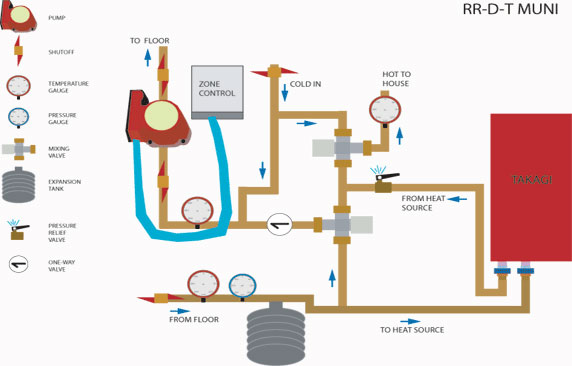
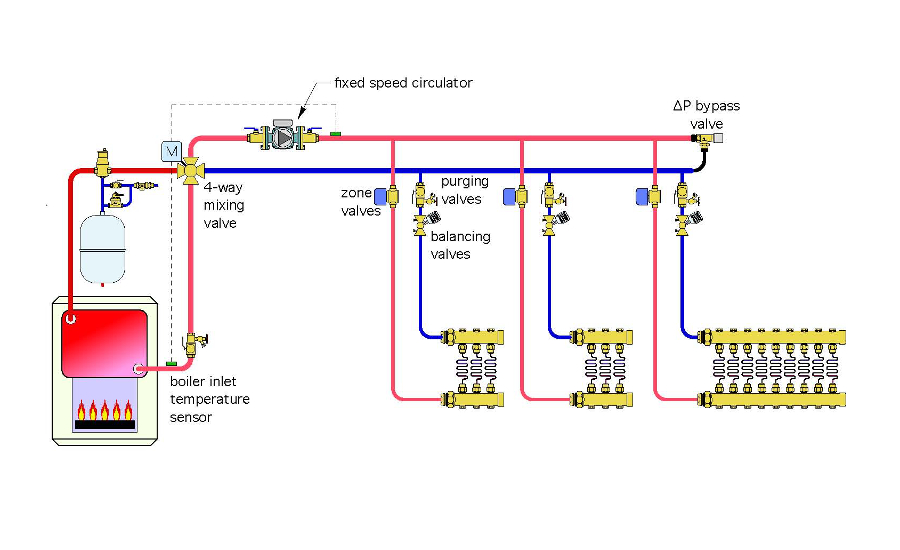
* Heat Source: This is the heart of the system, responsible for heating the water that will circulate through the floor. Common heat sources include: * Boiler: A boiler heats water using natural gas, propane, electricity, or oil. It's a common choice, especially when a hot water system is already present for domestic hot water. * Electric Resistance: Electric resistance cables or mats embedded in the floor directly generate heat. This is a simpler installation but often more expensive to operate than a boiler due to higher electricity costs. * Heat Pump: Heat pumps can be used in some climates, particularly air-to-water heat pumps. They efficiently transfer heat from the outside air (or ground) to the water. * Manifold: The manifold acts as a central distribution point for the heated water. It's where the water enters and exits the tubing loops within the floor. A single-zone system often has a simple manifold with one supply and one return port. * PEX Tubing: Cross-linked polyethylene (PEX) tubing is the most common material used for the in-floor loops. It's flexible, durable, and resistant to corrosion. The PEX tubing is embedded within the floor, typically in a concrete slab, thin-set mortar, or a lightweight concrete overlay. * Circulator Pump: The circulator pump is crucial for moving the heated water throughout the system. It ensures constant circulation from the heat source, through the manifold, into the PEX tubing, and back to the heat source. Think of the circulator pump as the "heart" of the system, pumping the heated water through the "veins" (PEX tubing). * Thermostat: The thermostat controls the system by sensing the room temperature and signaling the heat source to turn on or off to maintain the desired temperature. For a single-zone system, a simple thermostat is sufficient. More advanced thermostats can offer programmable schedules and remote control via a smartphone. * Mixing Valve (Optional): A mixing valve blends hot water from the heat source with cooler return water to achieve the desired supply temperature for the floor. This is especially important if the heat source produces very hot water (e.g., a boiler) as excessively hot floors can be uncomfortable and inefficient. * Expansion Tank: As water heats up, it expands. The expansion tank provides a space for the expanding water to go, preventing pressure buildup in the system. * Air Vent: Air trapped in the system can hinder circulation and reduce efficiency. Air vents allow trapped air to escape. * Pressure Relief Valve: This safety device releases water if the pressure in the system exceeds a safe level. * Control System: The control system ties everything together and includes wiring, relays, and other components to allow the thermostat to control the pump and heat source.A Visual Representation: The Single-Zone Radiant Floor Heating Diagram
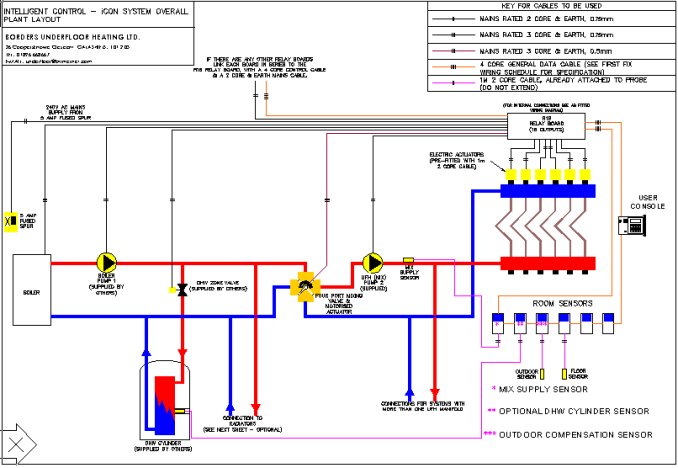
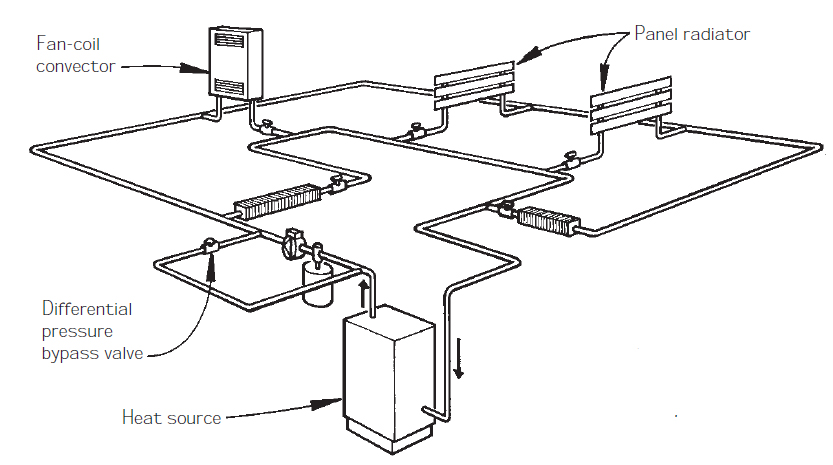
While the above descriptions are helpful, a diagram provides a clearer picture. A typical diagram would show the following connections:
1. Heat Source (Boiler, Electric Resistance, or Heat Pump) connected to the Manifold. 2. Circulator Pump positioned on either the supply or return line to ensure water circulation. 3. PEX Tubing Loops running from the Manifold and embedded within the floor. 4. Thermostat wired to the Heat Source and/or Circulator Pump to control the system based on room temperature. 5. Expansion Tank, Air Vent, and Pressure Relief Valve connected to the system for safety and proper operation. 6. (If applicable) Mixing Valve blending hot supply water with cooler return water before it enters the manifold.It's crucial to consult with a qualified HVAC professional when designing or installing a radiant floor heating system. They can create a detailed diagram specific to your application and ensure that all components are properly sized and installed.
How the System Works: A Step-by-Step Explanation
Let's walk through the operational cycle of a single-zone radiant floor heating system:
1. Thermostat Senses a Need for Heat: When the room temperature drops below the thermostat's setpoint, the thermostat sends a signal to the control system. 2. Heat Source Activates: The control system activates the heat source (e.g., the boiler fires up or the electric resistance element turns on). 3. Circulator Pump Starts: Simultaneously, the circulator pump starts circulating water through the system. 4. Heated Water Flows Through PEX Tubing: The heated water travels from the heat source to the manifold and then into the PEX tubing embedded within the floor. 5. Floor Warms Up: As the heated water flows through the PEX tubing, it warms the floor material (e.g., concrete slab). 6. Heat Radiates Upward: The warmed floor radiates heat upwards, warming the room. This is radiant heat – it warms objects and people directly, rather than just heating the air. 7. Water Returns to Heat Source: After circulating through the PEX tubing, the water returns to the heat source to be reheated. 8. Thermostat Reaches Setpoint: Once the room temperature reaches the thermostat's setpoint, the thermostat signals the control system to turn off the heat source and the circulator pump (or to allow the heat source to modulate to maintain temperature). 9. Cycle Repeats: The cycle repeats as needed to maintain the desired room temperature.Advantages of Single-Zone Radiant Floor Heating
Choosing a single-zone radiant floor heating system offers several benefits:
* Comfort: Radiant heat provides a consistent and comfortable warmth, eliminating cold spots and drafts associated with forced-air systems. * Energy Efficiency: Radiant floor heating can be more energy-efficient than forced-air systems because it heats objects and people directly, rather than just the air. You can often lower the thermostat setting by a few degrees and still feel comfortable. * Quiet Operation: Unlike noisy furnaces or forced-air systems, radiant floor heating operates silently. * Improved Air Quality: Radiant floor heating doesn't circulate dust, allergens, and other particles in the air, leading to improved indoor air quality. * Individual Room Control: A single-zone system is ideal for controlling the temperature of a specific room or area.Disadvantages of Single-Zone Radiant Floor Heating
While offering numerous advantages, there are also some potential drawbacks to consider:
* Slower Response Time: Radiant floor heating systems typically have a slower response time than forced-air systems. It takes time for the floor to heat up and cool down, so temperature adjustments are not instantaneous. * Installation Costs: The initial installation cost can be higher than that of forced-air systems, especially if retrofitting an existing home. * Floor Covering Considerations: Certain floor coverings, such as thick carpets with dense padding, can impede heat transfer and reduce the system's efficiency. Tile, stone, and engineered wood are generally the best choices for radiant floor heating. * Inertia: Due to the thermal mass of the floor, radiant floor heating systems can be slow to respond to changes in outdoor temperature or solar gain.Factors to Consider When Planning a Single-Zone System
Before deciding on a single-zone radiant floor heating system, consider these factors:
* Room Size and Layout: The size and layout of the room will determine the amount of PEX tubing required and the appropriate heat output of the heat source. * Floor Covering: Choose a floor covering that is compatible with radiant floor heating and allows for efficient heat transfer. * Insulation: Proper insulation is crucial for maximizing the efficiency of the system. Insulate the floor slab from the ground and the walls from the outside. * Heat Loss Calculations: Perform heat loss calculations to determine the heating requirements of the room. This will help you choose the appropriate size of the heat source and the spacing of the PEX tubing. * Local Codes and Regulations: Ensure that the installation complies with all local building codes and regulations. * Professional Installation: While DIY installation is possible, it's generally recommended to hire a qualified HVAC professional to design and install the system. They can ensure that the system is properly sized, installed, and configured for optimal performance.Choosing the Right Heat Source
Selecting the appropriate heat source is a critical decision. Consider these factors when making your choice:
* Fuel Availability and Cost: If you have access to natural gas or propane, a boiler might be the most cost-effective option. Electric resistance heating can be expensive to operate in areas with high electricity rates. * Existing Heating System: If you already have a hot water boiler for domestic hot water, it may be possible to tap into it for your radiant floor heating system. * Efficiency: Look for a heat source with a high efficiency rating to minimize energy consumption. * Climate: In colder climates, a boiler or heat pump may be more suitable than electric resistance heating. * Installation Costs: Consider the installation costs of each type of heat source. Electric resistance heating is typically the simplest and least expensive to install, while boilers and heat pumps can be more complex and costly.In conclusion, understanding the single-zone radiant floor heating diagram and the system's components is crucial for making informed decisions about heating your home. By carefully considering the advantages, disadvantages, and key factors outlined in this guide, you can determine if radiant floor heating is the right choice for your needs. Always consult with a qualified professional to ensure proper design and installation for optimal performance and long-term comfort.