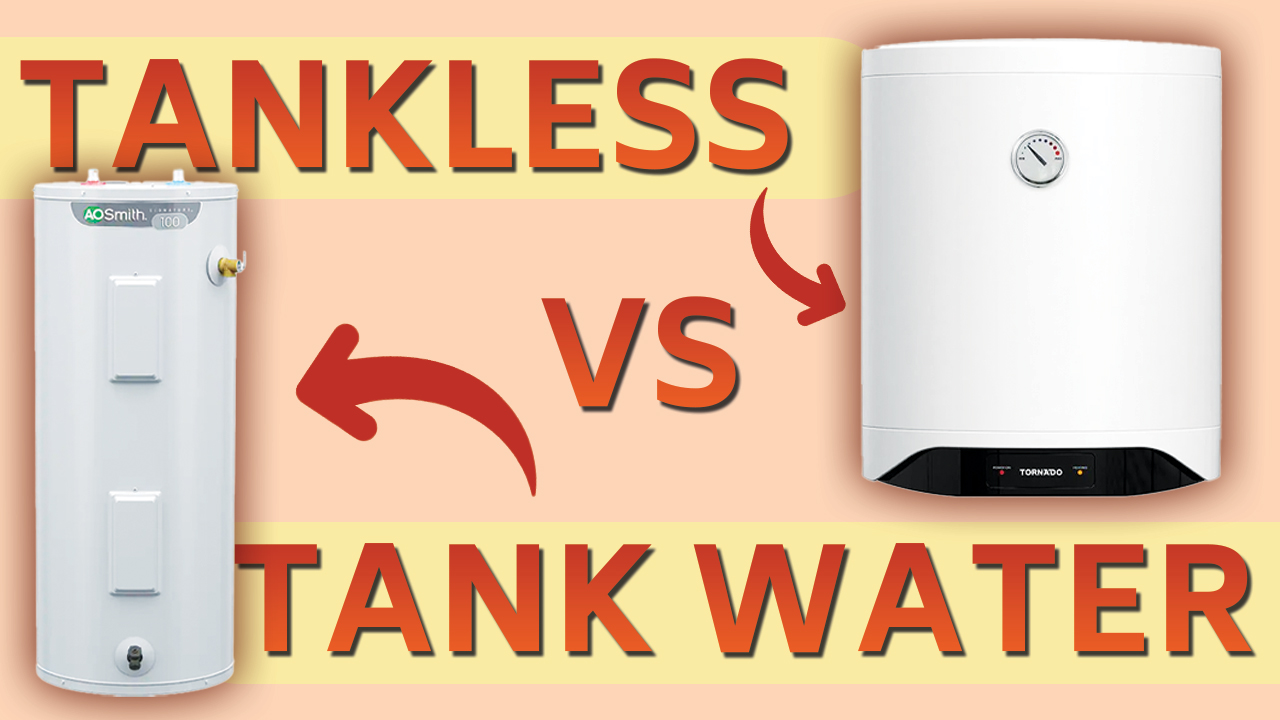
Tank Vs Tankless Water Heater Pros And Cons
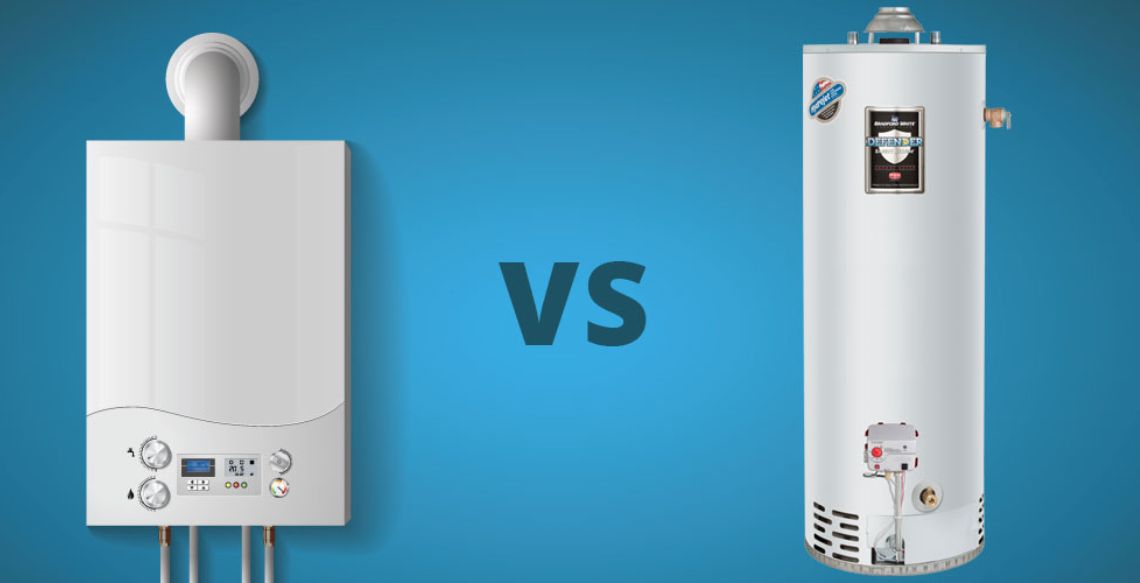
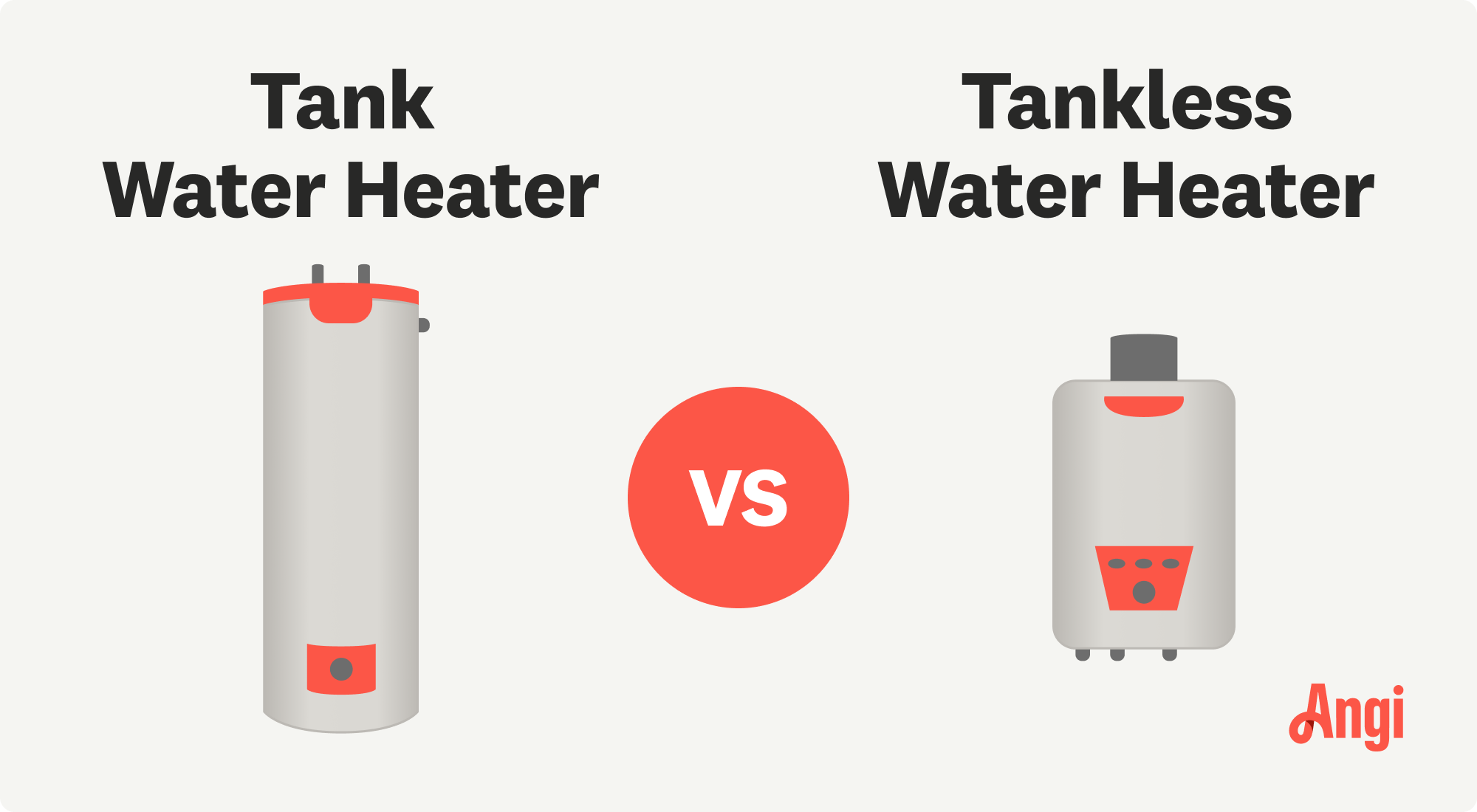
Choosing between a tank water heater and a tankless water heater can feel overwhelming. Both have their strengths and weaknesses, and the best choice depends heavily on your individual needs and circumstances. This guide breaks down the pros and cons of each type, helping you make an informed decision.
Tank Water Heaters: The Traditional Choice
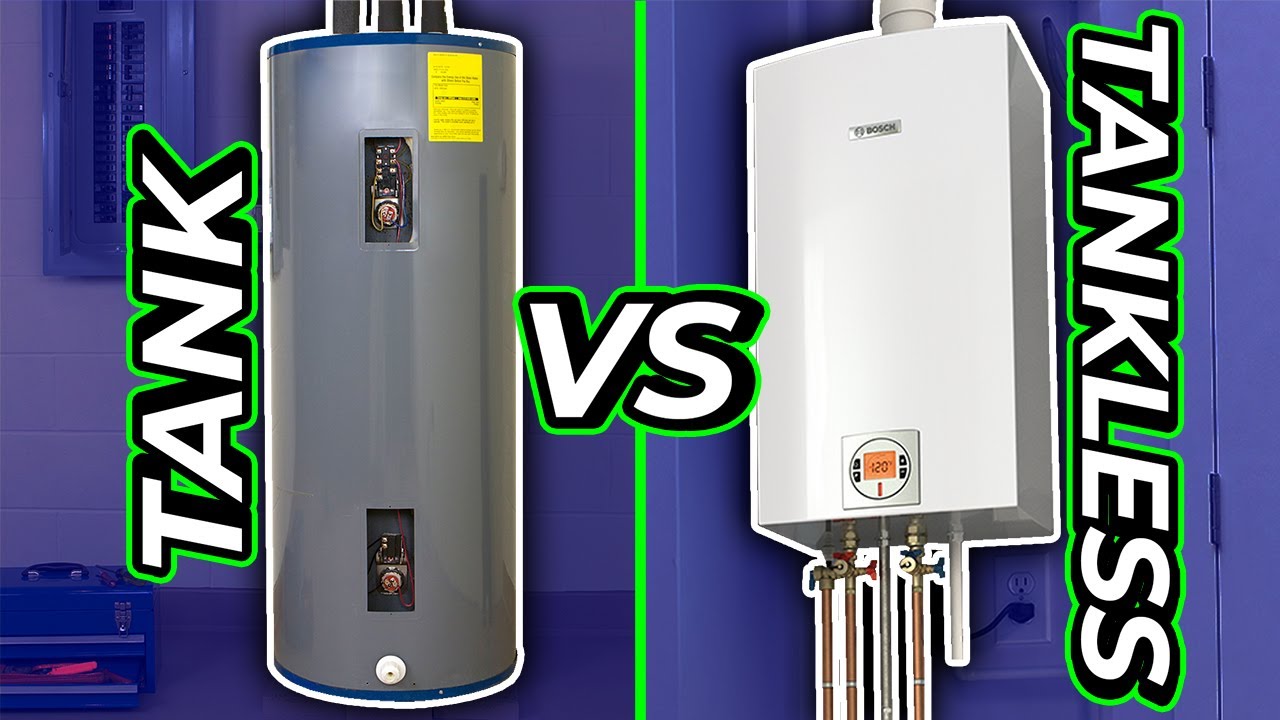
Tank water heaters are the most common type found in homes. They work by heating a large volume of water in a storage tank and keeping it at a set temperature, ready for use whenever you need it.
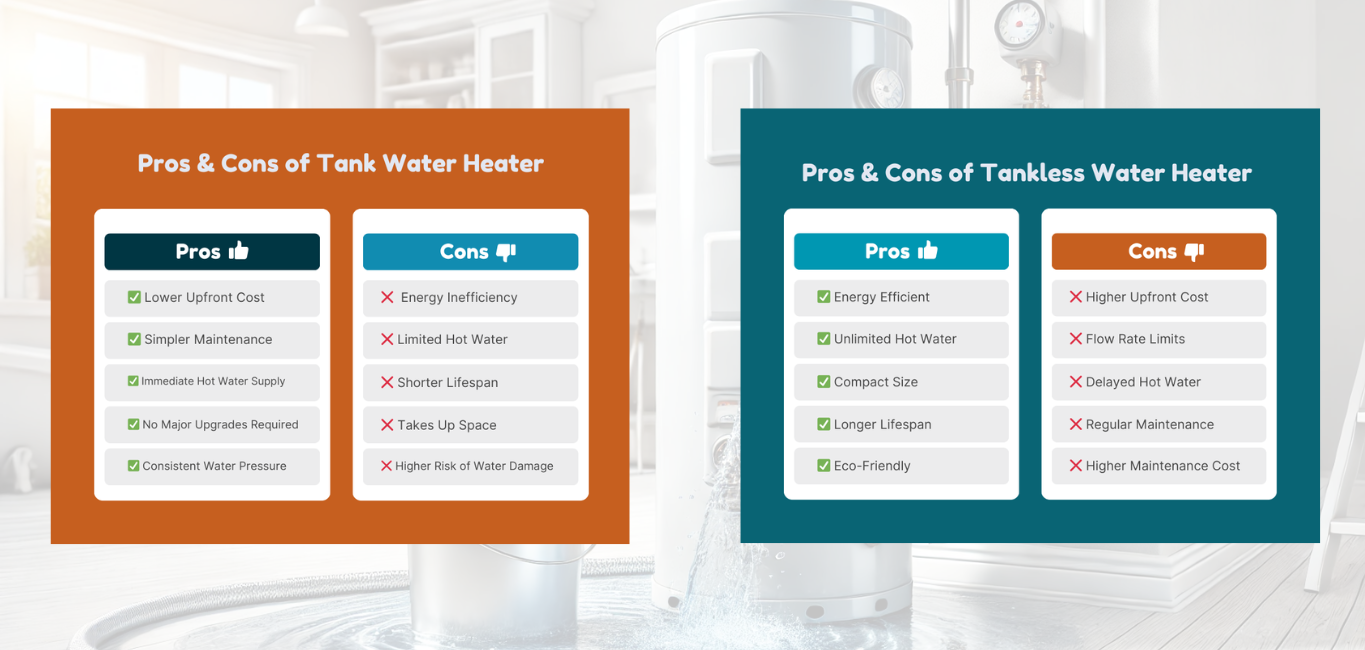
Pros of Tank Water Heaters:
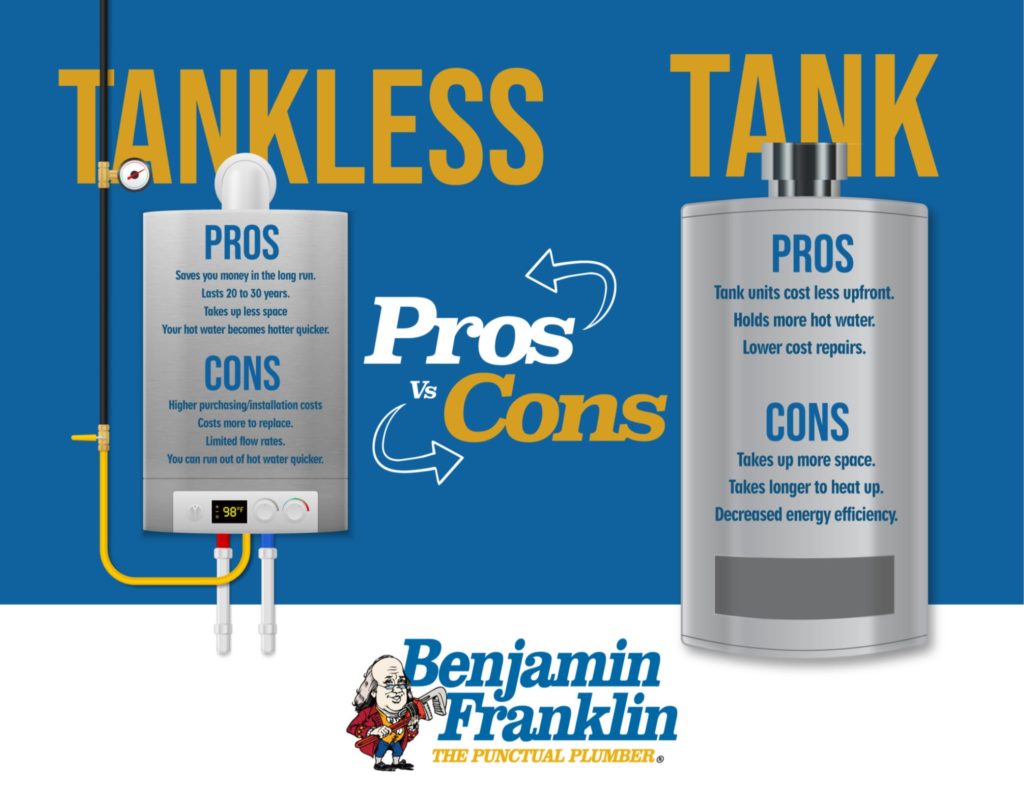
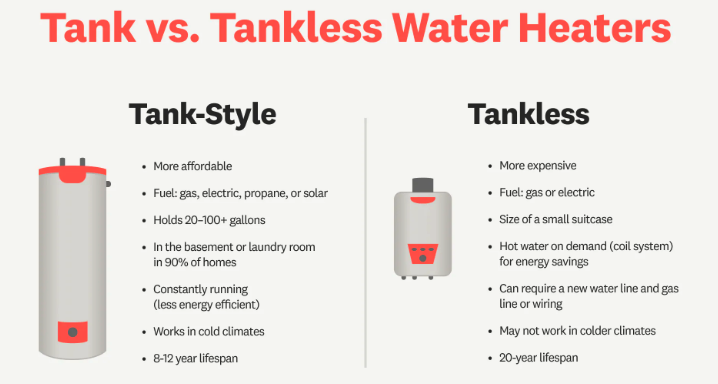
Lower Upfront Cost: Generally, tank water heaters are significantly cheaper to purchase and install than tankless models. This is a major factor for many homeowners.
Simpler Installation: The installation process is typically less complex, requiring fewer modifications to your existing plumbing and electrical systems. This translates to lower installation costs as well.
Familiar Technology: Most plumbers are very familiar with tank water heaters, making repairs and maintenance relatively straightforward and affordable.
Multiple Fixture Use: Tank heaters can handle simultaneous hot water demands from multiple fixtures (showers, dishwashers, washing machines) more easily than some smaller tankless models. This is because they have a reserve of hot water readily available.
Less Powerful Electrical Requirements: Electric tank heaters usually require a standard 240V circuit, which is commonly available in homes. Tankless electric heaters often need much higher amperage, potentially requiring an electrical panel upgrade.
Cons of Tank Water Heaters:
Standby Heat Loss: The biggest drawback of tank heaters is standby heat loss. The water in the tank constantly loses heat to the surrounding environment, even when you're not using hot water. This results in wasted energy and higher utility bills.
Limited Hot Water Supply: Once the tank's hot water supply is depleted, you have to wait for it to reheat, which can take 30-60 minutes depending on the tank size and heating element.
Larger Footprint: Tank heaters take up considerable space, which can be an issue in smaller homes or apartments. They require a dedicated area, often in a basement, utility closet, or garage.
Shorter Lifespan: Typically, tank water heaters last 10-15 years, compared to the potentially longer lifespan of some tankless models (although lifespan depends heavily on water quality and maintenance).
Potential for Leaks: As the tank ages, it can corrode and develop leaks, potentially causing water damage to your home.
Tankless Water Heaters: On-Demand Hot Water
Tankless water heaters, also known as on-demand water heaters, heat water only when you need it. They don't store hot water in a tank. Instead, they use a powerful burner or heating element to heat water as it flows through the unit.
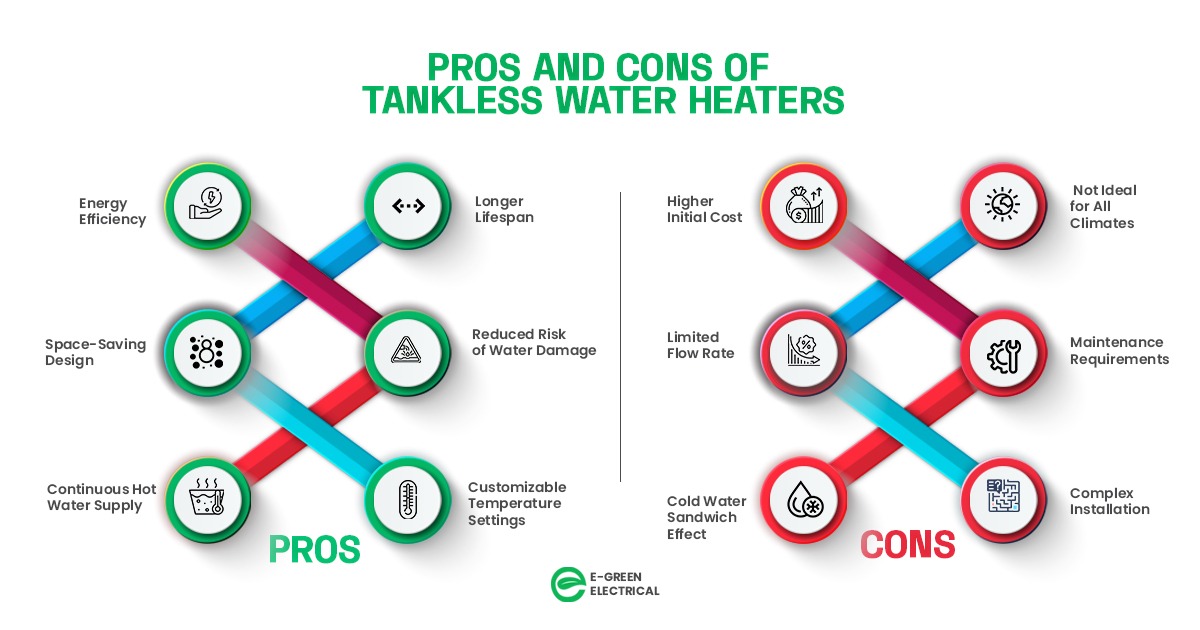
Pros of Tankless Water Heaters:
Unlimited Hot Water: The biggest advantage is unlimited hot water. You'll never run out, no matter how long you shower or how many appliances are running simultaneously (provided the unit is properly sized for your household's demands).
Energy Efficiency: Tankless heaters are generally more energy efficient than tank heaters because they eliminate standby heat loss. You only pay to heat water when you need it.
Space Saving: Tankless heaters are much smaller than tank heaters and can be mounted on a wall, freeing up valuable floor space.
Longer Lifespan: With proper maintenance, tankless water heaters can last 20 years or more, significantly longer than tank heaters.
Reduced Risk of Water Damage: Since there's no large tank to leak, the risk of significant water damage is reduced.
Cons of Tankless Water Heaters:
Higher Upfront Cost: Tankless water heaters are significantly more expensive to purchase and install than tank models. This is often the biggest barrier for homeowners.
Complex Installation: Installation can be more complex, often requiring upgrades to your plumbing, electrical system, or gas line. This adds to the overall cost.
Flow Rate Limitations: Tankless heaters have a flow rate limitation. If you try to use too many hot water fixtures at the same time, the water temperature may drop. Proper sizing is crucial to avoid this issue.
"Cold Water Sandwich": Some users experience a brief burst of cold water ("cold water sandwich") when a tankless heater first activates. This is because the water in the pipes leading to the heater isn't yet hot. This is more noticeable with older models.
Power Outage Issues: Electric tankless heaters won't work during a power outage unless you have a backup generator.
Maintenance Requirements: Tankless heaters require regular maintenance, such as descaling, to remove mineral buildup. Neglecting maintenance can shorten their lifespan and reduce their efficiency.
Factors to Consider When Choosing:
Before making a decision, consider these factors:
Household Size and Hot Water Usage: How many people live in your home? How often do you use hot water? Large families with high hot water demands may benefit from the endless supply of a tankless heater, but must choose a model with a sufficient flow rate. Smaller households with lower usage may find a tank heater more cost-effective.
Budget: What is your budget for purchase and installation? Remember to factor in potential costs for plumbing, electrical, or gas line upgrades.
Space Constraints: How much space do you have available for a water heater? If space is limited, a tankless heater may be the better option.
Energy Efficiency Goals: Are you looking to reduce your energy consumption and lower your utility bills? Tankless heaters are generally more energy efficient, but the savings may not outweigh the higher upfront cost in all cases.
Local Climate: In colder climates, the incoming water temperature is lower, which means a tankless heater needs to work harder to heat the water. This can impact its efficiency and flow rate.
Water Quality: Hard water can cause mineral buildup in both tank and tankless heaters, but it can be a bigger issue for tankless models. Consider installing a water softener if you have hard water.
Fuel Type: Do you prefer gas or electric? Gas tankless heaters typically have higher flow rates than electric models, but they require a gas line. Electric models are easier to install in homes without gas lines.
Sizing Your Water Heater:
Tank Water Heaters: A general rule of thumb is to choose a tank size based on the number of people in your household. A 40-gallon tank is usually sufficient for 1-2 people, a 50-gallon tank for 3-4 people, and a 60-80 gallon tank for 5 or more people. Consider your peak hour demand - when is the most hot water being used at the same time in the house?
Tankless Water Heaters: Sizing a tankless heater is more complex and depends on the flow rate and temperature rise required. You need to determine the maximum number of hot water fixtures you'll be using simultaneously and the temperature difference between the incoming water and your desired hot water temperature. Consult with a qualified plumber to ensure you choose the right size tankless heater for your needs.
Installation Considerations:
Tank Water Heaters: Installation is usually straightforward, but you may need to replace the water connections and drain valve. Ensure the location is level and can support the weight of a full tank.
Tankless Water Heaters: Installation can be more complex and may require:
- Upgrading the gas line to provide sufficient gas flow (for gas models).
- Upgrading the electrical panel to accommodate the higher amperage (for electric models).
- Installing a dedicated vent pipe (for gas models).
- Modifying the plumbing to accommodate the tankless unit.
Maintenance:
Tank Water Heaters:
- Flush the tank annually to remove sediment buildup.
- Check the anode rod every few years and replace it if necessary. The anode rod protects the tank from corrosion.
- Inspect the temperature and pressure relief valve regularly.
Tankless Water Heaters:
- Descale the unit annually to remove mineral buildup. This is especially important in areas with hard water.
- Clean the air filter regularly.
- Inspect the gas line and venting system (for gas models).
Conclusion:
The choice between a tank and tankless water heater depends on your individual needs and circumstances. Tank heaters are generally more affordable upfront and easier to install, but they are less energy efficient and have a limited hot water supply. Tankless heaters offer unlimited hot water and are more energy efficient, but they are more expensive to purchase and install. Carefully consider your budget, hot water usage, space constraints, and energy efficiency goals to make the best decision for your home. Consulting with a qualified plumber can provide valuable insights and help you choose the right water heater for your specific needs.