
The Unit Decibels Are Used To Measure
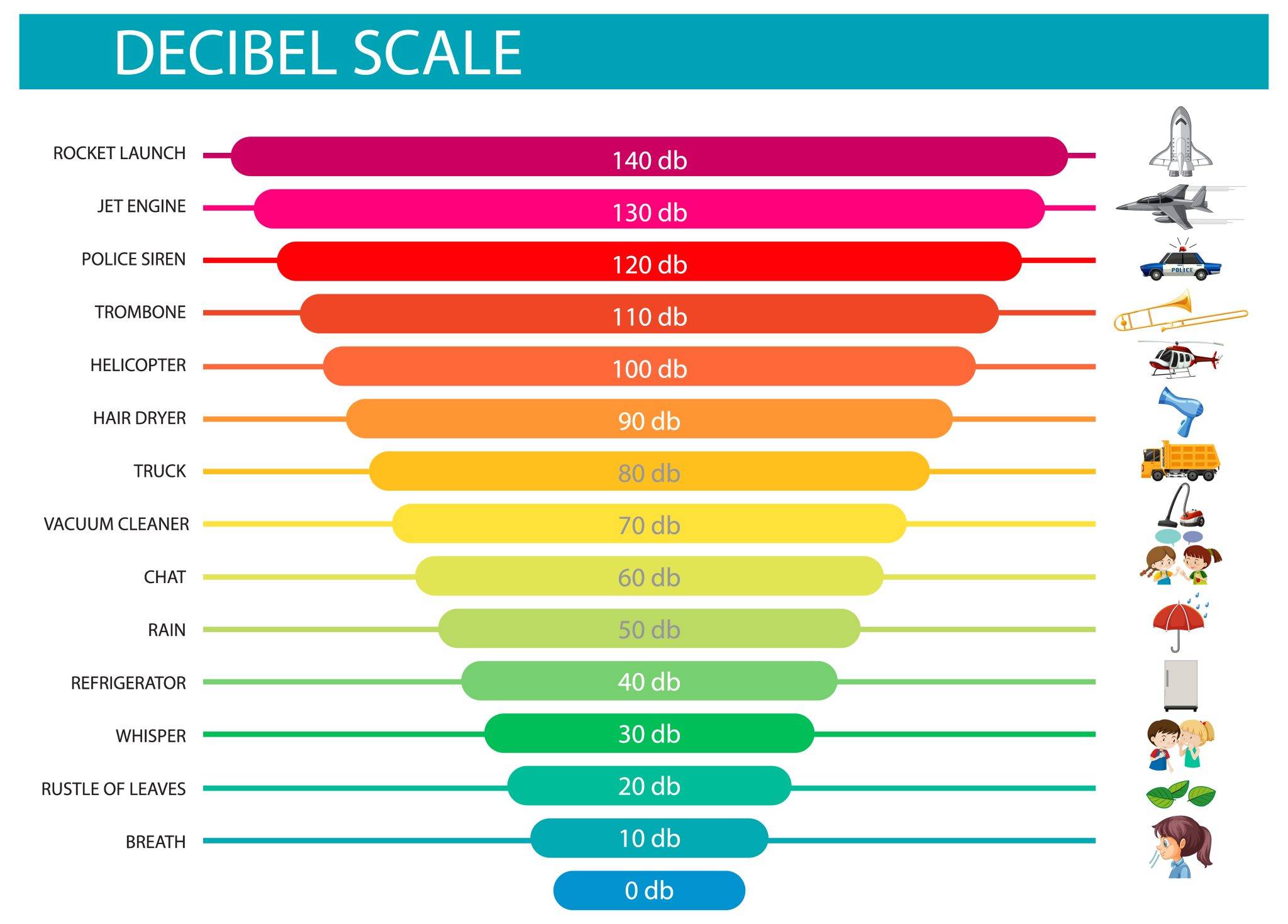
The decibel (dB) is a ubiquitous unit of measurement, popping up in discussions about audio, electronics, and even structural engineering. But what exactly *is* a decibel, and what does it measure? Understanding the decibel requires a bit of unpacking, as it's not a straightforward linear unit like meters or kilograms. It's a logarithmic unit, which makes it particularly useful for representing quantities that vary over a very wide range.
What the Decibel Measures: A Relative Scale
At its core, the decibel is used to express the ratio of two values of a power quantity or a field quantity on a logarithmic scale. Instead of saying one sound is "ten times louder" than another, we can use decibels to express the difference in a more manageable and easily comparable way. Think of it as a way to compress a large range of numbers into a smaller, more digestible range.
Crucially, a decibel measurement is *always* a relative measurement. It compares a measured quantity to a reference value. This reference value depends on what you're measuring. For example, in acoustics, a common reference is the threshold of human hearing.
Power Quantities vs. Field Quantities
To fully understand decibels, it's important to understand the distinction between power quantities and field quantities.
Power Quantities: These are quantities that are directly proportional to power. Power is the rate at which energy is transferred or used. Examples include:
- Acoustic power: The rate at which sound energy is transmitted.
- Electrical power: The rate at which electrical energy is transmitted.
- Light intensity: The power of light per unit area.
Field Quantities: These are quantities that are proportional to the square root of power. Examples include:
- Sound pressure: The pressure variations caused by sound waves.
- Voltage: The electrical potential difference.
- Current: The flow of electrical charge.
The logarithmic formulas used to calculate decibels differ slightly depending on whether you're dealing with a power quantity or a field quantity. This difference is crucial for accurate calculations and interpretations.
The Decibel Formula
Here are the basic decibel formulas:
- For Power Quantities: dB = 10 * log10 (P1 / P0)
Where:- P1 is the measured power.
- P0 is the reference power.
- log10 is the base-10 logarithm.
- For Field Quantities: dB = 20 * log10 (A1 / A0)
Where:- A1 is the measured amplitude (e.g., sound pressure, voltage).
- A0 is the reference amplitude.
- log10 is the base-10 logarithm.
The key difference is the multiplication factor: 10 for power quantities and 20 for field quantities. This accounts for the square root relationship between field quantities and power.
Why the Logarithm? The logarithmic scale is essential because human perception of many sensory inputs (like sound and light) is approximately logarithmic. This means that we perceive changes in loudness or brightness in proportion to the ratio of the intensities, not the absolute difference. A decibel scale reflects this perceptual behavior, making it a useful tool for measuring sound, light, and other phenomena.
Common Decibel Scales and Their Applications
Because the decibel is a relative unit, it's often used with a specific suffix to indicate the reference value being used. Here are some common examples:
dB SPL (Sound Pressure Level)
dB SPL is used to measure the sound pressure level relative to the threshold of human hearing. The reference pressure (P0) is 20 micropascals (20 µPa), which is considered the quietest sound a human with normal hearing can detect at 1 kHz.
A dB SPL value tells you how much louder a sound is compared to this threshold. For example:
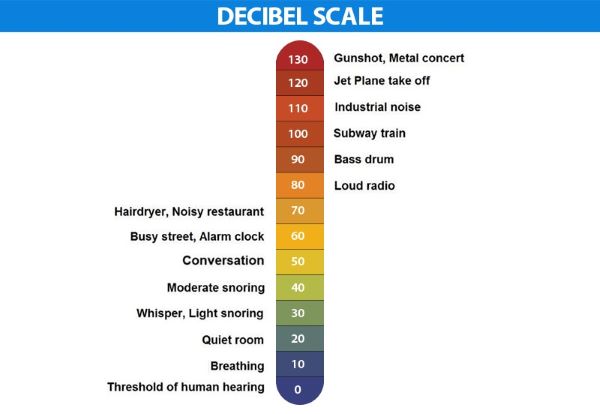
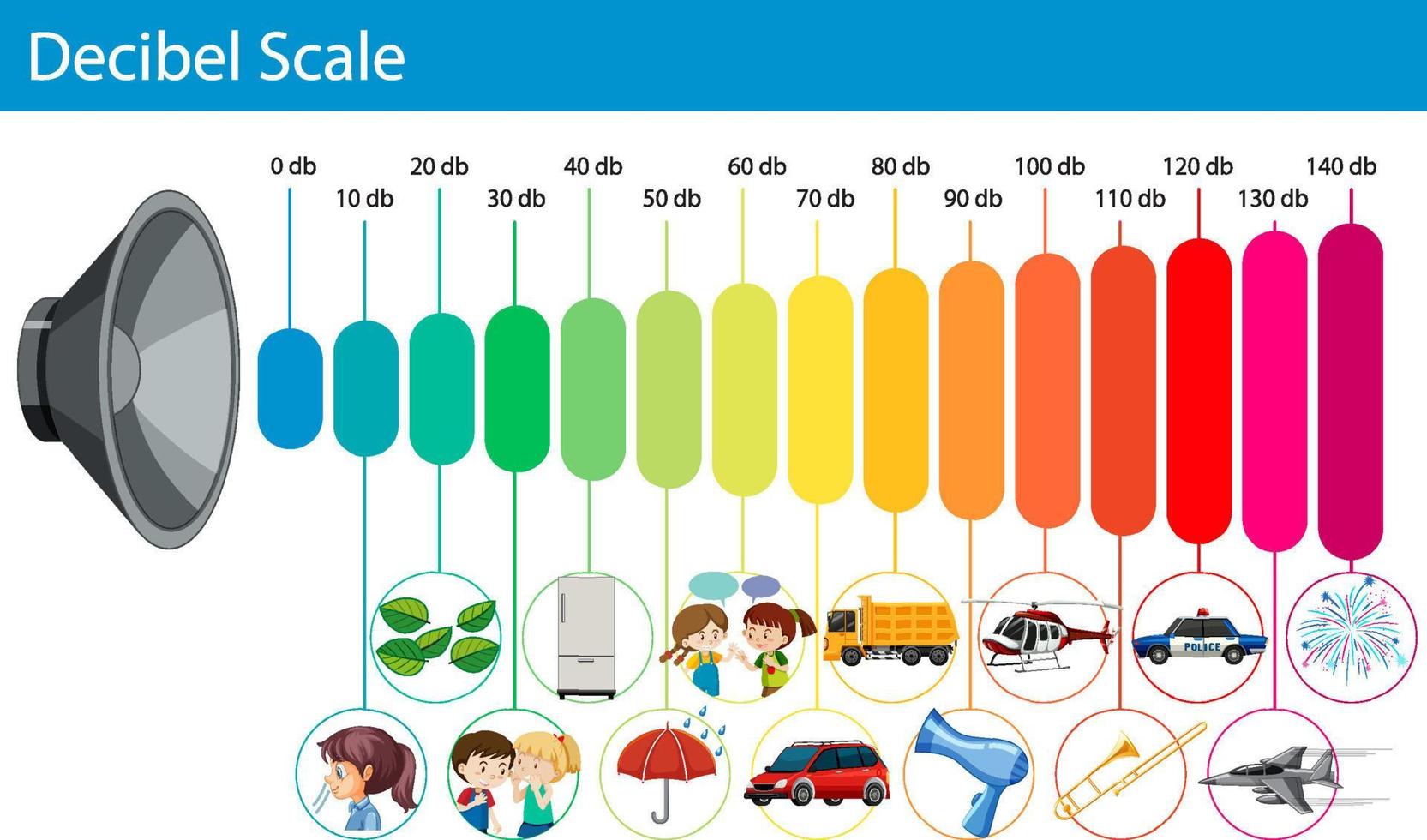
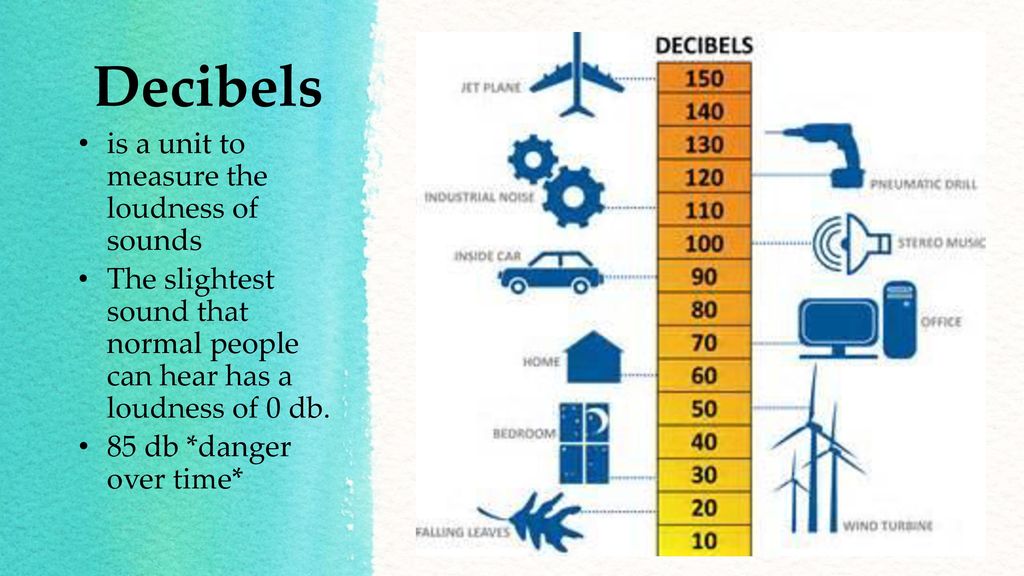
- 0 dB SPL: Threshold of hearing (very quiet)
- 30 dB SPL: Quiet library
- 60 dB SPL: Normal conversation
- 90 dB SPL: Loud machinery (can cause hearing damage with prolonged exposure)
- 120 dB SPL: Jet engine at close range (can cause immediate hearing damage)
dBm (Decibels relative to one milliwatt)
dBm is used to express power levels in electrical and telecommunications systems. The reference power (P0) is 1 milliwatt (1 mW).
dBm provides a convenient way to express both very small and very large power levels in a manageable range. It's frequently used in radio frequency (RF) engineering and signal processing.
dBu (Decibels unloaded) or dBv (Decibels relative to 0.775 volts)
dBu (also sometimes written as dBv, although dBv is technically decibels relative to 1 volt, but often used interchangeably with dBu) is a voltage measurement used in audio engineering. The reference voltage (V0) is approximately 0.775 volts. This value is derived from the voltage required to dissipate 1 milliwatt into a 600-ohm load, a common impedance in older audio equipment.
dBu is used to express signal levels in audio equipment like mixers, amplifiers, and recording devices.
dBFS (Decibels relative to Full Scale)
dBFS is used in digital audio to measure the amplitude of a signal relative to the maximum possible level that a digital system can represent. The maximum level is defined as 0 dBFS.
dBFS values are always negative, as any signal below the maximum will be less than 0 dBFS. For example, -6 dBFS represents a signal that is half the amplitude of the maximum possible signal.
Other Decibel Scales
Numerous other decibel scales exist, each with its specific reference value and application. These include:
- dBW (Decibels relative to one watt): Used for higher power levels than dBm.
- dBi (Decibels relative to isotropic radiator): Used to measure antenna gain.
- dBd (Decibels relative to dipole antenna): Another measure of antenna gain.
The key is to always be aware of the reference value when interpreting a decibel measurement. Without knowing the reference, the decibel value is meaningless.
Why Use Decibels? Advantages of the Logarithmic Scale
Using decibels offers several significant advantages:
- Compression of Large Ranges: Decibels allow us to represent a very wide range of values using a relatively small range of numbers. This is particularly useful when dealing with quantities like sound intensity, which can vary by many orders of magnitude.
- Simplified Calculations: Because decibels are logarithmic, multiplication and division operations are transformed into addition and subtraction. This simplifies calculations, especially when dealing with cascaded systems (systems where the output of one stage is the input of the next). For example, if an amplifier has a gain of +3 dB and is followed by another amplifier with a gain of +6 dB, the total gain is simply +9 dB.
- Reflects Human Perception: As mentioned earlier, our perception of many sensory inputs is approximately logarithmic. Decibel scales are therefore more aligned with how we experience the world than linear scales.
- Standardization: The decibel is a widely accepted and standardized unit, making it easy to compare measurements across different devices and contexts.
Potential Pitfalls: Common Misconceptions
Despite their usefulness, decibels can also be a source of confusion if not understood properly. Here are some common pitfalls to avoid:
- Decibels are not absolute units: Always remember that a decibel value is *relative* to a reference. A statement like "The sound is 80 dB" is meaningless without specifying the reference (e.g., 80 dB SPL).
- Adding decibels directly is often incorrect: You cannot simply add decibel values when combining multiple sources. Because the scale is logarithmic, you must first convert the decibel values back to linear power or amplitude values, add those, and then convert the result back to decibels. However, as stated above, you can directly add gains (in dB) of cascaded systems.
- Small changes in decibels can represent large changes in power or amplitude: A 3 dB increase represents a doubling of power. A 6 dB increase represents a doubling of amplitude (for field quantities). Therefore, even a few decibels difference can be significant.
- Confusing different decibel scales: Be careful to distinguish between different decibel scales (dB SPL, dBm, dBu, dBFS, etc.) and understand their respective reference values.
Conclusion
The decibel is a powerful and versatile unit of measurement used to express ratios of power or amplitude on a logarithmic scale. While it may seem complex at first, understanding the underlying principles and common applications of decibels is crucial for anyone working with audio, electronics, telecommunications, or any field where quantities vary over a wide range. By remembering that the decibel is always a relative unit and paying attention to the reference value being used, you can effectively interpret and use decibel measurements to make informed decisions.


+is+a+measurement+unit+used+when+comparing+two+sound.jpg)

+units+used+to+measure+sound+intensity..jpg)

+The+standard+measurement+of+sound+level.jpg)