Trane Compressor Model Number

Understanding Trane compressor model numbers is crucial for homeowners, HVAC technicians, and facility managers alike. These seemingly complex alphanumeric codes hold a wealth of information about the compressor's specifications, capabilities, and intended application. Deciphering them allows for informed decisions regarding replacements, maintenance, and system performance analysis.
Decoding the Trane Compressor Model Number: A Comprehensive Guide
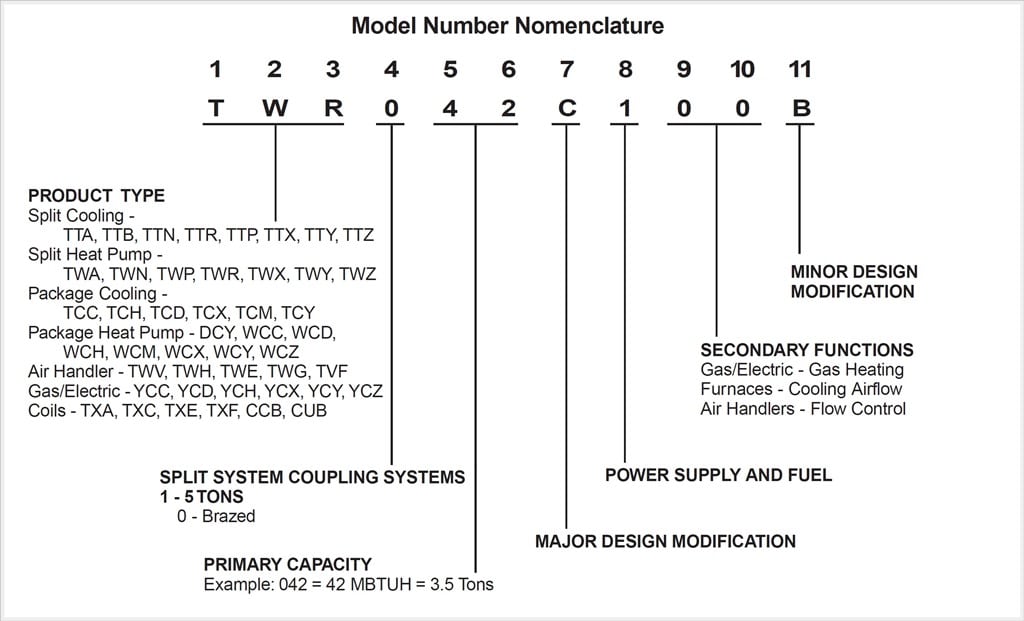
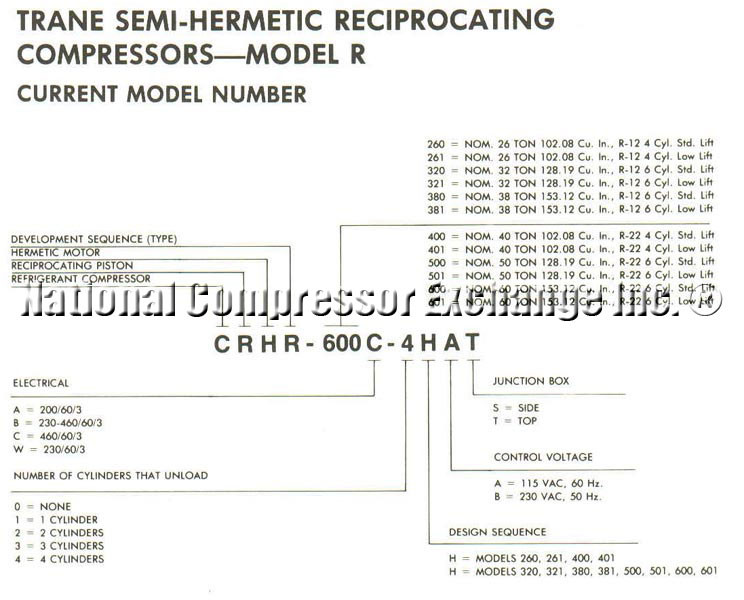
Trane uses a standardized system for its compressor model numbers, although specific formats can vary slightly depending on the age and type of the unit. Generally, the model number comprises several segments, each providing critical details. Let's break down a typical Trane compressor model number and explore the meaning of each component.
Example Model Number: BLWM033C10A
This is a hypothetical model number, but it illustrates the typical structure we'll discuss. Please note that actual model number structures can be more or less complex and may contain additional or slightly different codes.
Segment 1: Compressor Type (BLW)
The first few characters usually indicate the compressor type and family. In this example, "BLW" might signify a specific line of Trane compressors, perhaps designed for light commercial or residential applications. Common prefixes you might encounter include:
- CL: Often associated with scroll compressors.
- HRM: High-Efficiency Reciprocating compressors.
- REC: Reciprocating compressors (general).
- SCT: Scroll compressors, potentially with specific features or refrigerants.
- RTAC: Rotary compressors (often in larger chillers).
The precise meaning of these codes can be found in Trane's official compressor documentation. Technicians often refer to these manuals when specifying a new compressor or diagnosing problems.
Segment 2: Capacity Indicator (M033)
This section typically refers to the compressor's cooling capacity, usually expressed in BTU/hr (British Thermal Units per hour). In this example, "033" likely represents 33,000 BTU/hr or roughly 2.75 tons (since 1 ton equals 12,000 BTU/hr). The 'M' may designate a specific model series or capacity range within the BLW family.
Understanding capacity is crucial for proper system sizing. An undersized compressor will struggle to maintain the desired temperature, leading to inefficiency and potential equipment failure. An oversized compressor can cycle on and off too frequently, reducing efficiency and potentially causing humidity control problems.
Segment 3: Design Series (C)
This character often signifies the design series or revision of the compressor. "C" might indicate a specific iteration with improvements in efficiency, materials, or manufacturing processes. As Trane refines its compressor designs, these design series indicators change.
Segment 4: Voltage and Phase (10)
This segment typically provides information about the electrical requirements of the compressor, specifically the voltage and phase. "10" might represent 208-230V single-phase power. Different codes exist for various voltage configurations, such as 460V three-phase, 230V three-phase, etc. This information is critical for ensuring proper electrical connections and preventing damage to the compressor.
Segment 5: Refrigerant Type (A)
The final character often designates the refrigerant type that the compressor is designed to use. "A" might signify R-410A, a common refrigerant in modern HVAC systems. Other common refrigerant codes include:
- R-22: (While phased out, older systems may still use this. Replacement with newer refrigerants may be possible but consult with an HVAC professional)
- R-134a: Used in some applications, including chillers.
- R-32: Gaining popularity as a more environmentally friendly option.
Important Note: Never mix refrigerants or attempt to use a refrigerant that is not specified for the compressor. Doing so can cause severe damage and pose a safety hazard.
Why is Understanding Compressor Model Numbers Important?
Knowing how to interpret a Trane compressor model number offers numerous benefits for various stakeholders:
For Homeowners:
- Informed Decisions: When facing compressor replacement, understanding the model number allows you to verify that the replacement compressor is a compatible and appropriate choice for your system.
- Price Comparison: You can compare prices for comparable compressors from different suppliers.
- Preventing Scams: It helps you guard against unscrupulous contractors who might try to install a lower-quality or incompatible compressor.
For HVAC Technicians:
- Accurate Diagnosis: The model number is the starting point for troubleshooting and diagnosing compressor problems.
- Correct Replacement: It ensures that the replacement compressor meets the exact specifications of the original.
- Efficient Ordering: It allows for quick and accurate ordering of replacement parts.
For Facility Managers:
- Inventory Management: Tracking compressor model numbers facilitates efficient inventory management of HVAC equipment across multiple buildings.
- Preventive Maintenance: It allows for scheduled maintenance based on the specific requirements of each compressor model.
- System Performance Analysis: Model numbers help in analyzing the performance of different HVAC systems and identifying areas for improvement.
Finding the Compressor Model Number
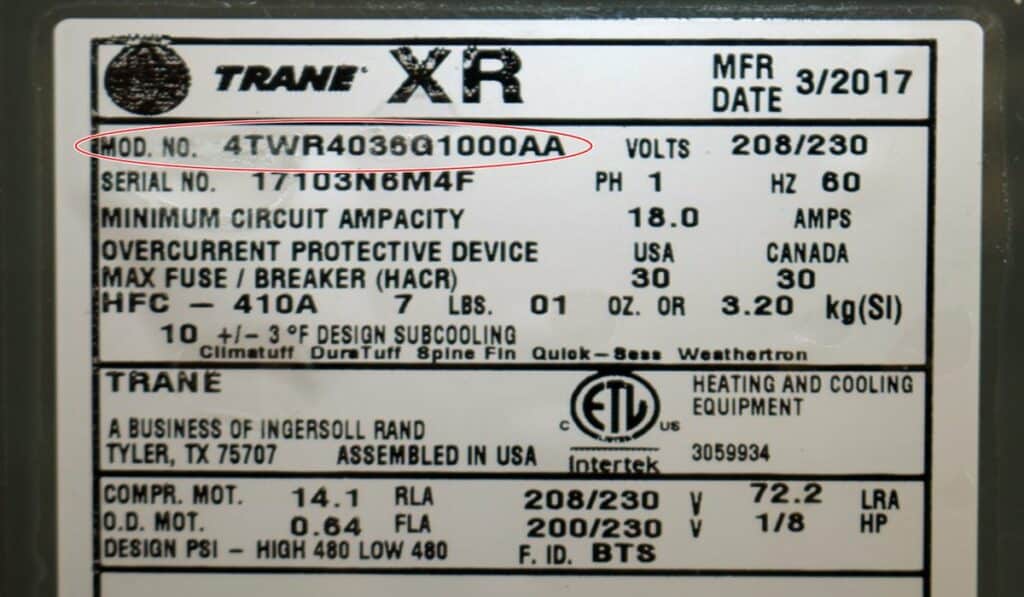
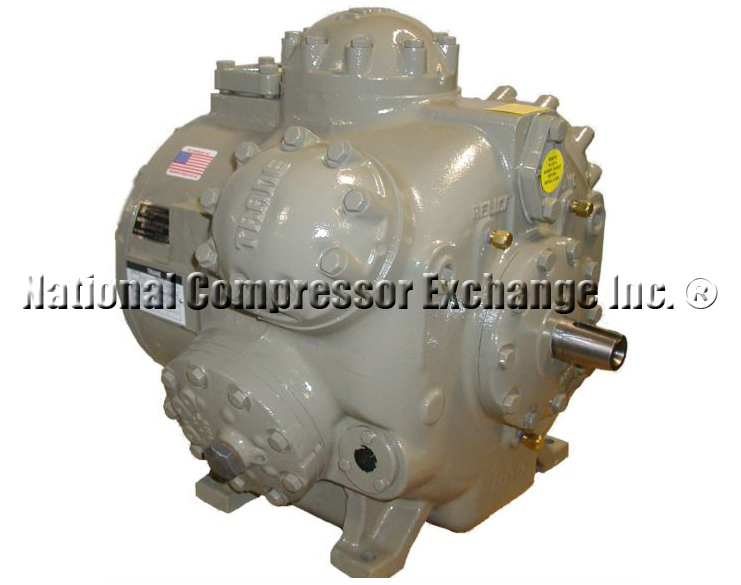
The Trane compressor model number is typically located on a nameplate attached to the compressor itself. The nameplate is usually made of metal or durable plastic and contains various information, including the model number, serial number, voltage, phase, refrigerant type, and manufacturing date. Look for the largest and most prominent alphanumeric code on the plate.
Beyond the Model Number: Other Important Compressor Considerations
While the model number provides valuable information, it's essential to consider other factors when selecting or replacing a Trane compressor:
- SEER Rating: The Seasonal Energy Efficiency Ratio (SEER) measures the cooling efficiency of the entire air conditioning system. A higher SEER rating indicates greater energy savings.
- HSPF Rating: The Heating Seasonal Performance Factor (HSPF) measures the heating efficiency of heat pumps. A higher HSPF rating indicates greater energy savings.
- Refrigerant Type: Choose a compressor that uses an environmentally friendly refrigerant. R-410A is common, but newer refrigerants with lower global warming potential are emerging.
- Compressor Type: Scroll compressors are generally more efficient and quieter than reciprocating compressors.
- Warranty: Check the warranty offered by the manufacturer. A longer warranty provides greater peace of mind.
- Installation: Proper installation is crucial for optimal compressor performance and longevity. Hire a qualified HVAC technician with experience installing Trane equipment.
Compressor Costs and Lifespan
The cost of a Trane compressor can vary depending on its type, capacity, and efficiency rating. Generally, scroll compressors are more expensive than reciprocating compressors. The lifespan of a compressor can range from 10 to 20 years, depending on factors such as maintenance, usage, and environmental conditions. Regular maintenance, including cleaning coils and checking refrigerant levels, can help extend the lifespan of your compressor.
Cost Examples (Estimates - Consult with a Trane Dealer for Accurate Pricing):
- Small Residential Reciprocating Compressor: $800 - $1500 (parts only)
- Mid-Size Residential Scroll Compressor: $1500 - $3000 (parts only)
- Light Commercial Scroll Compressor: $3000 - $6000+ (parts only)
These figures do not include labor costs for installation, which can add significantly to the total expense. Compressor replacement is best handled by a qualified HVAC technician.
By understanding Trane compressor model numbers and considering other relevant factors, homeowners, technicians, and facility managers can make informed decisions about their HVAC systems, ensuring optimal performance, efficiency, and longevity.