Trane Model Number Lookup By Serial Number
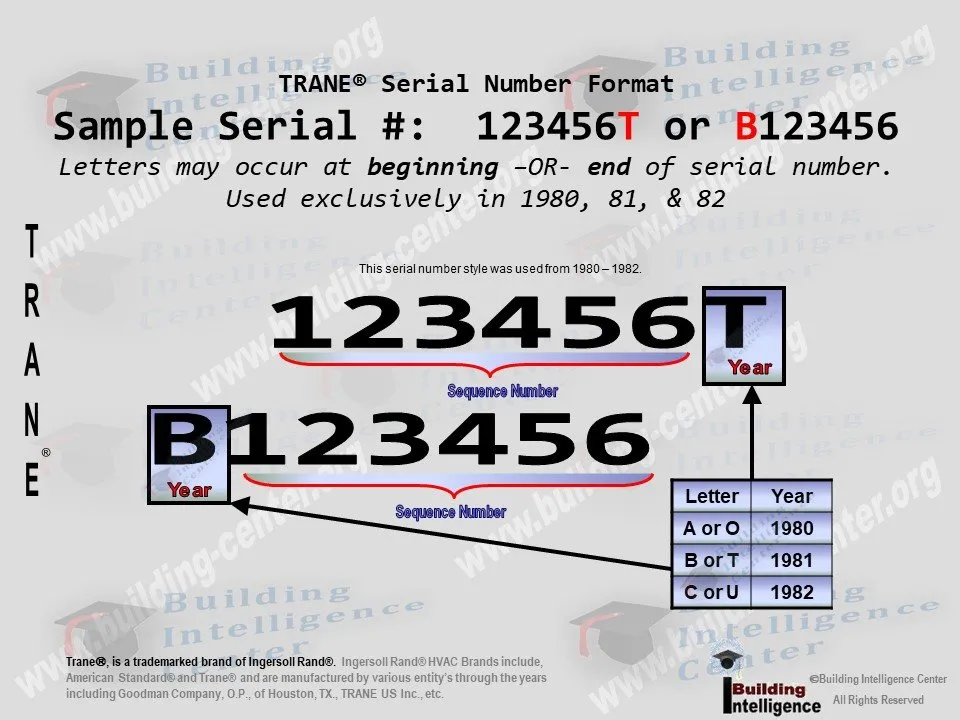
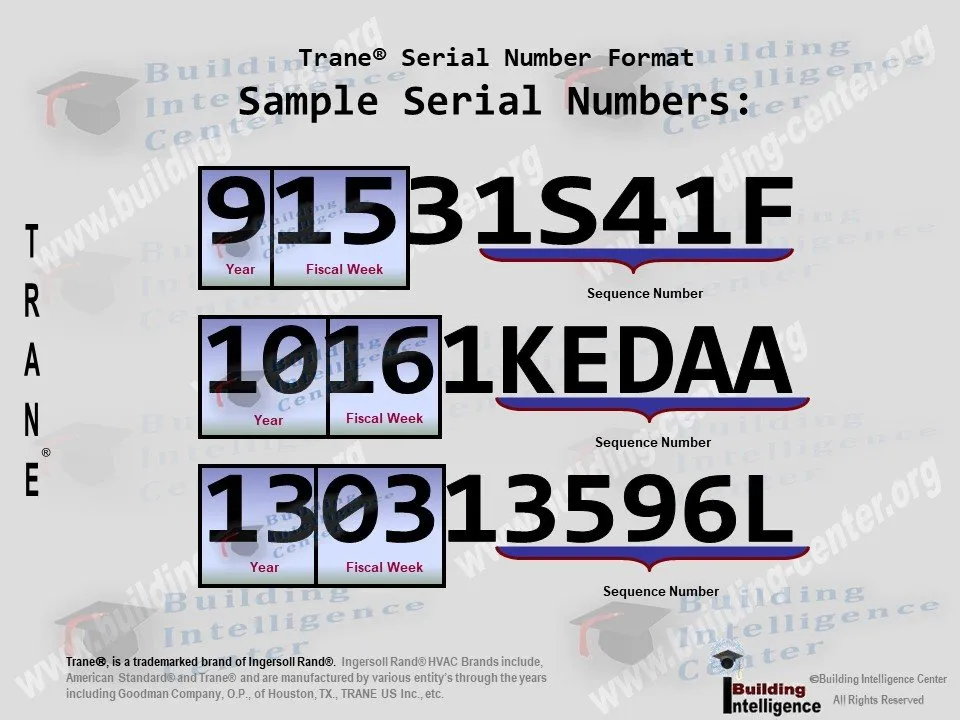
Your Trane HVAC system is vital for maintaining a comfortable home environment. When issues arise, or you simply need to order replacement parts, knowing your unit's specific model number is crucial. While the model number is usually prominently displayed, sometimes it's obscured or missing. In these situations, you can often use the serial number to perform a Trane model number lookup. This guide will walk you through the process, providing tips and precautions along the way.
Finding the Serial and Model Number
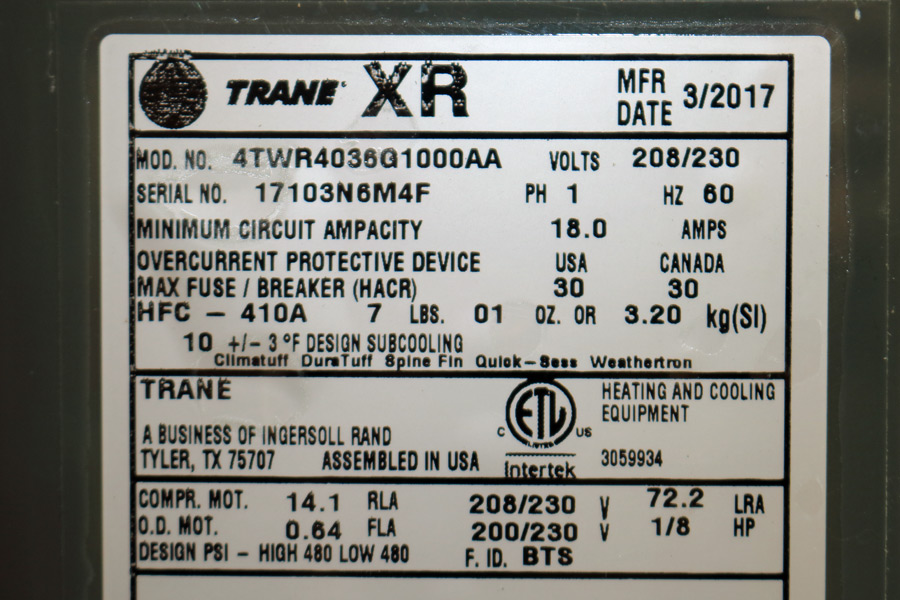
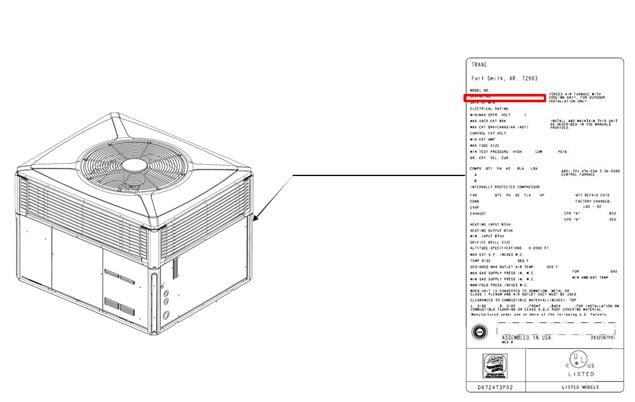
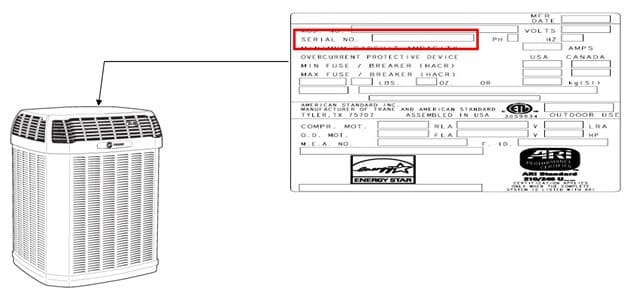
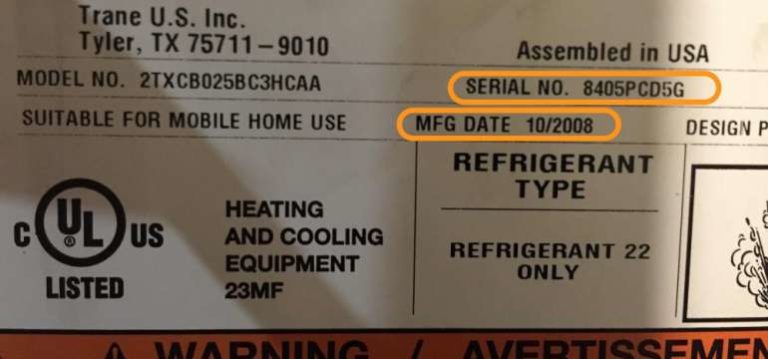
The first step is locating the identification plate on your Trane unit. This plate contains both the serial number and, ideally, the model number. The location of this plate varies depending on whether you're dealing with an indoor unit (furnace, air handler) or an outdoor unit (air conditioner condenser, heat pump).
Outdoor Units (Air Conditioners and Heat Pumps)
For outdoor units, look for the identification plate on the unit's exterior. Common locations include:
- On the side panel, typically near the access panel.
- On the back of the unit.
- Underneath a removable top panel (exercise caution when removing panels and ensure the power is OFF).
Indoor Units (Furnaces and Air Handlers)
For indoor units, the identification plate is usually located inside the unit itself. This often means opening the access panel. Always turn off the power to the unit at the breaker box before opening any panels. Look for the plate on:
- The inside of the access panel.
- The side of the unit's internal housing.
- Near the blower motor.
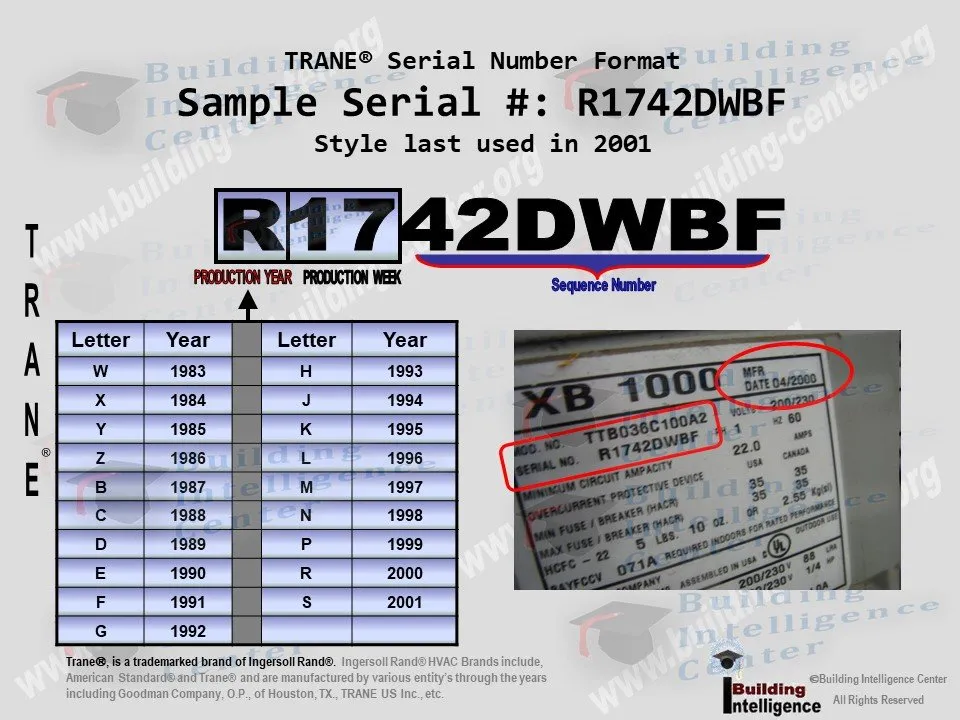
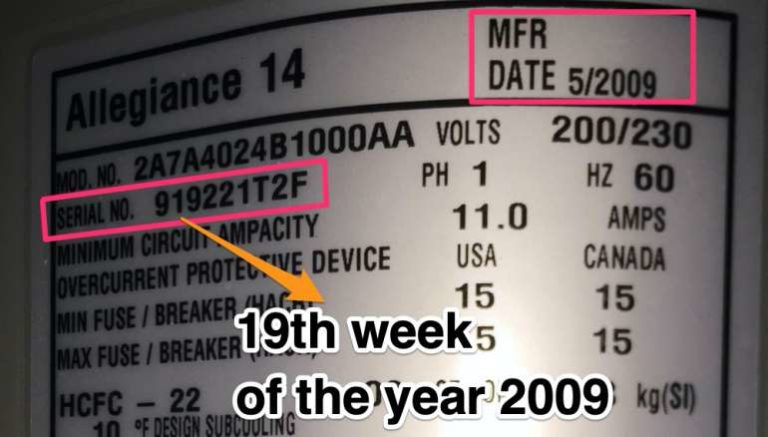
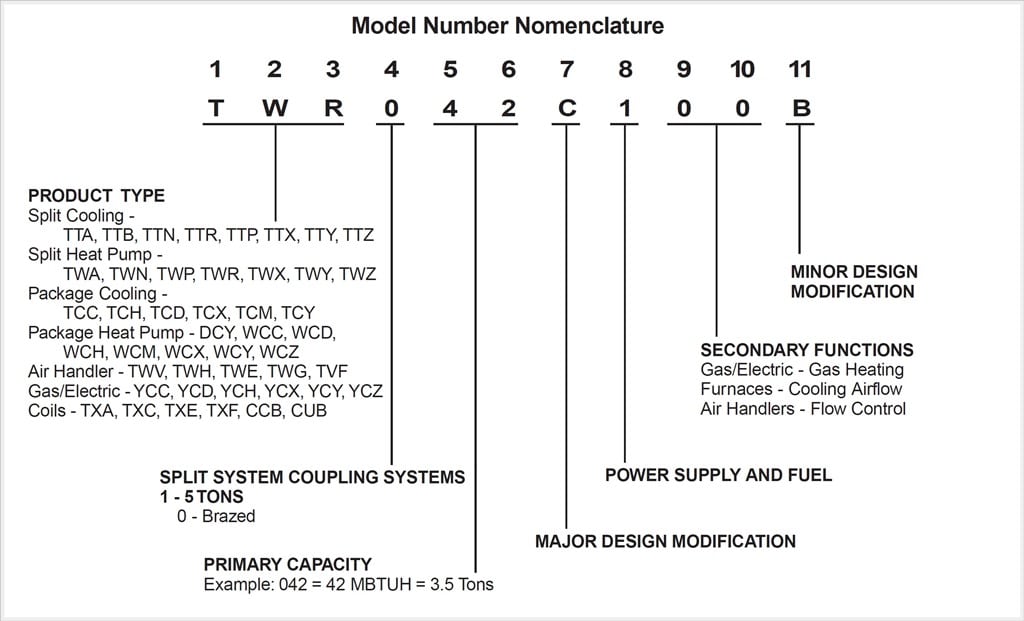
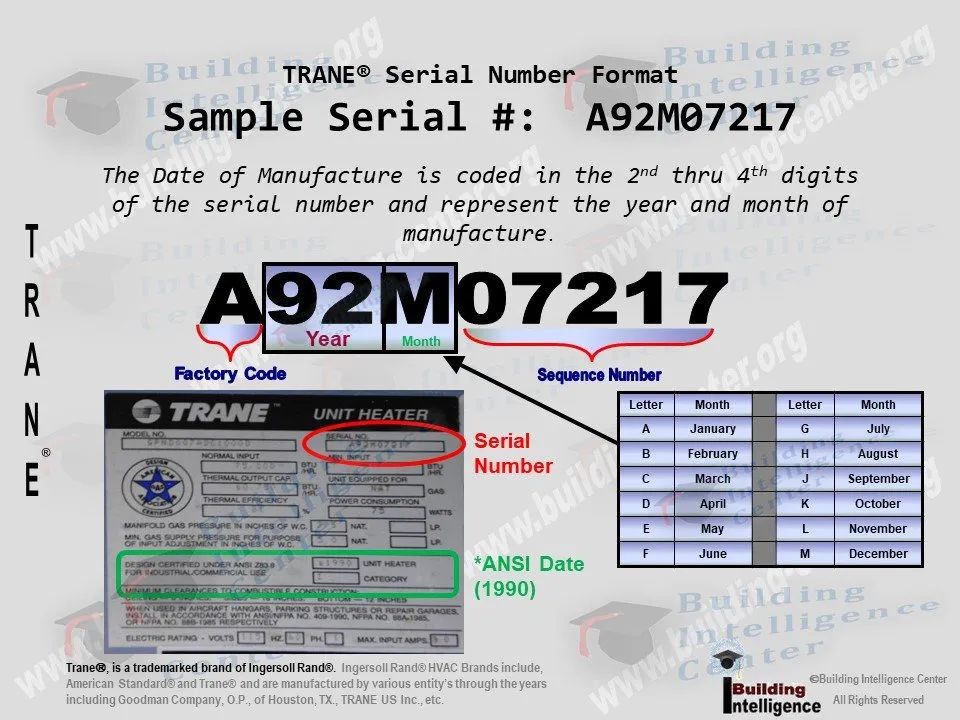
Once you've located the plate, carefully note the serial number and, if present, the model number. The serial number is usually a string of numbers and letters, while the model number will follow a specific format based on the type of unit. Trane model numbers can often start with letters like "XR," "XL," "XV," or "TWE."
Performing a Trane Model Number Lookup
Now that you have the serial number, you have a few options for finding the model number:
1. Contacting a Trane Dealer or HVAC Professional
This is often the most reliable method. A Trane dealer or experienced HVAC technician has access to databases that can quickly cross-reference serial numbers with model numbers. To do this, you'll need:
- The serial number of your unit.
- The location of your unit (city, state).
- A brief description of the issue you're experiencing (if applicable).
Safety First: When working with HVAC equipment, always prioritize safety. If you are uncomfortable working with electrical components or handling refrigerant, contact a qualified HVAC technician. Improper handling can result in electric shock, injury, or damage to your equipment.
2. Using Online Trane Resources (If Available)
Trane may offer online resources or tools on their website or through authorized distributors that allow you to input the serial number and retrieve the model number. Check the official Trane website for these resources. Be aware that these tools may not always be publicly available or up-to-date.
3. Checking Existing Documentation
Before contacting a dealer or searching online, double-check your existing documentation. This includes:
- Homeowner's manual.
- Warranty information.
- Installation paperwork.
- Previous repair invoices.
The model number might be listed in these documents. This is often the easiest and fastest way to find the information you need.
4. Consult HVAC Forums and Online Communities
HVAC forums and online communities can be a valuable resource for troubleshooting and information gathering. However, exercise caution when relying on information from these sources. Verify any advice with a qualified professional before taking action. Search for forums dedicated to Trane products or general HVAC repair.
Why You Need the Model Number
Knowing your Trane model number is essential for several reasons:
- Ordering Replacement Parts: The model number ensures you get the correct parts for your specific unit. Using the wrong parts can damage your system or void your warranty.
- Troubleshooting and Repair: The model number allows you to access technical specifications, wiring diagrams, and troubleshooting guides specific to your unit.
- Warranty Claims: The model number is required when filing a warranty claim with Trane.
- Checking Compatibility: If you're upgrading components or adding accessories, the model number confirms compatibility with your existing system.
- Estimating Repair Costs: Knowing the model number allows HVAC technicians to provide more accurate repair cost estimates.
Common Trane HVAC Issues and Repairs
Here are some common issues that Trane HVAC systems might experience. *Note: this is a general guide, and the specific issues will vary based on your unit's model and age.*
Air Conditioner/Heat Pump Issues:
- Refrigerant Leaks: Low refrigerant levels can cause reduced cooling or heating performance. Refrigerant handling requires specialized equipment and certification. Contact a licensed HVAC technician for repairs.
- Compressor Failure: The compressor is the heart of the system. Failure can result in complete loss of cooling.
- Fan Motor Problems: Problems with the condenser fan or blower fan can lead to overheating and reduced efficiency.
- Dirty Coils: Dirty condenser or evaporator coils reduce efficiency and can lead to system failure.
- Frozen Evaporator Coil: This can be caused by low refrigerant, restricted airflow, or a malfunctioning expansion valve.
Furnace Issues:
- Ignition Problems: Issues with the igniter, pilot light, or flame sensor can prevent the furnace from starting.
- Flame Rollout: A dangerous condition where flames escape the combustion chamber. Immediately shut down the furnace and contact a qualified technician.
- Cracked Heat Exchanger: A serious safety hazard that can leak carbon monoxide into your home. Turn off the furnace and contact a professional immediately.
- Blower Motor Failure: Problems with the blower motor can prevent air from circulating through your home.
- Dirty Filters: Clogged air filters restrict airflow and reduce efficiency.
Tools You Might Need:
- Screwdrivers (Phillips and flathead)
- Wrench set
- Multimeter (for testing electrical components)
- Voltage tester
- Flashlight
- Safety glasses
- Work gloves
Warning: Working with electricity and natural gas can be dangerous. If you are not comfortable performing these tasks, contact a qualified HVAC technician. Improper repairs can result in electric shock, fire, or carbon monoxide poisoning.
Estimating Repair Costs
Repair costs for Trane HVAC systems can vary widely depending on the type of repair, the age of the unit, and your location. Obtaining an accurate estimate requires a professional diagnosis. However, here are some general cost ranges for common repairs:
- Refrigerant Recharge: $200 - $800 (depending on the type of refrigerant and the amount needed).
- Compressor Replacement: $1,200 - $3,500.
- Fan Motor Replacement: $200 - $800.
- Igniter Replacement: $100 - $300.
- Flame Sensor Replacement: $80 - $200.
- Heat Exchanger Replacement: $1,500 - $4,000 (this is often more cost-effective to replace the entire furnace).
These are just estimates, and actual costs may vary. It's always best to get multiple quotes from qualified HVAC contractors before proceeding with any repairs.
When to Call a Professional
While some HVAC maintenance and minor repairs can be handled by homeowners, certain situations require the expertise of a qualified HVAC technician. These include:
- Refrigerant Leaks: Handling refrigerant requires specialized equipment and certification.
- Electrical Repairs: Working with high-voltage electrical components can be dangerous.
- Gas Furnace Repairs: Gas leaks and carbon monoxide poisoning are serious risks.
- Compressor Replacement: This is a complex repair that requires specialized tools and knowledge.
- Suspected Carbon Monoxide Leaks: If you suspect a carbon monoxide leak, evacuate your home immediately and call the fire department.
- Any repair you are uncomfortable with. It's always better to be safe than sorry.
Maintaining Your Trane HVAC System
Regular maintenance can help prevent costly repairs and extend the lifespan of your Trane HVAC system. Here are some essential maintenance tasks:
- Change Air Filters Regularly: Dirty air filters restrict airflow and reduce efficiency. Replace them every 1-3 months, or more often if you have pets or allergies.
- Clean Coils: Clean the condenser and evaporator coils annually to improve efficiency. You can use a fin comb and a coil cleaner.
- Clear Debris Around Outdoor Unit: Keep the area around your outdoor unit clear of leaves, grass, and other debris.
- Schedule Annual Tune-Ups: A professional HVAC technician can inspect your system, clean components, and identify potential problems before they become major issues.
By understanding your Trane system's model number and performing regular maintenance, you can keep your home comfortable and avoid costly repairs. Remember to prioritize safety and contact a qualified HVAC technician when needed.