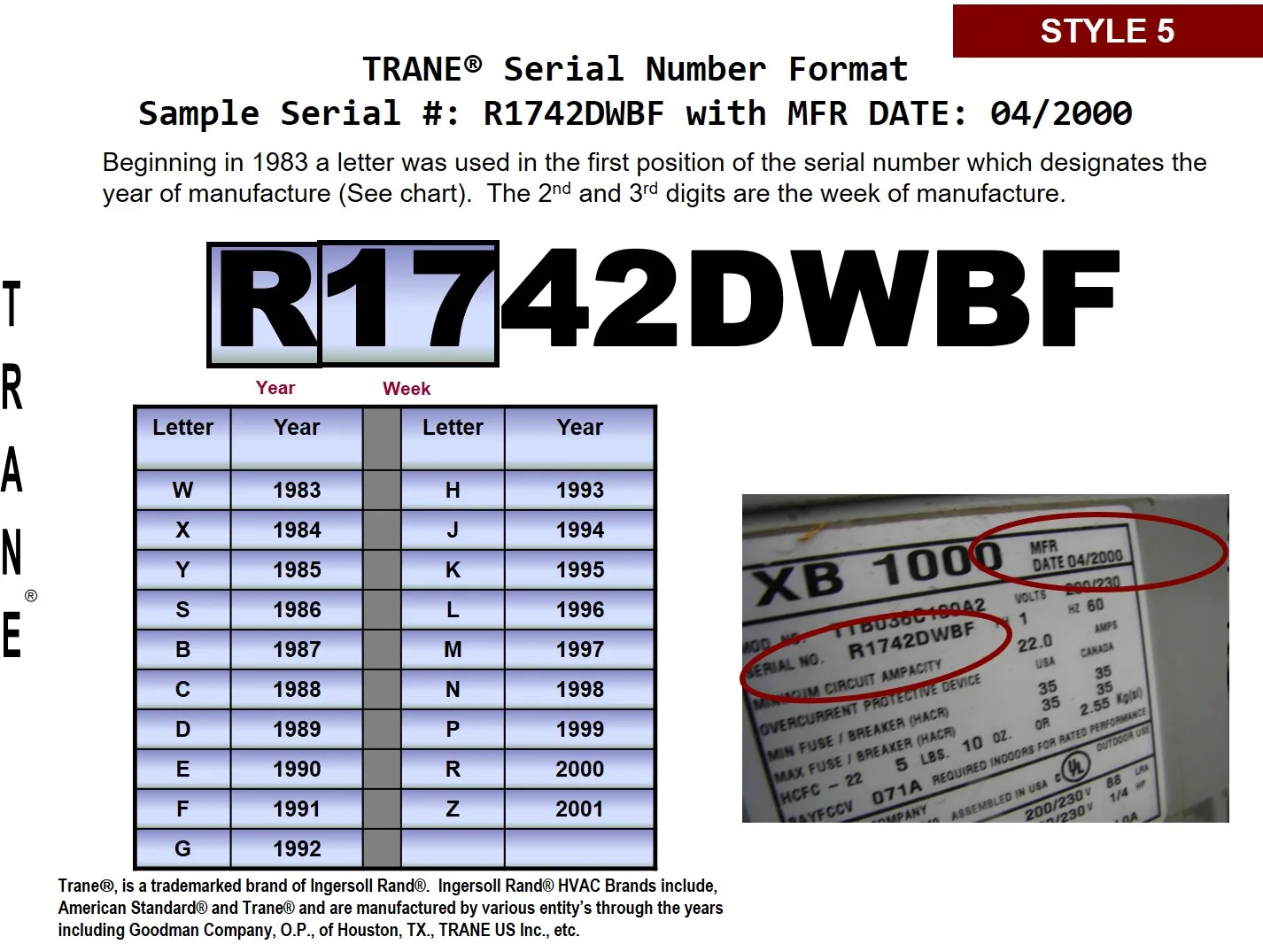
Trane Model Number Nomenclature
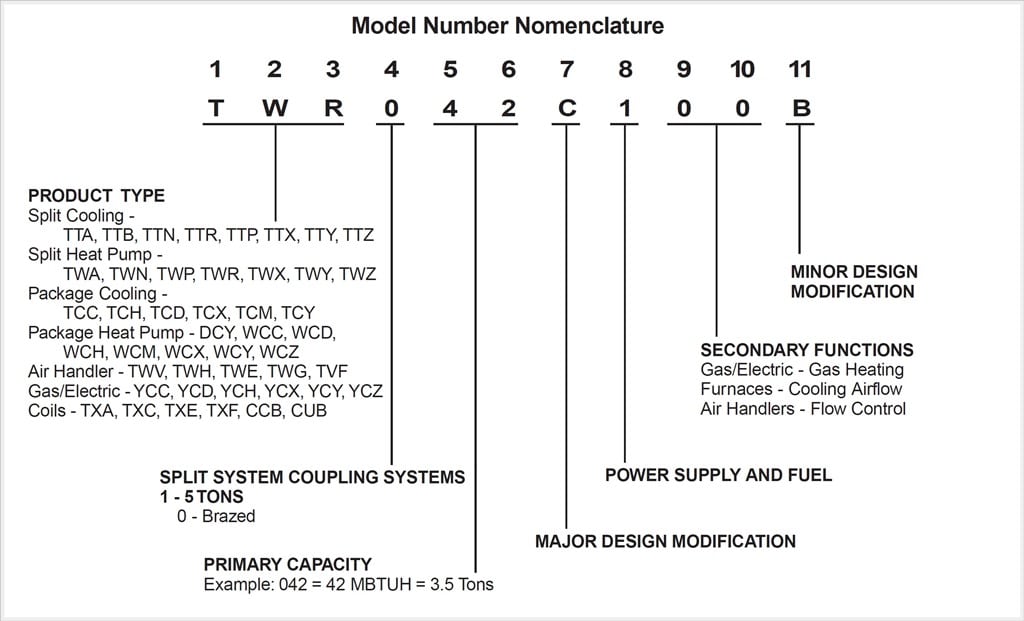
Understanding the Trane model number nomenclature can be a powerful tool when researching, comparing, or troubleshooting your HVAC (Heating, Ventilation, and Air Conditioning) system. These seemingly cryptic codes actually contain a wealth of information about the unit's specifications, efficiency, features, and intended application. This guide will demystify Trane model numbers, enabling you to decipher their meaning and make informed decisions about your home comfort.
Breaking Down the Code: A Section-by-Section Guide
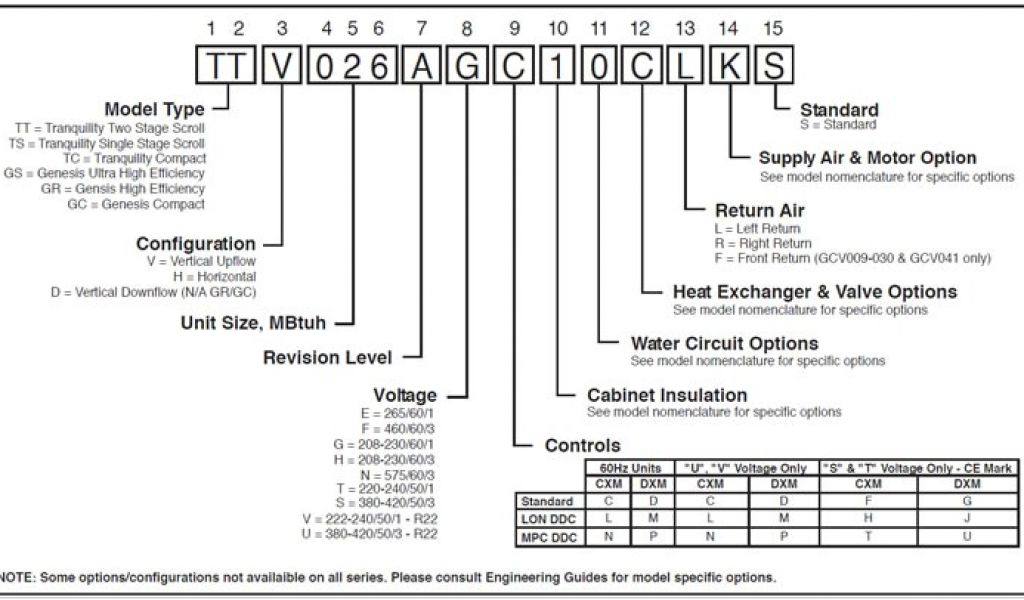
Trane uses a standardized system for creating their model numbers, although the specific format can vary slightly depending on the type of equipment (air conditioner, heat pump, furnace, etc.). Generally, the model number is broken down into several distinct sections, each representing a specific characteristic of the unit. Let's examine the most common components:
Section 1: Equipment Type and Series
The first few characters usually indicate the type of equipment and the specific series it belongs to. This is a crucial piece of information for quickly identifying the broad category of the unit.
- XR: Often signifies a reliable and cost-effective line of air conditioners or heat pumps.
- XL: Typically represents a higher-end, more feature-rich series of air conditioners or heat pumps.
- XV: Indicates a variable-speed unit, offering enhanced comfort and energy efficiency.
- S: Used in relation to Smart HVAC equipment, with advanced features.
- G: Commonly used for gas furnaces.
- A: Often signifies an air handler.
- T: Indicative of thermostats and control units.
For example, XR16 tells you it's likely an air conditioner or heat pump from the XR series, specifically generation 16 (though, exact interpretation varies by model type).
Section 2: Cooling/Heating Capacity
This section typically represents the cooling capacity (for air conditioners and heat pumps) or heating capacity (for furnaces) of the unit, expressed in BTUs (British Thermal Units) per hour. This number is often abbreviated and represented in thousands.
For example, a model number containing "024" often indicates a 24,000 BTU/hour capacity (2 tons), which is suitable for smaller homes or specific zones. "036" means 36,000 BTU/hour (3 tons), a common size for average-sized homes. "048" indicates 48,000 BTU/hour (4 tons), suitable for larger homes. "060" usually means 60,000 BTU/hour (5 tons) for large residences or commercial spaces.
Important Note: Correctly sizing your HVAC system is crucial for optimal performance and efficiency. An undersized unit will struggle to cool or heat your home adequately, while an oversized unit can lead to short cycling and increased energy consumption. Consulting with a qualified HVAC professional is highly recommended to determine the appropriate capacity for your specific needs.
Section 3: Efficiency Rating
Efficiency ratings are a key factor in determining the long-term operating costs of your HVAC system. The model number often includes indicators of these ratings, although the exact representation can vary.
For air conditioners and heat pumps, the primary efficiency rating is SEER (Seasonal Energy Efficiency Ratio). A higher SEER rating indicates greater energy efficiency. Some Trane model numbers might directly incorporate the SEER rating. If not directly incorporated, the series designation often gives clues. For example, an XR16 typically has a SEER of 16.
For heat pumps, another important rating is HSPF (Heating Seasonal Performance Factor), which measures heating efficiency. Again, sometimes this may be indirectly indicated in the model number.
For furnaces, the efficiency rating is AFUE (Annual Fuel Utilization Efficiency). This percentage indicates how efficiently the furnace converts fuel into usable heat. A higher AFUE rating means less wasted energy and lower heating bills. High efficiency furnaces might have model numbers with specific indicators of their efficiency level.
Understanding these ratings allows you to compare different models and choose the most energy-efficient option for your budget and needs. It’s important to note that government regulations often set minimum efficiency standards for HVAC equipment.
Section 4: Voltage and Phase
This section specifies the electrical requirements of the unit, including the voltage and phase. This information is crucial for ensuring compatibility with your home's electrical system. Common voltage ratings include 115V, 208/230V, and 460V. The phase can be single-phase or three-phase. For residential applications, single-phase is the most common. This section is often denoted by a short code.
Incorrect voltage or phase can damage the unit and pose a safety hazard. Always consult with a qualified electrician or HVAC technician to ensure proper electrical connections.
Section 5: Design Series/Revision Level
This section, often found at the end of the model number, indicates the design series or revision level of the unit. Manufacturers often make incremental improvements to their products over time, and this section helps to differentiate between different versions of the same basic model. It might be represented by letters or numbers.
For example, a model number ending in "A" might represent the initial design series, while "B" or "C" would indicate subsequent revisions. While these revisions may not always represent major changes, they can sometimes include improvements to performance, reliability, or features.
Section 6: Special Features/Options
Some Trane model numbers include codes that indicate specific features or options that are included in the unit. These codes can vary widely depending on the model and the available options.
- Variable Speed: Units with variable speed compressors or blowers offer enhanced comfort and efficiency by adjusting their output to match the exact cooling or heating demand.
- Communicating Systems: These systems use advanced controls and sensors to optimize performance and provide detailed diagnostic information.
- ComfortLink II: This is Trane's communicating technology, designed to enhance comfort and energy efficiency.
- Pre-Charged: Denotes systems that are pre-charged with refrigerant for easier installation (though final adjustments are always necessary). Think of refrigerant as the "blood" of your AC system, carrying heat from inside to outside.
- Corrosion Resistant: Indicates the unit has enhanced protection against corrosion, making it suitable for coastal environments.
Example Model Number Breakdown
Let's analyze a hypothetical Trane model number: XR16-036-230-A
- XR16: Indicates an air conditioner or heat pump from the XR series, likely with a SEER rating of around 16.
- 036: Represents a cooling capacity of 36,000 BTU/hour (3 tons).
- 230: Indicates a voltage of 230V (most likely 208/230V).
- A: Represents the initial design series or revision level.
Where to Find the Model Number
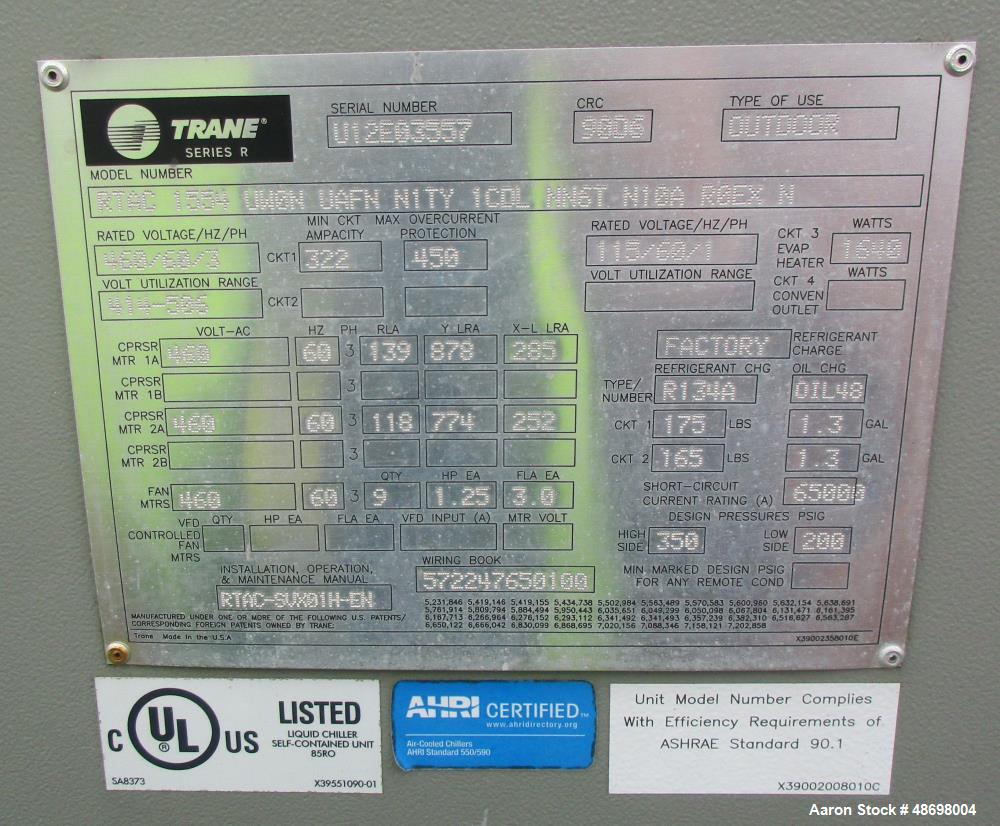
The model number is typically located on a nameplate attached to the unit. For outdoor units (air conditioners and heat pumps), the nameplate is usually found on the side of the unit. For indoor units (furnaces and air handlers), the nameplate is typically located inside the unit, often on the blower compartment door. Look for a label that clearly identifies the "Model Number" or "Model No."
Why Understanding Model Numbers Matters
Decoding Trane model numbers empowers you to:
- Compare different models: Easily compare the specifications and features of different units to make an informed decision.
- Verify compatibility: Ensure that the unit is compatible with your home's electrical system and ductwork.
- Troubleshoot issues: Provide accurate information to HVAC technicians for faster and more efficient repairs.
- Find replacement parts: Use the model number to identify the correct replacement parts for your unit.
- Research specifications: Access detailed product information and specifications from Trane's website or other sources.
Beyond the Model Number: Professional Advice is Key
While understanding the model number can provide valuable insights, it's essential to consult with a qualified HVAC professional for accurate sizing, installation, and maintenance of your system. A professional can assess your specific needs and recommend the best solution for your home and budget.
Do not attempt to install or repair HVAC equipment without proper training and certification. Working with HVAC systems can be dangerous and requires specialized knowledge and tools. Improper installation or repair can lead to equipment damage, safety hazards, and voided warranties.
In conclusion, learning to decipher Trane model numbers can significantly aid in your HVAC research and decision-making. Remember to prioritize safety and consult with qualified professionals for all installation and repair needs. By combining your understanding of model numbers with expert advice, you can ensure a comfortable and efficient home environment.