Trane Packaged Rooftop Units Pdf
Frequently Asked Questions About Trane Packaged Rooftop Unit PDFs
This article answers common questions about Trane packaged rooftop unit (RTU) PDFs, helping you understand how to find, interpret, and use them effectively. Whether you're a homeowner, facility manager, or HVAC professional, this resource provides clear and concise information.
Q: What is a Trane Packaged Rooftop Unit PDF and why would I need one?
A Trane Packaged Rooftop Unit (RTU) PDF is a digital document that contains important information about a specific Trane RTU model. These PDFs are usually manuals, specifications sheets, installation guides, wiring diagrams, or parts lists. You might need one for several reasons:
- Troubleshooting: Diagnosing and repairing issues with your RTU. The manual will have troubleshooting steps.
- Maintenance: Performing routine maintenance tasks, such as filter changes or coil cleaning. Maintenance schedules are usually provided in a manual.
- Installation: Properly installing a new RTU unit. Installation manuals cover all the necessary steps.
- Specifications: Checking the unit's specifications, like cooling capacity (BTU/h), airflow (CFM), electrical requirements (voltage, amperage), dimensions, and efficiency (SEER/EER). This is useful for replacing or upgrading the RTU.
- Parts Identification: Identifying and ordering replacement parts using the parts list and exploded diagrams.
- Warranty Information: Understanding the terms and conditions of your unit's warranty.
Essentially, the PDF serves as a comprehensive reference guide for your Trane RTU. You can think of it like the owner's manual for your car, but for your building's heating and cooling system.
Q: Where can I find the Trane Packaged Rooftop Unit PDF for my specific model?
Finding the correct PDF is crucial. Using the wrong document can lead to incorrect diagnoses or improper repairs. Here are the most reliable places to locate the PDF for your Trane RTU model:
- Trane's Official Website: This is the best and most reliable source. Navigate to the "Commercial HVAC" or "Support" section, then search for your model number. Trane's website often has a document library where you can download various PDFs related to your unit. Always prioritize this source.
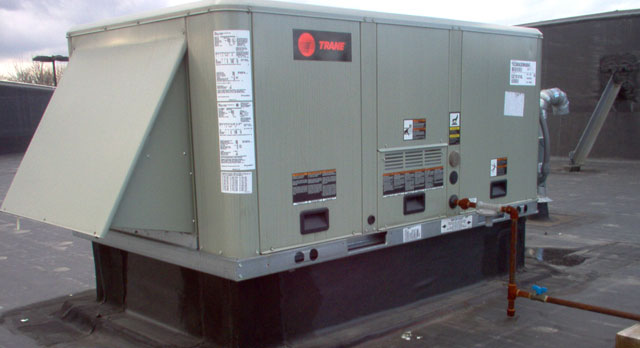
- The Unit Itself: Look for a data plate or sticker on the RTU. This plate usually contains the model number and serial number. Note these down, as they're essential for searching online. You might also find a QR code that links directly to the documentation.
- HVAC Contractor/Installer: Your HVAC contractor likely has access to Trane's technical resources and can provide you with the necessary PDFs. They may have even given you a copy during the initial installation.
- Online HVAC Parts Retailers: Some online retailers that sell Trane parts also provide access to PDF manuals and specifications. Search for your model number on their site.
- Online Search Engines (with caution): Use search engines like Google, but be very careful when downloading PDFs from third-party websites. Make sure the source is reputable and the file is virus-free. Prefer Trane's official website or a known HVAC supplier. When using a search engine, include the full model number and the terms "PDF," "manual," or "specifications." Example: "Trane YSC090D3H0A PDF manual."
Important: Avoid downloading PDFs from untrusted sources, as they may contain malware or incorrect information. Double-check the PDF matches your exact model number before using it.
Q: What information can I expect to find in a typical Trane RTU PDF manual?
A Trane RTU PDF manual is a comprehensive resource. The exact contents vary depending on the specific model and type of document, but generally, you can expect to find the following:
- Product Specifications: Detailed technical specifications, including:
- Cooling and heating capacity (BTU/h)
- Airflow (CFM)
- Electrical requirements (voltage, phase, amperage)
- Refrigerant type and charge
- Unit dimensions and weight
- Energy efficiency ratings (SEER, EER, HSPF)
- Installation Instructions: Step-by-step instructions for installing the RTU, including:
- Roof curb requirements
- Ductwork connections
- Electrical wiring
- Refrigerant piping (if applicable)
- Start-up procedures
- Operating Instructions: Guidelines for operating the RTU, including:
- Start-up and shutdown procedures
- Temperature settings
- Fan speed adjustments
- Troubleshooting common issues
- Maintenance Procedures: Recommended maintenance schedules and procedures, including:
- Filter replacement
- Coil cleaning
- Blower motor lubrication
- Belt inspection and replacement
- Refrigerant level checks
- Troubleshooting Guide: A section dedicated to diagnosing and resolving common problems, often with:
- Error codes and their meanings
- Possible causes of malfunctions
- Suggested corrective actions
- Wiring Diagrams: Detailed electrical wiring diagrams showing the connections between all components.
- Parts List: An itemized list of all parts, along with their part numbers. Exploded diagrams show how the parts fit together.
- Warranty Information: Details about the unit's warranty coverage, including terms and conditions, and how to make a claim.
- Safety Precautions: Important safety information to prevent injury or damage to the equipment.
The level of detail varies, but a good RTU PDF manual will provide all the information needed for safe and effective operation, maintenance, and troubleshooting.
Q: The PDF is too technical. How can I understand it better?
RTU manuals can be complex, but here's how to make them more approachable:
- Start with the Basics: Focus on the sections most relevant to your immediate needs. For example, if you need to change the filter, go directly to the "Maintenance" section.
- Glossary of Terms: Many manuals include a glossary explaining technical terms. Refer to this section to understand unfamiliar vocabulary.
- Visual Aids: Pay close attention to diagrams, illustrations, and exploded views. These can often clarify complex procedures.
- Break it Down: Don't try to understand everything at once. Read a section, take a break, and then come back to it.
- Online Resources: Search online for explanations of specific terms or concepts. YouTube videos can also be helpful for visualizing maintenance or repair tasks.
- Consult a Professional: If you're still struggling, don't hesitate to contact a qualified HVAC technician. They can explain the manual in simpler terms and provide hands-on assistance. It's better to ask for help than to risk damaging the equipment or injuring yourself.
- Highlight and Annotate: Print the PDF and highlight key information or make notes in the margins to help you remember important details.
Remember, you don't need to become an HVAC expert overnight. Focus on understanding the information that's relevant to your specific needs. It helps to understand the basic principles of refrigeration and air conditioning to better grasp the information within the document. Familiarizing yourself with the terminology and general concepts will significantly improve your comprehension.
Q: How do I use the PDF to troubleshoot problems with my Trane RTU?
The troubleshooting section of the PDF is your best friend when facing problems. Here's a step-by-step approach:
- Identify the Symptom: Carefully observe the problem. Is the unit not cooling, not heating, making unusual noises, or displaying an error code?
- Check the Error Codes: If the unit is displaying an error code, look up the code in the troubleshooting section of the PDF. The manual will explain the meaning of the code and suggest possible causes.
- Consult the Troubleshooting Guide: If there's no error code, look for a section in the manual that describes your specific symptom.
- Follow the Suggested Solutions: The troubleshooting guide will provide a list of possible causes and corrective actions. Start with the simplest solutions first. For example, check the air filter before attempting more complex repairs.
- Use the Wiring Diagrams: If the problem appears to be electrical, use the wiring diagrams to trace the circuit and identify any potential issues, such as loose connections or faulty components.
- Isolate the Problem: Try to isolate the problem to a specific component or system. For example, if the unit is not cooling, check the compressor, fan motor, and refrigerant levels.
- Document Your Findings: Keep a record of the steps you've taken and the results you've observed. This will help you track your progress and avoid repeating unnecessary steps.
Safety First! Always disconnect power to the unit before attempting any electrical repairs. If you're not comfortable working with electricity or refrigerant, call a qualified HVAC technician. Remember that some repairs require specialized tools and knowledge. If you’re unsure, seek professional help.
Q: Can I use the Trane RTU PDF to find compatible replacement parts?
Yes, the parts list within the PDF is invaluable for finding compatible replacement parts. Here's how to use it effectively:
- Locate the Parts List: Find the section of the PDF that contains the parts list and exploded diagrams.
- Identify the Part: Use the diagrams to visually identify the part you need.
- Find the Part Number: Once you've identified the part, find its corresponding part number in the parts list. The part number is a unique identifier that ensures you order the correct replacement.
- Verify Compatibility: Double-check that the part number matches your specific RTU model number. Trane often uses different parts in similar models, so it's crucial to verify compatibility.
- Order the Part: Use the part number to order the replacement part from a reputable HVAC parts supplier.
- Consider Upgrades: While replacing a part, consider if there's an upgraded or more efficient version available that's compatible with your unit.
Important: Always use genuine Trane replacement parts or parts that are specifically designed to be compatible with Trane RTUs. Using non-compatible parts can damage your unit and void the warranty. When ordering, provide the supplier with your RTU's model and serial number to ensure you get the correct part. Cross-referencing the part number with multiple sources is a good practice to confirm accuracy.
Q: What if I can't find the PDF for my specific Trane RTU model?
If you can't find the PDF for your exact model, don't panic. Here are some steps you can take:
- Double-Check the Model Number: Make sure you have the correct model number. Even a small typo can prevent you from finding the right PDF.
- Contact Trane Directly: Call Trane's customer support line or use their online contact form to request the PDF. Provide them with the model number and serial number of your unit.
- Contact a Trane Dealer: A local Trane dealer can often access archived documentation and provide you with the PDF.
- Search for Similar Models: If you can't find the exact PDF, try searching for PDFs for similar models. There may be some overlap in the information, although wiring diagrams are usually specific. Look for models with similar features and specifications.
- Check HVAC Forums: Search online HVAC forums or communities. Other users may have the PDF you're looking for or be able to point you in the right direction.
- Consider a Universal Manual: While not ideal, some companies create universal manuals for various RTU models. These manuals are more general, but they might provide some useful information.
- Hire an HVAC Technician: If you're unable to find the PDF, consider hiring an HVAC technician. They will have access to the necessary resources and can diagnose and repair your unit.
Persistence is key! Even if you can't find the exact PDF, you may be able to piece together enough information from other sources to troubleshoot or maintain your RTU. Don't hesitate to leverage all available resources, including Trane's customer support, local dealers, and online communities. Always prioritize safety and accuracy when working with your HVAC equipment.