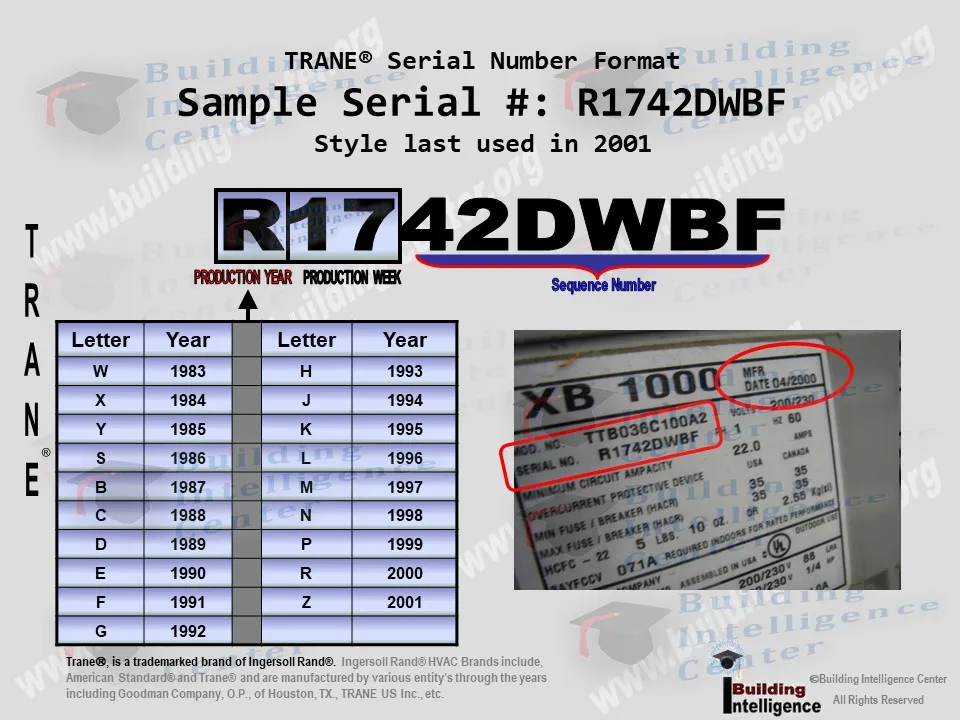
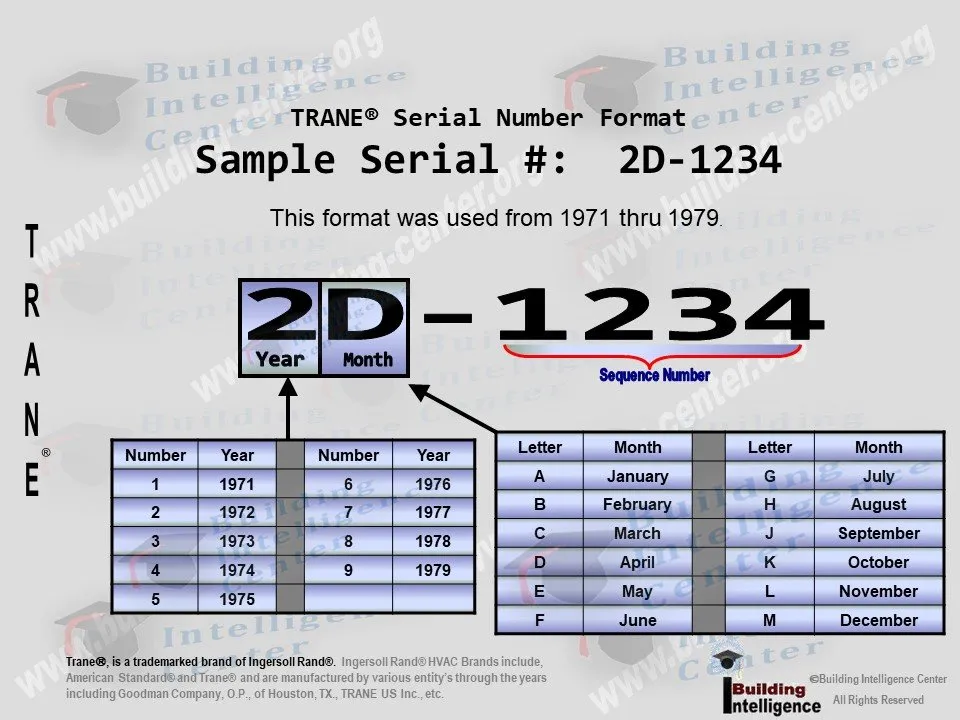
Trane Rtu Model Number Nomenclature
Understanding the codes and numbers attached to your HVAC system can feel like deciphering a secret language. However, knowing how to read the model number of your Trane RTU (Rooftop Unit) is crucial for maintenance, troubleshooting, and, most importantly, optimizing energy efficiency. This article breaks down the Trane RTU model number nomenclature, helping you unlock the information hidden within and empowering you to make informed decisions about your heating and cooling needs.
Decoding the Trane RTU Model Number: A Step-by-Step Guide
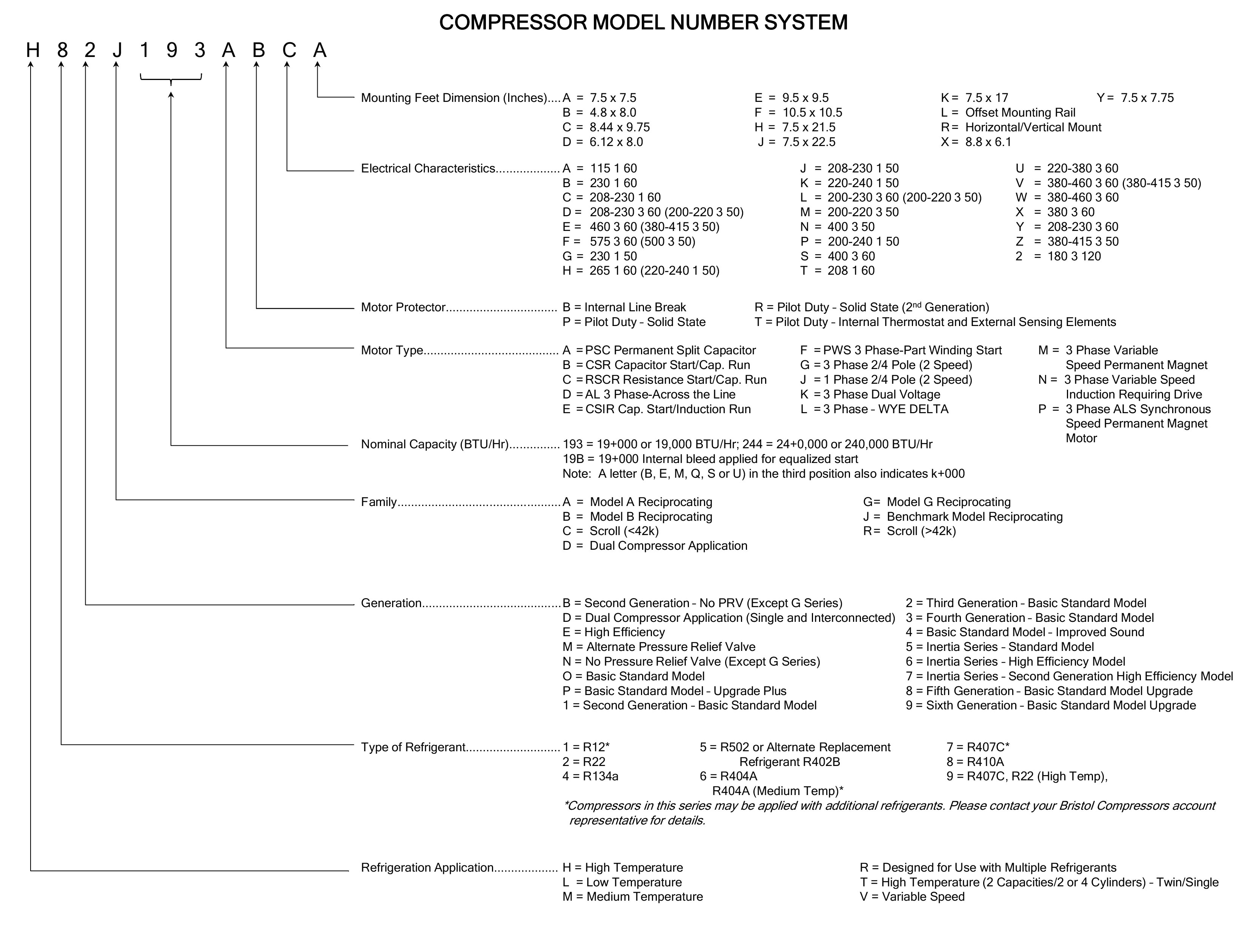
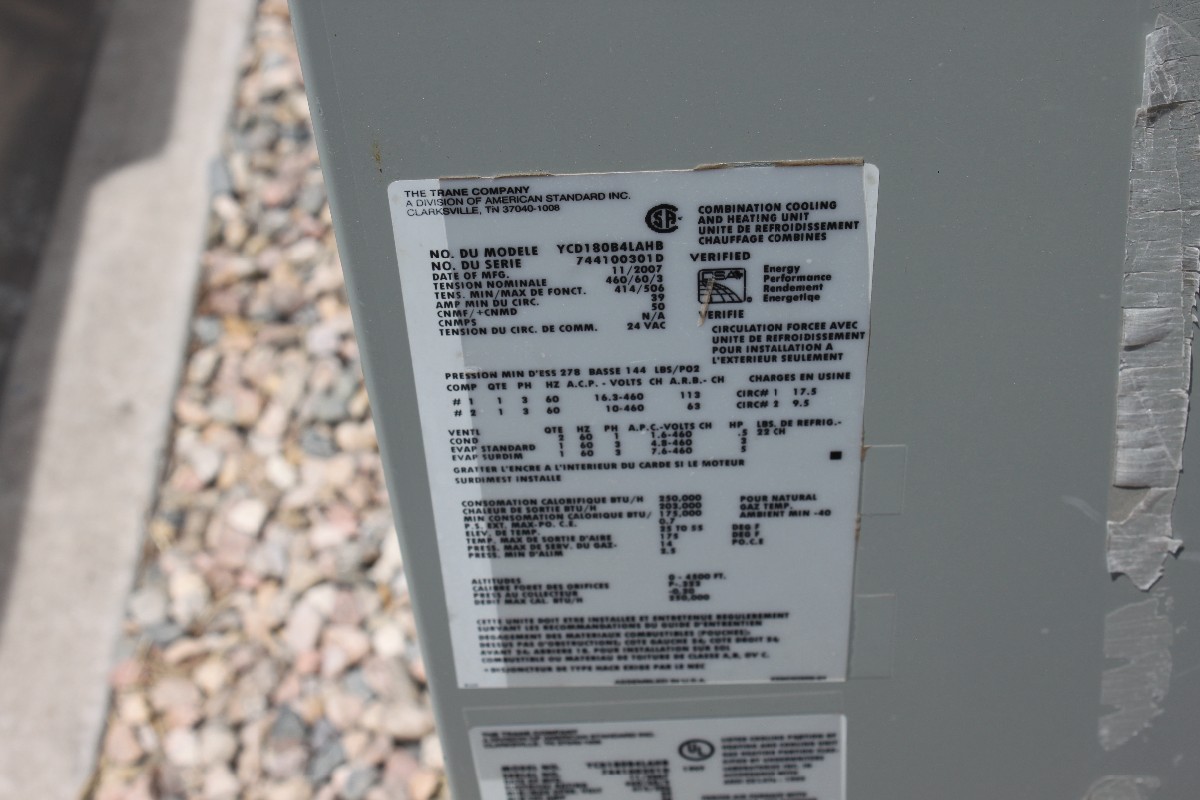
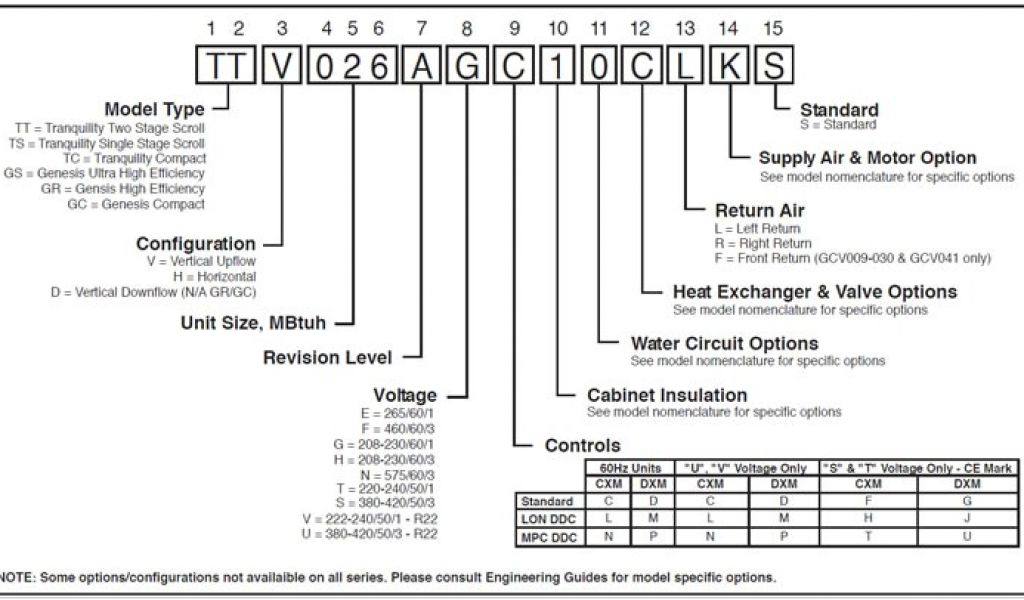
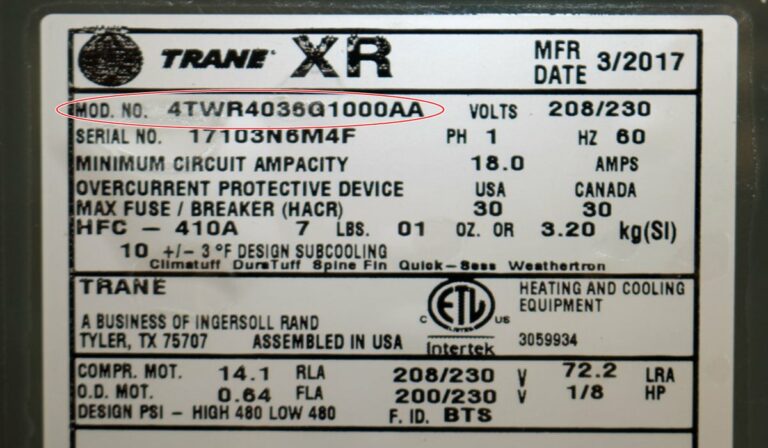
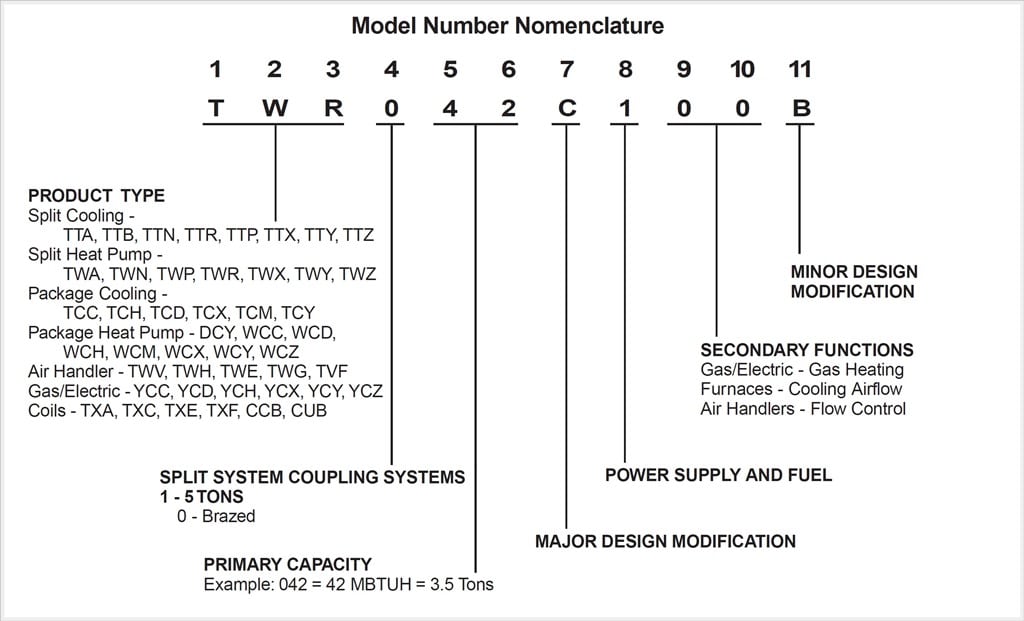
Trane uses a standardized system for naming their RTU models, although the exact format can vary slightly depending on the age and series of the unit. Let's dissect a typical model number segment by segment to understand what each part signifies. A common example we'll use throughout this guide is: YSC120D3H0AB
1. Unit Type and Series (The First Few Characters)
The initial characters usually indicate the unit type and the series or generation of the RTU. This part provides a broad overview of the system's capabilities and features.
- YSC: In our example, 'YSC' typically indicates a specific series of small- to medium-sized Trane rooftop units, often designed for commercial applications like small offices or retail spaces. The 'Y' often indicates that it has features allowing the unit to have its compressor staged for efficiency. The 'S' may denote the standard efficiency of the system.
- Other common prefixes you might encounter include:
- YHC: High-efficiency rooftop unit, generally offering better energy performance compared to standard models.
- XCC: Another series, possibly indicating a different feature set or capacity range.
2. Cooling Capacity (The Middle Numbers)
The numbers following the series designation usually represent the cooling capacity of the unit, measured in thousands of BTUs (British Thermal Units) per hour. This is a critical factor in determining if the RTU is appropriately sized for your space.
- 120: In our example, '120' indicates a cooling capacity of 120,000 BTUs per hour, or 10 tons (1 ton = 12,000 BTUs).
- When selecting a new RTU, accurately calculating the cooling load for your building is essential. Undersized units will struggle to maintain comfortable temperatures, while oversized units can lead to inefficient cycling and humidity issues. Consulting with a qualified HVAC professional is highly recommended for accurate load calculations. Many firms offer these calculations at no charge.
3. Voltage and Electrical Characteristics (The Letter and Number Combination)
This section specifies the electrical voltage and phase requirements of the RTU. Using the correct voltage is vital for safe and proper operation. An improperly installed RTU can be damaged or even cause an electrical hazard.
- D3: 'D3' typically indicates the voltage and phase configuration of the unit. 'D3' often corresponds to 460V/3PH/60Hz power. It is essential to verify that your building's electrical supply matches the RTU's requirements.
- Other voltage codes might include:
- A2: 208-230V/3PH/60Hz
- B1: 208-230V/1PH/60Hz
- Always consult the unit's wiring diagram and the services of a qualified electrician to ensure proper electrical connections.
4. Design Series (The Letter After the Voltage)
This letter often indicates the design series of the unit, reflecting incremental improvements and updates made by the manufacturer.
- H: 'H' usually indicates a specific design series within the 'YSC120D3' model. Each series has improvements to components or overall design. Newer design series usually have improvements or more features.
5. Major Options and Modifications (The Last Two Letters)
These final letters often describe major factory-installed options or modifications to the base unit. These options can include features like specific heating configurations, economizers, or special coatings.
- 0AB: This segment provides information about specific options installed in the unit. The first digit may indicate the type of heat (0 = electric heat, 1 = gas heat). The next digits indicate further options, such as the economizer.
- Common options include:
- Economizers: Allow the unit to use outside air for cooling when the temperature and humidity are favorable, significantly reducing energy consumption.
- Various Heating Options: Including gas heat, electric heat, or heat pumps.
- Coated Coils: Provide increased protection against corrosion in coastal or industrial environments.
Why Understanding the Model Number Matters
Deciphering the Trane RTU model number isn't just for HVAC technicians. It empowers homeowners and businesses to make more informed decisions about their heating and cooling systems, leading to significant benefits.
1. Accurate Part Identification and Replacement
When you need to replace a component, knowing the exact model number ensures you order the correct part. This prevents delays and costly mistakes.
2. Energy Efficiency Optimization
The model number can help you determine the unit's efficiency ratings (SEER, EER, HSPF), allowing you to compare it to other models and assess its energy performance. Knowing the unit's capacity also lets you evaluate whether it's properly sized for your needs. An improperly sized unit will cause higher energy usage and shorter lifespan.
3. Access to Rebates and Incentives
Many government agencies and utility companies offer rebates and incentives for installing energy-efficient HVAC systems. The model number is often required to verify eligibility.
For example, the Energy Star program provides certifications and resources for energy-efficient products. Installing an Energy Star certified RTU can qualify you for rebates and lower your energy bills. Check with your local utility company and state energy office for available programs.
4. Smart HVAC Integration
Understanding your RTU model can facilitate the integration of smart thermostats and sensors. Many smart thermostats require specific compatibility information, which can be found using the model number. Smart thermostats learn from your living habits and adjust accordingly for optimal efficiency.
Consider integrating your Trane RTU with a smart thermostat like the Nest Learning Thermostat or the Ecobee SmartThermostat. These devices can learn your temperature preferences, automatically adjust settings, and even provide energy usage reports.
5. Informed Maintenance and Repair
Knowing the model number allows HVAC technicians to quickly access the correct service manuals and technical specifications, leading to faster and more accurate diagnoses and repairs. A service contractor can more accurately service your unit and provide relevant solutions.
Beyond the Model Number: Additional Factors for Energy Efficiency
While understanding the Trane RTU model number is a valuable first step, several other factors contribute to the overall energy efficiency of your HVAC system.
1. Proper Installation
Even the most efficient RTU will perform poorly if it's not installed correctly. Ensure your HVAC contractor follows manufacturer guidelines and performs a thorough commissioning process.
2. Regular Maintenance
Routine maintenance, including filter changes, coil cleaning, and ductwork inspections, is crucial for maintaining optimal performance and preventing costly breakdowns. Consider signing up for a preventative maintenance agreement with a qualified HVAC contractor. This will also allow a tech to find inefficiencies in the system and correct them.
3. Ductwork Sealing and Insulation
Leaky ductwork can waste significant energy. Seal any leaks with duct mastic and insulate ducts in unconditioned spaces to minimize heat loss or gain.
4. Building Envelope Improvements
Improving the insulation and air sealing of your building envelope can reduce the heating and cooling load, allowing you to potentially downsize your RTU and save energy.
5. Economizer Optimization
If your RTU is equipped with an economizer, ensure it's properly calibrated and functioning correctly. A malfunctioning economizer can actually increase energy consumption.
Conclusion
Decoding the Trane RTU model number is a key to unlocking valuable information about your HVAC system. By understanding the meaning of each character, you can make more informed decisions about maintenance, repairs, upgrades, and energy efficiency improvements. Combine this knowledge with proper installation, regular maintenance, and smart HVAC integration to maximize energy savings and create a more comfortable and sustainable environment. Always consult with a qualified HVAC professional for personalized advice and guidance.