Trane Serial Number Date Codes
Ever wondered how old your Trane air conditioner or furnace really is? It's a common question for homeowners, especially when considering repairs, replacements, or just understanding your home's energy efficiency. The problem? Finding and deciphering the serial number on your Trane unit to determine its manufacture date can feel like cracking a secret code. This article will guide you through the process, helping you understand your Trane unit's age and, more importantly, when you need to call in a professional.
Diagnosing the "Mystery Age" of Your Trane Unit
The first step is figuring out *why* you need to know the age of your unit. Common reasons include:
- Warranty Information: Knowing the manufacture date is crucial for determining if your unit is still under warranty.
- Repair vs. Replace: A very old unit might be nearing the end of its lifespan, making replacement a more sensible option than expensive repairs.
- Home Sale: Potential buyers often want to know the age of major appliances, including the HVAC system.
- Energy Efficiency Evaluation: Older units are often less energy-efficient than newer models, impacting your utility bills.
Once you understand your motivation, you can proceed with finding and interpreting the serial number.
Step 1: Locating the Serial Number
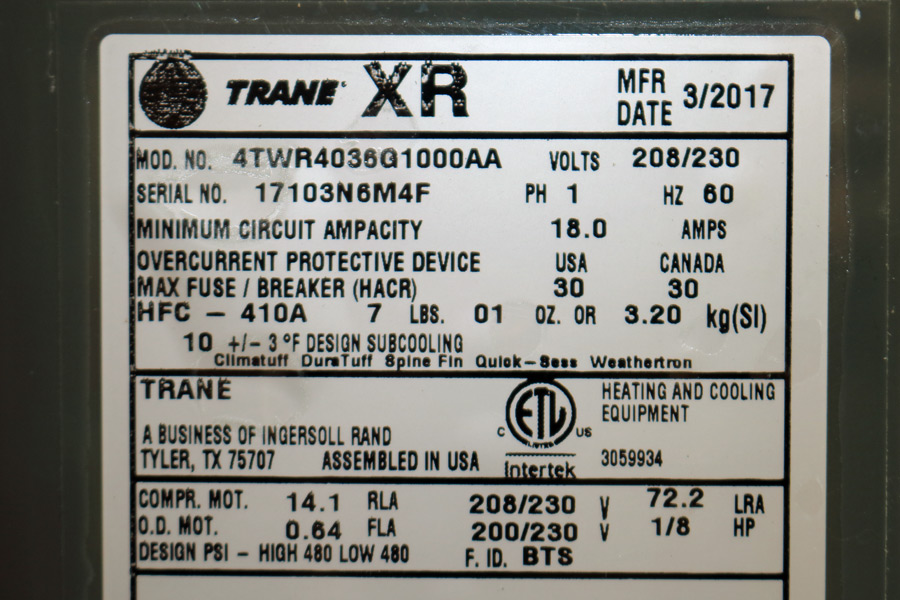
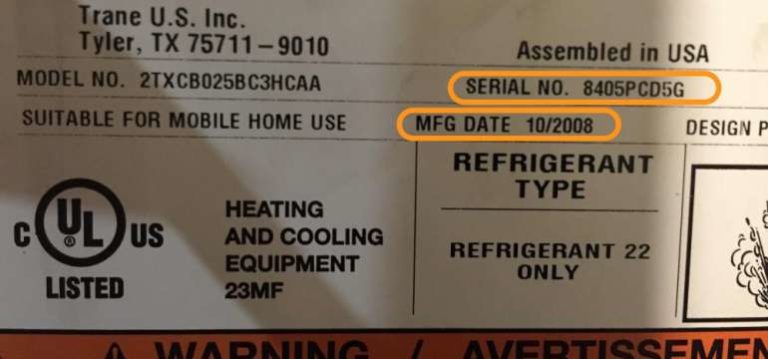
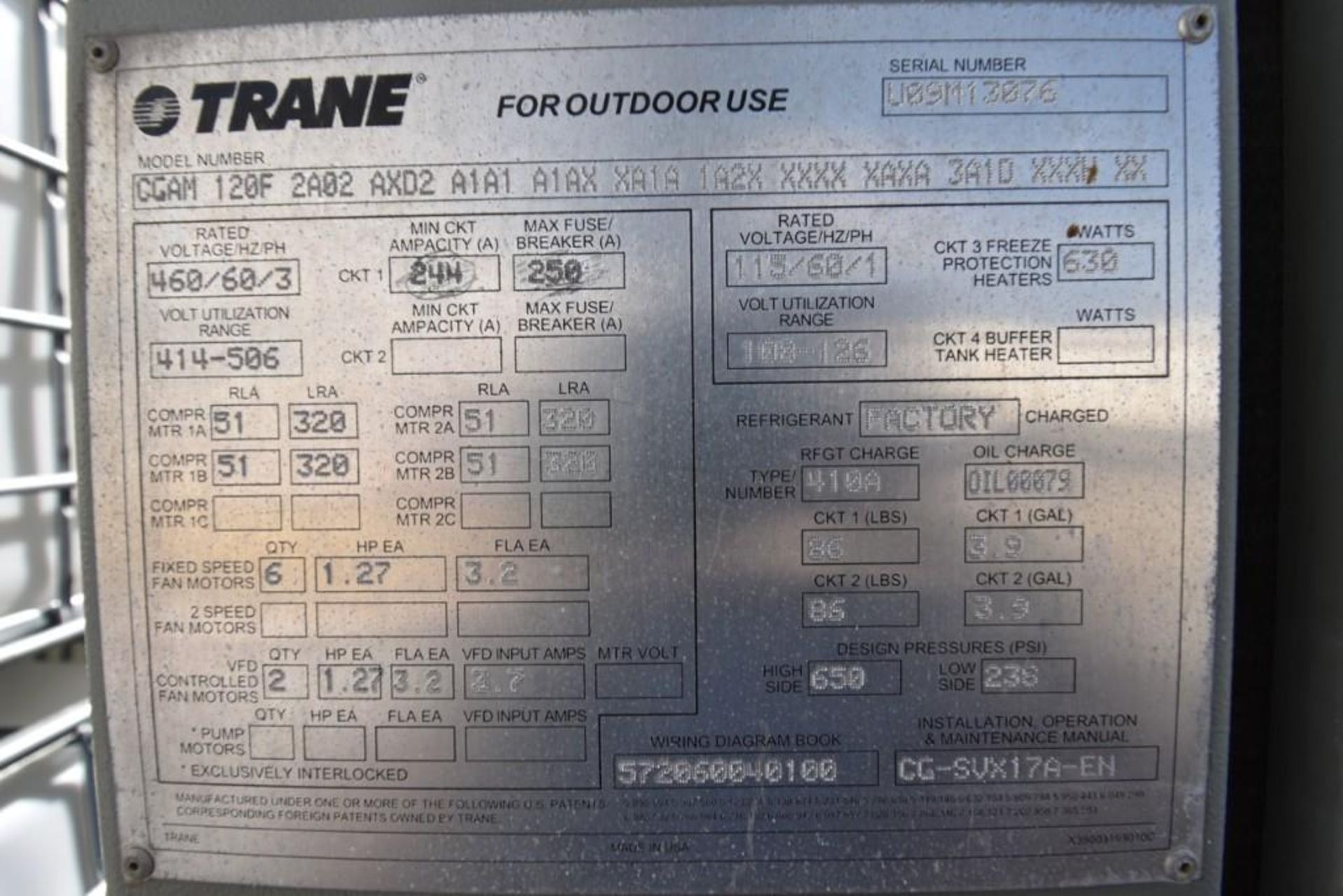
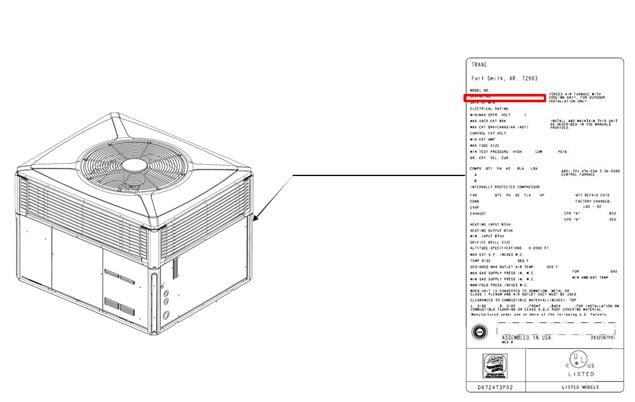
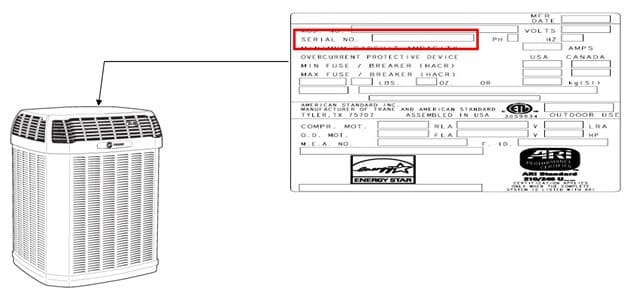
The serial number is typically found on a nameplate or sticker attached to the unit. Here's where to look:
- Outdoor Air Conditioner/Heat Pump: Check the side of the unit, usually near the bottom. Look for a metal plate or sticker.
- Indoor Furnace/Air Handler: Look inside the access panel of the furnace or air handler. Always turn off the power to the unit at the breaker before opening the access panel. Safety first!
- Pay close attention to all labels. The serial number can easily be overlooked among other model information and manufacturing data.
The nameplate should clearly display the model number and the serial number. Write both down – you'll need them!
Step 2: Deciphering the Serial Number
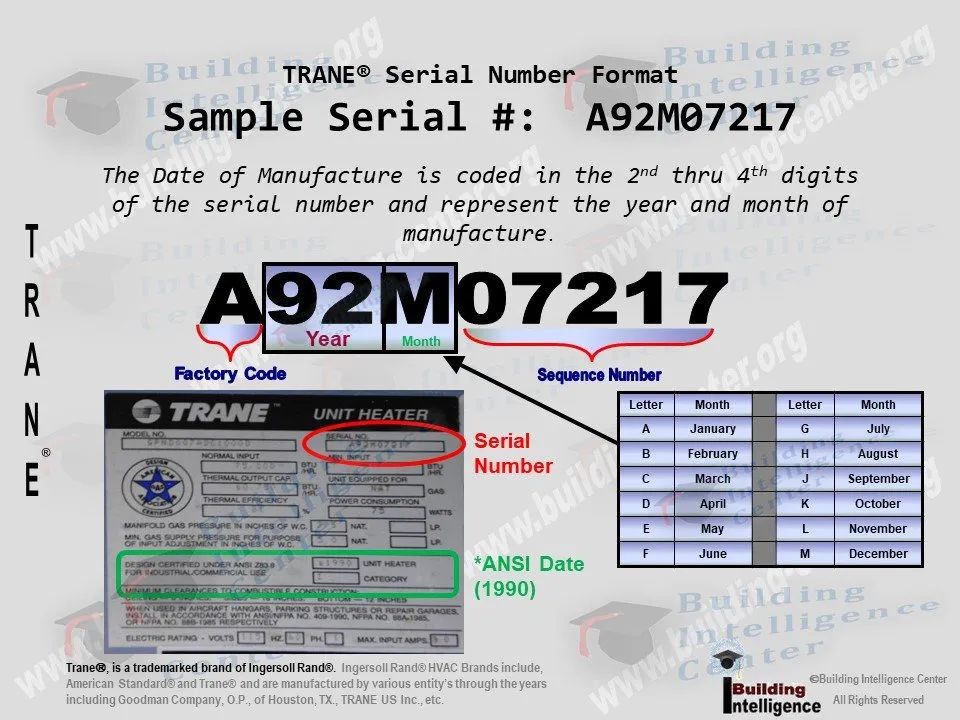
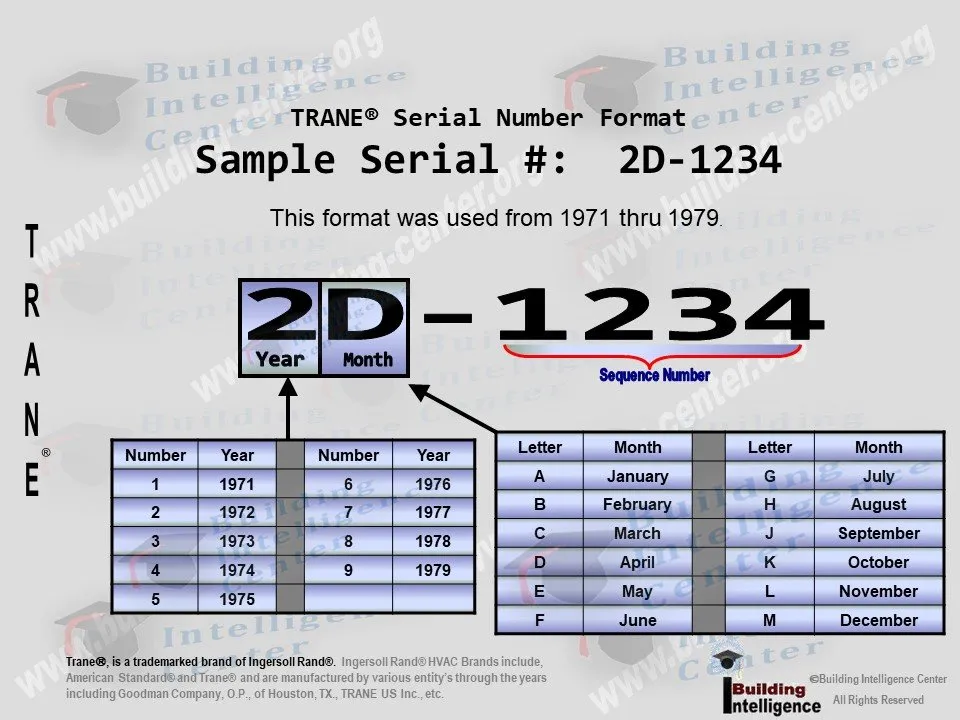
Trane's serial number date codes have evolved over time, so there isn't a single universal format. However, we can break down the most common formats:
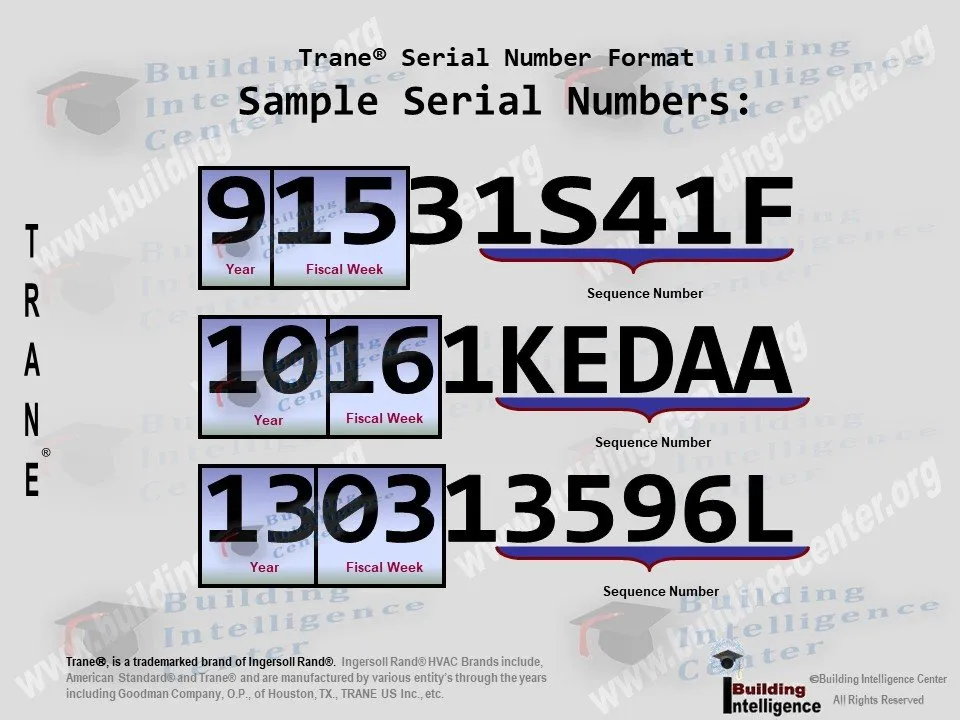
Format 1: Week and Year (Most Common, used from the 1970s to the present with minor variations)
This format typically looks like this: YYWWXXXXX or YWXXXXXXX
- YY/Y: Represents the year of manufacture. For example, "23" would mean 2023, "98" would mean 1998, and "8" might mean 2008 or 1998 depending on the context and other serial number features. If the serial number starts with single-digit year, consider that it could be the 2000s, 2010s or even 2020s depending on the age of the home and unit model type.
- WW: Represents the week of manufacture within that year (01-52). For instance, "05" would mean the fifth week of the year.
- XXXXX: Represents a sequential production number. This part is not relevant for determining the date.
Example 1: Serial Number: 231512345. This unit was manufactured in the 15th week of 2023.
Example 2: Serial Number: 984898765. This unit was manufactured in the 48th week of 1998.
Example 3: Serial Number: 701412345. This unit was manufactured in the 14th week of 2007. *or possibly* 1997
Format 2: Julian Date Code (Older Units, Less Common)
This format is less common and generally applies to older units. It uses a Julian date, which represents the day of the year.
- First digit: Indicates the last digit of the year (e.g., 8 for 1988, 2008, etc.).
- Next three digits: Represent the day of the year (001-365).
Example: Serial Number: 8123XXXXX. This unit was manufactured on the 123rd day of a year ending in '8'. To narrow it down, consider the age of the house and other factors. It's likely 1988, 1998, or 2008. Knowing when the house was built is extremely helpful in identifying what decade the "8" represents.
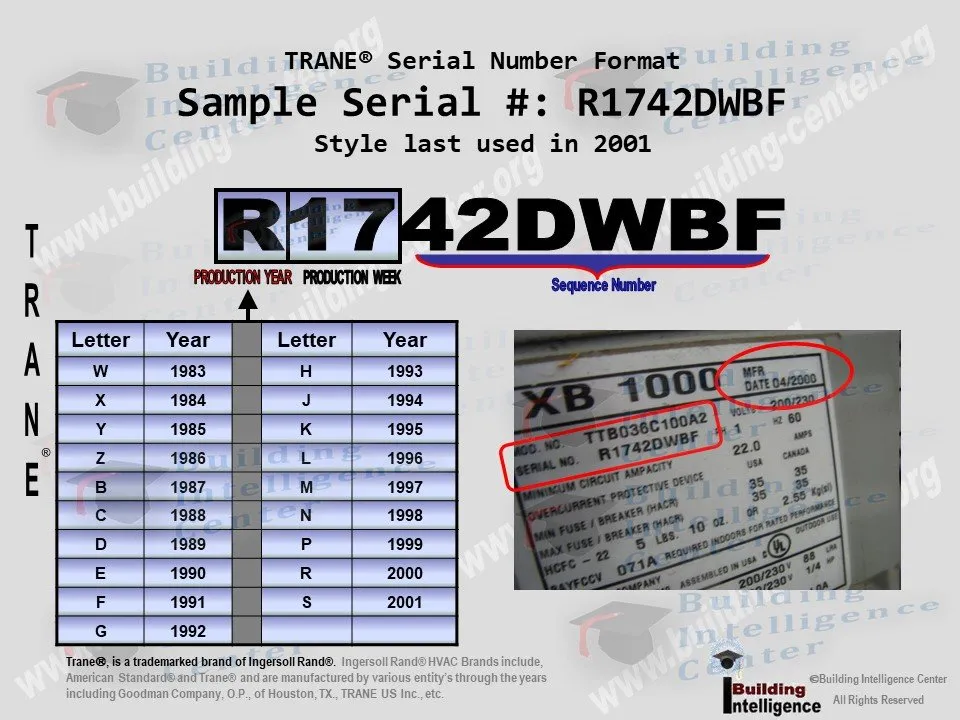
Format 3: Letter-Based Year Code (Rare, Primarily for Compressors)
Some older Trane compressors use a letter-based code for the year. This is much less common for the entire unit serial number.
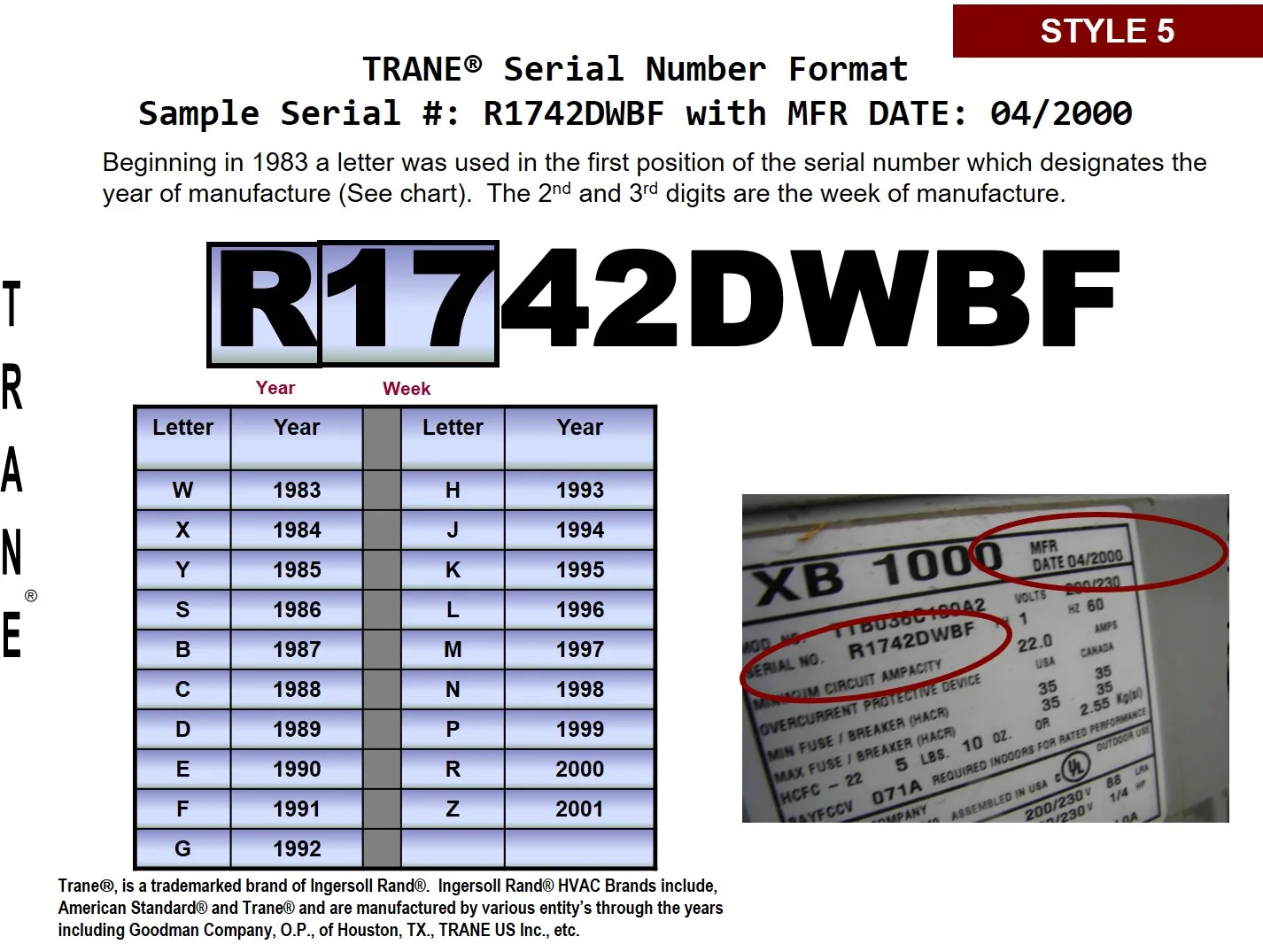
- Each letter represents a year within a repeating cycle (e.g., A=1980, B=1981, C=1982, and so on).
This format requires a specific lookup table, which is often difficult to find. If you encounter this format, it's best to consult a professional HVAC technician or contact Trane directly.
Step 3: Dealing with Ambiguity
The biggest challenge arises when the serial number provides ambiguous dates (e.g., "8" could be 1988, 1998, 2008, or 2018...possibly even 2028 depending on how far in the future you are reading this!). Here’s how to narrow it down:
- Check the Model Number: The model number can provide clues. Search online for the model number. Often, you can find product brochures or specifications sheets that indicate the years the model was manufactured.
- Consider the Age of the House: If the house was built in 1995, it’s unlikely the unit was manufactured in 1988.
- Look for Other Date Codes: Sometimes, there are other date codes stamped on components within the unit. These can provide further clues.
- Check Existing Paperwork: Did you get any documentation when you bought the house? Sales receipts from previous repairs or installation can have valuable information about the age of your unit.
Step 4: Simple DIY Fixes (Mostly About Access & Visibility)
Before calling a professional, there are a few simple DIY fixes you can try to improve your chances of finding and reading the serial number:
- Clean the Nameplate: Use a damp cloth to gently clean the nameplate. Dirt and grime can obscure the numbers. Avoid harsh chemicals or abrasive cleaners.
- Improve Lighting: Use a flashlight or work light to illuminate the nameplate, especially in dark or cramped spaces.
- Take a Photo: Use your phone to take a close-up photo of the nameplate. Zooming in on the photo can sometimes make the numbers easier to read.
- Mirror Trick: If the nameplate is in a difficult-to-reach location, use a mirror to reflect the image and make it visible.
When to Call a Professional
While you can often decipher the serial number on your own, there are times when professional help is necessary:
- Illegible Serial Number: If the nameplate is damaged or the serial number is completely unreadable, a technician may be able to use other methods (e.g., checking internal components) to estimate the unit's age.
- Uncertainty with Date Code: If you're still unsure about the manufacture date after following the steps above, a technician familiar with Trane equipment can often provide a more definitive answer.
- Complex Warranty Issues: If you're dealing with a warranty claim and need precise age verification, a professional can help you navigate the process.
- Suspect Unit Condition: If you suspect the unit has been tampered with or the serial number has been altered, it's best to have a professional inspect it.
- Prior to performing any electrical troubleshooting tasks on HVAC equipment, it is always best practice to seek professional help from a qualified, licensed HVAC technician.
Never attempt repairs on your HVAC system without proper training and qualifications. Working with electricity and refrigerant can be dangerous. Your safety is paramount.
Empowering You with Information
Understanding the age of your Trane HVAC system empowers you to make informed decisions about its maintenance, repair, and eventual replacement. By following these steps, you can unlock the "mystery" of your unit's age and take control of your home's comfort and energy efficiency.
Knowing the manufacturing date will also help when ordering replacement parts online or from your local supply house. When ordering parts, always provide them with the model number and serial number to ensure you receive the correct item.
Remember, when in doubt, consult a qualified HVAC professional. They can provide expert guidance and ensure your system is running safely and efficiently.
Finally, for additional resources, contact your local Trane dealer. They often have access to historical data and can assist in determining the age of your unit if you're struggling with the serial number.