Trane Serial Number Decoder

Understanding the intricacies of your HVAC system can seem daunting, but knowing how to decode a seemingly simple serial number can unlock a wealth of information. This is especially true for Trane HVAC units, a brand renowned for its durability and performance. Whether you’re a homeowner, a seasoned HVAC technician, or a facility manager overseeing multiple units, this guide will provide a comprehensive breakdown of how to decipher a Trane serial number.
Why Decode Your Trane Serial Number?
The serial number isn't just a random string of characters; it's a coded message that reveals key details about your unit. Understanding this code allows you to:
- Determine the Manufacturing Date: Knowing when your unit was manufactured is crucial for assessing its age and potential lifespan. Older units may be less efficient and closer to needing replacement.
- Identify Unit Specifications: The serial number can point to the specific model and its original specifications, including its BTU (British Thermal Unit) rating, SEER (Seasonal Energy Efficiency Ratio), and other performance characteristics. BTU measures the heating or cooling capacity of a unit. SEER reflects the energy efficiency during cooling; a higher SEER indicates better efficiency.
- Verify Warranty Information: Accessing the manufacturing date is essential for verifying your warranty coverage. Trane warranties typically cover parts for a specific period from the date of manufacture or installation.
- Order Correct Replacement Parts: When repairs are necessary, the serial number helps you identify the exact replacement parts needed, ensuring compatibility and proper functioning.
- Track Maintenance History: For facility managers, tracking units by serial number allows for a detailed maintenance history, facilitating proactive maintenance and preventing costly breakdowns.
Anatomy of a Trane Serial Number: The Breakdown
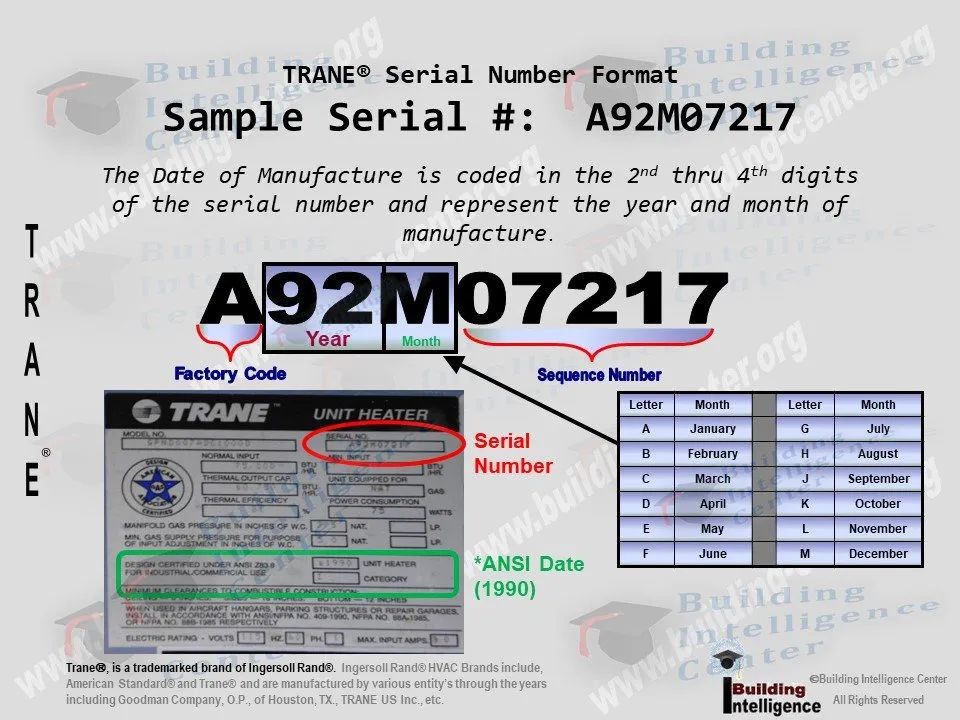
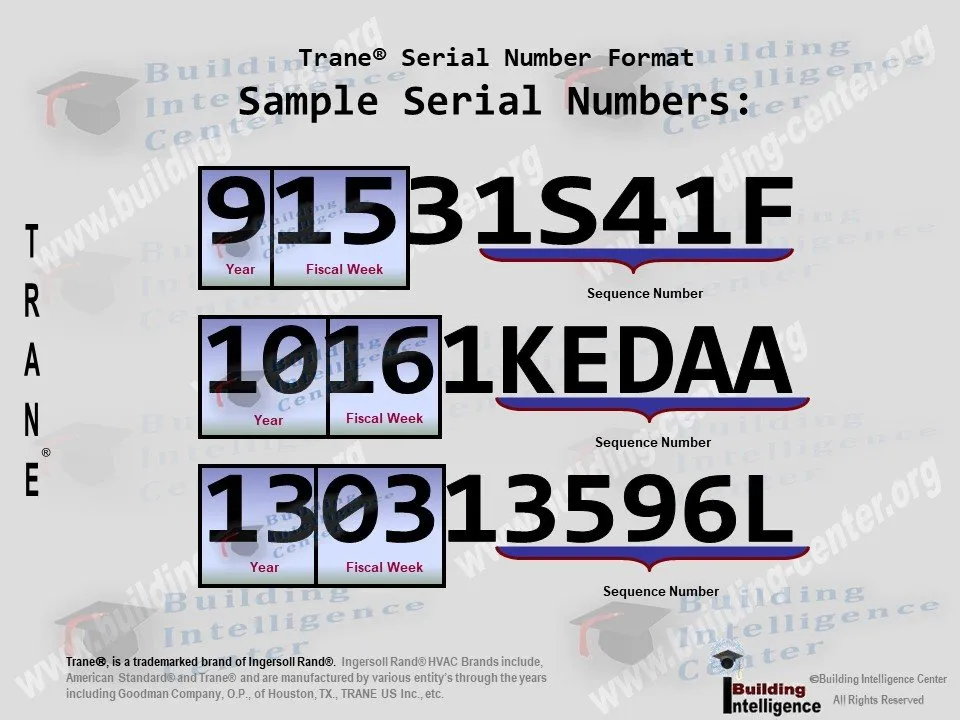
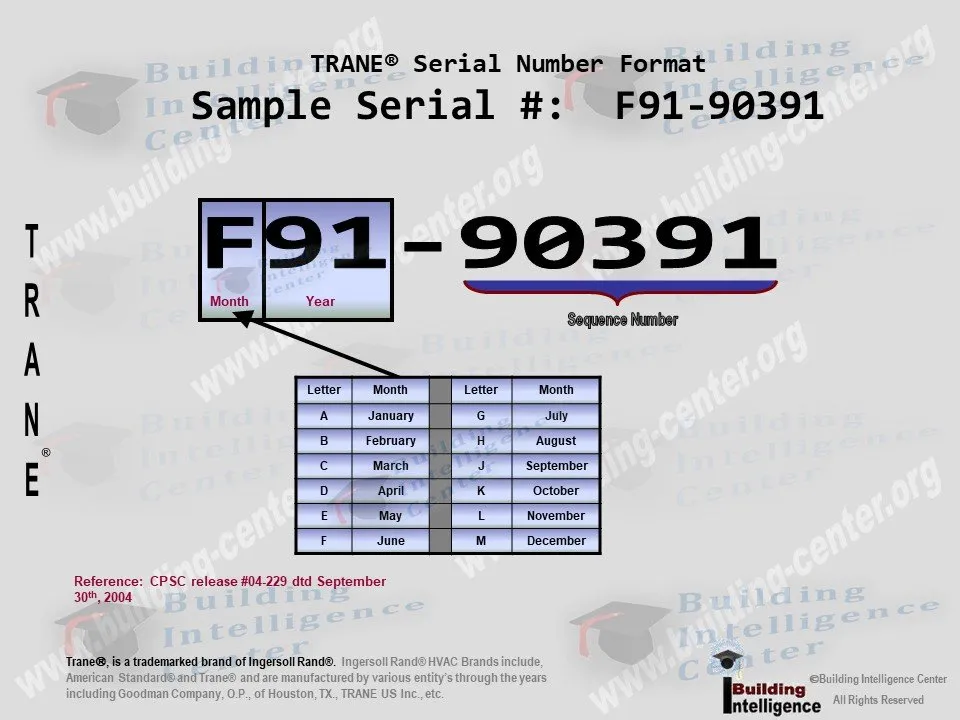
Trane uses a specific format for their serial numbers, although slight variations may exist depending on the age of the unit. Generally, the serial number consists of a combination of letters and numbers. Here's a typical breakdown:
Example Serial Number: 29194ABCDE
In this example, we'll dissect each segment:
The First Two Digits: The Week of Manufacture
The first two digits (29 in our example) usually indicate the week of the year the unit was manufactured. Here, '29' suggests the unit was made during the 29th week of the year, roughly around late July.
The Next Two Digits: The Year of Manufacture
The next two digits (19 in our example) represent the year of manufacture. Therefore, '19' indicates the year 2019. This, combined with the week, tells us the unit was likely manufactured in the 29th week of 2019.
The Remaining Characters: The Production Sequence
The remaining characters (4ABCDE in our example) represent the sequence number and manufacturing location or specific factory. This section is less relevant for homeowners but valuable for Trane internally and HVAC technicians for specific unit identification and tracking. This sequence differentiates this unit from all other units manufactured in the same week and year.
Important Considerations and Variations
While the above explanation covers the most common format, keep in mind that Trane has used different serial number formats over the years. Here are some potential variations and points to remember:
- Older Units: Older Trane units (pre-2000s) might have a slightly different format. You might need to consult Trane's historical documentation or contact their customer service for assistance with decoding.
- Letter Prefixes: Some serial numbers might start with a letter prefix. This prefix often indicates the manufacturing plant or specific product line.
- Online Lookup Tools: While not officially provided by Trane, some third-party websites offer serial number lookup tools. However, use these with caution, as their accuracy cannot be guaranteed. Always verify the information with Trane directly.
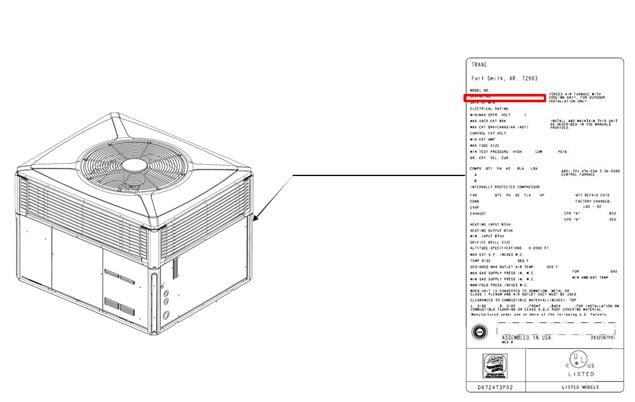
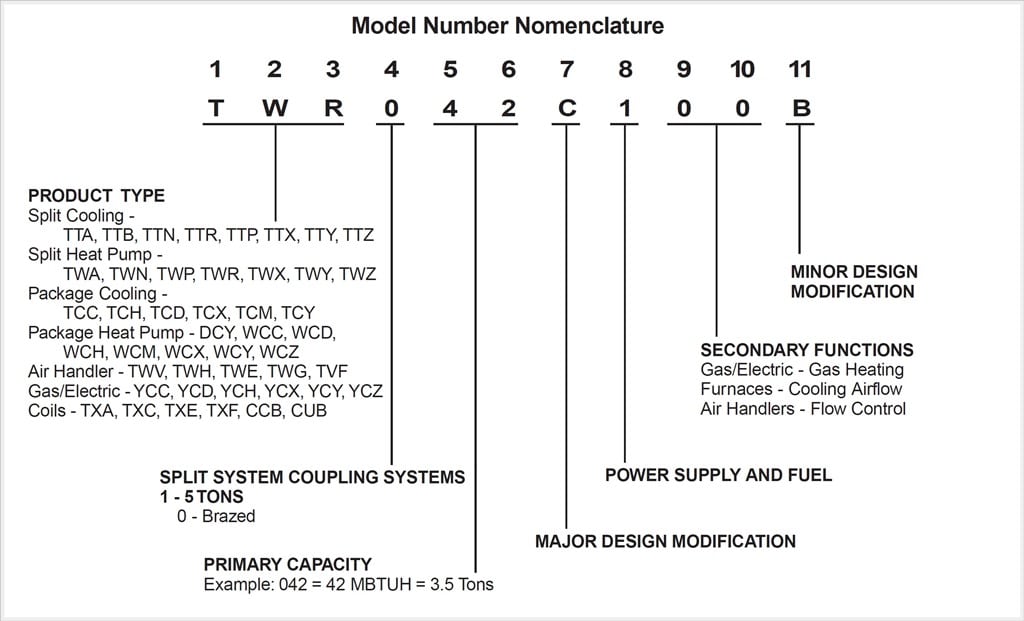
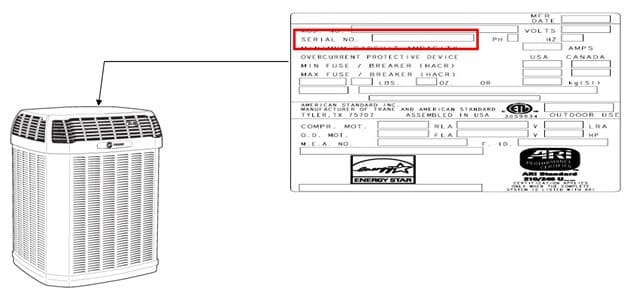
- Model Number Importance: Always cross-reference the information derived from the serial number with the unit's model number. The model number provides more specific details about the unit's capabilities and features. The model number is typically found on the unit's nameplate alongside the serial number.
Example Scenarios: Putting Knowledge into Practice
Let's examine a couple of real-world scenarios to illustrate how this knowledge can be applied:
Scenario 1: Homeowner Checking Warranty
A homeowner notices their air conditioner is not cooling as efficiently as it used to. The unit’s serial number is 12155FGHIJ. Decoding this, they find it was manufactured in the 12th week of 2015. The homeowner then checks their original installation paperwork and finds the unit was installed in June 2015. Knowing Trane's standard warranty is 5 years on parts, they realize their unit is likely out of warranty.
Scenario 2: HVAC Technician Troubleshooting
An HVAC technician is called to diagnose a malfunctioning furnace. The serial number is 45201KLMNO. This indicates the unit was manufactured in the 45th week of 2020. The technician can use this information, along with the model number, to access the correct technical specifications and troubleshooting guides for that specific model year, aiding in accurate diagnosis and repair.
Efficiency Ratings and Lifespan: What to Expect
Understanding your Trane unit's manufacturing date is intrinsically linked to understanding its potential efficiency and remaining lifespan. HVAC technology has advanced significantly over the years, leading to improvements in energy efficiency. Older units, manufactured before updated energy standards, typically have lower SEER ratings (for cooling) and AFUE (Annual Fuel Utilization Efficiency) ratings (for heating). AFUE measures the heating efficiency; a higher AFUE percentage indicates better efficiency. For instance, a furnace with 80% AFUE wastes 20% of its fuel, while a furnace with 95% AFUE wastes only 5%.
For example, a Trane air conditioner manufactured in 2010 might have a SEER rating of 13, which was the minimum standard at the time. A newer unit manufactured in 2023, however, could easily have a SEER rating of 16 or higher. This difference in SEER rating translates directly into lower energy bills for the homeowner.
The typical lifespan of a well-maintained Trane air conditioner is 15-20 years, while a furnace can last 15-25 years. However, factors such as climate, usage patterns, and maintenance frequency can significantly impact lifespan. Regular maintenance, including filter changes and annual professional tune-ups, is crucial for maximizing the lifespan and efficiency of your unit.
Cost Considerations: Repair vs. Replace
As your Trane unit ages, you might face the decision of whether to repair or replace it. Several factors should be considered:
- Age and Condition: If your unit is nearing the end of its expected lifespan and requires frequent repairs, replacement is likely the more cost-effective option in the long run.
- Repair Costs: Obtain quotes for the necessary repairs. If the repair costs exceed 50% of the replacement cost, replacement should be seriously considered.
- Energy Efficiency: Consider the energy savings associated with a newer, more efficient unit. A high-efficiency unit can significantly reduce your monthly energy bills, offsetting the initial cost of replacement over time.
- Refrigerant Type: Older units may use R-22 refrigerant, which is being phased out. If your unit requires refrigerant recharge and uses R-22, replacement might be necessary, as R-22 is becoming increasingly expensive and difficult to obtain. Newer units use environmentally friendly refrigerants like R-410A.
To illustrate, imagine an aging Trane furnace that is 20 years old requires a new heat exchanger, a major and expensive repair. The repair cost is estimated at $2,500. A new, high-efficiency furnace costs $5,000 installed. While the repair is cheaper upfront, the homeowner should consider the furnace's age, the potential for future breakdowns, and the energy savings from a new, more efficient model. In this scenario, replacement is likely the better long-term investment.
Decoding for Property Managers: Streamlining Operations
For property managers overseeing multiple units across different properties, understanding the Trane serial number is invaluable for efficient operations. A centralized database tracking each unit's serial number, manufacturing date, model number, and maintenance history allows for:
- Proactive Maintenance Scheduling: Schedule maintenance based on the unit's age and usage, preventing breakdowns and extending lifespan.
- Budgeting for Replacements: Accurately forecast replacement needs based on the age and condition of the units, allowing for effective budget planning.
- Standardized Maintenance Procedures: Ensure consistent maintenance practices across all properties by using the model number to access specific technical documentation and procedures.
- Improved Inventory Management: Streamline the ordering of replacement parts by referencing the serial number and model number, minimizing downtime and ensuring the correct parts are readily available.
For example, a property manager with 50 Trane air conditioning units can use the serial numbers to identify units manufactured before 2015, which are likely less efficient and approaching the end of their lifespan. This allows the manager to proactively budget for replacements over the next few years, avoiding a sudden and costly expense.
Conclusion: Empowering Informed Decisions
Decoding your Trane serial number is a powerful tool for making informed decisions about your HVAC system. Whether you are a homeowner looking to understand your warranty, a technician diagnosing a problem, or a facility manager overseeing multiple units, the information encoded within that seemingly simple number can save you time, money, and frustration. By understanding the manufacturing date, model specifications, and potential lifespan of your unit, you can proactively manage its maintenance, optimize its performance, and ensure a comfortable and energy-efficient environment. Remember to always cross-reference the serial number information with the model number and, when in doubt, consult with a qualified HVAC professional or contact Trane directly for assistance.