Types Of Metering Devices In Hvac

Metering Devices in HVAC Systems: A Comprehensive Guide
Metering devices are critical components within Heating, Ventilation, and Air Conditioning (HVAC) systems. They play a crucial role in regulating the flow of refrigerant, ensuring optimal system performance, efficiency, and longevity. Understanding the different types of metering devices and their applications is essential for homeowners, HVAC technicians, and facility managers alike.
What is a Metering Device?
In simple terms, a metering device is a valve that controls the amount of liquid refrigerant entering the evaporator coil. The evaporator is where the refrigerant absorbs heat from the air, cooling it down. The metering device ensures the right amount of refrigerant is supplied to the evaporator, preventing issues like overheating or undercooling. Too little refrigerant, and the system won't cool effectively. Too much, and liquid refrigerant can flood back to the compressor, causing serious damage.
Think of it like the fuel injector in your car. It precisely controls how much fuel enters the engine, optimizing performance and fuel efficiency. A metering device does the same for refrigerant in your HVAC system.
Types of Metering Devices
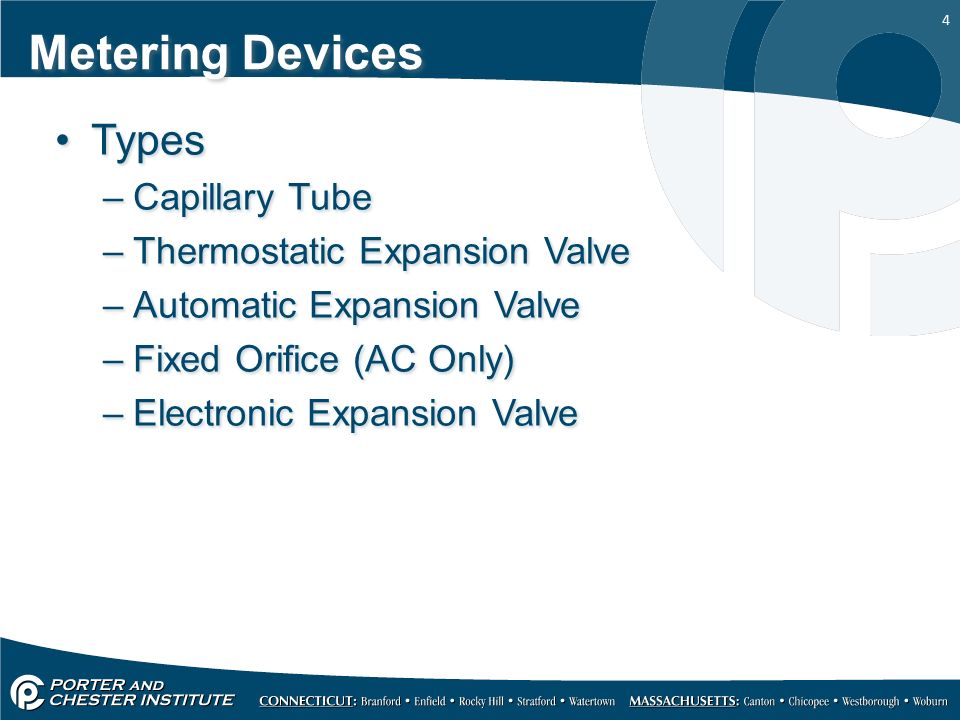
Several types of metering devices are used in HVAC systems, each with its own characteristics, advantages, and disadvantages. The most common include:
Fixed Orifice Devices
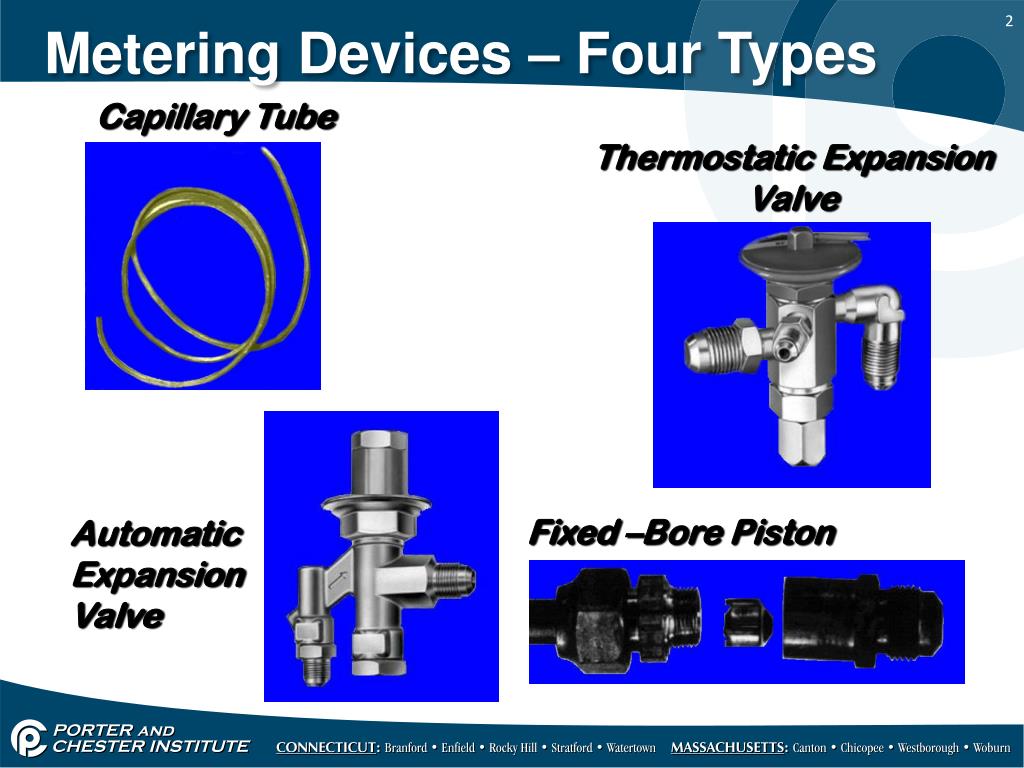
Fixed orifice devices, also known as capillary tubes or piston metering devices, are the simplest and least expensive type. They consist of a tube with a fixed diameter that restricts refrigerant flow. Because the opening is fixed, the amount of refrigerant allowed through is determined solely by the pressure difference across the orifice.
Advantages:
- Low cost
- Simple design
- No moving parts (leading to higher reliability)
Disadvantages:
- Not very efficient at varying load conditions
- Limited ability to adapt to changing temperature or pressure
- Prone to clogging if the system isn't kept clean
Applications: Fixed orifice devices are typically found in smaller, less expensive HVAC systems, such as window air conditioners and some smaller split systems. Their simplicity makes them a cost-effective solution for these applications.
Example: A small window AC unit may use a capillary tube as its metering device. It's simple, cheap, and generally reliable enough for the unit's lifespan.
Thermostatic Expansion Valves (TXV or TEV)
Thermostatic Expansion Valves (TXVs) are more sophisticated metering devices that automatically adjust refrigerant flow based on the superheat of the refrigerant leaving the evaporator. Superheat refers to the temperature of the refrigerant vapor above its saturation temperature at a given pressure. By monitoring superheat, the TXV can ensure that the evaporator is fully utilized without allowing liquid refrigerant to return to the compressor.
Advantages:
- More efficient than fixed orifice devices
- Better able to adapt to varying load conditions
- Helps prevent liquid refrigerant from entering the compressor
Disadvantages:
- More complex design
- Higher cost
- More prone to failure than fixed orifice devices
- Requires proper adjustment and calibration
Applications: TXVs are commonly used in larger, more efficient HVAC systems, such as central air conditioners, heat pumps, and commercial refrigeration systems. They are particularly well-suited for systems with variable loads, where the cooling or heating demand changes frequently.
Example: A central air conditioning system in a house will likely use a TXV. As the temperature outside fluctuates, the TXV will adjust refrigerant flow to maintain consistent cooling performance inside.
Electronic Expansion Valves (EEV)
Electronic Expansion Valves (EEVs) represent the cutting edge in metering device technology. They use electronic sensors and a control board to precisely regulate refrigerant flow. Unlike TXVs, which rely on mechanical feedback, EEVs offer real-time control and optimization, leading to even greater efficiency and performance.
Advantages:
- Highest efficiency and performance
- Precise control of refrigerant flow
- Adaptable to a wide range of operating conditions
- Can be integrated with smart HVAC systems for remote monitoring and control
Disadvantages:
- Most complex and expensive type of metering device
- Requires specialized knowledge and tools for installation and maintenance
- Relies on electronic components, which can be susceptible to failure
Applications: EEVs are increasingly used in high-end HVAC systems, including variable refrigerant flow (VRF) systems, chillers, and heat pumps. They are also becoming more common in energy-efficient homes and commercial buildings.
Example: A VRF system in a large office building would likely use EEVs at each indoor unit. This allows for precise temperature control in individual zones and maximizes energy efficiency.
Automatic Expansion Valve (AXV)
An Automatic Expansion Valve (AXV) maintains a constant pressure in the evaporator. It modulates the refrigerant flow to keep the evaporator pressure at a set point, regardless of the load on the evaporator.
Advantages:
- Maintains a consistent evaporator pressure.
- Relatively simple design compared to EEVs.
Disadvantages:
- Less efficient than TXVs or EEVs under varying load conditions.
- Not as widely used as other types of metering devices in modern systems.
Applications: AXVs were more common in older refrigeration and air conditioning systems. They are less frequently used in newer, more efficient systems.
Choosing the Right Metering Device
Selecting the appropriate metering device for an HVAC system depends on several factors, including:
- System Size and Capacity: Larger systems generally benefit from more sophisticated metering devices like TXVs or EEVs.
- Load Variations: Systems with fluctuating loads require devices that can adapt quickly, such as TXVs or EEVs.
- Energy Efficiency Goals: If maximizing energy efficiency is a priority, an EEV is the best choice.
- Budget: Fixed orifice devices are the most affordable option, while EEVs are the most expensive.
- Maintenance Requirements: Simpler devices like fixed orifices require less maintenance, while more complex devices like TXVs and EEVs may require periodic adjustments and calibration.
Homeowners: When purchasing a new HVAC system, discuss the type of metering device with your HVAC contractor. Consider the long-term energy savings and performance benefits of a TXV or EEV, even if it means a slightly higher upfront cost.
HVAC Technicians: Proper installation, adjustment, and maintenance of metering devices are crucial for optimal system performance. Stay up-to-date on the latest technologies and best practices for servicing different types of devices.
Facility Managers: In commercial buildings, optimizing HVAC system performance can significantly reduce energy consumption and operating costs. Consider upgrading to more efficient metering devices, such as EEVs, as part of a larger energy management strategy.
Troubleshooting Metering Devices
Metering devices can sometimes malfunction, leading to various HVAC system problems. Common issues include:
- Clogging: Dirt, debris, or refrigerant contaminants can clog the metering device, restricting refrigerant flow.
- Maladjustment: TXVs and EEVs may require adjustment or calibration to ensure proper refrigerant flow.
- Failure: Mechanical or electronic components can fail, causing the device to stop functioning correctly.
Symptoms of a malfunctioning metering device:
- Insufficient cooling or heating
- High or low superheat
- Frost or ice on the evaporator coil
- Compressor failure
If you suspect a problem with your metering device, consult a qualified HVAC technician for diagnosis and repair.
Conclusion
Metering devices are essential components of HVAC systems, responsible for regulating refrigerant flow and ensuring optimal performance. Understanding the different types of metering devices, their advantages, disadvantages, and applications is crucial for homeowners, HVAC technicians, and facility managers. By choosing the right metering device and maintaining it properly, you can maximize the efficiency, reliability, and lifespan of your HVAC system. Ultimately, selecting the right metering device based on your needs and application will result in long-term energy savings and improved comfort.