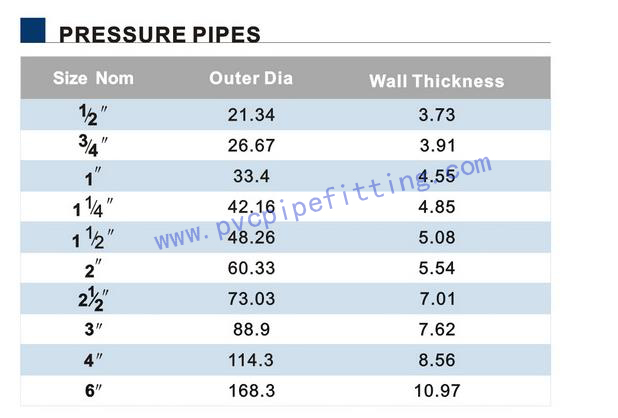
Wall Thickness Of Schedule 80 Pipe

Understanding the wall thickness of Schedule 80 pipe is crucial for anyone involved in plumbing, construction, or industrial applications. It directly impacts the pipe's strength, pressure rating, and overall suitability for a given task. This guide will provide a comprehensive overview of Schedule 80 pipe wall thickness, explaining its significance and helping you make informed decisions.
What is Pipe Schedule?
The term "pipe schedule" refers to a standardized system that defines the nominal wall thickness of a pipe. It doesn't directly specify the actual wall thickness in inches or millimeters, but rather indicates a relative thickness based on a numbering system. Think of it like clothing sizes – a "large" shirt might vary slightly between brands, but it generally represents a larger size than a "small" shirt. Similarly, Schedule 80 represents a thicker wall than Schedule 40 for a given nominal pipe size.
The schedule number is related to the internal pressure the pipe can withstand. Higher schedule numbers generally correspond to thicker walls and higher pressure ratings. The most common schedules are Schedule 40 and Schedule 80, but others exist, such as Schedule 10, Schedule 160, and XXS (double extra strong).
Schedule 80: A Deeper Dive
Schedule 80 pipe is thicker than Schedule 40 pipe for the same nominal pipe size. This increased thickness provides several advantages:
- Higher Pressure Rating: It can handle higher internal pressures.
- Increased Strength: It is more resistant to external forces and impacts.
- Greater Durability: It tends to last longer, especially in demanding environments.
Because of these advantages, Schedule 80 pipe is often used in applications where strength and pressure resistance are critical.
Common Applications of Schedule 80 Pipe
You'll find Schedule 80 pipe used in a wide range of industries and applications:
- Chemical Processing: Transporting corrosive fluids.
- High-Pressure Water Lines: Fire suppression systems, industrial water distribution.
- Wastewater Treatment: Handling abrasive and corrosive wastewater.
- Oil and Gas Industry: Transporting petroleum products.
- Compressed Air Systems: Distributing compressed air in factories and workshops.
- Chilled Water Systems: Large-scale cooling applications.
Understanding Wall Thickness Charts
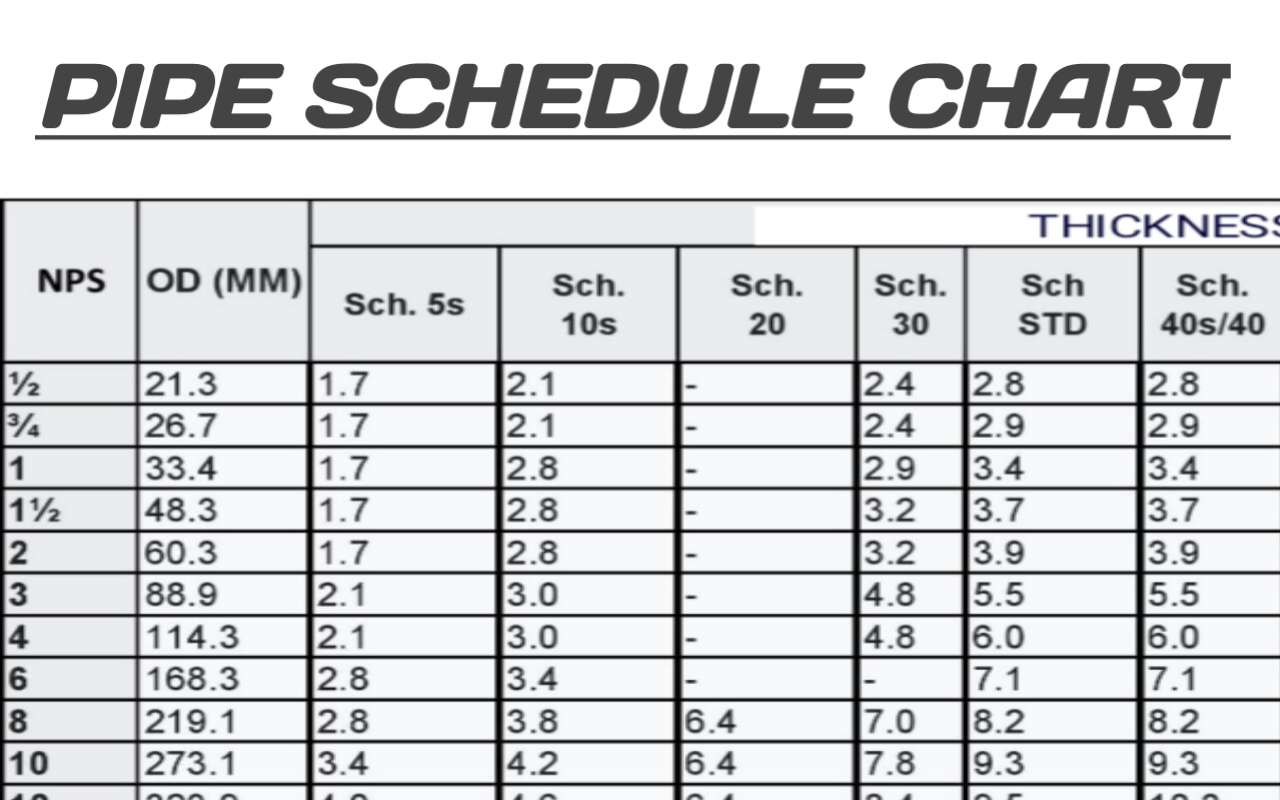
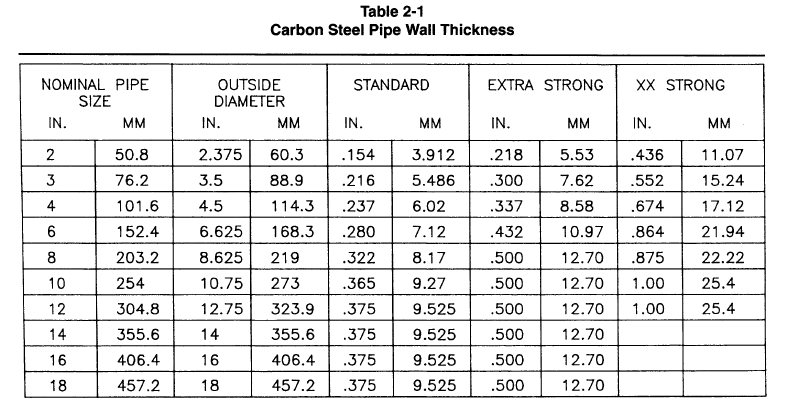
While the schedule number indicates relative thickness, you need a wall thickness chart to determine the actual wall thickness for a specific pipe size and schedule. These charts are readily available online and in engineering handbooks. The charts typically list:
- Nominal Pipe Size (NPS): The "name" of the pipe size, e.g., 1/2 inch, 1 inch, 2 inches.
- Outside Diameter (OD): The actual outside diameter of the pipe. This is constant for a given NPS, regardless of the schedule.
- Wall Thickness: The actual wall thickness for the specified schedule (e.g., Schedule 40, Schedule 80).
- Inside Diameter (ID): The calculated inside diameter of the pipe, which depends on the outside diameter and wall thickness.
- Weight per Foot: The weight of the pipe per unit length.
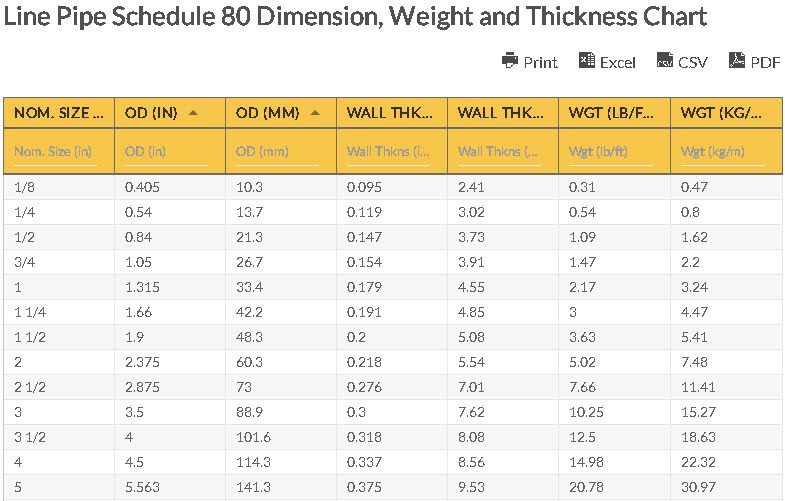
Example: Let's say you need Schedule 80 pipe with a nominal pipe size of 1 inch. Consulting a wall thickness chart, you might find the following:
- NPS: 1 inch
- OD: 1.315 inches
- Wall Thickness (Schedule 80): 0.179 inches
- ID: 0.957 inches
This means the actual wall thickness of a 1-inch Schedule 80 pipe is 0.179 inches.
Factors Influencing Wall Thickness Selection
Choosing the correct wall thickness is critical for the safe and reliable operation of any piping system. Consider the following factors:
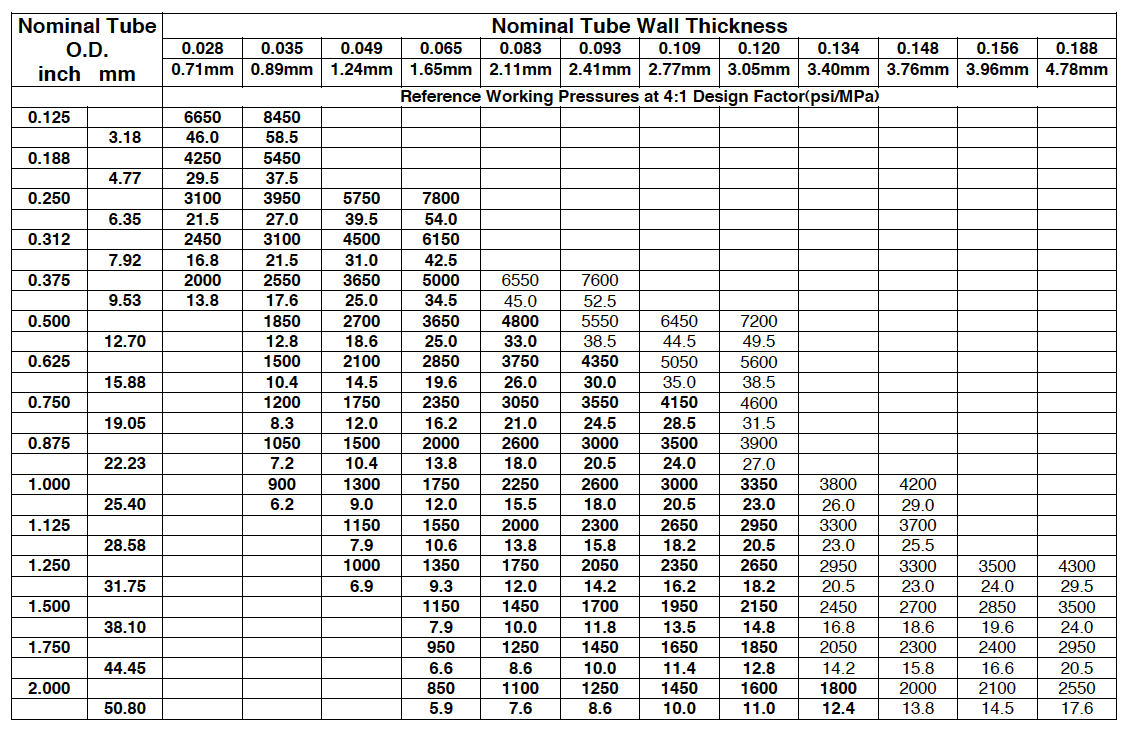
- Pressure: The maximum operating pressure of the system is the most important factor. The pipe's pressure rating must exceed the system's maximum pressure with a safety margin.
- Temperature: High temperatures can reduce the pipe's strength. Consult temperature derating charts provided by the pipe manufacturer.
- Fluid Type: Corrosive fluids can degrade the pipe material over time. Select a pipe material resistant to the fluid being transported.
- External Loads: Consider any external loads the pipe might experience, such as soil pressure, traffic loads, or hanging loads.
- Safety Factor: Always incorporate a safety factor to account for unforeseen circumstances or variations in material properties.
- Code Requirements: Local building codes and industry standards may dictate minimum wall thickness requirements.
Analogy: Think of a bridge. The thicker the bridge's support beams, the more weight it can handle. Similarly, the thicker the pipe wall, the higher the pressure and external loads it can withstand.
Schedule 80 vs. Schedule 40
The key difference between Schedule 80 and Schedule 40 is the wall thickness. Schedule 80 has a thicker wall than Schedule 40 for the same nominal pipe size. This difference translates to:
- Higher Pressure Rating for Schedule 80: Schedule 80 can withstand significantly higher pressures.
- Greater Strength for Schedule 80: Schedule 80 is more resistant to bending, impact, and other external forces.
- Higher Cost for Schedule 80: Schedule 80 is generally more expensive due to the increased material used in its construction.
When to use Schedule 80: Choose Schedule 80 when high pressure, significant external loads, or harsh environmental conditions are present. It's also often required by code in certain applications.
When to use Schedule 40: Schedule 40 is suitable for lower-pressure applications where strength requirements are less demanding. It is more economical than Schedule 80.
Materials Used for Schedule 80 Pipe
Schedule 80 pipe is available in various materials, each with its own advantages and disadvantages. The most common materials include:
- PVC (Polyvinyl Chloride): A cost-effective option for many applications, resistant to many chemicals, but has lower temperature and pressure limits.
- CPVC (Chlorinated Polyvinyl Chloride): Offers higher temperature resistance than PVC, making it suitable for hot water applications.
- Steel (Carbon Steel): Strong and durable, suitable for high-pressure and high-temperature applications, but susceptible to corrosion.
- Stainless Steel: Excellent corrosion resistance, making it ideal for demanding environments, but more expensive than carbon steel.
The choice of material depends on the specific application, considering factors such as fluid type, temperature, pressure, and cost.
How to Determine the Correct Schedule
Here's a step-by-step process to determine the appropriate pipe schedule:
- Determine the Maximum Operating Pressure: Identify the highest pressure the piping system will experience.
- Determine the Operating Temperature: Identify the temperature of the fluid being transported.
- Identify the Fluid Type: Determine the chemical properties of the fluid to select a compatible pipe material.
- Consult Pressure Rating Charts: Obtain pressure rating charts for the selected pipe material at the operating temperature. These charts are usually provided by the pipe manufacturer.
- Select a Schedule with Sufficient Pressure Rating: Choose a schedule whose pressure rating exceeds the maximum operating pressure with an appropriate safety factor. A common safety factor is 2:1 or higher, meaning the pipe's pressure rating should be at least twice the operating pressure.
- Consider External Loads and Code Requirements: Factor in any external loads the pipe might experience and ensure compliance with all applicable building codes and industry standards.
- Consult with a Qualified Engineer: For complex or critical applications, it's always best to consult with a qualified engineer to ensure the proper pipe selection and design.
Important Considerations
- Pressure Testing: After installation, always pressure test the piping system to ensure it is leak-free and can withstand the design pressure.
- Proper Installation: Follow the manufacturer's installation instructions carefully. Improper installation can compromise the pipe's integrity.
- Regular Inspections: Conduct regular inspections of the piping system to identify any signs of corrosion, damage, or leaks.
- Derating Factors: Always consider derating factors for temperature and fluid type when calculating the allowable pressure.
Conclusion
Choosing the correct wall thickness for Schedule 80 pipe is essential for ensuring the safety, reliability, and longevity of your piping system. By understanding the factors that influence wall thickness selection and consulting with qualified professionals when needed, you can make informed decisions and avoid costly mistakes. Remember to prioritize safety and always adhere to applicable codes and standards.