Wet Bulb Temperature Vs Dry Bulb

Understanding the properties of air is fundamental to success in the HVAC (Heating, Ventilation, and Air Conditioning) industry. Two critical measurements for HVAC professionals are dry bulb temperature and wet bulb temperature. These readings provide insights into the air's thermal characteristics and its capacity to hold moisture, which is essential for designing, installing, and maintaining effective HVAC systems. This article will explore the differences between these measurements, their significance, and how they impact various aspects of the HVAC field.
Dry Bulb Temperature: A Straightforward Measurement
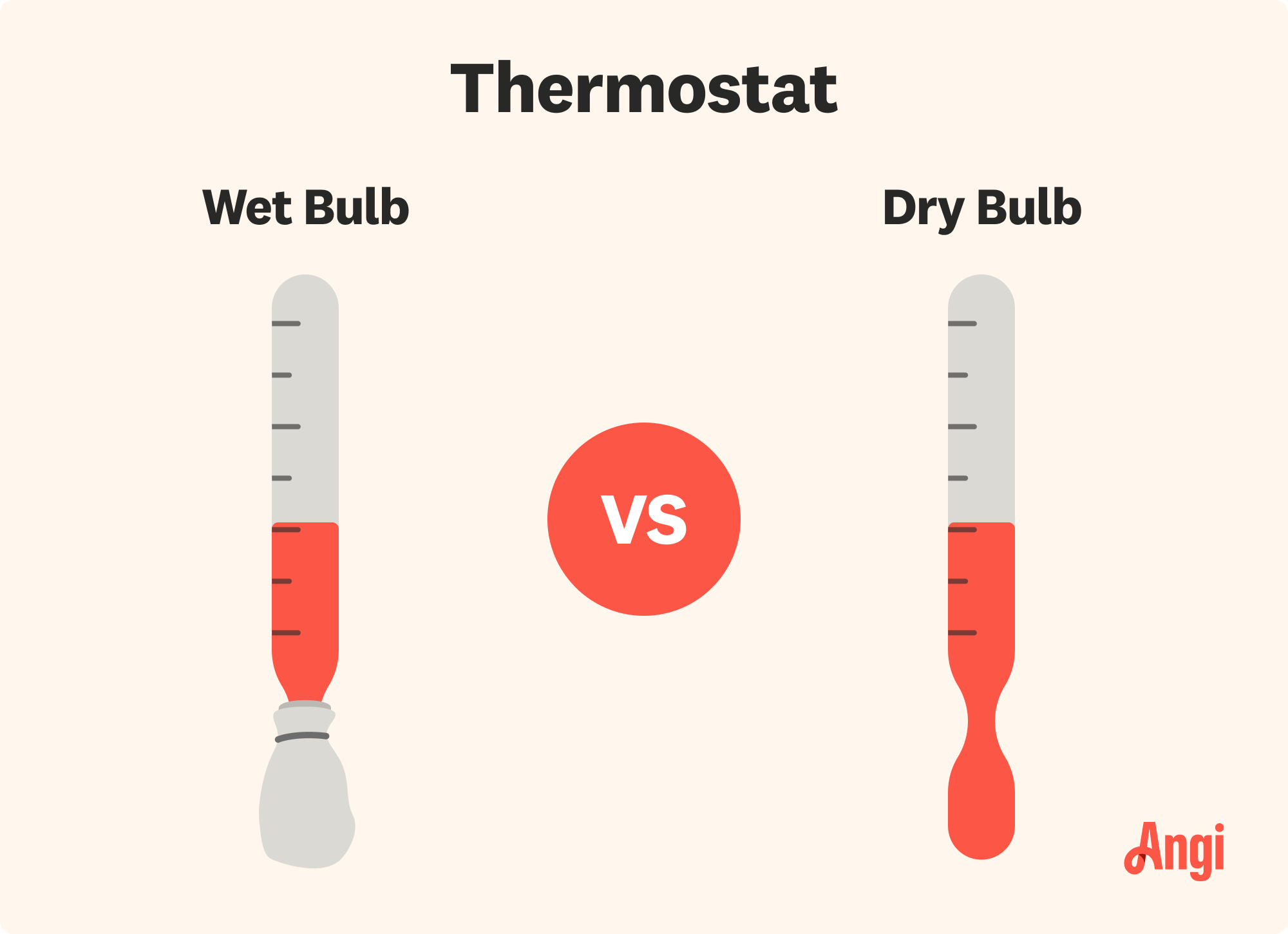
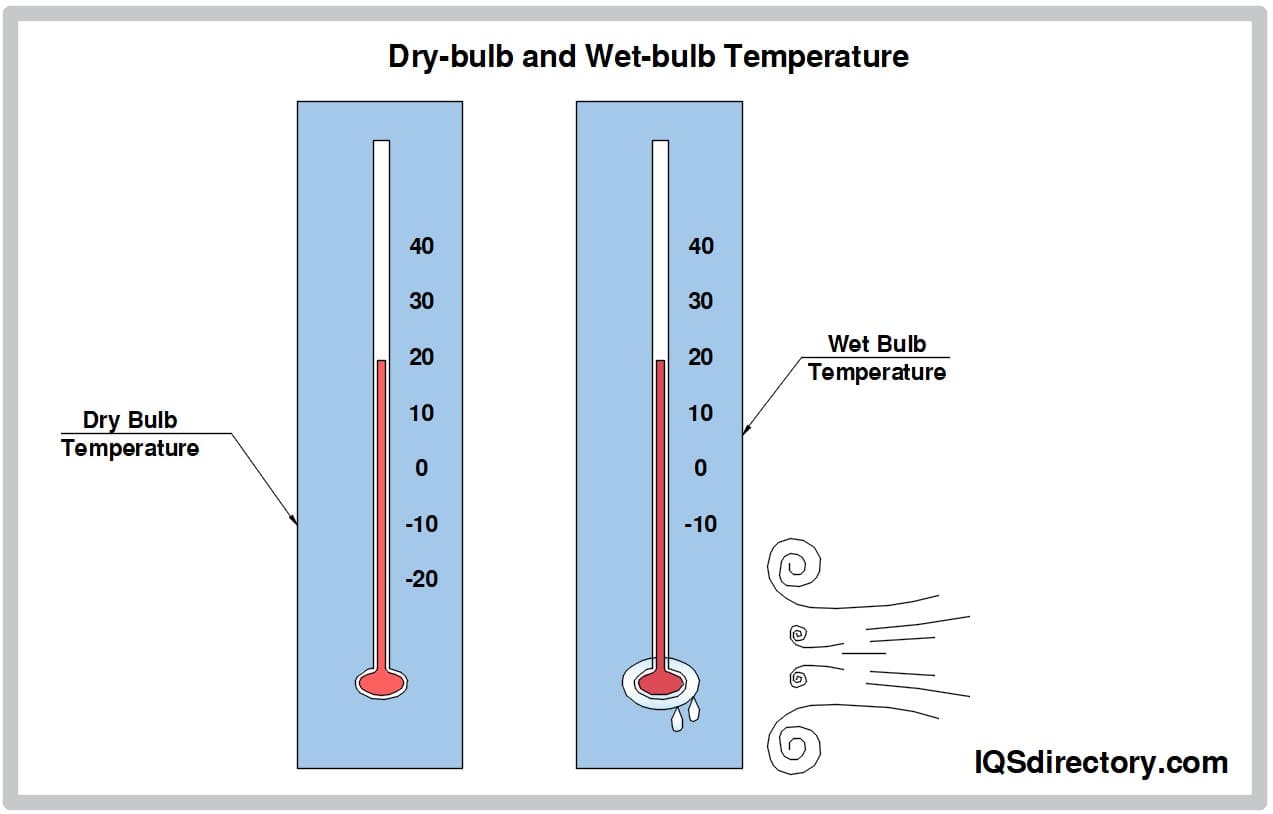
Dry bulb temperature is what most people typically refer to when talking about temperature. It is the air temperature as measured by a standard thermometer, shielded from radiation and moisture. It represents the sensible heat of the air, meaning the heat that can be felt and measured directly. Dry bulb temperature is usually expressed in degrees Fahrenheit (°F) or degrees Celsius (°C). This temperature is a cornerstone in almost every HVAC calculation.
Why Dry Bulb Temperature Matters
Dry bulb temperature is a fundamental parameter in determining heating and cooling loads for buildings. HVAC systems are designed to maintain a specific dry bulb temperature range, ensuring occupant comfort. When calculating heating loads in winter, engineers consider the difference between the desired indoor dry bulb temperature and the outdoor dry bulb temperature. This temperature difference directly impacts the amount of heat required to maintain comfort levels. Similarly, in summer, cooling loads are heavily influenced by the outdoor dry bulb temperature. Higher outdoor temperatures necessitate more cooling capacity to maintain the desired indoor temperature.
Wet Bulb Temperature: Accounting for Moisture
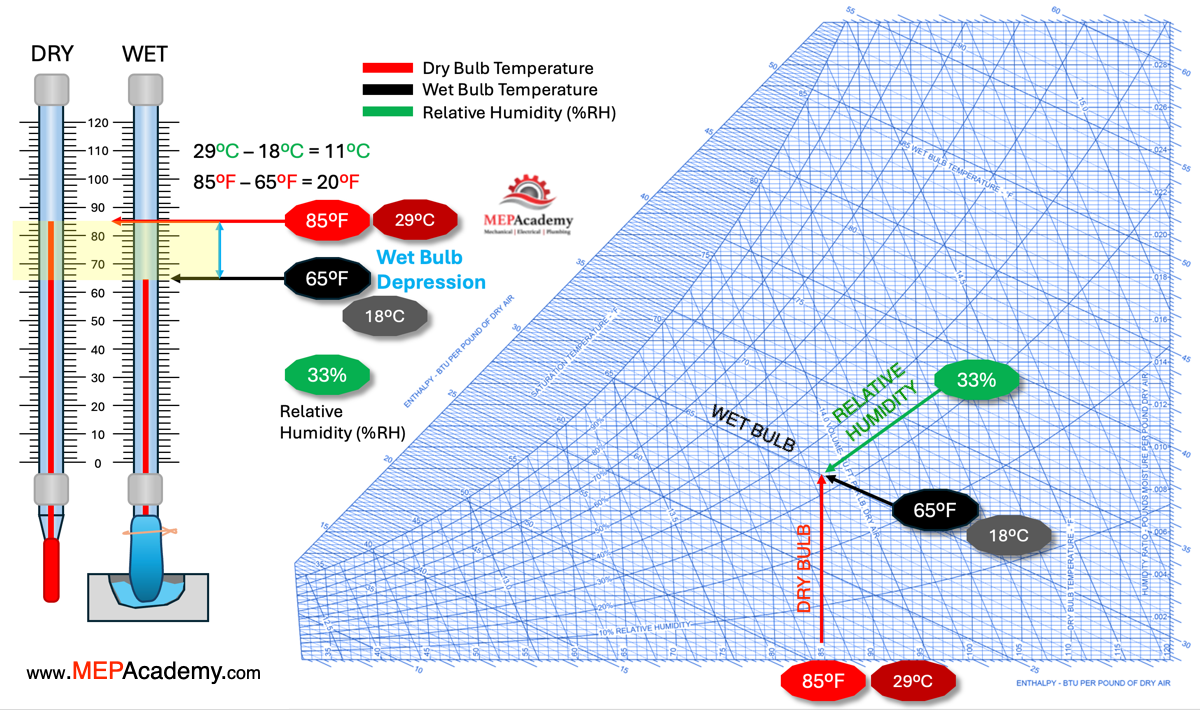
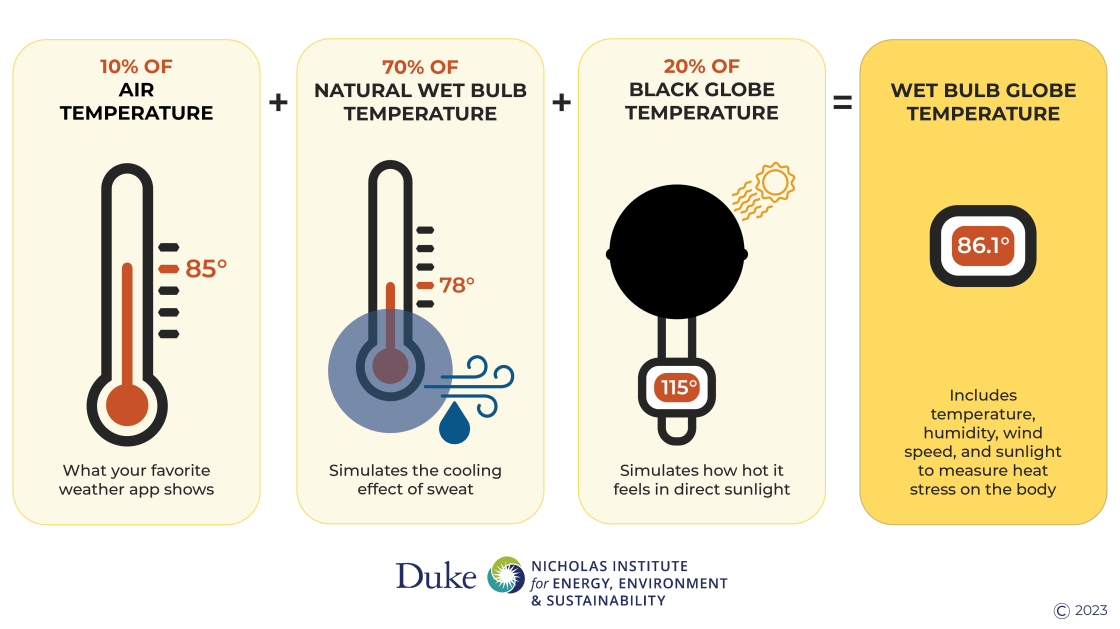
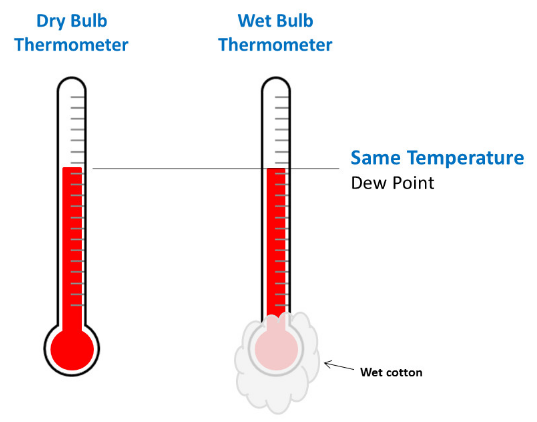
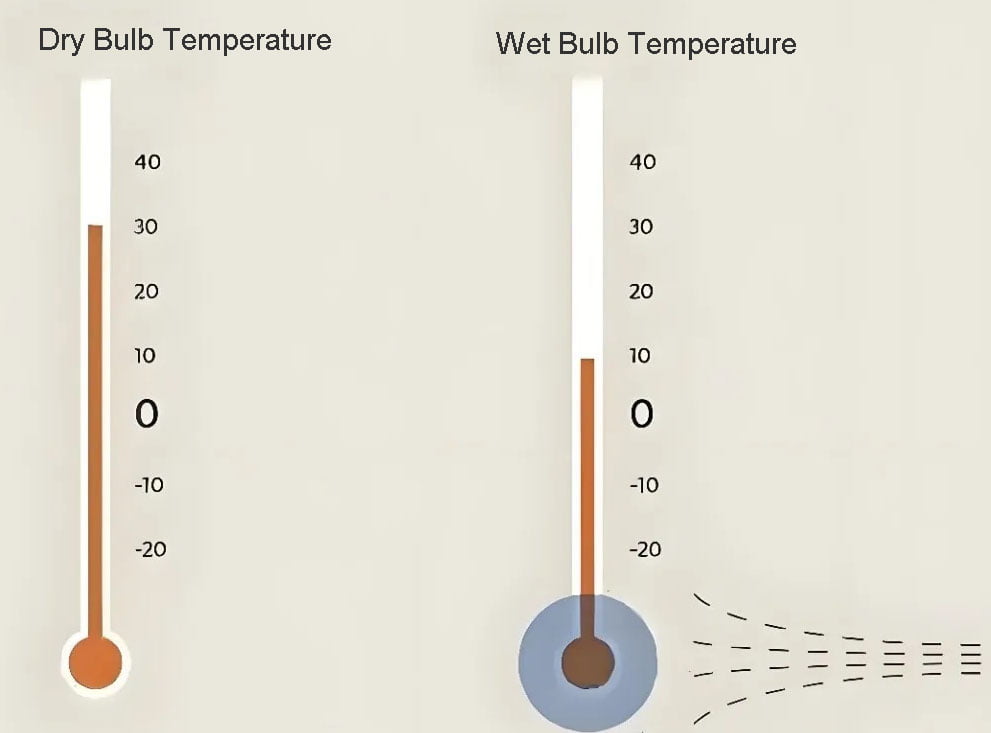
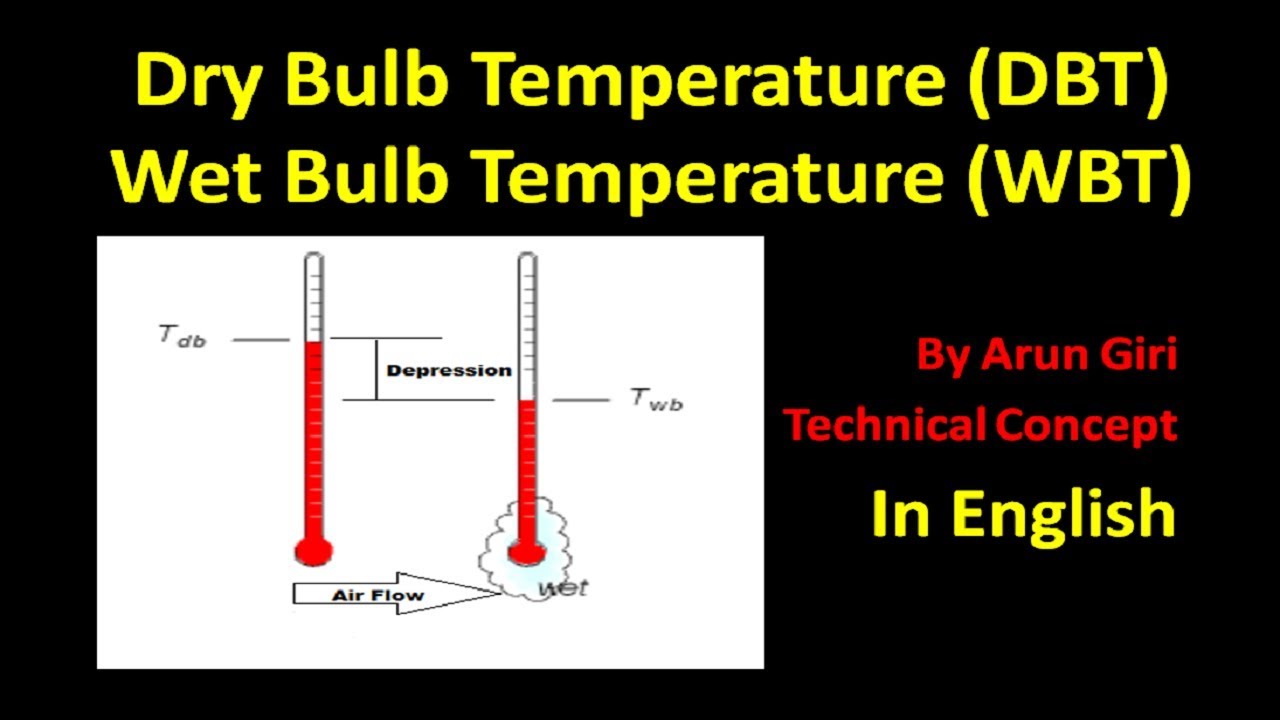
Wet bulb temperature is the temperature a parcel of air would have if it were cooled to saturation (100% relative humidity) by the evaporation of water into it, with the latent heat being supplied by the air parcel. It's measured using a thermometer with a wet wick covering the bulb, exposed to airflow. As water evaporates from the wick, it cools the thermometer, resulting in a lower temperature reading. The difference between the dry bulb and wet bulb temperatures indicates the amount of moisture in the air.
Understanding Wet Bulb Depression
The difference between the dry bulb and wet bulb temperatures is known as the wet bulb depression. A larger wet bulb depression signifies drier air, as more water can evaporate, leading to a greater cooling effect. Conversely, a smaller wet bulb depression indicates higher humidity, as less water can evaporate before saturation is reached. When the air is fully saturated (100% relative humidity), the dry bulb and wet bulb temperatures are equal.
The Significance of Wet Bulb Temperature in HVAC
Wet bulb temperature is crucial in evaluating the cooling capacity of evaporative coolers and cooling towers. These systems rely on the evaporation of water to cool air or water. The lower the wet bulb temperature, the greater the potential for cooling. For example, in arid climates with low wet bulb temperatures, evaporative coolers can provide significant energy savings compared to traditional air conditioners. Furthermore, in cooling tower applications, wet bulb temperature is a key parameter in determining the efficiency of the tower in rejecting heat.
Applications in Psychrometrics
Both dry bulb and wet bulb temperatures are essential components of psychrometrics, the study of the thermodynamic properties of moist air. Using a psychrometric chart, HVAC professionals can determine other important air properties, such as relative humidity, dew point temperature, and enthalpy, given the dry bulb and wet bulb temperatures. These properties are vital for designing efficient and comfortable HVAC systems.
Career Paths in HVAC and the Importance of Understanding Air Properties
A solid understanding of dry bulb and wet bulb temperatures is invaluable for various career paths within the HVAC industry.
- HVAC Technicians: Install, maintain, and repair HVAC systems. Must be able to troubleshoot issues related to temperature and humidity. The Bureau of Labor Statistics projects about 5% growth for HVAC mechanics and installers over the next ten years. The median annual wage for HVAC technicians was $51,390 in May 2022.
- HVAC Design Engineers: Design HVAC systems for residential, commercial, and industrial buildings. Use psychrometric principles to ensure optimal performance and energy efficiency. Entry-level engineers might earn $60,000 to $75,000 annually, while experienced engineers can earn upwards of $100,000.
- HVAC Sales Engineers: Sell HVAC equipment and systems to businesses and contractors. Must have a technical understanding of HVAC principles to effectively communicate the benefits of different products. Sales engineers often earn a base salary plus commission, with potential earnings exceeding $80,000 per year.
- Building Automation Specialists: Program and maintain building automation systems that control HVAC equipment. Need a strong understanding of HVAC systems and control strategies. Salaries for building automation specialists typically range from $65,000 to $90,000 per year.
Certifications and Training
Several certifications and training programs can enhance your career prospects in the HVAC industry:
- NATE (North American Technician Excellence): This is a leading certification for HVAC technicians, demonstrating competency in specific areas, such as air conditioning, heating, or commercial refrigeration. NATE certification can lead to higher earning potential and increased job opportunities.
- EPA Section 608 Certification: Required for technicians who handle refrigerants. This certification ensures that technicians understand proper refrigerant handling procedures to protect the environment.
- HVAC Excellence: Offers a range of certifications for HVAC educators and technicians, focusing on specific skill sets and knowledge areas.
- Apprenticeships: Many HVAC companies offer apprenticeship programs that combine on-the-job training with classroom instruction. Apprenticeships provide a structured pathway to becoming a skilled HVAC technician.
Real-World Examples
Consider a scenario where an HVAC technician is troubleshooting a cooling issue in a commercial building. The technician measures a dry bulb temperature of 85°F and a wet bulb temperature of 70°F. Using a psychrometric chart, the technician can determine that the relative humidity is approximately 40%. If the design specifications for the building call for a relative humidity of 50%, the technician knows that the system is not adequately controlling humidity. This could be due to several factors, such as a malfunctioning dehumidifier, an oversized air conditioning unit, or inadequate ventilation.
Another example involves an HVAC design engineer selecting an evaporative cooler for a warehouse in Arizona. The engineer researches the typical wet bulb temperatures in the area during the summer months. If the average wet bulb temperature is 65°F, the engineer can estimate the cooling capacity of the evaporative cooler and ensure that it can effectively cool the warehouse to the desired temperature.
The Future of HVAC: Trends and Technologies
The HVAC industry is constantly evolving, with new technologies and trends shaping the future of the field. Some notable developments include:
- Smart HVAC Systems: These systems use sensors, data analytics, and cloud connectivity to optimize performance and energy efficiency. Smart thermostats, for example, can learn occupant preferences and adjust temperature settings accordingly.
- Variable Refrigerant Flow (VRF) Systems: VRF systems offer precise temperature control and energy savings by adjusting the flow of refrigerant to individual zones. These systems are becoming increasingly popular in commercial buildings.
- Geothermal Heat Pumps: Geothermal heat pumps utilize the earth's constant temperature to provide heating and cooling. These systems are highly energy-efficient and environmentally friendly.
- Renewable Energy Integration: The integration of renewable energy sources, such as solar and wind power, is becoming increasingly common in HVAC systems. This helps to reduce reliance on fossil fuels and lower carbon emissions.
According to a report by Grand View Research, the global HVAC systems market is expected to reach $387.2 billion by 2030, driven by factors such as increasing demand for energy-efficient solutions, rising disposable incomes, and growing urbanization.
Conclusion
Dry bulb temperature and wet bulb temperature are fundamental measurements for HVAC professionals. Understanding the difference between these measurements and their implications is crucial for designing, installing, and maintaining effective HVAC systems. By mastering these concepts and pursuing relevant certifications and training, individuals can build successful and rewarding careers in the HVAC industry. For employers, hiring professionals with a strong grasp of psychrometrics and HVAC principles ensures optimal system performance and energy efficiency, leading to cost savings and improved occupant comfort. As the HVAC industry continues to evolve, a commitment to lifelong learning and staying abreast of the latest technologies will be essential for success.