What Is A Merv Rating For Furnace Filters

Have you ever felt like your furnace just isn't heating your home as efficiently as it used to? Or maybe you've noticed more dust and allergens floating around, even after cleaning? One often overlooked culprit behind these issues is the humble furnace filter. But not just any filter – the *right* filter, with the *right* MERV rating.
Choosing the correct MERV rating for your furnace filter is crucial for both your indoor air quality and the health of your HVAC system. Using the wrong filter can lead to reduced airflow, increased energy bills, and even costly damage to your furnace. Let's dive into understanding what MERV ratings are all about and how to troubleshoot filter-related problems.
Understanding MERV Ratings
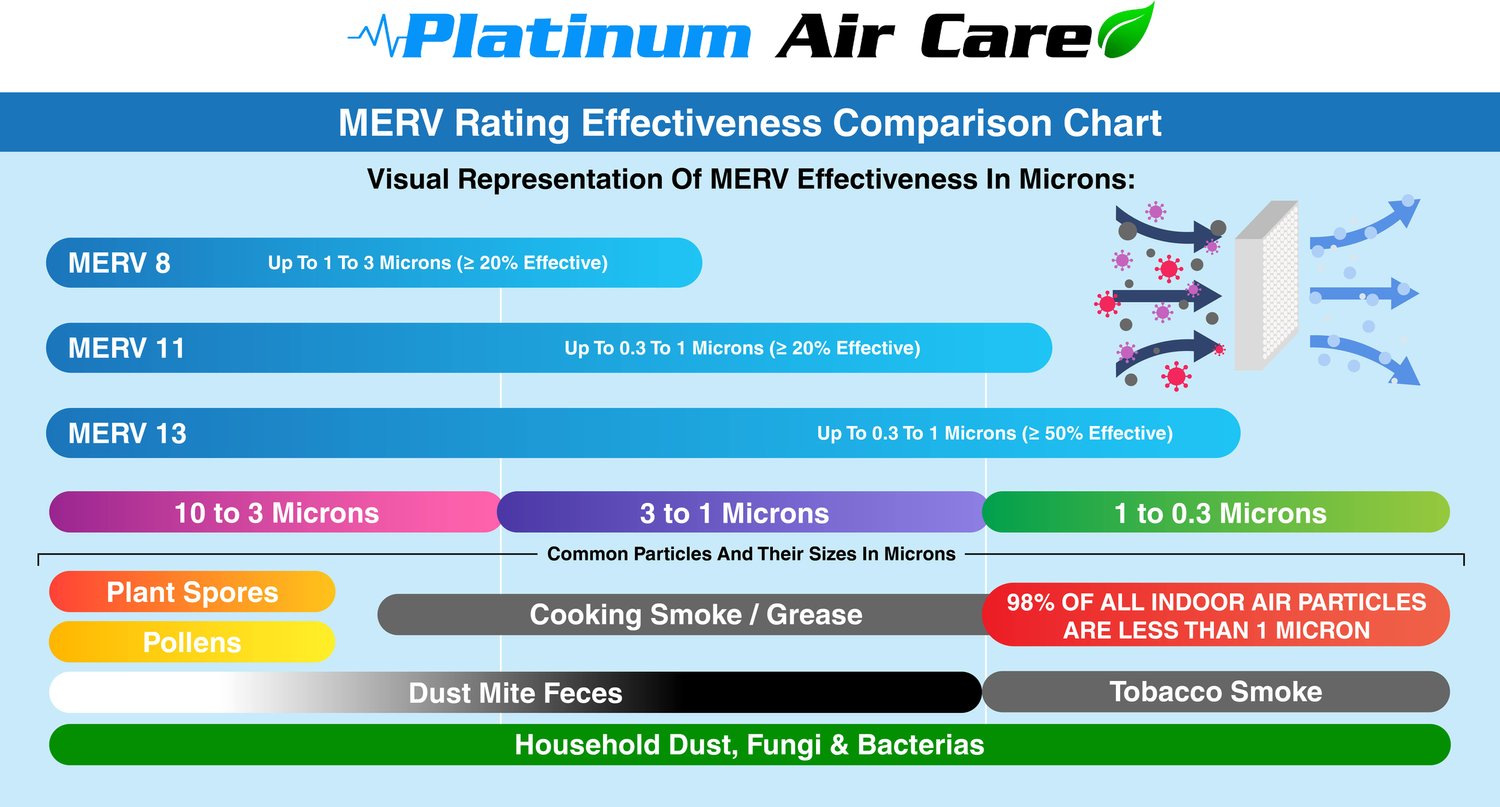
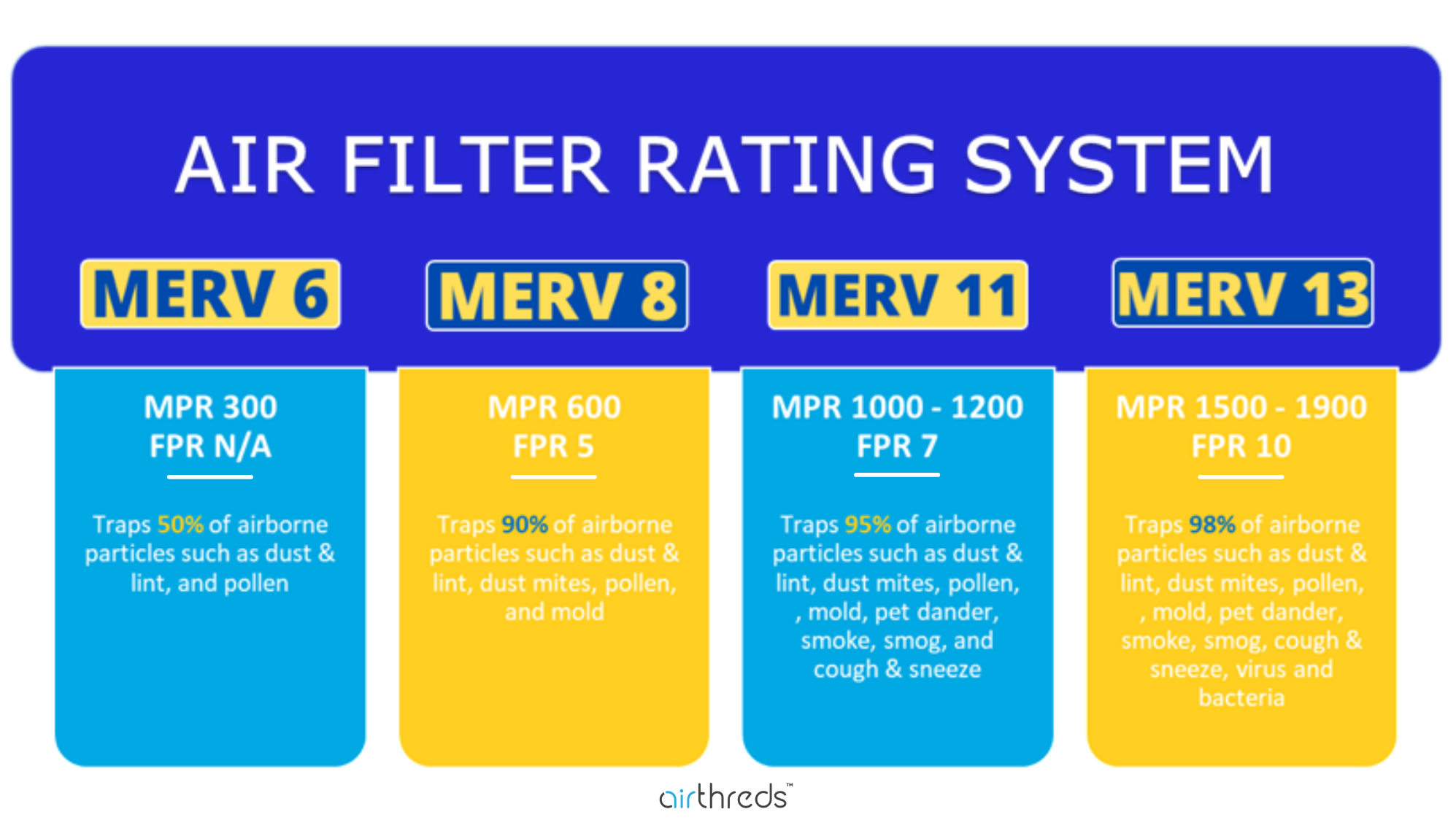
MERV stands for Minimum Efficiency Reporting Value. It's a scale used to measure the effectiveness of air filters in capturing particles of different sizes. The higher the MERV rating, the more efficient the filter is at trapping smaller particles. Think of it like a net: a net with smaller holes will catch more fish.
The MERV Scale: A Breakdown
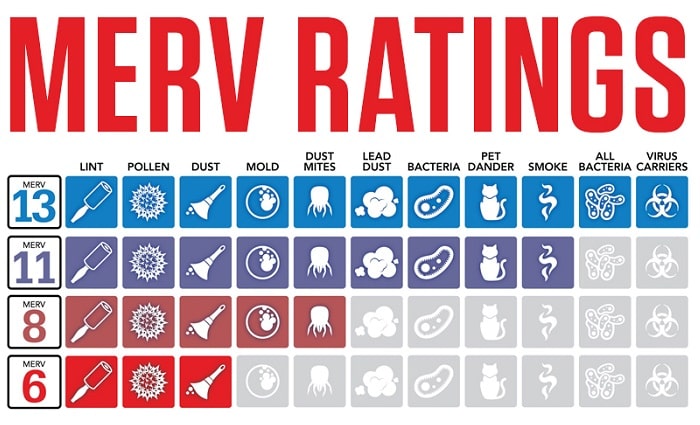
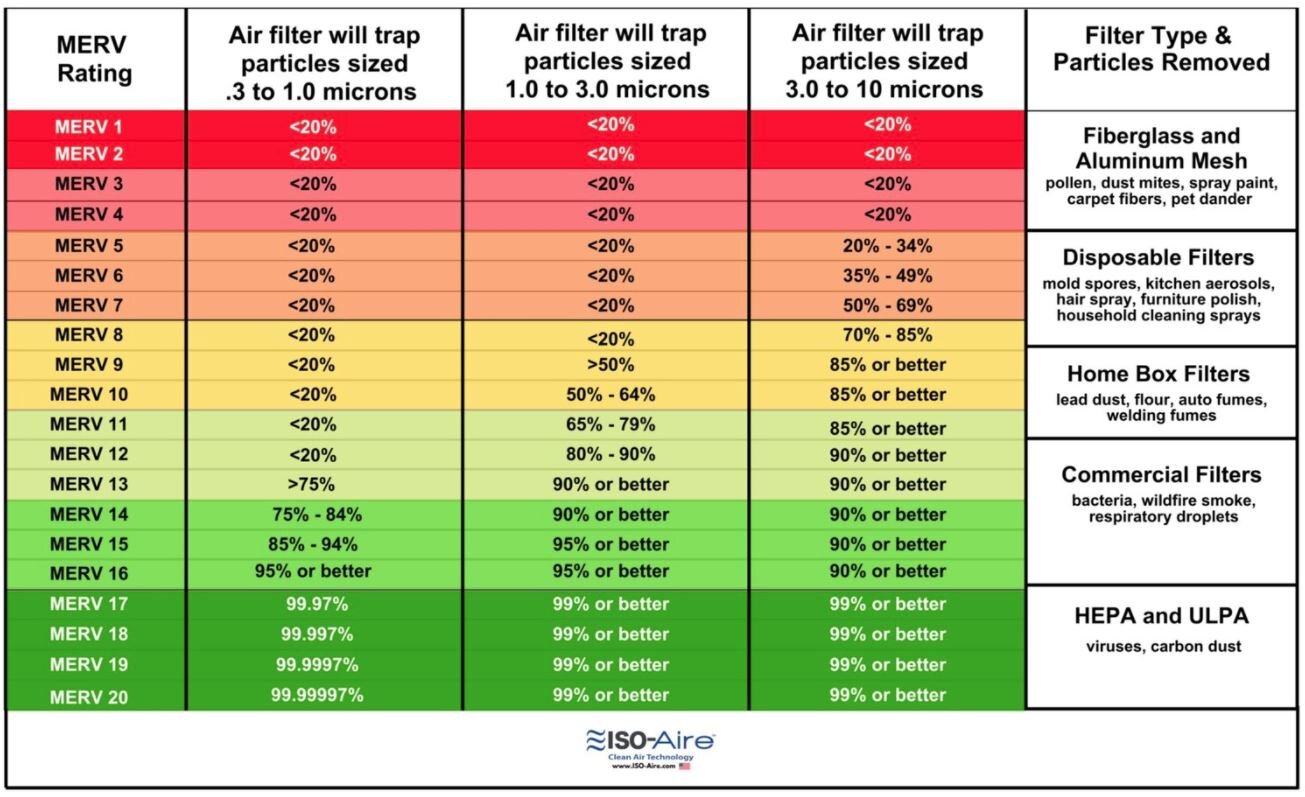
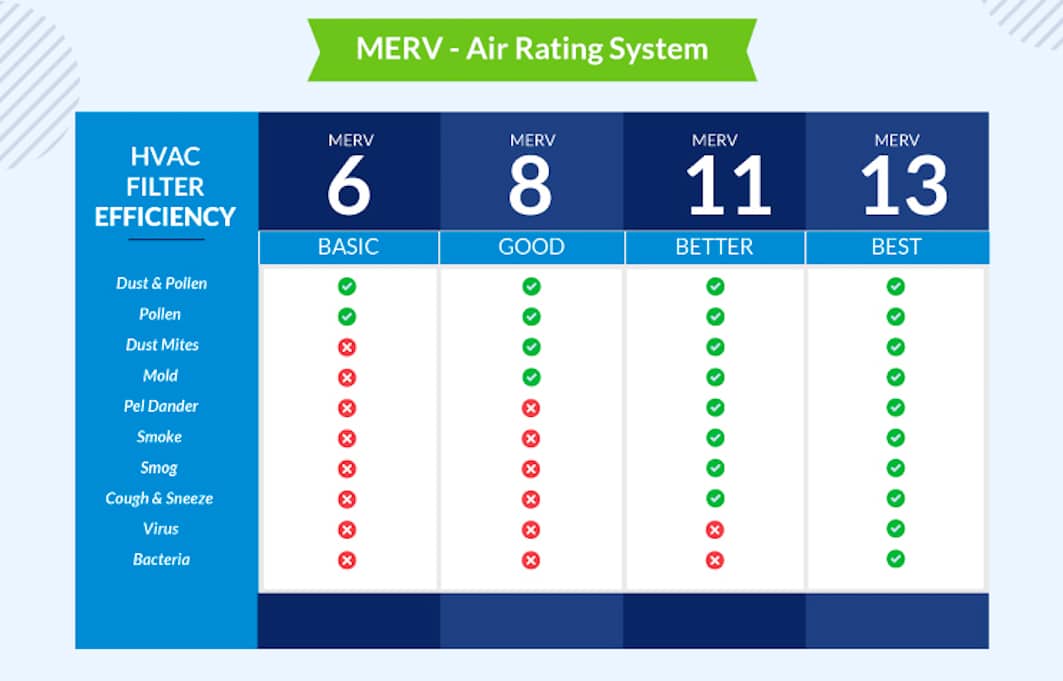
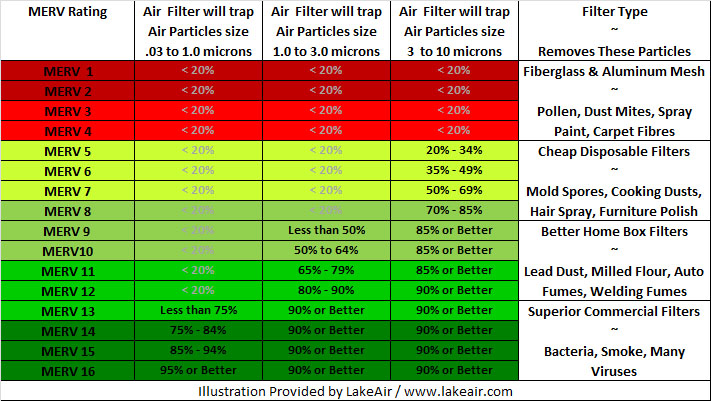
The MERV scale typically ranges from 1 to 20, although you'll usually find filters in the 1-16 range for residential use. Here's a general overview:
- MERV 1-4: These are the most basic filters, primarily designed to protect your furnace from large debris like dust, lint, and pollen. They offer minimal air filtration for improving indoor air quality. These are often the least expensive filters.
- MERV 5-8: These filters offer a moderate level of filtration, capturing larger particles like mold spores and pet dander in addition to the particles caught by lower-rated filters. They strike a good balance between filtration and airflow for many residential systems.
- MERV 9-12: These filters provide a higher level of filtration, capturing smaller particles like fine dust, smog, and some bacteria. They are a good choice for households with allergy sufferers or those concerned about indoor air quality. However, they can restrict airflow more than lower-rated filters.
- MERV 13-16: These are high-efficiency filters capable of capturing very small particles like viruses and tobacco smoke. They are often used in hospitals, clean rooms, and other environments where air quality is critical. These filters significantly restrict airflow and are not suitable for all residential HVAC systems.
Important Note: Just because a filter has a high MERV rating doesn't automatically mean it's the best choice for your home. Using a filter with a MERV rating that's too high for your system can actually do more harm than good. We'll discuss why in the troubleshooting section.
Troubleshooting Furnace Filter Issues
Now, let's get to the heart of the matter: how to identify and address problems related to your furnace filter's MERV rating.
Problem 1: Reduced Airflow & Inefficient Heating/Cooling
Symptoms:
- Furnace runs constantly without adequately heating or cooling the home.
- Rooms are unevenly heated or cooled.
- Increased energy bills.
- Furnace is noisy or cycling on and off frequently.
Possible Cause: Using a filter with too high of a MERV rating, causing excessive airflow restriction.
Diagnosis:
- Inspect the Filter: Remove your furnace filter and hold it up to a light. Can you easily see light through it? If it appears very dense and difficult to see through, it's likely restricting airflow.
- Check the MERV Rating: What is the current MERV rating of the filter you're using? Compare it to the recommendations for your furnace (check your furnace manual or contact the manufacturer).
- The "No Filter" Test (Use with Caution): *Briefly* run your furnace without a filter installed. Do not run it for more than a few minutes! This is solely for diagnostic purposes. If the airflow significantly improves, your filter is definitely the problem. Immediately replace the filter after this test!
DIY Fix:
- Lower the MERV Rating: Replace your current filter with one that has a lower MERV rating. A good starting point is a MERV 8 filter.
- Monitor Performance: After replacing the filter, observe your furnace's performance over the next few days. Is the heating or cooling more efficient? Are your energy bills improving?
When to Call a Professional:
- If lowering the MERV rating doesn't resolve the airflow issues.
- If your furnace is making unusual noises, even after replacing the filter.
- If you suspect your furnace has been damaged due to restricted airflow (e.g., overheating).
Problem 2: Poor Indoor Air Quality
Symptoms:
- Increased allergy symptoms (sneezing, coughing, itchy eyes).
- More dust accumulation in your home.
- Noticeable odors or stale air.
Possible Cause: Using a filter with too low of a MERV rating, allowing allergens and pollutants to circulate.
Diagnosis:
- Check the MERV Rating: Is your current filter's MERV rating low (1-4)? This might be insufficient for your needs, especially if you have allergies or sensitivities.
- Assess Your Environment: Do you have pets? Do you live in an area with high levels of pollution? These factors can impact your indoor air quality and necessitate a higher MERV rating.
- Visual Inspection: How dirty is your filter when you replace it? If it looks relatively clean after a typical usage period, it might not be capturing enough particles.
DIY Fix:
- Increase the MERV Rating (Gradually): Replace your current filter with one that has a slightly higher MERV rating (e.g., from MERV 4 to MERV 8). Avoid jumping to a very high MERV rating immediately, as this could restrict airflow.
- Monitor Performance: Observe your allergy symptoms and dust accumulation over the next few weeks. Did the higher MERV rating improve your indoor air quality without negatively impacting airflow?
When to Call a Professional:
- If increasing the MERV rating significantly restricts airflow.
- If you have severe allergies or respiratory issues that aren't improving with filtration.
- If you suspect mold or other serious air quality problems in your home. A professional air quality assessment may be needed.
Problem 3: Furnace Overheating
Symptoms:
- Furnace shuts off unexpectedly.
- Burning smell coming from the vents.
- Furnace is excessively hot to the touch.
Possible Cause: Severely restricted airflow due to a dirty filter or a filter with an excessively high MERV rating, causing the furnace to overheat.
Diagnosis:
- Immediately Turn Off the Furnace: Safety first! Turn off your furnace at the breaker.
- Inspect the Filter: Is the filter extremely dirty and clogged? Is the MERV rating much higher than recommended for your furnace?
- Check for Obstructions: Are any vents blocked by furniture or rugs? Ensure proper airflow throughout your home.
DIY Fix:
- Replace the Filter: Install a clean filter with the appropriate MERV rating for your furnace.
- Clear Obstructions: Remove any obstructions blocking vents.
- Reset the Furnace (If Applicable): Some furnaces have a reset button. Consult your furnace manual for instructions.
- Let the Furnace Cool Down: Allow the furnace to cool down completely before restarting it.
When to Call a Professional:
- Immediately! Overheating is a serious issue that can lead to fire or permanent damage to your furnace. Do not attempt to diagnose or repair the problem yourself beyond replacing the filter and clearing obstructions. A qualified HVAC technician should inspect your furnace to determine the underlying cause of the overheating and ensure it's safe to operate.
Problem 4: Short Cycling
Symptoms:
- The furnace turns on and off frequently, running for only short periods.
- The house doesn't heat evenly.
- Increased energy bills.
Possible Cause: Can be caused by a dirty filter restricting airflow, leading to the furnace overheating quickly and shutting off as a safety measure.
Diagnosis:
- Inspect the Filter: Examine the filter for excessive dirt and debris. A severely clogged filter restricts airflow and causes the furnace to work harder and overheat.
- Check Thermostat Settings: Ensure the thermostat is properly set and functioning. A faulty thermostat can cause erratic heating cycles.
- Check for Air Leaks: Look for drafts around windows and doors. Air leaks can cause the furnace to work harder to maintain the set temperature, leading to short cycling.
DIY Fix:
- Replace the Filter: Replace a dirty filter with a new one that has the recommended MERV rating for your furnace.
- Seal Air Leaks: Seal any air leaks around windows and doors with weather stripping or caulk.
- Adjust Thermostat Settings: Make sure the thermostat is set to the correct temperature and is not being affected by drafts or direct sunlight.
When to Call a Professional:
- If the short cycling continues after replacing the filter and sealing air leaks.
- If you suspect a faulty thermostat.
- If you notice any unusual noises coming from the furnace.
General Tips for Furnace Filter Maintenance
- Change Your Filter Regularly: The frequency depends on the type of filter and your home environment. A good rule of thumb is to change disposable filters every 1-3 months.
- Follow Manufacturer Recommendations: Consult your furnace manual for the recommended MERV rating and filter change frequency.
- Consider a Permanent Filter (with Caution): Some homeowners opt for washable, permanent filters. While they can save money in the long run, they require regular cleaning and may not offer the same level of filtration as disposable filters. Ensure the permanent filter doesn't significantly restrict airflow.
- Keep Vents Clear: Ensure that all vents in your home are free from obstructions to allow for proper air circulation.
Empowering You to Take Control
Understanding MERV ratings and their impact on your furnace's performance and your indoor air quality empowers you to make informed decisions. By following these troubleshooting steps, you can address many common filter-related issues yourself. Remember, regular filter maintenance is key to keeping your furnace running efficiently and ensuring a healthy and comfortable home. When in doubt, always consult a qualified HVAC professional.