What Is A Vav Box's Primary Function
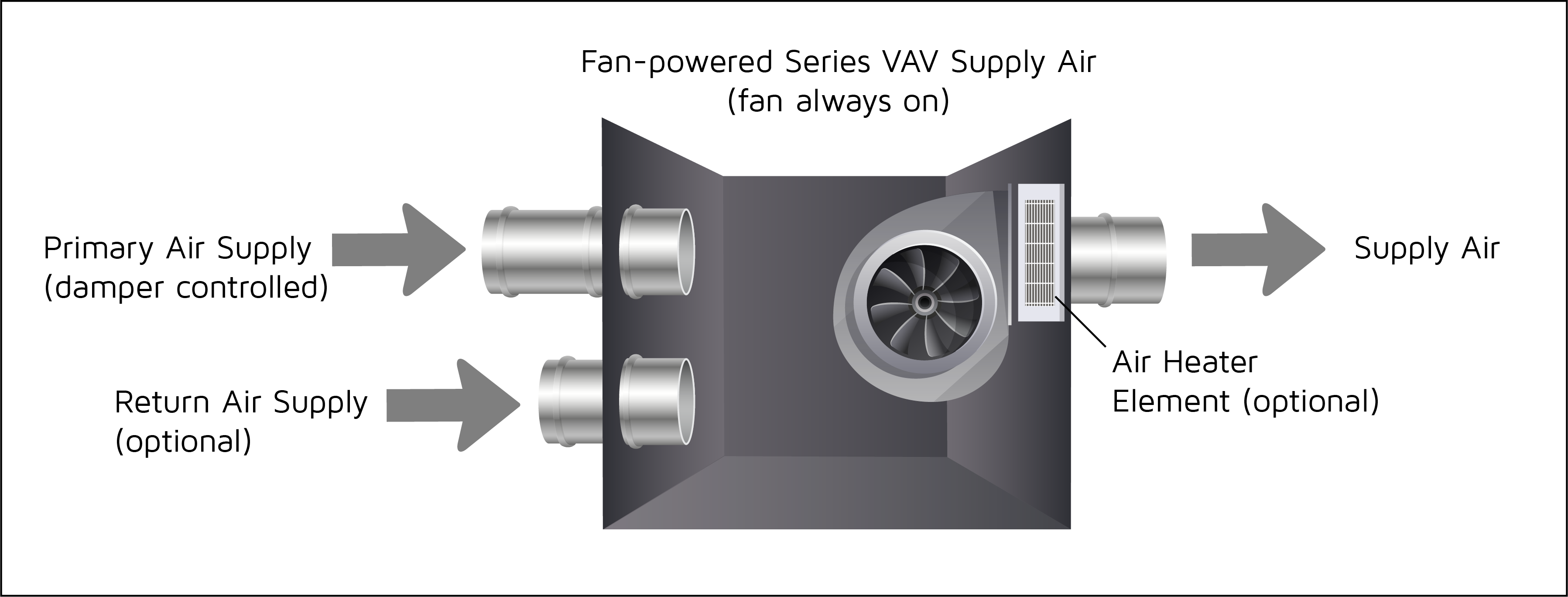
A Variable Air Volume (VAV) box is a crucial component in many modern commercial and industrial Heating, Ventilation, and Air Conditioning (HVAC) systems. Its primary function is to regulate the amount of conditioned air delivered to individual zones or areas within a building. This allows for precise temperature control and energy efficiency by adjusting airflow based on the specific needs of each space.
Understanding the Basics of HVAC Systems
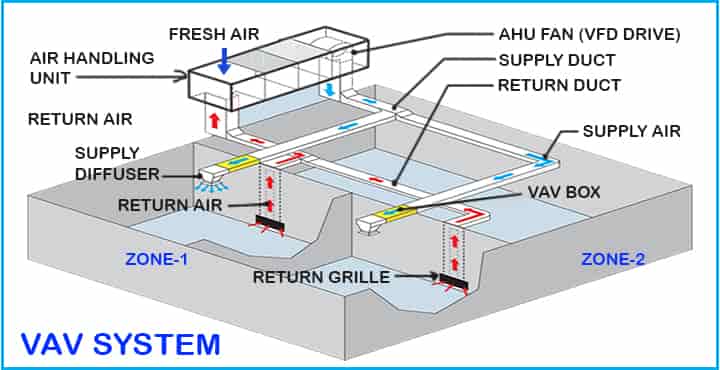
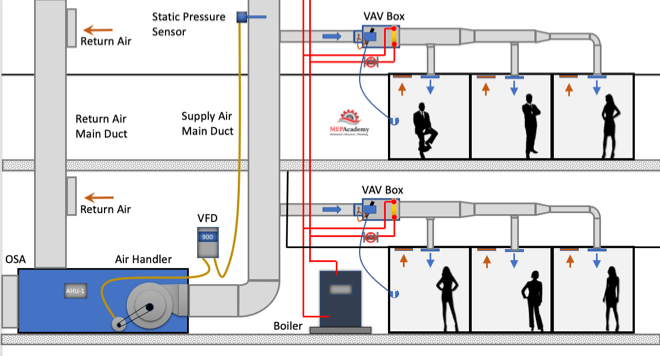
Before diving deeper into VAV boxes, it's important to understand the basics of a centralized HVAC system. In such a system, a large air handling unit (AHU) conditions air – heating, cooling, and filtering it – and then distributes this conditioned air throughout the building via a network of ducts.
Think of the AHU as the "heart" of the system, pumping conditioned air, which is the "lifeblood," to different areas of the building. Traditional HVAC systems, often called constant air volume (CAV) systems, deliver a fixed amount of air to each zone, regardless of the zone's actual heating or cooling needs.
This can lead to inefficiencies. For example, imagine a conference room that's only occupied half the time. A CAV system would continue to pump the same amount of conditioned air into the room even when it's empty, wasting energy.
The Role of the VAV Box: Precision Airflow Control
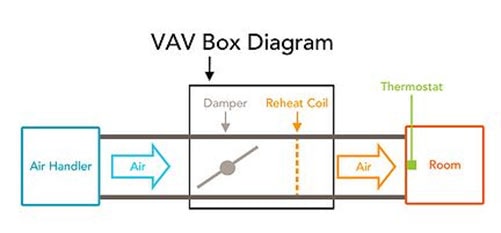
This is where the VAV box comes in. Instead of delivering a constant volume of air, a VAV box acts as a "gatekeeper," modulating the airflow to each zone based on its temperature requirements. It receives conditioned air from the main ductwork and then adjusts the amount of air it releases into the zone it serves.
In essence, the primary function of a VAV box is to regulate the *volume* of air delivered to a zone to maintain a desired temperature.
How Does a VAV Box Work?
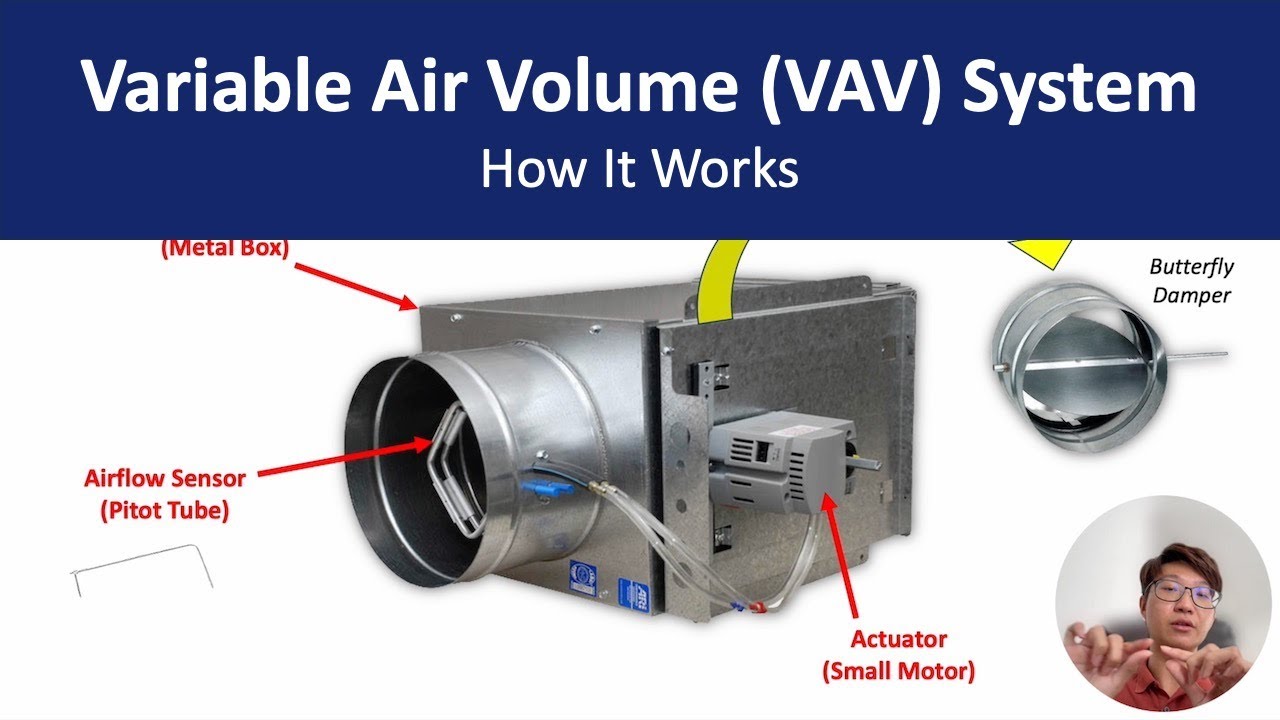
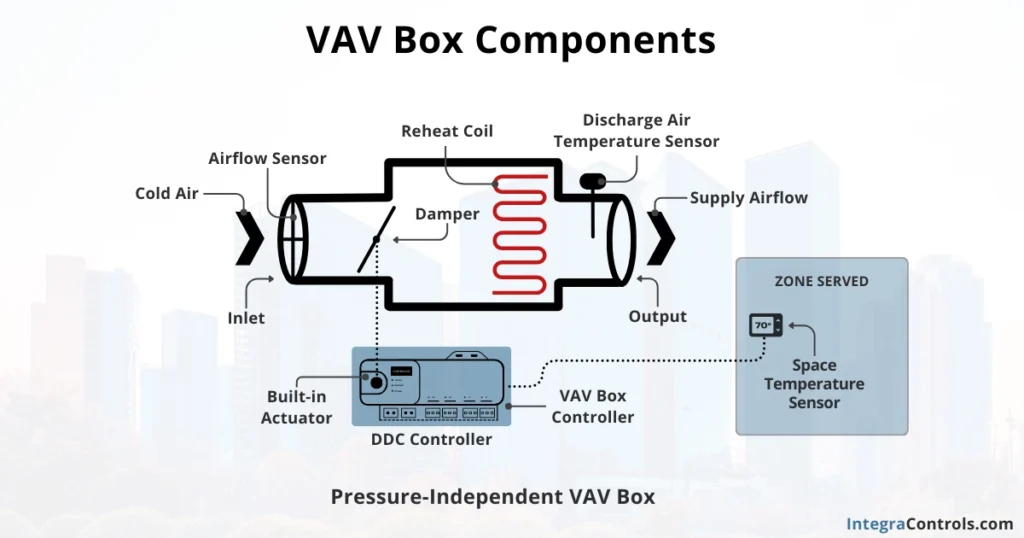
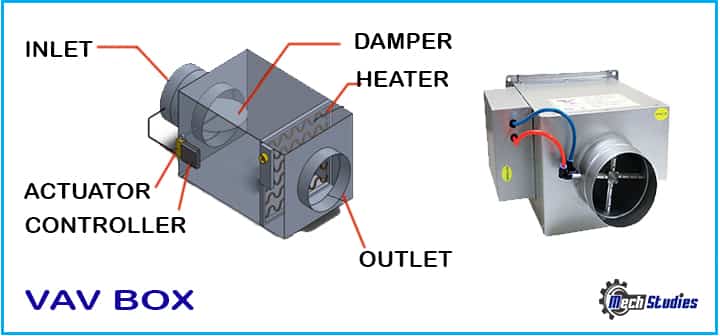
A VAV box typically consists of several key components:
- Inlet Duct: This is where the conditioned air from the main ductwork enters the box.
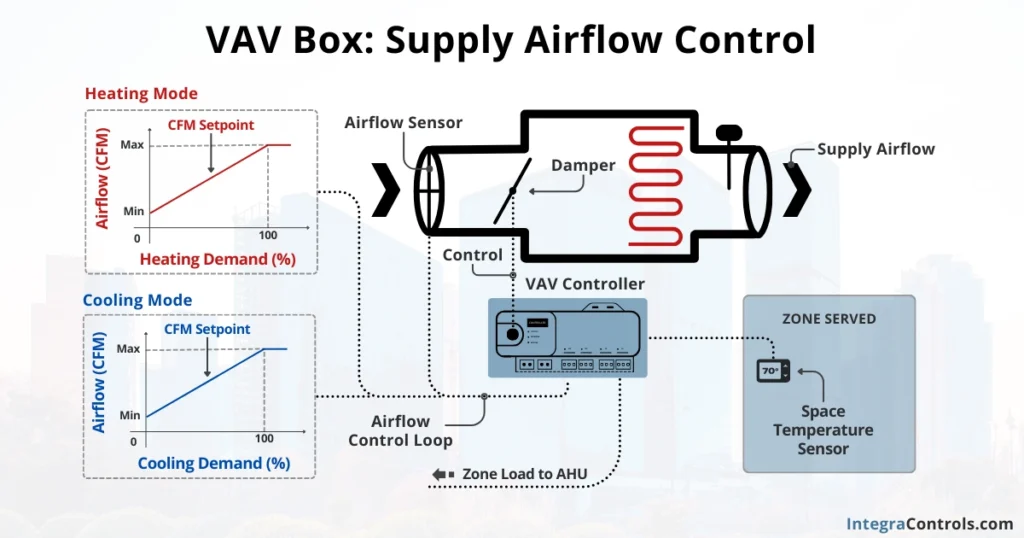
- Damper: This is an adjustable plate or valve inside the box that controls the airflow. By opening or closing the damper, the VAV box can increase or decrease the amount of air passing through it.
- Actuator: This is a motor that controls the position of the damper. It receives signals from a controller and adjusts the damper accordingly.
- Flow Sensor: This measures the actual airflow passing through the box. This feedback is essential for accurate control.
- Controller: This is the "brain" of the VAV box. It receives temperature information from a thermostat in the zone, compares it to the desired setpoint, and then sends signals to the actuator to adjust the damper.
The process works like this:
- The thermostat in the zone measures the temperature.
- The controller compares the measured temperature to the desired setpoint.
- If the zone is too warm, the controller signals the actuator to open the damper, allowing more cool air to flow into the zone.
- If the zone is too cold, the controller signals the actuator to close the damper, reducing the amount of cool air (or increasing the amount of heated air if the system is in heating mode).
- The flow sensor monitors the actual airflow and provides feedback to the controller, ensuring that the desired airflow is achieved.
Types of VAV Boxes
While the basic function remains the same, VAV boxes come in different configurations to suit various applications:
Single-Duct VAV Boxes
These are the most common type of VAV box. They have a single inlet duct for conditioned air and a single outlet duct that delivers air to the zone. They are suitable for zones that require only cooling or only heating.
Dual-Duct VAV Boxes
These boxes have two inlet ducts – one for hot air and one for cold air. They can mix hot and cold air to precisely control the temperature of the air delivered to the zone. Dual-duct systems offer greater flexibility in temperature control but are more complex and expensive than single-duct systems.
VAV Boxes with Reheat
These boxes are similar to single-duct boxes but include an electric or hot water reheat coil. This allows them to provide both cooling and heating, even when the main air handler is only supplying cool air. Reheat VAV boxes are often used in perimeter zones that may require heating even during the cooling season.
Pressure-Independent VAV Boxes
These boxes are designed to maintain a constant airflow regardless of fluctuations in the static pressure of the main ductwork. They use a pressure sensor and a more sophisticated control algorithm to compensate for pressure variations, ensuring more stable and reliable temperature control.
Benefits of Using VAV Boxes
Implementing VAV boxes in an HVAC system offers several significant advantages:
- Improved Energy Efficiency: By delivering only the amount of air needed to maintain the desired temperature in each zone, VAV systems can significantly reduce energy consumption compared to CAV systems. This translates to lower utility bills and a reduced environmental footprint.
- Enhanced Temperature Control: VAV boxes provide precise temperature control in individual zones, allowing occupants to customize their comfort levels. This can lead to increased productivity and satisfaction.
- Greater Flexibility: VAV systems can easily adapt to changes in occupancy and zone requirements. As building layouts change or occupancy patterns shift, the airflow to each zone can be adjusted accordingly.
- Reduced Noise Levels: By modulating airflow, VAV systems can reduce noise levels compared to CAV systems, which operate at a constant airflow and may generate more noise.
When Are VAV Boxes the Right Choice?
VAV systems are particularly well-suited for:
- Large Commercial Buildings: Office buildings, hospitals, schools, and other large commercial buildings with multiple zones and varying occupancy patterns.
- Buildings with Diverse Thermal Loads: Buildings with zones that have different heating and cooling requirements due to factors such as solar exposure, occupancy, and equipment usage.
- Buildings Seeking Energy Efficiency: Buildings where energy conservation is a priority. VAV systems can significantly reduce energy consumption compared to traditional HVAC systems.
Potential Drawbacks of VAV Systems
While VAV systems offer numerous benefits, it's important to be aware of potential drawbacks:
- Higher Initial Cost: VAV systems typically have a higher initial cost than CAV systems due to the more complex equipment and controls involved.
- More Complex Maintenance: VAV systems require more specialized maintenance than CAV systems. Technicians need to be familiar with the electronic controls and sensors used in VAV boxes.
- Potential for Stratification: In some cases, VAV systems can lead to temperature stratification, where the air temperature is different at different heights in a zone. This can be mitigated by proper system design and control strategies.
Conclusion
In summary, the primary function of a VAV box is to regulate the *amount* of conditioned air delivered to individual zones in a building, enabling precise temperature control and improved energy efficiency. By understanding how VAV boxes work and their associated benefits and drawbacks, you can make informed decisions about whether a VAV system is the right choice for your building.
Consider consulting with a qualified HVAC professional to assess your specific needs and determine the most appropriate HVAC solution for your building.