What Size Mini Split For 1000 Sq Ft
Frequently Asked Questions: Mini Split Sizing for 1000 Sq Ft
Choosing the right size mini split system is crucial for efficient and comfortable heating and cooling. Too small, and it will struggle to maintain temperature; too large, and it will cycle frequently, wasting energy and potentially shortening its lifespan. This FAQ addresses common questions about sizing a mini split for a 1000 sq ft space.
Q1: What size (BTU) mini split do I need for a 1000 sq ft space?
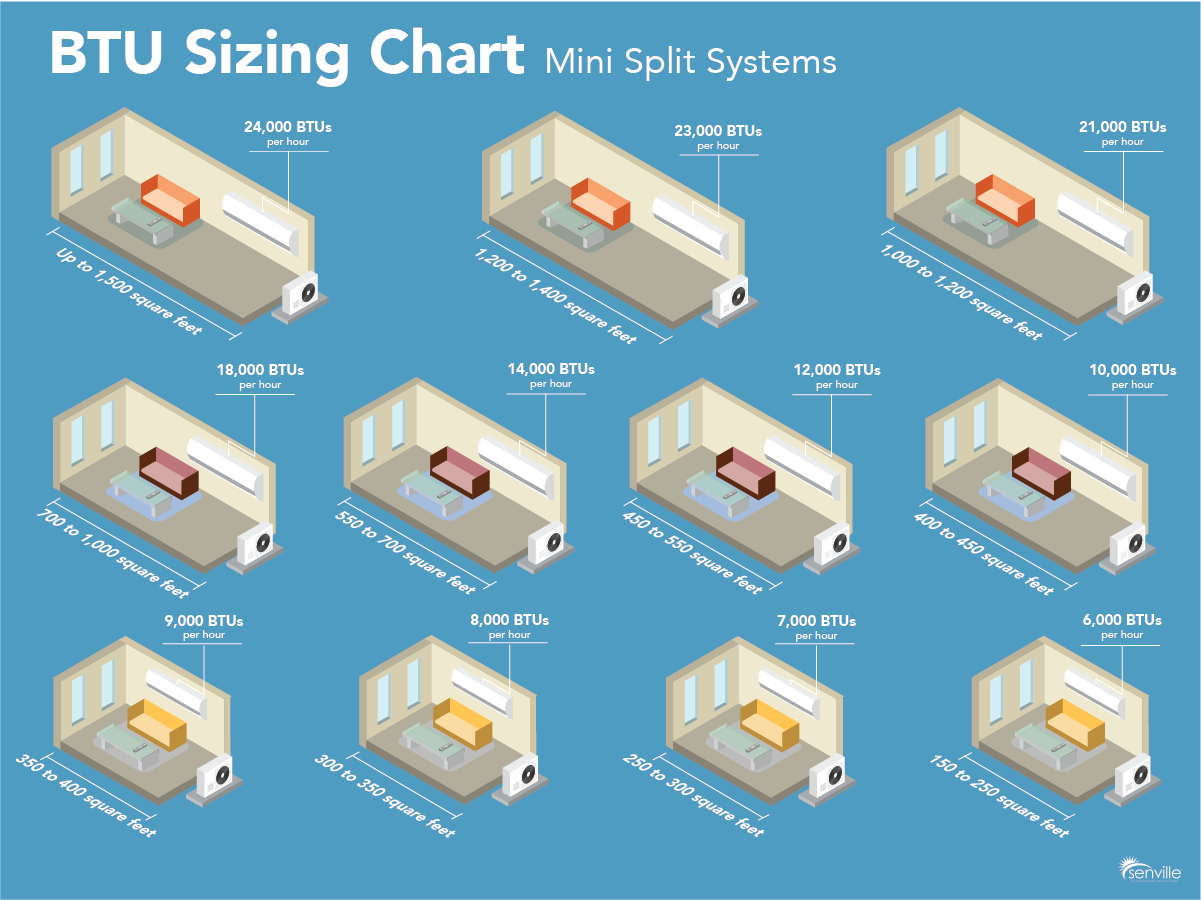
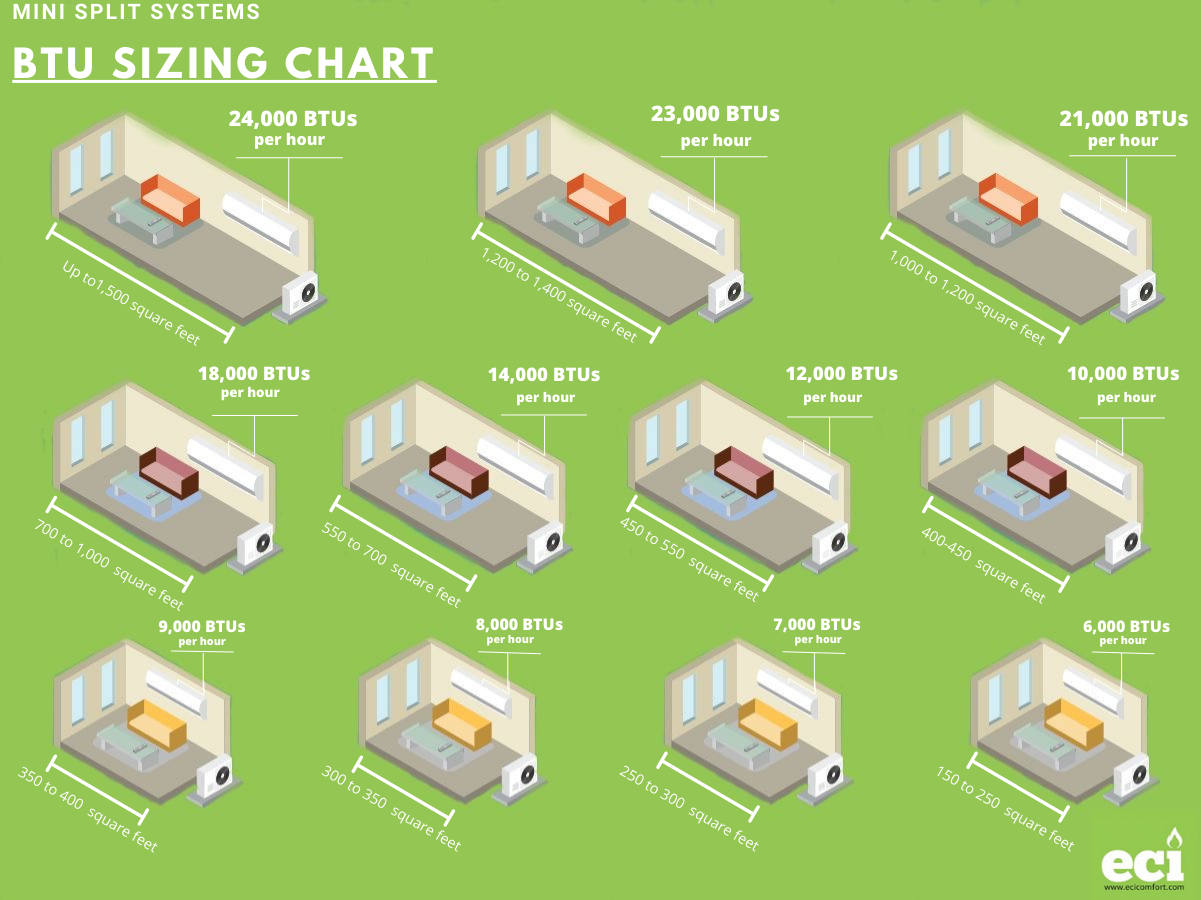
Generally, a 18,000 BTU to 24,000 BTU mini split system is recommended for a 1000 sq ft space. This is a general guideline. However, the ideal size can vary depending on several factors which are covered in the following questions. The key is finding a system that can adequately heat and cool the area without being oversized.
Q2: What factors besides square footage affect the BTU requirement?
Several factors can significantly influence the BTU requirement beyond just the square footage. Consider these elements when determining the right size mini split:
- Climate: Colder climates (with harsher winters) and hotter climates (with intense summers) demand higher BTU ratings. Someone in Maine will need more heating power than someone in Florida.
- Insulation: Poor insulation leads to heat loss in winter and heat gain in summer, increasing the BTU requirement. Well-insulated spaces require less powerful units. Check your walls, ceiling, and windows for adequate insulation.
- Window Size and Number: Large windows, especially those facing south or west, allow more sunlight and heat into the space, necessitating a higher BTU rating. Consider window treatments (blinds, curtains) and window film to reduce solar heat gain.
- Ceiling Height: Higher ceilings increase the volume of air that needs to be heated or cooled. A room with 12-foot ceilings will require a larger BTU capacity than a room with 8-foot ceilings.
- Occupancy: The number of people regularly occupying the space affects the heat load. Each person generates body heat, which contributes to the overall cooling demand. A home office with one person will have different needs than a family room.
- Appliances and Electronics: Heat-generating appliances (ovens, computers, servers) and electronics can increase the cooling load, requiring a higher BTU rating. Consider the typical usage patterns of these devices.
- Building Orientation: The direction your building faces affects how much sunlight it receives. South-facing walls receive the most sun, while north-facing walls receive the least.
It's best to consider all these factors, not just square footage, for an accurate BTU estimation. A professional HVAC technician can perform a load calculation to determine the precise BTU requirement for your specific situation.
Q3: How do I calculate the BTU requirement myself if I want a more accurate estimate?
While a professional load calculation is the most accurate, you can perform a rough estimate using a simplified method. Keep in mind that this is just an approximation, and professional advice is always recommended.
- Start with a base BTU: Begin with 20 BTU per square foot. For a 1000 sq ft space, this equals 20,000 BTU.
- Adjust for climate:
- Hot climates (e.g., Arizona, Florida): Add 2,000-4,000 BTU.
- Cold climates (e.g., Minnesota, Maine): Add 2,000-4,000 BTU.
- Adjust for insulation:
- Poor insulation: Add 2,000-4,000 BTU.
- Good insulation: Subtract 2,000 BTU.
- Adjust for windows:
- Many large windows (especially south- or west-facing): Add 2,000-4,000 BTU.
- Adjust for occupancy:
- More than two people regularly occupying the space: Add 400 BTU per additional person.
- Adjust for heat-generating appliances:
- Significant heat-generating appliances (e.g., a commercial kitchen): Add 2,000-4,000 BTU (or more).
Example: 1000 sq ft space in a moderately warm climate, with average insulation, a few medium-sized windows, and two occupants. Base BTU: 20,000 BTU Climate adjustment: +2,000 BTU Insulation adjustment: No adjustment Window adjustment: No adjustment Occupancy adjustment: No adjustment Total estimated BTU: 22,000 BTU
Based on this estimate, a 24,000 BTU mini split would be a suitable choice. Remember to always round up rather than down to ensure adequate heating and cooling capacity.
Q4: What are the consequences of choosing the wrong size mini split?
Selecting the correct size mini split is crucial for optimal performance and energy efficiency. Here are the potential consequences of choosing the wrong size:
- Undersized Unit:
- Inadequate heating and cooling: The system struggles to reach and maintain the desired temperature, especially during extreme weather conditions.
- Longer run times: The unit runs continuously, consuming more energy and increasing your utility bills.
- Increased wear and tear: Constant operation puts excessive strain on the components, shortening the lifespan of the system.
- Oversized Unit:
- Short cycling: The unit turns on and off frequently, leading to uneven temperature distribution and discomfort.
- Reduced dehumidification: Short cycles prevent the system from effectively removing humidity from the air, potentially leading to mold growth.
- Higher initial cost: Larger units are more expensive to purchase.
- Increased energy consumption: Short cycling is inefficient and wastes energy.
- Reduced lifespan: Frequent starting and stopping can put stress on the compressor, reducing its lifespan.
Proper sizing ensures optimal comfort, energy efficiency, and longevity of your mini split system. Always prioritize an accurate assessment of your needs.
Q5: Can I use multiple smaller mini split units instead of one larger one for a 1000 sq ft space? What are the advantages and disadvantages?
Yes, using multiple smaller mini split units is a viable option, especially if you want to zone your heating and cooling. Zoning allows you to control the temperature in different areas of your home independently.
Advantages of Multiple Smaller Units:
- Zoning: Allows you to heat or cool only the areas you're using, saving energy and increasing comfort. For example, you could keep the bedrooms cooler at night and the living area warmer during the day.
- Improved Comfort: Provides more consistent temperature control in each zone.
- Redundancy: If one unit fails, the others can still provide heating and cooling.
- Easier Installation: Smaller units may be easier to install in tight spaces.
Disadvantages of Multiple Smaller Units:
- Higher Initial Cost: Purchasing multiple units is generally more expensive than purchasing a single larger unit.
- More Complex Installation: Installing multiple units requires more refrigerant lines and electrical connections.
- More Outdoor Units: Each indoor unit typically requires its own outdoor unit, which can take up more space and be visually less appealing. Multi-zone systems can mitigate this.
For a 1000 sq ft space, you might consider using two 9,000 BTU or two 12,000 BTU units for effective zoning. Carefully weigh the costs and benefits to determine the best approach for your specific needs and budget.
Q6: Are there any incentives or rebates available for installing energy-efficient mini split systems?
Yes, many government agencies, utility companies, and manufacturers offer incentives and rebates for installing energy-efficient mini split systems. These incentives can significantly reduce the overall cost of the system.
Where to find information about incentives and rebates:
- DSIRE (Database of State Incentives for Renewables & Efficiency): This website provides a comprehensive list of federal, state, and local incentives for renewable energy and energy efficiency.
- Your Local Utility Company: Many utility companies offer rebates for installing energy-efficient appliances, including mini split systems. Check their website or contact them directly.
- Federal Tax Credits: Explore federal tax credits available for energy-efficient home improvements. Consult with a tax professional for specific guidance.
- Manufacturer Websites: Some manufacturers offer rebates on their products. Check their websites for details.
Take advantage of available incentives to reduce the cost of your mini split system and make your home more energy-efficient. Be sure to check the eligibility requirements and application deadlines for each incentive program.
Q7: Should I hire a professional for mini split installation, or is it a DIY project?
While some homeowners may be tempted to install a mini split system themselves to save money, it's generally highly recommended to hire a qualified HVAC professional. Mini split installation involves working with refrigerant lines, electrical wiring, and potentially complex system configurations. Improper installation can lead to:
- Reduced Efficiency: Incorrect refrigerant charging or airflow issues can significantly reduce the system's efficiency, costing you more in energy bills.
- System Damage: Improper wiring or handling of refrigerant can damage the system, voiding the warranty and requiring costly repairs.
- Safety Hazards: Incorrect electrical connections or refrigerant leaks can pose safety hazards to you and your family.
- Voided Warranty: Many manufacturers require professional installation for the warranty to be valid.
- Permit Issues: In many jurisdictions, a permit is required for HVAC installations, and a professional installer can handle the permitting process.
A professional HVAC technician has the knowledge, skills, and tools to ensure a safe and proper installation. They can also provide valuable advice on system sizing, placement, and maintenance. While the upfront cost may be higher, the long-term benefits of professional installation outweigh the risks of a DIY approach. Always verify that the technician is licensed and insured before hiring them.