What Size Wire For 200 Amp Service Panel
Frequently Asked Questions: Choosing the Right Wire Size for a 200 Amp Service Panel
Upgrading or installing a new 200 amp service panel is a significant electrical project. One of the most crucial aspects is selecting the correct wire size. Using the wrong size can lead to dangerous situations like overheating, voltage drops, and even electrical fires. This FAQ aims to answer your most common questions about wire sizing for a 200 amp service panel, ensuring a safe and efficient electrical system.
Q1: What size wire do I need for a 200 amp service panel?
The most common answer, according to the National Electrical Code (NEC), is 4/0 AWG copper or 250 kcmil aluminum. However, this is a general guideline. The specific wire size required depends on several factors, including:
- The material of the wire: Copper and aluminum have different conductivity, so they require different sizes to carry the same amount of current.
- The insulation type: Some insulation types are rated for higher temperatures, allowing for higher ampacity (current-carrying capacity).
- The distance the wire will run (voltage drop): Longer runs experience voltage drop, which might require a larger wire size.
- The specific installation method: How the wires are installed (e.g., in conduit, direct burial) can affect their heat dissipation and therefore, the required ampacity.
Important Note: Always consult the NEC and local electrical codes for the most accurate and up-to-date requirements. Also, it is highly recommended to consult with a qualified electrician for your specific installation.
Q2: Why is using the correct wire size so important? What are the risks of using undersized wire?
Using the correct wire size is absolutely critical for the safety and proper functioning of your electrical system. Undersized wires can lead to a number of serious problems:
- Overheating: Undersized wires are forced to carry more current than they are designed for. This causes them to heat up, potentially melting the insulation and creating a fire hazard. This is perhaps the most dangerous consequence.
- Voltage Drop: As electricity travels through a wire, some voltage is lost due to resistance. Using too small of a wire increases resistance, leading to significant voltage drop, especially over long distances. This can cause appliances to malfunction, lights to dim, and motors to run inefficiently.
- Equipment Damage: Insufficient voltage due to voltage drop can damage sensitive electronic equipment like computers and televisions. Motors may also overheat and fail prematurely.
- Code Violations: Using the wrong wire size is a direct violation of the NEC and local electrical codes. This can result in fines, delays in project completion, and potential liability in case of an electrical fire.
- Reduced Efficiency: Inefficient power delivery leads to higher energy bills. You're essentially wasting electricity by using undersized wires.
Think of it like a water hose. If you try to force too much water through a small hose, it will burst. Similarly, forcing too much electricity through undersized wires is a recipe for disaster. Never compromise on wire size.
Q3: What is the difference between copper and aluminum wire, and which is better for a 200 amp service?
The primary difference between copper and aluminum wire lies in their conductivity. Copper is a better conductor of electricity than aluminum. This means that for the same ampacity, a smaller gauge copper wire can be used compared to an aluminum wire.
Here's a breakdown:
- Copper:
- Pros: Higher conductivity, more ductile (easier to bend and work with), generally considered more reliable in smaller gauges, less susceptible to corrosion in some environments.
- Cons: More expensive than aluminum.
- Aluminum:
- Pros: Less expensive than copper, lighter in weight.
- Cons: Lower conductivity, more prone to expansion and contraction with temperature changes, requires special connectors designed for aluminum to prevent corrosion and loosening over time, can oxidize and form a non-conductive layer that increases resistance.
For a 200 amp service, both copper and aluminum are acceptable, provided they are properly sized and installed. Many electricians prefer copper for its superior conductivity and ease of use, especially for shorter runs. However, aluminum is a cost-effective alternative, particularly for longer runs where the weight of copper becomes a significant factor. The key is to ensure proper installation and use of appropriate connectors for the chosen material.
Q4: What does "4/0 AWG" and "250 kcmil" mean in relation to wire size?
"AWG" stands for American Wire Gauge. It's a standardized system for measuring wire diameter. In the AWG system, lower numbers indicate larger wire sizes. For example, 10 AWG wire is larger than 14 AWG wire. However, once you reach 1 AWG, the next larger sizes are referred to as "0 AWG" (also written as 1/0), "00 AWG" (2/0), "000 AWG" (3/0), and "0000 AWG" (4/0). Therefore, 4/0 AWG is a very large wire.
"kcmil" stands for thousand circular mils. A "mil" is a unit of length equal to one-thousandth of an inch (0.001 inch). A "circular mil" is the area of a circle with a diameter of one mil. The kcmil value represents the cross-sectional area of the wire in thousands of circular mils. It's often used for larger wire sizes where the AWG system becomes less practical. So, 250 kcmil represents a wire with a cross-sectional area of 250,000 circular mils.
Essentially, both AWG and kcmil are different ways of measuring wire size, with kcmil generally used for larger conductors.
Q5: How does the length of the wire run affect the required wire size for a 200 amp service?
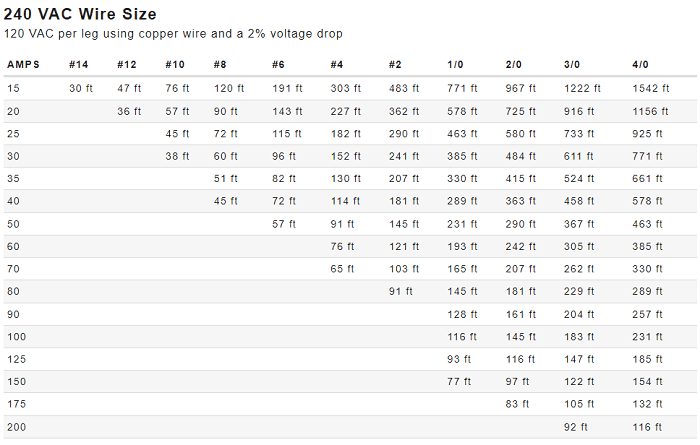
The length of the wire run is a critical factor in determining the correct wire size due to voltage drop. As electricity flows through a wire, it encounters resistance. This resistance causes a loss of voltage along the wire's length. The longer the wire, the greater the voltage drop.
The NEC specifies the acceptable voltage drop for branch circuits and feeders. Exceeding this limit can lead to:
- Dimming lights
- Malfunctioning appliances
- Overheating of motors
- Inefficient operation of equipment
To compensate for voltage drop over longer distances, you need to use a larger wire size. A larger wire has lower resistance, which minimizes voltage drop. Therefore, even if 4/0 AWG copper seems adequate for a short run to a 200 amp panel, a much larger size might be required for a longer run. There are voltage drop calculators available online and in electrical handbooks that can help you determine the appropriate wire size based on the distance, current, and voltage. However, it's best to consult with a qualified electrician for accurate calculations and code compliance.
Q6: Can I use a smaller wire size if I use multiple parallel wires for a 200 amp service?
Yes, in certain circumstances, it is possible to run multiple smaller wires in parallel to achieve the equivalent ampacity of a single larger wire. However, this is a more complex installation that requires strict adherence to the NEC guidelines.
Here are some key considerations:
- NEC Requirements: The NEC has specific rules regarding the paralleling of conductors, including limitations on conductor size, material, and installation methods. Generally, conductors must be 1/0 AWG or larger to be paralleled.
- Equal Lengths and Termination: All parallel conductors must be the same length, material, cross-sectional area, insulation type, and terminated in the same manner to ensure equal current distribution.
- Bundling and Derating: When conductors are bundled together, their ampacity may need to be derated (reduced) to account for the increased heat buildup. This can negate some of the benefits of paralleling.
- Professional Installation: Paralleling conductors requires a high level of electrical knowledge and skill. It is not a DIY project and should only be performed by a licensed electrician.
While paralleling can be a viable option in some cases, it's often more cost-effective and simpler to use a single larger conductor. Consulting with an electrician is essential to determine the best approach for your specific installation.
Q7: Where can I find the official wire sizing charts and guidelines for a 200 amp service?
The definitive source for wire sizing information is the National Electrical Code (NEC). Specifically, look at NEC Table 310.16 and the associated notes. This table provides the allowable ampacities of insulated conductors based on their size, insulation type, and ambient temperature. Other tables within Article 310 are also relevant.
However, the NEC is a complex document, and interpreting the tables correctly requires a good understanding of electrical principles and code requirements. Local electrical codes may also have additional or more stringent requirements. Therefore, it's highly recommended to:
- Consult with a qualified electrician: A licensed electrician has the knowledge and experience to accurately determine the correct wire size for your 200 amp service panel, taking into account all relevant factors and code requirements.
- Review local building codes: Your local building department can provide information on any specific electrical codes or requirements that apply in your area.
- Utilize online resources with caution: While there are many online resources that provide wire sizing information, it's important to verify the accuracy and reliability of these resources before relying on them. Always cross-reference information with the NEC and consult with an electrician.
In summary, while you can find wire sizing charts and guidelines online, professional guidance is essential to ensure a safe and code-compliant installation. Don't hesitate to seek the expertise of a qualified electrician.