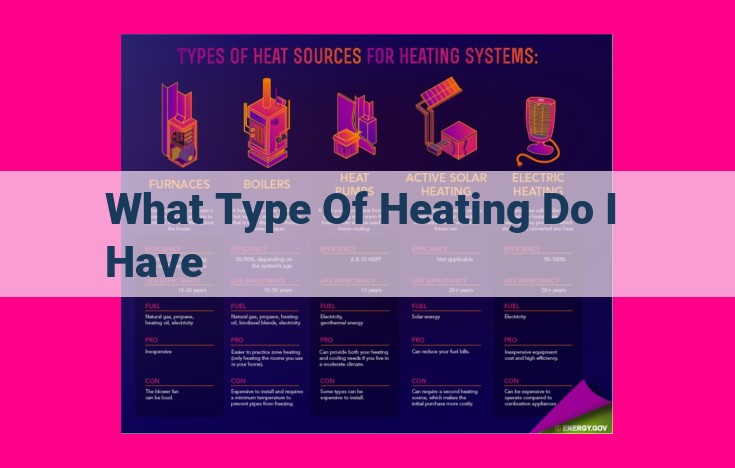
What Type Of Heat Do I Have
One of the most common and frustrating issues homeowners face, especially as seasons change, is inconsistent or non-existent heating. You crank up the thermostat, expecting to be enveloped in warmth, but instead, you're left shivering and wondering, "What's going on?" This article aims to help you understand your home's heating system and troubleshoot common problems before calling for professional help. We'll walk through identifying your system type and basic checks you can perform safely.
Step 1: Identify Your Heating System Type
The first step to solving any heating problem is knowing what kind of system you have. This will guide your troubleshooting efforts and help you understand potential causes.
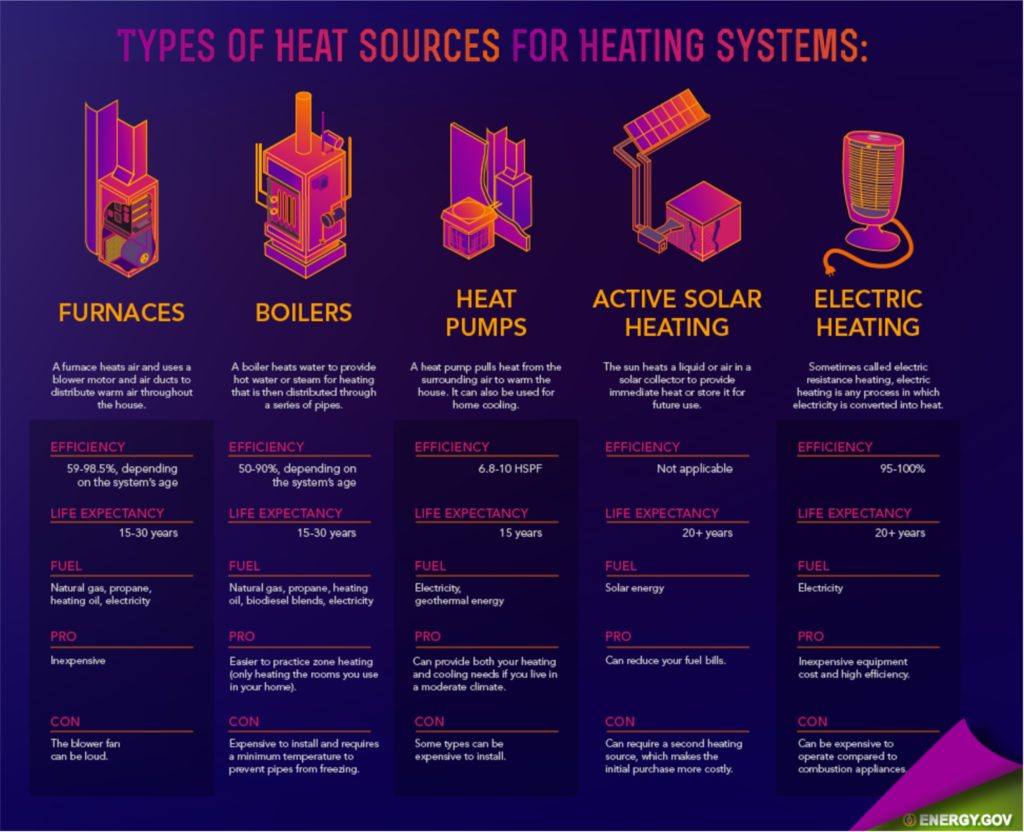
A. Forced Air Systems (Furnaces)
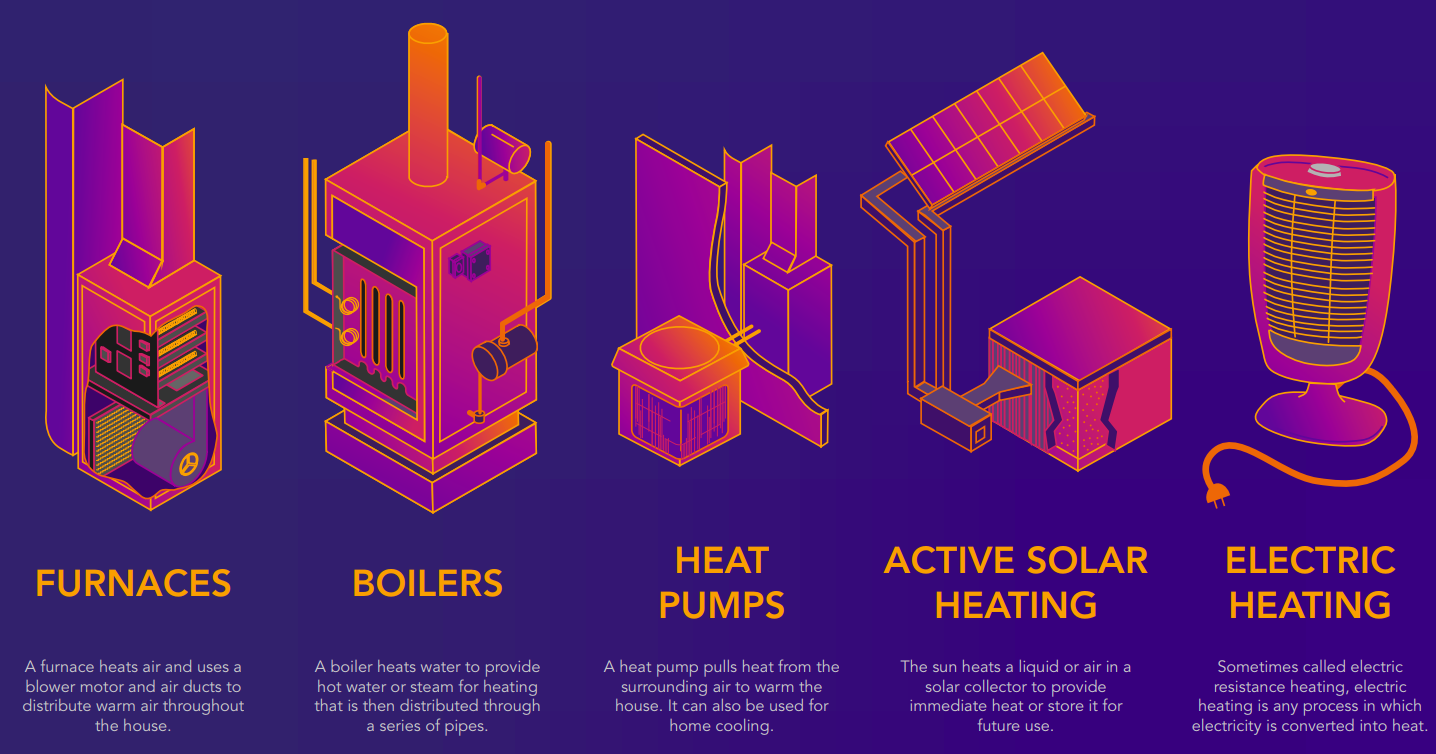
Description: These systems are the most common. They use a furnace to heat air and then distribute it through ducts to vents throughout your home. You'll typically have a central unit (the furnace itself) usually located in a basement, attic, or utility closet.
Fuels: Furnaces can run on natural gas, propane, oil, or electricity.
Identifying Features:
- You'll hear a whooshing sound as the furnace kicks on and air is forced through the vents.
- Look for ductwork running throughout your home.
- You'll likely have a thermostat to control the temperature.
- Check for a vent pipe exiting your home, often near the furnace (for gas, propane, or oil furnaces).
B. Heat Pumps
Description: Heat pumps work by transferring heat rather than generating it. In the winter, they extract heat from the outside air (even cold air contains some heat) and pump it inside. In the summer, they reverse the process and pump heat from inside your home to the outside, acting as an air conditioner.
Fuel: Heat pumps run on electricity.
Identifying Features:
- You'll have an outdoor unit that looks similar to an air conditioner condenser.
- You'll likely have a thermostat to control the temperature, often with settings for both heating and cooling.
- Heat pumps can sometimes feel like they're blowing cool air, especially when temperatures are very low. This is because they're extracting heat, not generating it, and the air might not feel as warm as a furnace-heated system.
C. Electric Resistance Heating
Description: This type of heating uses electric resistance to generate heat. Examples include baseboard heaters, space heaters, and electric furnaces.
Fuel: Electricity.
Identifying Features:
- Baseboard Heaters: Long, rectangular units installed along the baseboards of walls.
- Space Heaters: Portable units that plug into an electrical outlet.
- Electric Furnaces: Similar to gas furnaces, but they use electric heating elements instead of burning fuel.
D. Boilers
Description: Boilers heat water, which is then circulated through radiators or baseboard convectors to heat your home. Some boilers can also provide hot water for domestic use.
Fuel: Boilers can run on natural gas, propane, oil, or electricity.
Identifying Features:
- You'll have a central unit (the boiler) usually located in a basement or utility closet.
- Radiators or baseboard convectors in each room.
- You'll likely have a thermostat to control the temperature.
- Pipes connecting the boiler to the radiators or baseboard convectors.
Step 2: Basic Checks You Can Do (No Tools Required)
Once you've identified your heating system, you can start with some simple checks. These don't require any tools and can often pinpoint the problem.
A. Thermostat Check
Check the settings: Is the thermostat set to "Heat" and at a temperature higher than the current room temperature? It seems obvious, but it's easily overlooked!
Check the batteries: Many thermostats, especially digital ones, rely on batteries. Weak batteries can cause inaccurate readings or prevent the thermostat from communicating with the heating system. Replace the batteries with fresh ones.
Test the Thermostat: Increase the set temperature by several degrees. You should hear the heating system kick on within a few minutes. If nothing happens, proceed to the next steps.
B. Air Filter Check (For Forced Air Systems and Heat Pumps)
Locate the air filter: Typically found near the furnace or air handler. It might be behind a removable panel.
Inspect the filter: A clogged air filter restricts airflow, which can cause the furnace to overheat and shut down or reduce the efficiency of a heat pump. If the filter is dirty, replace it with a new one. Always use the correct size filter recommended by the manufacturer.
Note: Replacing a dirty air filter is one of the simplest and most effective things you can do to maintain your heating system.
C. Circuit Breaker Check
Locate your electrical panel: Usually found in a basement, garage, or utility closet.
Identify the circuit breaker for your heating system: It should be labeled "Furnace," "Heat Pump," or something similar. If you're unsure, consult your home's electrical diagram.
Check the breaker: If the breaker is tripped (in the "off" or middle position), reset it by flipping it all the way to the "off" position and then back to the "on" position.
Caution: If the breaker trips repeatedly, there may be a more serious electrical problem. Contact a qualified electrician.
D. Pilot Light Check (For Gas Furnaces and Boilers)
Locate the pilot light: On older furnaces and boilers, the pilot light is a small flame that ignites the main burner. Refer to your appliance's manual to find its exact location. *Newer furnaces have electronic ignition and do not have a pilot light.*
Check the pilot light: If the pilot light is out, follow the manufacturer's instructions to relight it. These instructions are usually printed on a label near the pilot light.
Caution: If you smell gas, do NOT attempt to light the pilot light. Leave the area immediately and call your gas company or a qualified HVAC technician.
E. Radiator Bleeding (For Boiler Systems)
Identifying Air in Radiators: If some radiators are warm while others are cold, or if you hear gurgling noises coming from the radiators, there might be air trapped inside.
Bleeding Radiators: You'll need a radiator key (a small, inexpensive tool available at most hardware stores) and a small container to catch any water that escapes.
Procedure:
- Locate the bleeder valve on the radiator (usually at the top).
- Insert the radiator key into the valve.
- Slowly turn the key counterclockwise. You should hear air hissing out.
- Once water starts to come out, close the valve by turning the key clockwise.
- Repeat for each radiator in your home.
Step 3: Checks Requiring Basic Equipment
These checks require minimal equipment, such as a multimeter, and a voltage tester. *Always turn off the power to the equipment being tested before doing any work.*
A. Voltage Check (Thermostat)
Tools Needed: Multimeter.
Purpose: To ensure the thermostat is receiving power.
Procedure:
- Turn off the power to the furnace/boiler or heat pump at the breaker.
- Remove the thermostat from the wall plate.
- Use the multimeter to check the voltage between the R (red) and C (common) terminals. A reading of 24 volts AC is typical.
- If there is no voltage, check the transformer in the furnace/boiler to make sure it is working (This is usually a job for a professional).
B. Checking for Voltage to Heating Element (Electric Resistance Heaters)
Tools Needed: Voltage Tester, Multimeter.
Purpose: To ensure power is reaching the heating element
- Turn off the power to the heater at the breaker.
- Using a voltage tester, verify that the power is indeed off before proceeding.
- Remove the cover to access the wiring of the heating element.
- Use a multimeter to check the voltage at the terminals of the heating element when the breaker is turned on (ensure the thermostat is also calling for heat).
- If there is no voltage, there's a problem with the wiring or the thermostat. Contact a professional.
Step 4: When to Call a Professional
While many heating problems can be resolved with simple troubleshooting, some issues require the expertise of a qualified HVAC technician. It's best to call a professional if:
- You smell gas. *Do NOT attempt to repair a gas leak yourself.*
- You suspect a carbon monoxide leak. *Carbon monoxide is a colorless, odorless gas that can be deadly.* Install carbon monoxide detectors in your home and call a professional immediately if they go off.
- You're uncomfortable working with electricity or gas.
- You've tried the basic troubleshooting steps and your heating system still isn't working.
- You suspect a problem with the furnace's blower motor, heat exchanger, or other major components.
- Your heat pump is frozen over or making unusual noises.
- Your boiler is leaking water or making banging noises.
Trying to fix something you're not comfortable with can be dangerous and potentially void your warranty. When in doubt, call a professional.
Maintaining Your Heating System
Preventative maintenance is key to keeping your heating system running efficiently and avoiding costly repairs. Here are some tips:
- Change your air filter regularly (every 1-3 months, depending on the type of filter and the amount of dust in your home).
- Schedule an annual maintenance checkup with a qualified HVAC technician.
- Keep the area around your furnace or boiler clear of clutter.
- Ensure that vents are not blocked by furniture or rugs.
- Consider installing a programmable thermostat to save energy.
By understanding your heating system and performing regular maintenance, you can keep your home comfortable and warm all winter long. Remember to prioritize safety and call a professional when needed. Stay warm!