Where To Put Leave In Thermometer In Turkey
Ensuring food safety is a critical aspect of the culinary arts, especially when preparing large poultry like turkey. While seemingly outside the direct scope of HVAC, the principles of temperature control and precision measurement, which are fundamental to HVAC work, find a practical application in cooking. This article bridges the gap, offering insights useful for HVAC professionals, students, and employers, drawing parallels between temperature control in HVAC systems and achieving safe internal temperatures in food preparation. While HVAC techs aren't chefs, understanding temperature principles is universal.
The Importance of Accurate Temperature Measurement in Turkey
Consuming undercooked poultry can lead to serious health risks, primarily due to the presence of harmful bacteria like Salmonella and Campylobacter. According to the United States Department of Agriculture (USDA), the safe minimum internal temperature for turkey is 165°F (74°C). This temperature must be reached throughout the entire bird to ensure that all harmful bacteria are destroyed. Accurate temperature measurement is, therefore, non-negotiable.
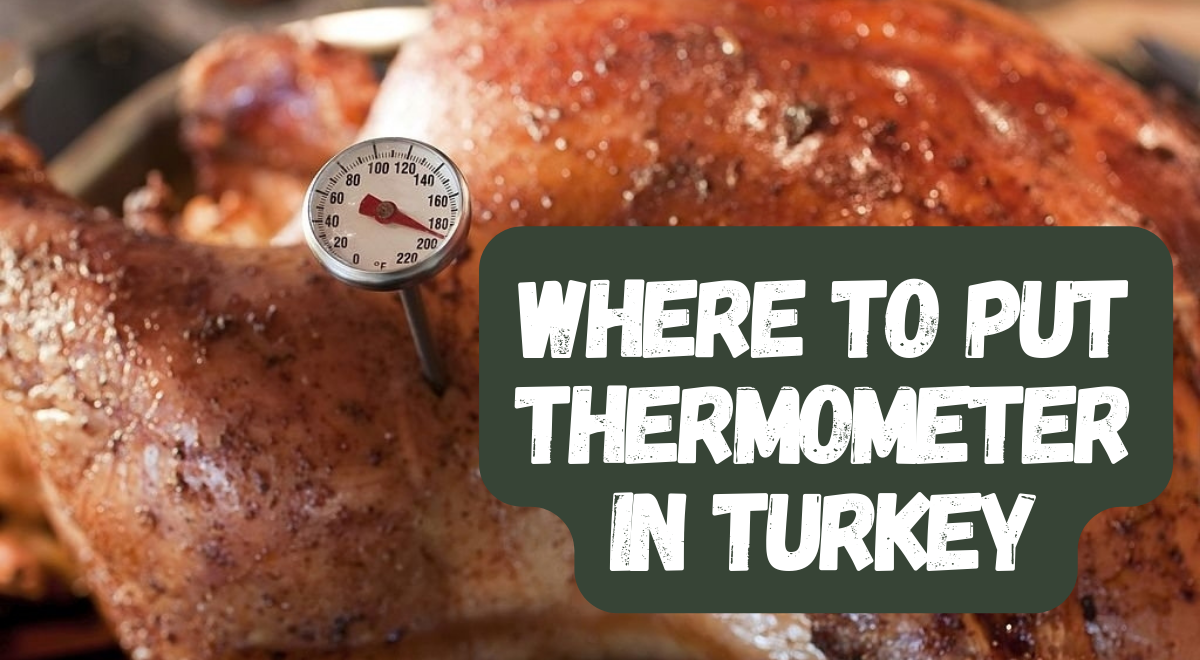
Where to Insert the Leave-In Thermometer
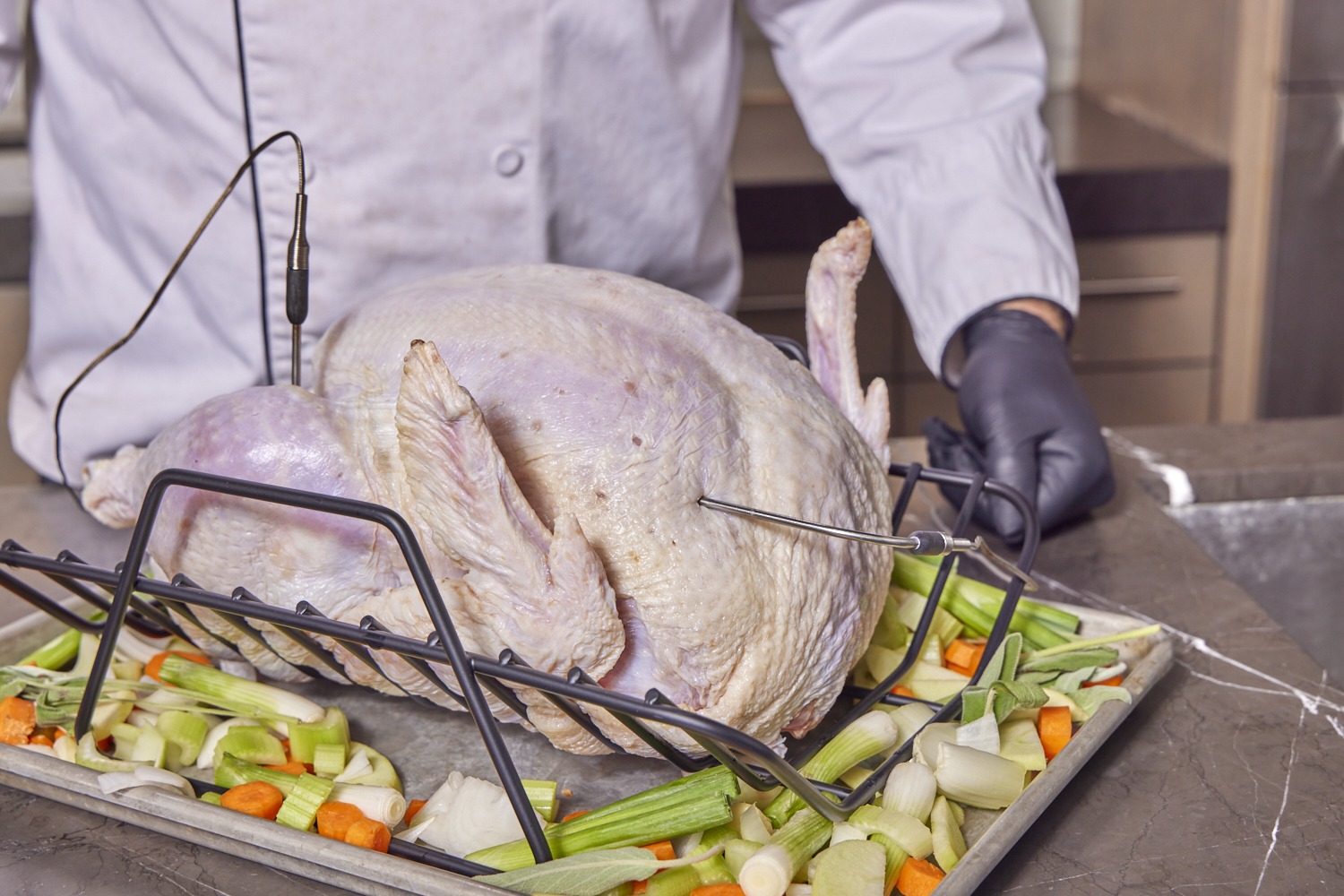
The placement of your leave-in thermometer is paramount to getting an accurate reading. Several factors can influence the accuracy, including proximity to bones or heating elements. Here's a breakdown of the recommended insertion points:
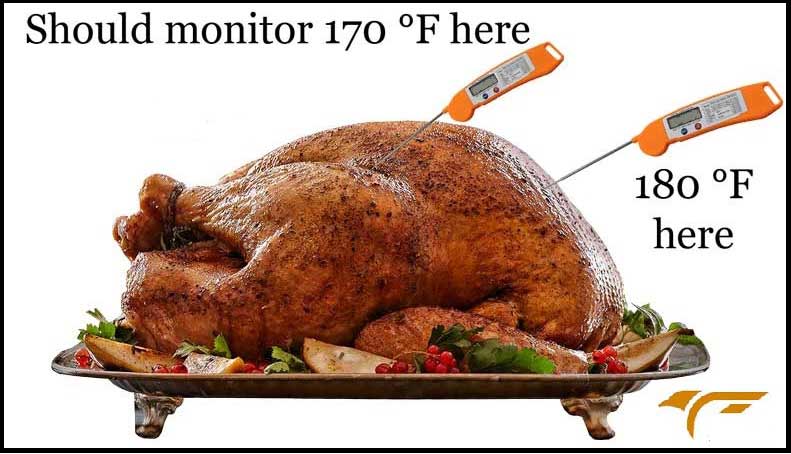
- Thigh: This is often cited as the most reliable location. Insert the thermometer into the thickest part of the thigh, making sure not to touch the bone. The thigh is the last part of the turkey to reach the target temperature.
- Breast: Another common location is the breast. Insert the thermometer into the thickest part of the breast, again being careful to avoid bone contact. However, be aware that the breast can cook faster than the thigh, so rely on the thigh reading primarily.
- Wing: While less common, the wing joint can also be used, especially on smaller turkeys. Ensure the thermometer is inserted deeply into the joint and avoids touching bone.
Key takeaway: Always verify the temperature in multiple locations, particularly the thigh, to ensure the entire bird has reached 165°F.
Types of Leave-In Thermometers
Choosing the right thermometer is crucial for accuracy and ease of use. Here are some popular options:
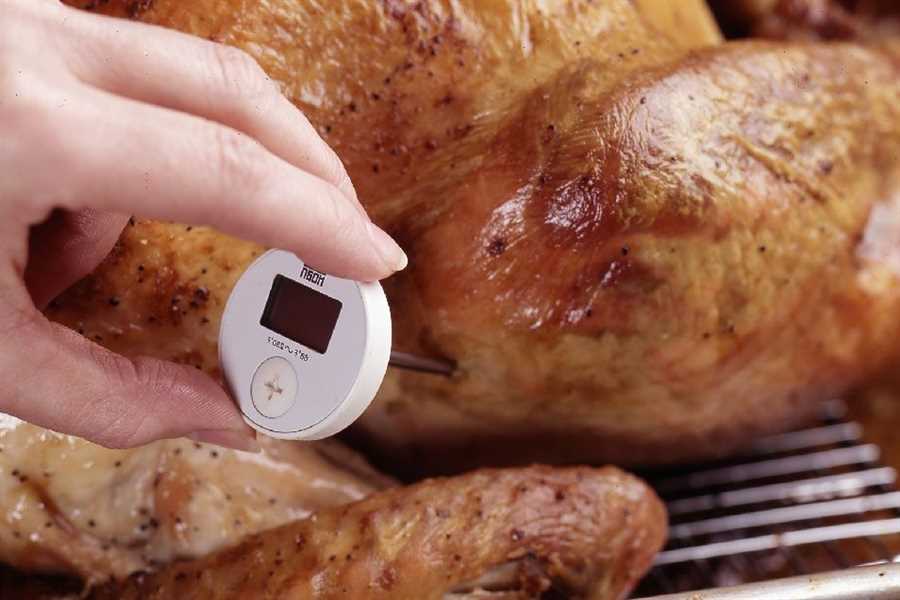
- Digital Leave-In Thermometers: These thermometers feature a probe that remains in the turkey throughout the cooking process. The digital display shows the current temperature, allowing for continuous monitoring. They often come with alarms that sound when the target temperature is reached.
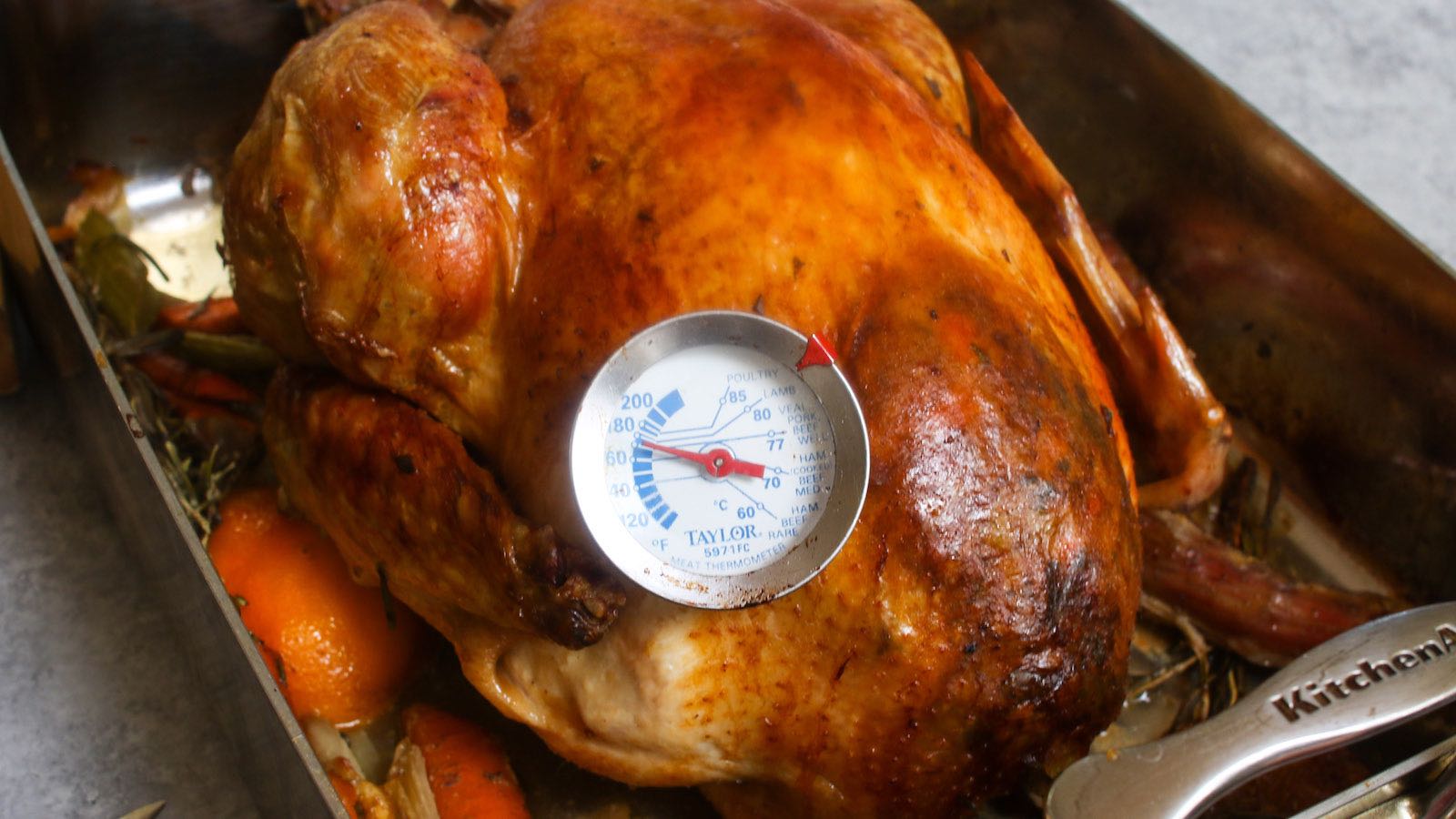
- Analog Leave-In Thermometers: These are more traditional thermometers with a dial display. They are reliable and don't require batteries but can be less precise than digital models.
- Wireless Leave-In Thermometers: These thermometers offer the convenience of remote monitoring. The probe stays in the turkey, and the temperature is transmitted wirelessly to a receiver, allowing you to monitor the cooking progress from another room.
HVAC Principles Applied to Cooking: An Unexpected Parallel
At first glance, HVAC and cooking seem worlds apart, but fundamental principles of heat transfer and temperature control connect them. HVAC technicians work with systems designed to maintain precise temperatures in buildings. This involves understanding heat transfer mechanisms (conduction, convection, and radiation), airflow, and insulation – all principles that also apply to cooking a turkey.
- Heat Transfer: Just as HVAC systems regulate heat flow in a building, cooking a turkey involves controlling heat transfer from the oven to the bird. Conduction heats the surface of the turkey, while convection circulates hot air around it.
- Insulation: Understanding insulation is crucial in both fields. In HVAC, insulation minimizes heat loss or gain. In cooking, covering the turkey with foil or using a roasting bag acts as insulation, preventing the surface from drying out and promoting even cooking.
- Temperature Sensors and Control: HVAC systems rely on sensors and control systems to maintain desired temperatures. Similarly, leave-in thermometers provide feedback on the turkey's internal temperature, allowing you to adjust cooking time and temperature to achieve the desired result.
HVAC Career Paths and the Importance of Precision
The HVAC industry offers diverse career paths, each requiring a unique set of skills and knowledge. Precision and accuracy are paramount in all HVAC roles. Here are some examples:
- HVAC Technician: Installs, maintains, and repairs heating, ventilation, and air conditioning systems. This role requires a strong understanding of thermodynamics, electrical systems, and troubleshooting techniques.
- HVAC Installer: Focuses on the installation of new HVAC systems. This involves measuring, cutting, and fitting pipes and ducts, as well as connecting electrical wiring.
- HVAC Service Technician: Specializes in the maintenance and repair of existing HVAC systems. This requires diagnostic skills and the ability to identify and resolve problems quickly.
- HVAC Design Engineer: Designs and develops new HVAC systems. This requires a strong understanding of engineering principles and the ability to use CAD software.
- HVAC Sales Engineer: Sells HVAC systems and services to clients. This requires technical knowledge and strong communication skills.
According to the Bureau of Labor Statistics (BLS), the median annual wage for HVAC technicians and installers was $51,390 in May 2021. The job outlook is projected to grow 5 percent from 2021 to 2031, about average for all occupations. This growth is driven by the increasing demand for energy-efficient HVAC systems and the need to replace aging equipment.
Certifications: Enhancing Your HVAC Career Prospects
Earning industry certifications can significantly enhance your career prospects in the HVAC field. Some of the most recognized certifications include:
- NATE (North American Technician Excellence): NATE certification demonstrates a technician's knowledge and skills in HVAC. It is widely recognized and respected in the industry.
- EPA Section 608 Certification: Required for technicians who handle refrigerants. This certification ensures that technicians understand the proper procedures for handling and disposing of refrigerants, protecting the environment.
- HVAC Excellence Certification: Offers a variety of certifications for different HVAC specialties, such as air conditioning, heating, and refrigeration.
Employers often prioritize candidates with certifications, as they demonstrate a commitment to professionalism and competence. Certifications can also lead to higher salaries and more career opportunities.
Real-World Examples: From Apprentice to Master Technician
Many successful HVAC professionals start as apprentices and work their way up to become master technicians. Here are a few examples:
- Sarah J.: Started as an apprentice at a local HVAC company after completing a vocational program. She earned her NATE certification within two years and is now a lead technician, responsible for training new apprentices.
- David L.: Began his career as an HVAC installer. He earned his EPA Section 608 certification and then transitioned to service technician. He now owns his own HVAC business.
- Maria R.: Graduated with a degree in mechanical engineering and started her career as an HVAC design engineer. She is now a senior engineer at a major HVAC manufacturer.
Employer Considerations: Hiring Skilled HVAC Professionals
For employers in the HVAC industry, hiring skilled and qualified professionals is essential for providing high-quality service and maintaining a competitive edge. When recruiting HVAC technicians, consider the following:
- Certifications: Prioritize candidates with NATE, EPA 608, and other relevant certifications.
- Experience: Look for candidates with relevant experience in the specific area you need, such as installation, service, or design.
- Technical Skills: Assess candidates' knowledge of HVAC systems, electrical systems, and troubleshooting techniques.
- Soft Skills: Evaluate candidates' communication, problem-solving, and customer service skills.
Investing in employee training and development is also crucial. Provide opportunities for technicians to earn certifications, attend workshops, and stay up-to-date on the latest technologies.
Conclusion: Precision and Temperature Control – A Common Thread
Whether you're ensuring a comfortable indoor environment or cooking a perfect turkey, the principles of temperature control and precision measurement are essential. HVAC professionals, with their understanding of heat transfer, airflow, and temperature sensors, possess valuable skills that extend beyond the realm of HVAC systems. By embracing precision and continuous learning, HVAC technicians can excel in their careers and contribute to a safer, more comfortable, and more efficient world. And, who knows, maybe even cook a perfect turkey!