Why Is A Pressure Regulator Necessary When Using Nitrogen Cylinders

Have you ever tried inflating a tire with a bicycle pump and found it incredibly difficult to reach the desired pressure? Now imagine that pump connected directly to a source capable of delivering thousands of PSI – that tire would explode instantly! This is a simplified analogy of why a pressure regulator is absolutely necessary when using nitrogen cylinders. While you might not be inflating tires with nitrogen at home, understanding the principles behind pressure regulation is crucial for safety and effectiveness in various DIY and professional applications.
Let's say you're a homeowner working on a mini-split AC system. You need to pressure test the lines after installation to ensure there are no leaks. You have a nitrogen cylinder on hand, ready to go. But, without a regulator, you're essentially holding a potential bomb. Let's explore why, and what to do about it.
The Core Problem: Uncontrolled Pressure
Nitrogen cylinders are filled with nitrogen gas at extremely high pressure. These cylinders can hold pressures exceeding 2,000 PSI (pounds per square inch) or even higher, depending on the cylinder's size and rating. The tools and equipment you're likely using at home, like the AC lines in our example, are designed to operate at much lower pressures – often just a few hundred PSI, or even less.
Connecting a high-pressure nitrogen cylinder directly to a low-pressure system will inevitably lead to over-pressurization and, in many cases, catastrophic failure. This can result in:
- Burst pipes or hoses: The sudden pressure surge can rupture the weak points in your system.
- Damaged equipment: Sensitive components can be damaged beyond repair.
- Serious injury: Exploding components can send shrapnel flying, causing severe physical harm.
- Death: In the extreme, a cylinder rupture due to improper handling can cause death.
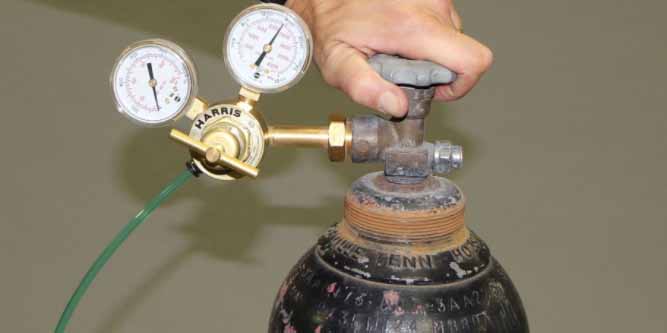
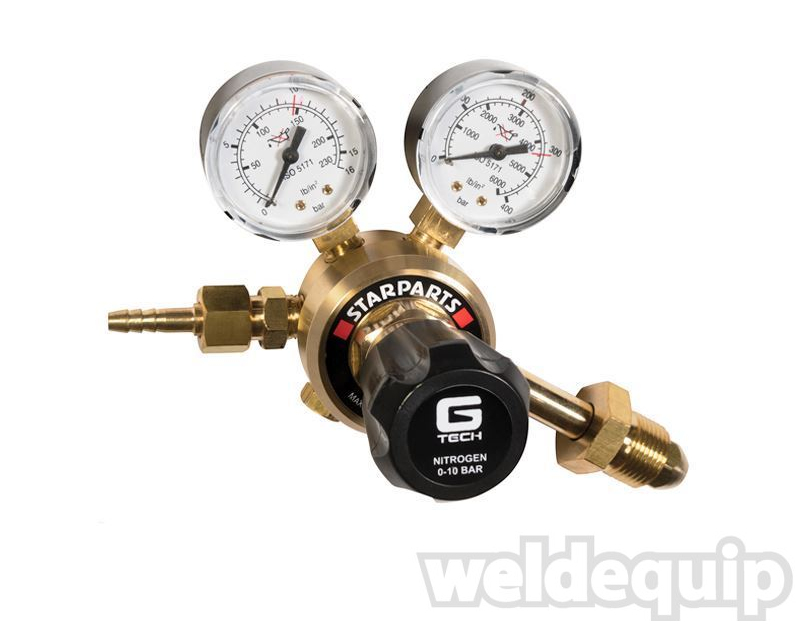
The pressure regulator acts as a gatekeeper, reducing the high pressure inside the cylinder to a safe and usable level for your application. It allows you to precisely control the output pressure, ensuring that you don't exceed the limitations of your equipment.
Diagnosis: Identifying the Need for a Regulator
The diagnosis is straightforward: if you are connecting a high-pressure gas cylinder to any system that operates at a lower pressure, you need a regulator. There is no debate. There is no work around. It is the law, both naturally and in many jurisdictions.
Here's how to confirm the need for a regulator in common situations:
Scenario 1: Pressure Testing HVAC Systems
Symptoms:
- You have a nitrogen cylinder and a manifold gauge set for HVAC work.
- You need to check for leaks in refrigerant lines.
Diagnosis: HVAC systems operate at relatively low pressures (typically below 500 PSI). Connecting a nitrogen cylinder (often over 2000 PSI) directly will ruin the system and risk explosion.
Scenario 2: Inflating Tires (Uncommon, but Possible)
Symptoms:
- You have a nitrogen cylinder (e.g., for racing applications).
- You want to inflate your car or bicycle tires.
Diagnosis: Car tires typically require 30-40 PSI, and bicycle tires even higher, but still far below cylinder pressure. Direct connection is extremely dangerous.
Scenario 3: Welding and Cutting
Symptoms:
- You're using nitrogen as a shielding gas in welding.
- You're using nitrogen for plasma cutting.
Diagnosis: Welding and cutting equipment requires precise gas flow and pressure regulation. Attempting to use a nitrogen cylinder without a regulator will result in inconsistent welds, poor cuts, and potential damage to your equipment.
DIY Troubleshooting (Primarily Related to Regulator Function)
Let's assume you already have a regulator, but you're experiencing issues. Here are some common problems and potential DIY fixes. Always shut off the cylinder valve before attempting any of these fixes.
Problem 1: No Gas Flow Despite Open Cylinder Valve
Possible Causes:
- Regulator is closed: Seems obvious, but double-check that the regulator adjusting knob is turned to increase pressure.
- Cylinder valve not fully open: Some cylinder valves require multiple turns to fully open.
- Regulator is faulty: The internal mechanism may be stuck or damaged.
- Obstruction in the regulator inlet: Debris may be blocking the gas flow.
- Empty Cylinder
DIY Fixes:
- Verify Regulator Setting: Turn the regulator adjusting knob clockwise to increase the output pressure. Observe the output pressure gauge.
- Fully Open Cylinder Valve: Turn the cylinder valve counterclockwise until it stops.
- Tap the Regulator (Gently!): Sometimes, a gentle tap on the regulator body can dislodge any stuck components.
- Check the cylinder gauge: If the cylinder gauge is low, the cylinder is empty.
When to Call a Professional: If none of these fixes work, the regulator is likely faulty and needs to be professionally repaired or replaced. Do not attempt to disassemble the regulator yourself.
Problem 2: Unstable Output Pressure (Fluctuating Gauge)
Possible Causes:
- Leaking connections: A leak anywhere in the system after the regulator can cause pressure fluctuations.
- Faulty regulator diaphragm: The diaphragm inside the regulator may be damaged or leaking.
- Excessive flow demand: The downstream application is demanding more gas than the regulator can supply.
DIY Fixes:
- Check for Leaks: Use a soapy water solution to check all connections (regulator to cylinder, regulator to hose, hose to application) for leaks. Bubbles indicate a leak. Tighten connections or replace fittings as needed.
- Adjust Flow Rate (if applicable): If the downstream application has a flow control valve, reduce the flow rate and see if the pressure stabilizes.
When to Call a Professional: If you've eliminated leaks and the pressure is still unstable, the regulator likely has a damaged diaphragm and needs professional repair or replacement. Attempting to fix a diaphragm yourself is extremely dangerous.
Problem 3: Regulator Creep (Output Pressure Slowly Increases Even When Downstream Valve is Closed)
Possible Causes:
- Leaking regulator seat: The internal valve that controls gas flow may not be sealing properly.
- Faulty regulator diaphragm: A small leak in the diaphragm can also cause creep.
DIY Fixes: Unfortunately, there are no safe DIY fixes for regulator creep. This indicates a serious internal problem.
When to Call a Professional: Immediately stop using the regulator and have it inspected and repaired or replaced by a qualified technician. Regulator creep is a dangerous condition that can lead to over-pressurization and equipment failure.
Problem 4: Difficulty Adjusting Output Pressure
Possible Causes:
- Stiff adjusting knob: The adjusting knob may be corroded or damaged, making it difficult to turn.
- Regulator is seized: Internal components may be frozen, preventing adjustment.
DIY Fixes:
- Lubricate the Adjusting Knob: Apply a small amount of penetrating oil (like WD-40) to the adjusting knob threads. Let it sit for a few minutes, then try turning the knob again.
- Tap the Regulator Body (Gently!): Sometimes, a gentle tap can loosen stuck components.
When to Call a Professional: If lubrication and tapping don't work, the regulator is likely seized internally and needs professional repair or replacement.
Important Safety Precautions
Working with compressed gases can be dangerous. Always follow these safety precautions:
- Wear appropriate PPE: Always wear safety glasses and gloves when working with compressed gases.
- Handle cylinders with care: Never drop or roll cylinders. Use a cylinder cart for transport.
- Secure cylinders properly: Always secure cylinders in an upright position to prevent them from falling over.
- Store cylinders in a well-ventilated area: Store cylinders away from heat sources and flammable materials.
- Never modify or tamper with regulators: Regulators are precision instruments and should only be repaired by qualified technicians.
- Always bleed the pressure from the system before disconnecting anything: Releasing pressure safely, away from people, prevents injury.
- Know the gas you are working with and its properties Each gas is different.
- Read the instructions Always read the instructions of any regulator or equipment being used.
Choosing the Right Regulator
Selecting the right regulator is crucial for safe and effective operation. Consider these factors:
- Gas type: Regulators are designed for specific gases. Make sure the regulator is compatible with nitrogen.
- Inlet pressure: The regulator's inlet pressure rating must be higher than the cylinder pressure.
- Outlet pressure: The regulator's outlet pressure range must match the requirements of your application.
- Flow rate: The regulator's flow rate must be sufficient for your application.
- Connection type: Ensure the regulator connections match the cylinder valve and your downstream equipment.
- Quality: Invest in a reputable brand for reliability and safety.
Professional Intervention is Critical When:
Remember, some problems are beyond DIY repair. It's crucial to know when to call a professional. Seek professional help immediately when:
- You suspect internal regulator damage: This includes creep, unstable pressure, or difficulty adjusting the pressure.
- The regulator has been dropped or damaged: Even if the regulator appears to be working, internal damage may be present.
- You are unsure about the proper repair procedures: When in doubt, err on the side of safety and consult a professional.
- There is a leak coming from the body of the regulator: Do not attempt to fix this yourself.
Understanding the necessity of a pressure regulator and knowing basic troubleshooting steps can empower you to work safely and effectively with nitrogen cylinders. But always prioritize safety and don't hesitate to seek professional help when needed.
By understanding the principles and taking necessary precautions, you can safely and effectively use nitrogen cylinders for a variety of applications.
Stay safe and happy DIY-ing!