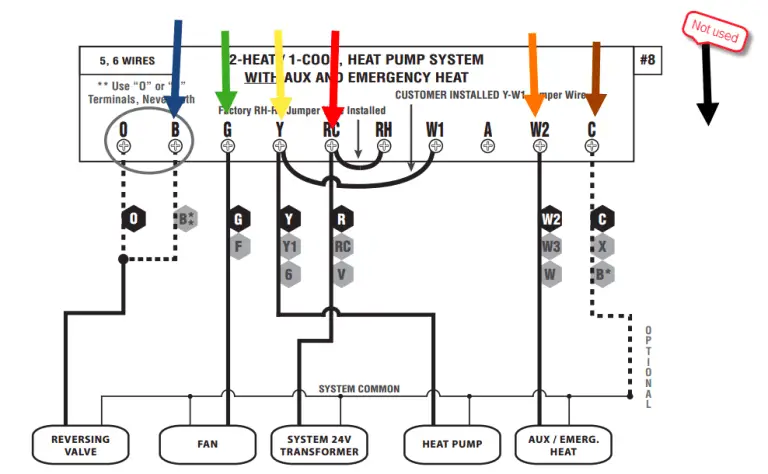
Wiring Diagram Goodman Furnace

Understanding Your Goodman Furnace Wiring Diagram: A Homeowner's Guide
Replacing or upgrading your furnace is a significant investment. Understanding the basics of your furnace, including the wiring diagram, can empower you to make informed decisions and communicate effectively with HVAC professionals. This guide focuses specifically on Goodman furnaces, a popular brand known for its affordability and reliability. While you should *never* attempt electrical repairs yourself unless you are a qualified electrician, understanding the wiring diagram can help you troubleshoot basic issues and understand the diagnostic process.
Why is the Wiring Diagram Important?
The wiring diagram is essentially a roadmap for the electrical system within your Goodman furnace. It illustrates how all the components, such as the blower motor, gas valve, igniter, and various safety switches, are interconnected. By understanding this diagram, you can:
- Troubleshoot problems: Identify potential causes of furnace malfunctions.
- Communicate with technicians: Accurately describe symptoms and potential issues.
- Verify repairs: Ensure that repairs are done correctly and safely.
- Understand system operation: Gain a better understanding of how your furnace works.
Locating Your Goodman Furnace Wiring Diagram
The wiring diagram for your specific Goodman furnace model is typically located inside the unit itself. Look for it:
- On the inside of the access panel(s).
- Pasted to the blower housing.
- Inside the control box.
The diagram is usually a folded piece of paper or a sticker. It is *crucial* to use the diagram specific to your model, as wiring configurations can vary even within the Goodman brand.
Decoding the Diagram: Key Components and Symbols
Goodman furnace wiring diagrams use standardized symbols to represent different components. Here's a breakdown of some common elements:
- Transformers: Step down the voltage from your household current (typically 120V) to the voltage used by the control board and other components (usually 24V). Represented by two interlocking coils.
- Control Board: The brain of the furnace, controlling the sequence of operations. Often depicted as a rectangle with numerous connection points.
- Blower Motor: Circulates heated air throughout your home. Represented by a circle with lines indicating the motor windings.
- Gas Valve: Controls the flow of gas to the burners. Often depicted as a solenoid.
- Igniter: Heats up to ignite the gas. May be a hot surface igniter (HSI) or a spark igniter. Represented by a resistor symbol.
- Flame Sensor: Detects the presence of a flame and ensures the gas valve stays open. Depicted as a rod extending into the flame.
- Limit Switch: A safety device that shuts off the furnace if it overheats. Represented as a switch symbol.
- Pressure Switch: Monitors the pressure in the venting system to ensure proper venting. Represented as a switch symbol.
- Thermostat Connections: Connections for the wires from your thermostat (R, W, G, Y, C).
The diagram will also use different colored lines to represent different wires. A legend on the diagram will explain the color coding.
Common Goodman Furnace Issues and the Wiring Diagram
Here are some common Goodman furnace problems and how understanding the wiring diagram can help:
- Furnace Won't Turn On: Check the transformer for proper voltage output. Use the diagram to trace the power supply from the transformer to the control board.
- Blower Motor Not Working: Check the blower motor capacitor and the wiring connections to the motor. The diagram will show you the correct wiring configuration.
- Furnace Short Cycling (Turning On and Off Repeatedly): Check the limit switch. The diagram will show you its location and how it's wired into the control circuit.
- No Heat: Check the igniter and flame sensor. The diagram will help you identify these components and their connections.
Important Safety Note: Always disconnect power to the furnace at the circuit breaker before attempting any troubleshooting or repairs. If you are not comfortable working with electricity, contact a qualified HVAC technician.
Goodman Furnace Models: A Brief Overview
Goodman offers a range of furnace models to suit different needs and budgets. Here's a brief look at some popular options:
- Goodman GMVM97: A high-efficiency modulating gas furnace with an AFUE rating of up to 98%. Offers precise temperature control and quiet operation.
- Goodman GMEC96: A mid-efficiency gas furnace with an AFUE rating of up to 96%. A good balance of performance and affordability.
- Goodman GCSS96: A standard-efficiency gas furnace with an AFUE rating of up to 96%. A budget-friendly option for warmer climates.
When choosing a Goodman furnace, consider the AFUE rating, which indicates the furnace's energy efficiency. A higher AFUE rating means lower energy bills. Also, consider the size of your home and the climate you live in.
Comparing Goodman to Other Brands
Goodman is often compared to other popular furnace brands such as Carrier, Trane, and Rheem. Here's a general comparison:
- Goodman: Known for its affordability and value. Often uses readily available parts, making repairs relatively easy.
- Carrier: A premium brand known for its innovation and advanced features. Offers high-efficiency models with variable-speed blowers and zoning capabilities.
- Trane: Another premium brand with a reputation for durability and reliability. Offers a wide range of models with advanced features.
- Rheem: A well-established brand offering a good balance of performance and affordability. Known for its innovative features and ease of installation.
Ultimately, the best furnace brand for you will depend on your specific needs, budget, and priorities.
Warranty Information
Goodman furnaces typically come with a limited warranty that covers parts for a certain period of time (usually 5-10 years). Some models may also offer a limited lifetime warranty on the heat exchanger. Be sure to register your furnace with Goodman to activate the warranty and keep records of all maintenance and repairs.
Maintenance Tips for Your Goodman Furnace
Regular maintenance is essential for keeping your Goodman furnace running efficiently and reliably. Here are some key maintenance tasks:
- Change the Air Filter: Replace the air filter every 1-3 months, depending on usage and air quality. A dirty air filter can restrict airflow and cause the furnace to overheat.
- Inspect the Blower Motor: Check the blower motor for dust and debris. Clean the motor as needed to ensure proper airflow.
- Clean the Burners: Inspect the burners for dirt and debris. Clean the burners as needed to ensure proper combustion.
- Check the Flue Vent: Inspect the flue vent for obstructions. Ensure that the vent is properly sealed to prevent carbon monoxide leaks.
- Schedule Professional Maintenance: Have your furnace professionally inspected and maintained annually by a qualified HVAC technician.
Understanding SEER, AFUE, and HSPF
When evaluating HVAC systems, you'll encounter acronyms like SEER, AFUE, and HSPF. Understanding these ratings will help you compare different models:
- AFUE (Annual Fuel Utilization Efficiency): This rating applies to furnaces and measures how efficiently the furnace converts fuel (natural gas or propane) into heat. A higher AFUE rating means greater efficiency and lower fuel bills.
- SEER (Seasonal Energy Efficiency Ratio): This rating applies to air conditioners and measures how efficiently the air conditioner cools your home. A higher SEER rating means greater efficiency and lower electricity bills.
- HSPF (Heating Seasonal Performance Factor): This rating applies to heat pumps and measures how efficiently the heat pump heats your home. A higher HSPF rating means greater efficiency and lower heating bills.
For furnaces, look for models with a high AFUE rating to save money on your heating bills. The minimum AFUE rating currently required by the U.S. Department of Energy is 78%, but many high-efficiency models have ratings of 90% or higher.
Conclusion
Choosing a new furnace is a complex decision. Understanding the basics of your Goodman furnace, including the wiring diagram, can help you make informed choices and communicate effectively with HVAC professionals. Remember to prioritize safety and consult with a qualified technician for any repairs or troubleshooting you are not comfortable with. By considering factors like AFUE rating, warranty, and maintenance needs, you can select a Goodman furnace that will provide reliable and efficient heating for years to come. Remember to always consult with licensed and experienced HVAC technicians for installation, repairs, and maintenance to ensure optimal performance and safety.