Wood Burning Stove Outside Air Intake
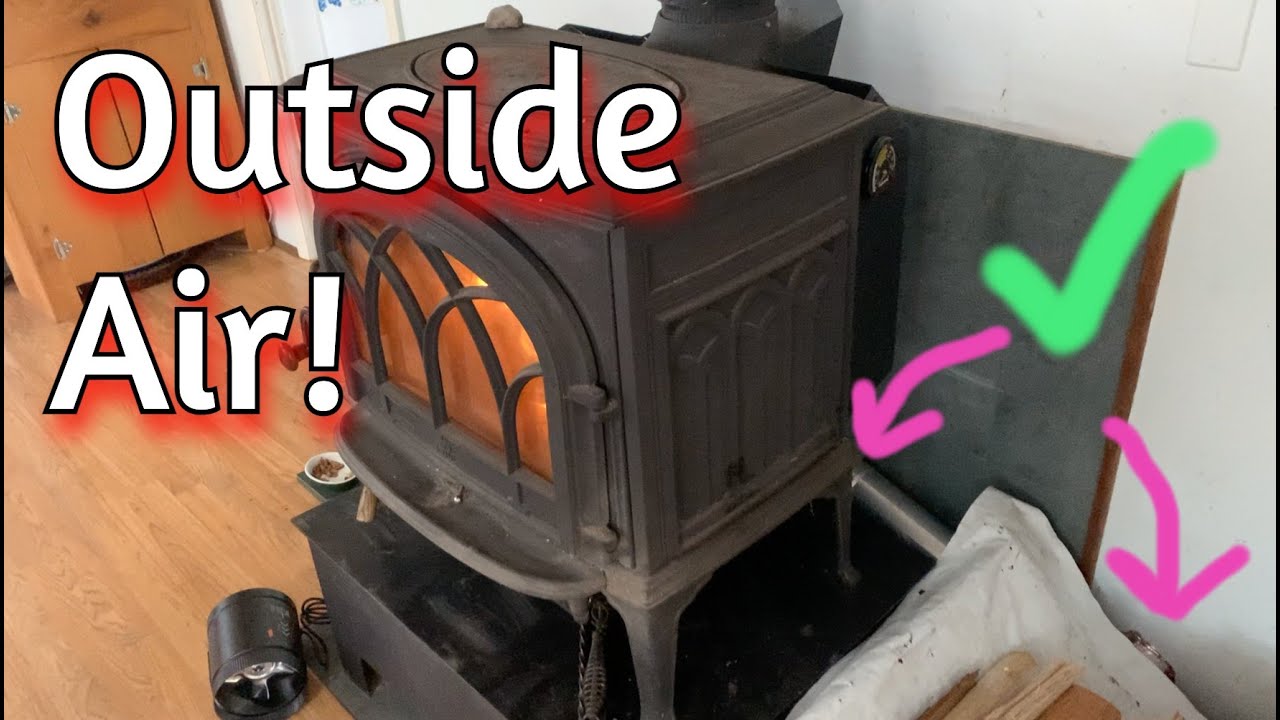
Wood-burning stoves offer a cozy and potentially cost-effective heating solution, but their efficiency can be significantly impacted by how they draw combustion air. An often-overlooked component with a huge influence on efficiency and indoor air quality is the outside air intake. This article delves into the benefits, installation considerations, and cost savings associated with integrating an outside air intake into your wood-burning stove setup.
Why Outside Air Intake Matters for Your Wood-Burning Stove
Traditional wood stoves often draw combustion air from inside the house. While seemingly inconsequential, this process creates several challenges:
- Negative Air Pressure: As the stove pulls air in for combustion, it creates negative pressure within the home. This draws cold air in through cracks around windows and doors, undermining your home's insulation and increasing your overall heating bill.
- Reduced Heating Efficiency: The stove has to heat the cold air drawn from outside *before* it can efficiently burn the wood. This reduces the stove's heating capacity and increases fuel consumption.
- Backdrafting Potential: In tightly sealed homes, negative pressure can reverse the flow of exhaust in other combustion appliances, like furnaces or water heaters, potentially leading to dangerous carbon monoxide buildup.
- Compromised Indoor Air Quality: Drawing air from inside the house can pull dust, allergens, and other pollutants into the combustion process, potentially impacting indoor air quality.
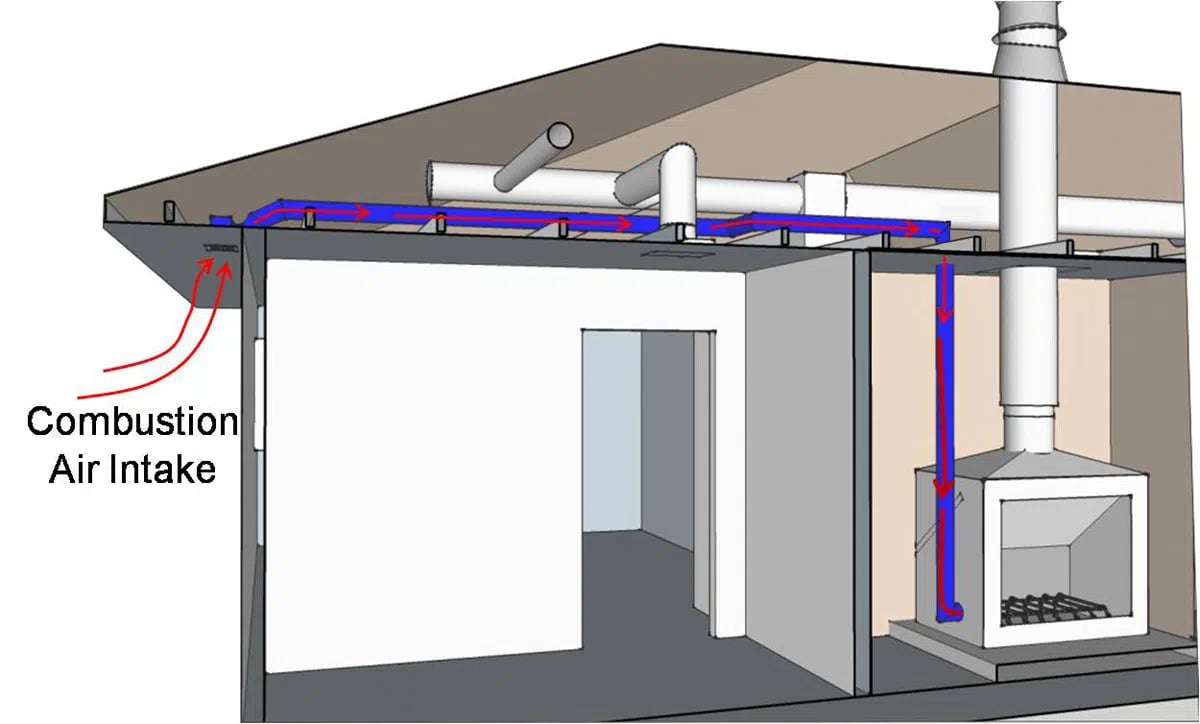
An outside air intake addresses these issues by providing a dedicated source of fresh air directly to the stove, isolating the combustion process from the home's internal environment.
The Benefits of an Outside Air Intake
Installing an outside air intake for your wood-burning stove offers a multitude of advantages:
- Improved Heating Efficiency: By using outside air for combustion, the stove doesn't have to work as hard to heat the air, resulting in more efficient burning and reduced wood consumption. Studies have shown efficiency gains of up to 10-20% with a properly installed outside air intake.
- Elimination of Negative Air Pressure: A dedicated air supply eliminates negative pressure, preventing cold air infiltration and drafts, which leads to a more comfortable and energy-efficient home.
- Enhanced Safety: By preventing negative pressure, you minimize the risk of backdrafting in other fuel-burning appliances, ensuring a safer living environment.
- Improved Indoor Air Quality: Isolating the combustion process reduces the circulation of dust and allergens within the home.
- More Consistent Burn: An outside air intake provides a consistent supply of air, leading to a more predictable and even burn, reducing the need for frequent adjustments.
Installation Considerations for Outside Air Intakes
Proper installation is crucial for maximizing the benefits of an outside air intake. Here are some key considerations:
- Location of Intake: The intake should be located away from potential sources of contaminants, such as dryer vents, exhaust fans, and roadways. Ideally, it should be placed on the windward side of the house to ensure a consistent flow of fresh air. It should also be located high enough to avoid being blocked by snow in winter.
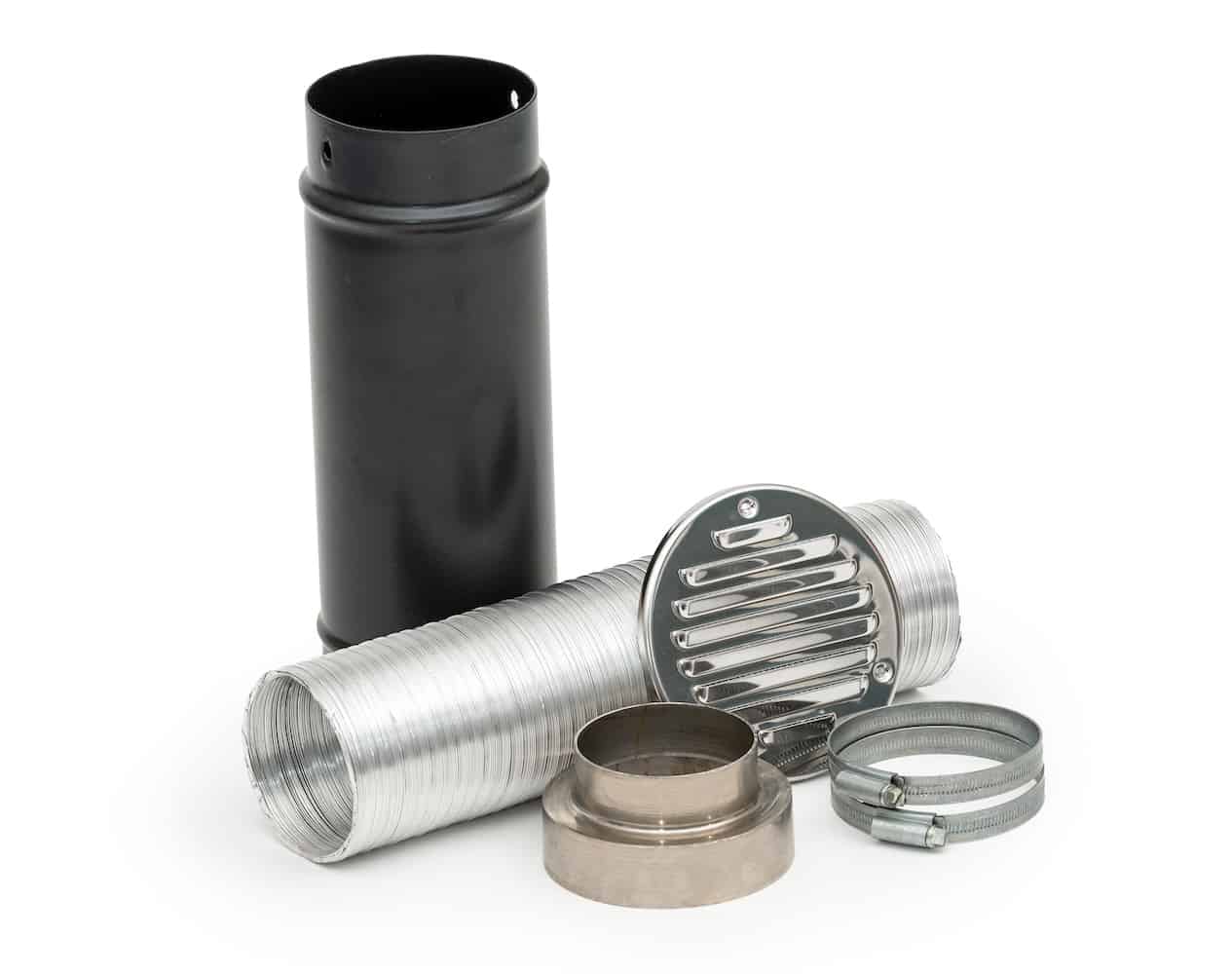
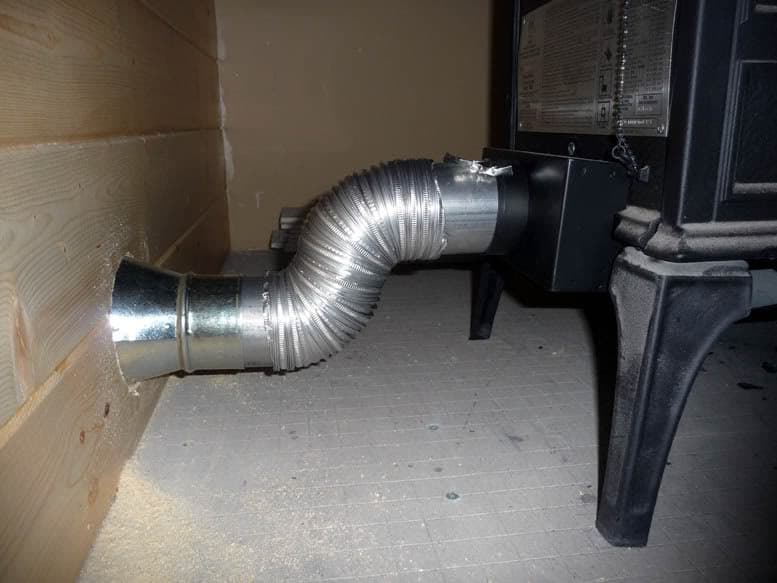
- Ducting Material: Use insulated, non-combustible ducting, such as galvanized steel or aluminum, to connect the intake to the stove. The ducting should be adequately sized to provide sufficient airflow. Consult your stove's manual for specific requirements. Flexible ducting is generally not recommended, as it can restrict airflow.
- Ducting Size: The diameter of the ducting is crucial for optimal performance. Most stoves require a 4-inch or 6-inch diameter duct. Consult your stove’s manufacturer specifications for the correct sizing. Undersized ducting will restrict airflow and negate the benefits of the intake.
- Air Damper: Installing an air damper allows you to control the amount of air entering the stove, which can be useful for fine-tuning the burn and preventing excessive draft during windy conditions.
- Screening: A screen should be installed at the intake opening to prevent insects, rodents, and debris from entering the ducting.
- Professional Installation: While DIY installation is possible, it's often recommended to hire a qualified HVAC contractor or wood stove installer to ensure proper installation and adherence to local building codes. Incorrect installation can negate the benefits of the intake and even create safety hazards.
DIY vs. Professional Installation: Weighing the Options
For homeowners with experience in home improvement projects, a DIY installation may seem tempting. However, it's important to honestly assess your skills and knowledge before proceeding. Consider the following:
- Your Skill Level: Are you comfortable working with ducting, drilling holes through walls, and understanding building codes?
- Time Commitment: Installation can take several hours, depending on the complexity of the project.
- Potential Risks: Improper installation can lead to reduced efficiency, safety hazards, and code violations.
Hiring a professional offers several advantages:
- Expertise and Experience: Professionals have the knowledge and experience to ensure proper installation and optimal performance.
- Code Compliance: Professionals are familiar with local building codes and regulations.
- Warranty: Professional installations often come with a warranty, providing peace of mind.
Cost Analysis and ROI
The cost of installing an outside air intake can vary depending on factors such as the complexity of the installation, the materials used, and whether you hire a professional. On average, expect to spend between $200 and $800 for a complete installation. This includes the cost of ducting, fittings, an air damper (if desired), and labor (if hiring a professional).
While the initial investment may seem significant, the long-term ROI can be substantial. By increasing heating efficiency by 10-20%, you can significantly reduce your wood consumption and save money on fuel costs. Over time, these savings can more than offset the cost of the installation. Furthermore, the improved comfort, enhanced safety, and improved indoor air quality provide additional intangible benefits.
Example ROI Calculation:
Assume you currently spend $500 per year on firewood. A 15% increase in efficiency due to an outside air intake would result in annual savings of $75. Over a 5-year period, this would translate to $375 in savings, potentially covering a significant portion of the installation cost.
Smart Home Integration and Energy Monitoring
Integrating your wood-burning stove with a smart home system can further enhance energy efficiency and convenience. While direct integration is less common than with furnaces or heat pumps, smart sensors and thermostats can indirectly improve the performance of your wood-burning stove.
- Temperature Sensors: Strategically placed temperature sensors can monitor the temperature in different areas of your home, allowing you to optimize the stove's output and prevent overheating.
- Smart Thermostats: If you have a supplemental heating system, such as a furnace or heat pump, a smart thermostat can automatically adjust the temperature based on the stove's output, ensuring consistent comfort and preventing unnecessary energy consumption.
- Air Quality Monitoring: Smart air quality monitors can track indoor air quality and alert you to potential problems, such as excessive smoke or carbon monoxide levels.
While no true "smart" wood stoves are currently available, using smart home devices to monitor and manage the stove's performance can lead to significant energy savings and improved comfort. These types of sensors can cost as little as $20 each, which is more than worth the peace of mind.
Government Incentives and Rebates
Depending on your location, you may be eligible for government incentives or rebates for installing energy-efficient heating equipment, including wood-burning stoves with outside air intakes. Check with your local utility company or energy efficiency program for available incentives. Many states and municipalities offer rebates for energy-efficient upgrades, especially those that reduce reliance on fossil fuels. The Energy Star website is a great resource for finding information on available incentives in your area.
Conclusion: A Smart Investment for a Warmer Home
Installing an outside air intake for your wood-burning stove is a smart investment that can improve heating efficiency, enhance safety, and improve indoor air quality. While the initial cost may seem daunting, the long-term ROI can be substantial, making it a worthwhile upgrade for any homeowner looking to save money on energy costs and create a more comfortable and sustainable living environment. By carefully considering the installation requirements, cost analysis, and potential for smart home integration, you can make an informed decision and enjoy the many benefits of a properly installed outside air intake.