York Age By Serial Number
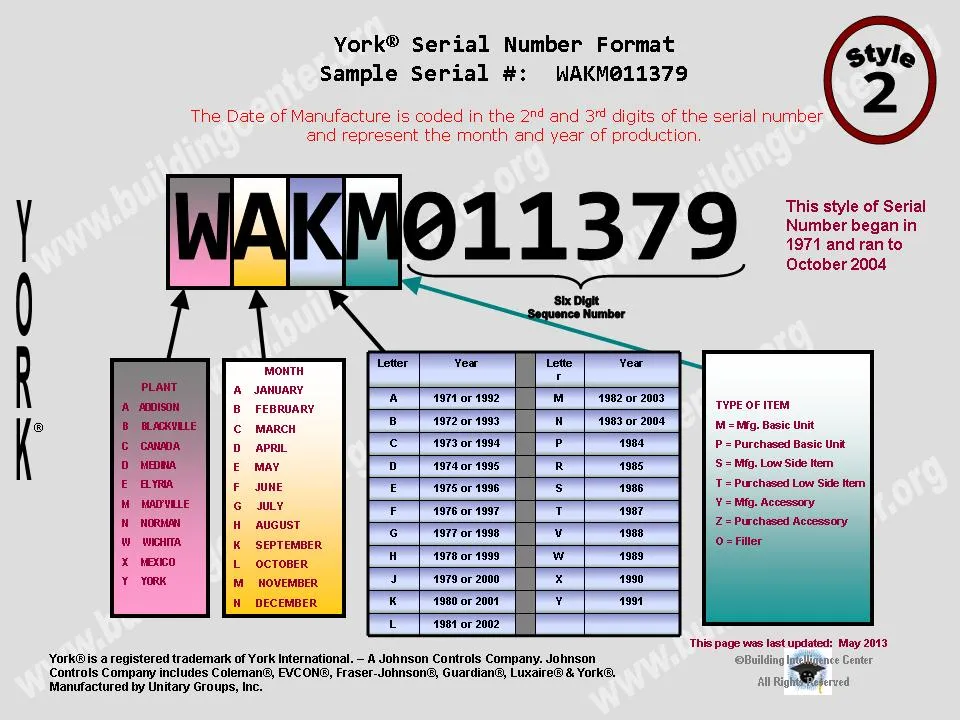
Determining the age of a York HVAC system using its serial number is a critical task for homeowners, HVAC technicians, and facility managers alike. Knowing the age helps estimate remaining lifespan, plan for potential replacements, assess energy efficiency compared to modern standards, and find compatible replacement parts. While York doesn't offer a public, universal lookup tool, understanding how their serial number system works can unlock this valuable information. This article provides a detailed guide to deciphering York serial numbers, along with tips for verifying your findings and accessing additional resources.
Understanding York Serial Number Formats
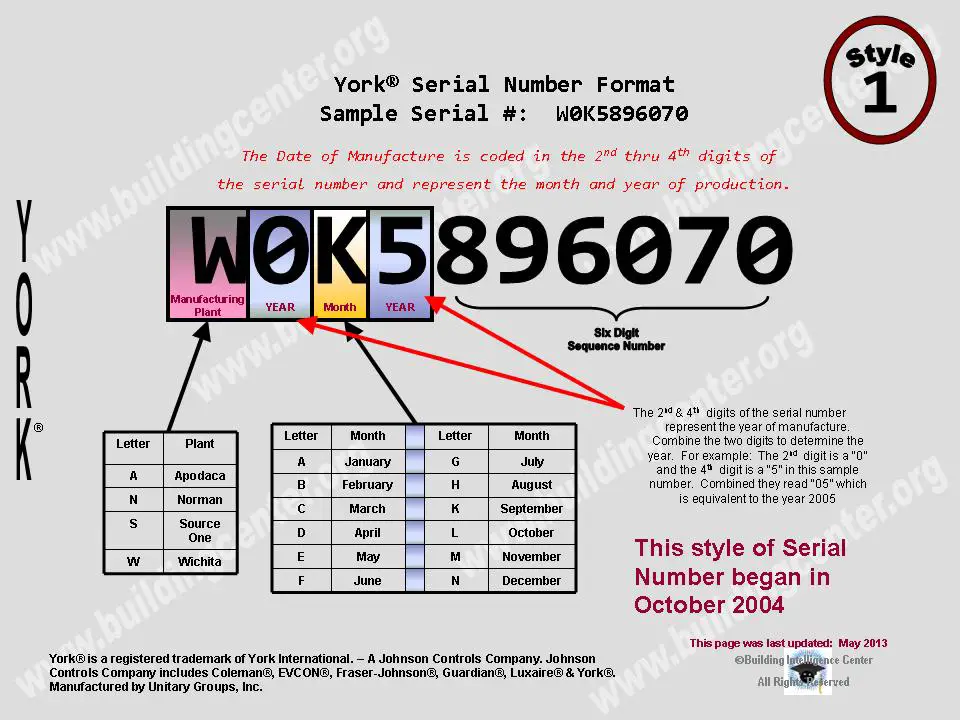
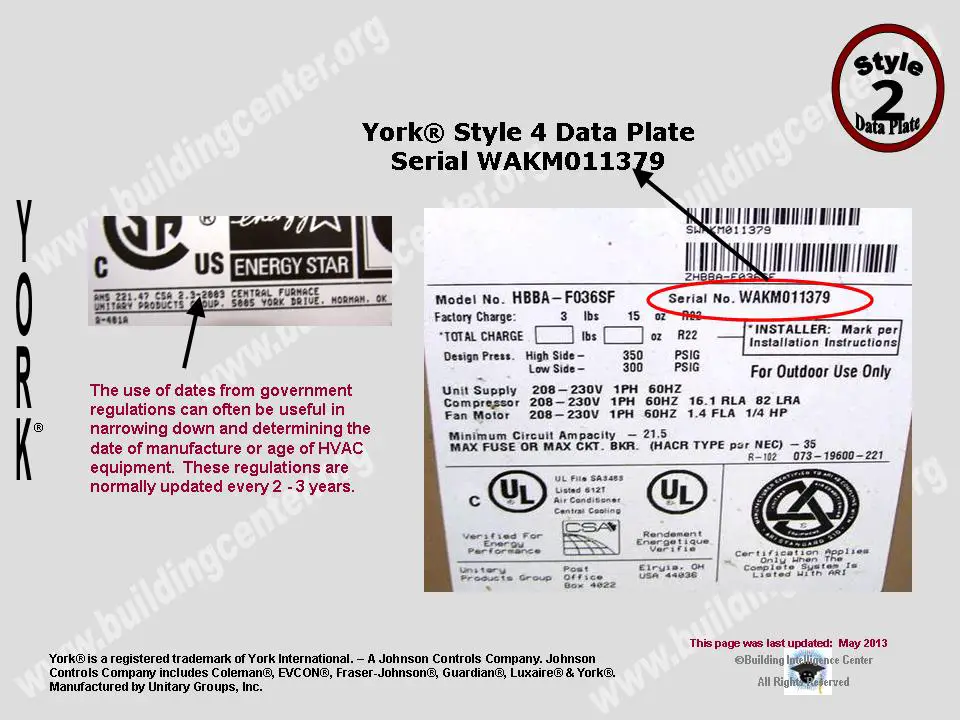
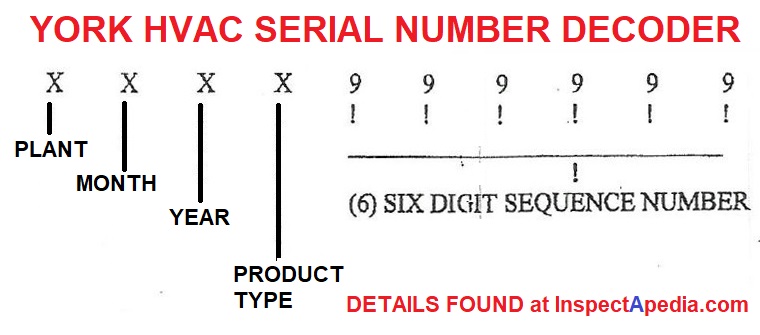
York, a well-known brand under the Johnson Controls umbrella, has used various serial number formats over the years. These formats typically include a combination of letters and numbers that encode the manufacturing date. Knowing the format used for *your* specific unit is the first step.
Here are the most common formats you'll encounter:
Format 1: Letter-Letter-Number-Number-Letter-Number-Number-Number-Number
This is one of the older, yet still prevalent, formats. The first two letters represent the week and year of manufacture. For example:
Example: WA12A12345
- WA: Here, 'W' indicates the week, and 'A' indicates the year. We need to consult the York date code tables to determine the precise week and year.
- 12: Represents the month. '12' would mean December.
- A: A manufacturing location or other internal code (less relevant for age determination).
- 12345: The sequential unit number.
Determining the year from the letter code requires looking up the York year code chart. These charts are available online through various HVAC forums, technical documents, and some HVAC parts distributors. The letter 'A' could signify a specific year within a repeating cycle, usually spanning several decades. This emphasizes the necessity of consulting the specific York date code chart, as 'A' will mean different years depending on the range you're looking at.
Format 2: Number-Letter-Letter-Number-Number-Number-Number-Number
In this format, the initial number signifies the last digit of the year, followed by two letters designating the month.
Example: 5AL123456
- 5: Represents the last digit of the year. This means it could be 2005, 2015, or even 1995. You’ll need to consider the unit's overall condition and features to make an educated guess and check the York date code table.
- AL: Indicates the month. Again, you'll need to consult the York date code tables to determine the specific month represented by "AL."
- 123456: The sequential unit number.
Format 3: Four Numbers - Letter - Numbers
This simpler format is often found on newer York units. The first four numbers usually represent the year and week of manufacture.
Example: 2305A1234
- 2305: '23' represents the year 2023, and '05' represents the 5th week of the year.
- A: A manufacturing location or other internal code.
- 1234: The sequential unit number.
Decoding the Letter Codes: The Importance of York Date Code Charts
The crucial step in deciphering York serial numbers involves using York date code charts. These charts correlate the letter combinations to specific months and years. These charts aren't always readily available on York's official website but can be found on HVAC technician forums, parts supplier websites, and in some older York service manuals.
Caution: It's vital to use a chart that corresponds to the *approximate* age of your unit. The letter codes recycle over time, so a letter combination could represent multiple years across different decades. Look for clues like the unit's physical appearance, the type of refrigerant it uses (R-22, R-410A, etc.), and any available installation or service records to narrow down the possibilities. Check online for similar models and their release dates.
Locating the Serial Number on Your York Unit
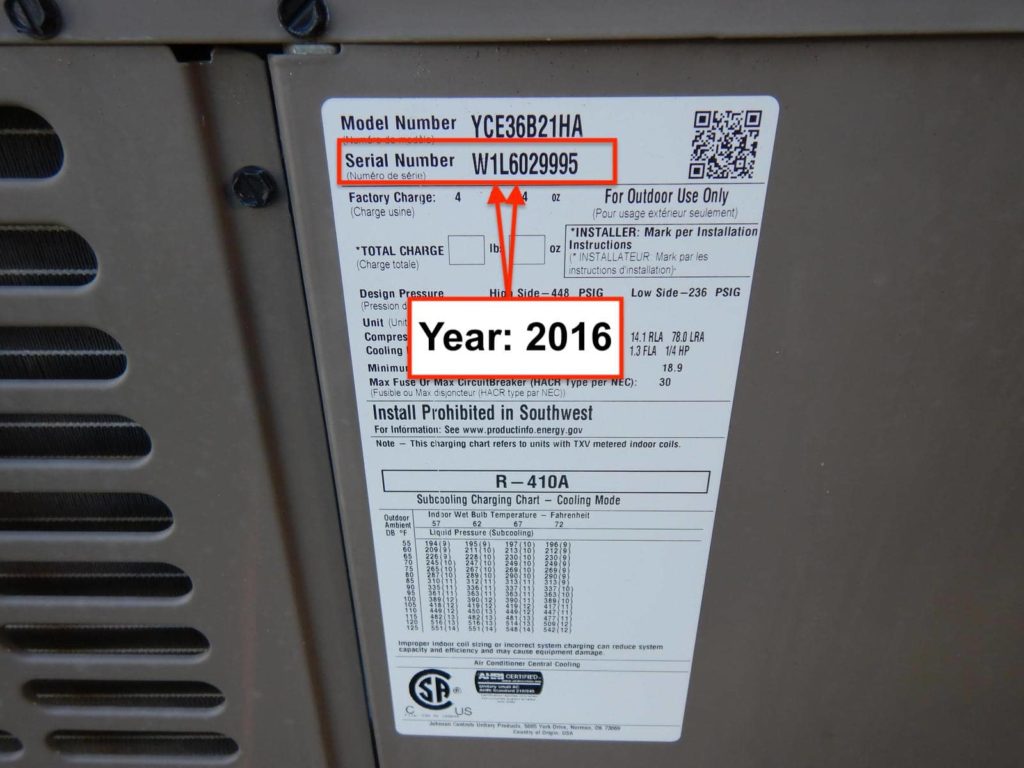
The serial number is typically found on a nameplate or sticker attached to the unit. The location varies depending on the type of equipment:
- Air Conditioners (Outdoor Condensing Units): Look on the side or back of the unit, often near the bottom.
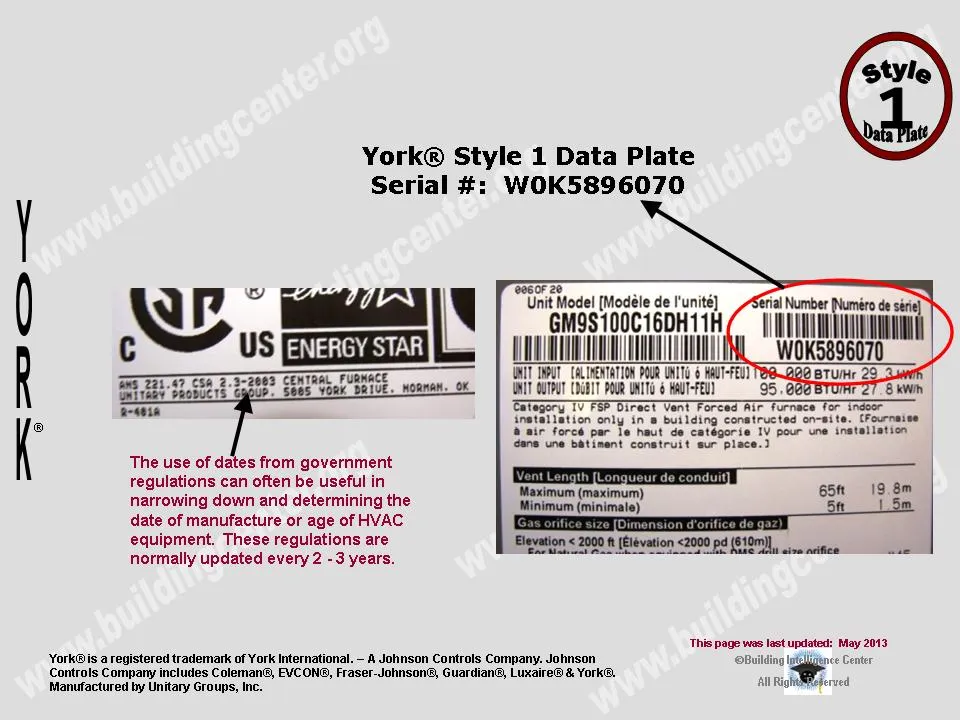
- Furnaces: The nameplate is usually inside the cabinet, often on the blower compartment door or near the burner assembly. *Always disconnect power before opening the furnace cabinet.*
- Air Handlers: Similar to furnaces, the nameplate is usually inside the cabinet. *Disconnect power first.*
- Heat Pumps (Outdoor Units): Look on the side or back, similar to air conditioners.
Verifying Your Findings
Once you've deciphered the serial number and determined the likely manufacturing date, it's a good idea to verify your findings. Here are some ways to do that:
- Check Installation or Service Records: These records often include the installation date, which should be close to the manufacturing date.
- Contact a Local York Dealer: A York dealer may have access to more detailed information about your unit based on the serial number. Provide them with the model and serial number.
- Compare to Similar Models: Search online for your unit's model number. See if you can find information about when that model was manufactured. Online forums often contain detailed discussions and shared knowledge from technicians.
- Refrigerant Type: The type of refrigerant used can indicate the age. R-22 was phased out, so if your unit uses R-22, it's likely older than units using R-410A or newer refrigerants. R-410A is now being phased out for R-32 and other refrigerants.
Why Knowing the Age Matters
Understanding the age of your York HVAC system provides several benefits:
- Lifespan Estimation: Most HVAC systems have a lifespan of 15-20 years. Knowing the age helps you anticipate when a replacement might be necessary. Replacing before a catastrophic failure can save money on emergency repairs and allow you to plan your budget.
- Efficiency Assessment: Older units are often less energy-efficient than newer models. If your unit is nearing the end of its lifespan, upgrading to a newer, more efficient model can significantly reduce your energy bills. Modern units have higher SEER (Seasonal Energy Efficiency Ratio) and HSPF (Heating Seasonal Performance Factor) ratings, indicating better efficiency.
- Repair vs. Replace Decision: When a major repair is needed, knowing the age helps you decide whether to repair the existing unit or replace it. If the unit is old, investing in a new, more efficient system is often the better long-term decision. Consider the cost of the repair, the age of the unit, and the potential energy savings from a new system.
- Part Availability: For older units, finding replacement parts can be challenging. Knowing the age helps you understand the potential difficulty in sourcing parts and the likelihood of future repair issues.
- Property Value: A newer, energy-efficient HVAC system can increase your property value. Potential buyers appreciate the reduced energy costs and the peace of mind that comes with a newer system.
Cost Considerations: Repair vs. Replacement
When facing a major repair on an older York HVAC system, carefully weigh the cost of the repair against the cost of replacing the unit. Consider these factors:
- Repair Cost: Get a detailed estimate from a qualified HVAC technician. Inquire about the warranty on the repair.
- Replacement Cost: Obtain quotes from multiple contractors for a new system installation. Factor in the cost of the unit, labor, and any necessary modifications to your ductwork or electrical system.
- Energy Savings: Calculate the potential energy savings from a new, more efficient system. Use online energy calculators or consult with an HVAC professional.
- Long-Term Reliability: A new system will likely be more reliable and require fewer repairs in the long run.
Example: Imagine your 18-year-old York air conditioner needs a new compressor, costing $2,000 to repair. A new, energy-efficient unit costs $5,000 installed, but you estimate it will save you $500 per year in energy costs. In this scenario, replacing the unit might be the better long-term investment, as you'll recoup the additional cost through energy savings and avoid potential future repairs on the aging unit.
Conclusion
Determining the age of your York HVAC system is a valuable exercise that empowers you to make informed decisions about maintenance, repairs, and replacements. By understanding York's serial number formats, utilizing date code charts, and verifying your findings, you can gain insights into your system's remaining lifespan, efficiency, and overall performance. When facing major repairs or considering an upgrade, carefully weigh the costs and benefits to ensure you're making the most cost-effective and energy-efficient choice for your home or building.