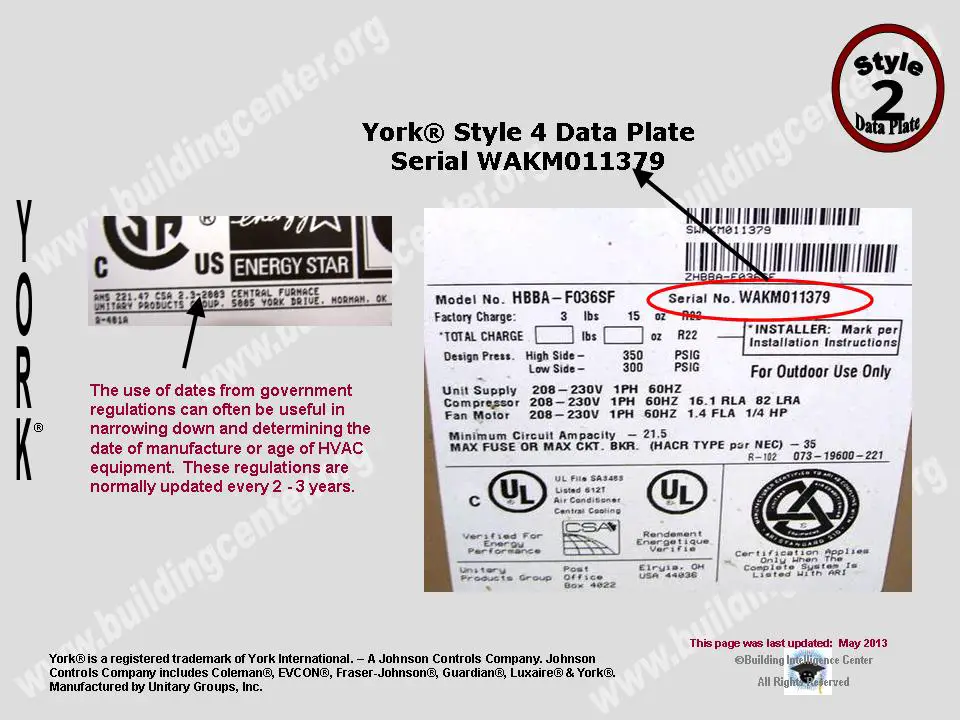
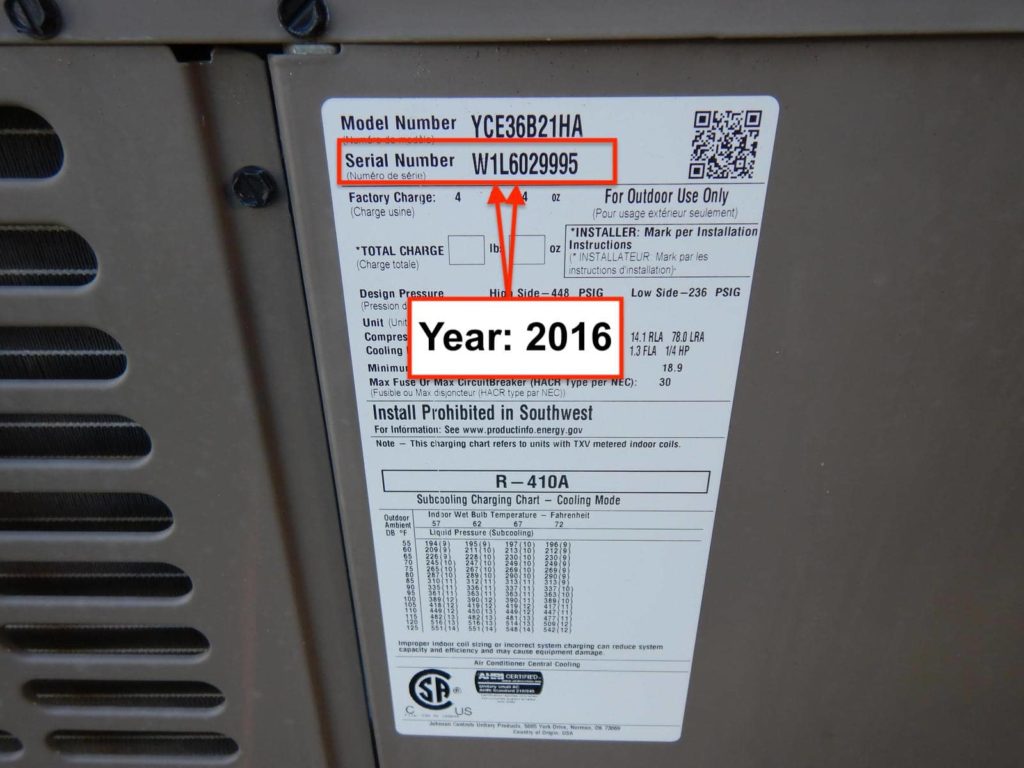
York Air Handler Model Number Nomenclature
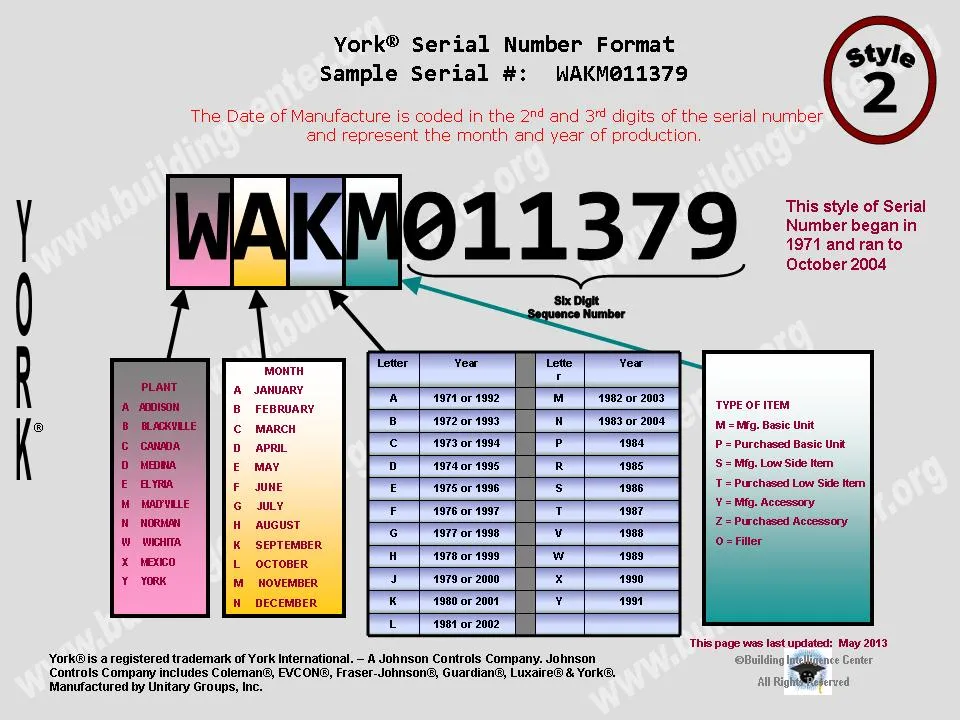
Understanding the model number of your York air handler is key to identifying its specifications, capabilities, and compatibility. This guide breaks down the typical York air handler model number nomenclature, empowering you to decipher its meaning and make informed decisions regarding maintenance, repair, or replacement.
Decoding the York Air Handler Model Number
York, like other HVAC manufacturers, uses a specific coding system to convey important information through the model number. While the exact format may vary slightly depending on the series and year of manufacture, the core elements remain consistent. Let's examine a hypothetical example and dissect each section:
Example Model Number: YHJH48S41S2AAAA
We'll break this down piece by piece to understand what each segment reveals about the air handler.
1. Series Identification (First Few Characters)
The initial characters usually denote the series or product line of the air handler. This is a crucial indicator of the unit's overall design and technology.
In our example, YHJH represents a specific series. The specific meaning of "YHJH" would require consulting York's product documentation, but it typically points to a particular range of features, efficiency levels, and applications. These series identifiers can relate to how efficient or high-end the air handler is.
2. Cabinet Size (Next Two or Three Digits)
The next set of digits often corresponds to the cabinet size or physical dimensions of the air handler. This isn't directly related to its capacity, but it does indicate how much space it occupies and helps determine where it can be installed.
In our example, 48 usually indicates the cabinet width in inches, but it could represent the airflow capacity measured in 100s of CFM. Checking the specific model information is crucial. Generally larger numbers indicate physically larger air handlers.
3. Voltage (One Character)
Next is a single character, indicating the voltage required to power the unit. This is *extremely* important for electrical compatibility. Incorrect voltage can damage the air handler or create a fire hazard.
In our example, S signifies the voltage. "S" commonly represents 208/230V, but always confirm this with the unit's specifications. The voltage tells you the electrical requirements of the unit.
4. Motor Type (One or Two Digits/Characters)
This section of the model number usually specifies the type of blower motor used in the air handler. Different motor types offer varying levels of efficiency and performance. Common motor types include PSC (Permanent Split Capacitor) and ECM (Electronically Commutated Motor).
In our example, 41 represents the motor type. A lower number might represent a lower-efficiency PSC motor, while a higher number often indicates a more advanced ECM motor. ECM motors are more energy-efficient and often offer variable-speed operation, leading to better temperature control and reduced energy consumption. PSC motors are more affordable but are less efficient.
5. Coil Configuration (One Character)
This character usually describes the coil configuration within the air handler, such as its orientation (horizontal, vertical) and the type of refrigerant it's designed to work with.
In our example, S again describes the coil configuration. It could indicate a specific orientation or refrigerant compatibility. Refrigerant is like the "blood" of your AC system, carrying heat from inside to outside. The model number specifies which type the system is compatible with.
6. Design Series/Factory Options (Remaining Characters)
The final section of the model number typically covers design series variations, factory-installed options, and other specific features of the air handler. This section is often more specific to the manufacturer and may require referring to the York product documentation for a complete interpretation.
In our example, 2AAAA could represent a particular design series or factory-installed options. These options can include things like electric heat strips, special filtration systems, or specific control features. These features will come as part of the whole air handler unit from the factory.
Important Considerations
- Consult the Manufacturer's Documentation: The most reliable way to decode a York air handler model number is to consult the official product documentation or contact York directly. The meanings of specific codes can vary between models and production years.
- Verify Voltage: Double-check the voltage rating before connecting the air handler to the power supply. Using the wrong voltage can damage the unit and create a safety hazard.
- Refrigerant Compatibility: Ensure that the air handler is compatible with the type of refrigerant used in your air conditioning system. Using the wrong refrigerant can damage the system and void the warranty.
- Airflow Capacity: Match the air handler's airflow capacity (measured in CFM - cubic feet per minute) to the requirements of your ductwork system and the cooling/heating load of your building.
- Professional Assistance: If you're unsure about any aspect of the model number or the air handler's specifications, consult a qualified HVAC technician.
Why Understanding the Model Number Matters
Knowing how to interpret a York air handler model number provides several benefits:
- Proper Maintenance: Knowing the specific model allows you to find the correct replacement parts, filters, and service manuals.
- Accurate Repairs: Technicians can quickly identify the unit's components and troubleshoot issues more efficiently.
- Informed Replacement Decisions: When replacing an air handler, you can use the model number to find a compatible replacement with similar specifications and features.
- Verification of Specifications: You can confirm that the installed unit matches the specifications quoted by the installer.
- Warranty Claims: The model number is essential for filing warranty claims with the manufacturer.
Key Takeaways
- York air handler model numbers are coded to provide valuable information about the unit's specifications.
- Each section of the model number represents a specific characteristic, such as series, cabinet size, voltage, motor type, and coil configuration.
- Always consult the manufacturer's documentation for a complete and accurate interpretation of the model number.
- Understanding the model number empowers you to make informed decisions regarding maintenance, repair, and replacement.
- When in doubt, seek professional assistance from a qualified HVAC technician.
In conclusion, taking the time to understand your York air handler's model number can save you time, money, and potential headaches in the long run. By deciphering the code, you gain valuable insight into your system's capabilities and ensure that you make informed decisions about its care and operation. Remember to always prioritize safety and consult with qualified professionals when necessary.