York Serial Number Lookup
Understanding your York HVAC system is crucial for proper maintenance, troubleshooting, and ensuring optimal performance. A key piece of information for unlocking this understanding is the serial number. This unique identifier provides a wealth of data about your unit, from its manufacturing date to its specific components. This article details how to locate and interpret your York serial number, empowering homeowners, HVAC technicians, and facility managers alike.
Locating the York Serial Number
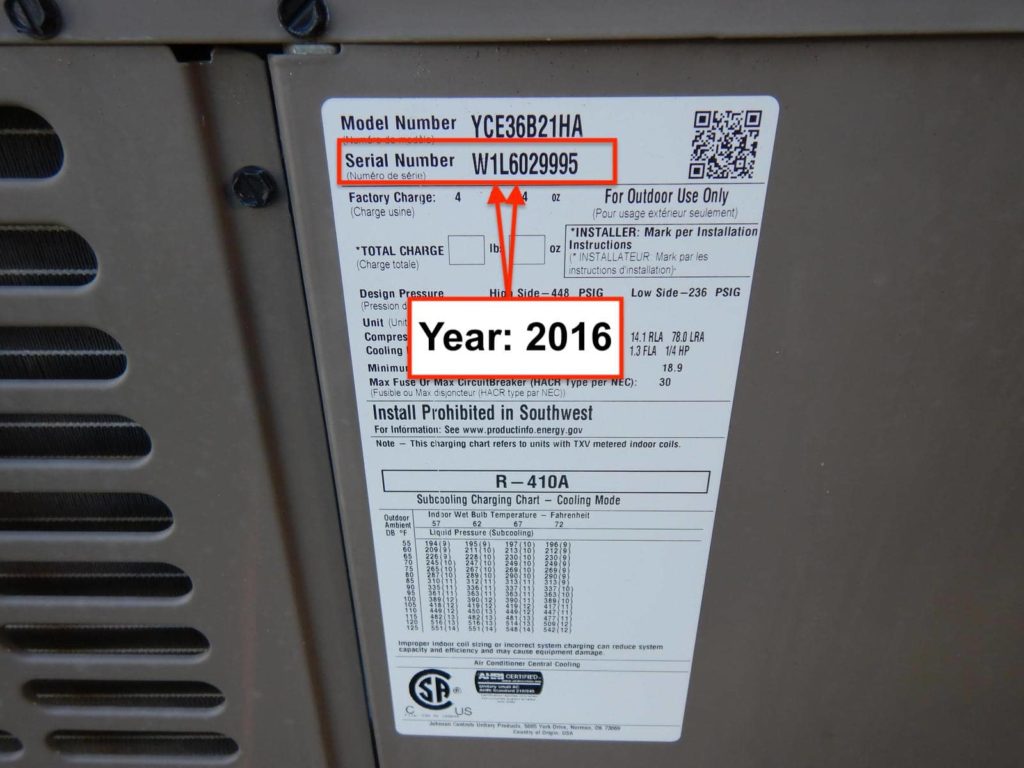
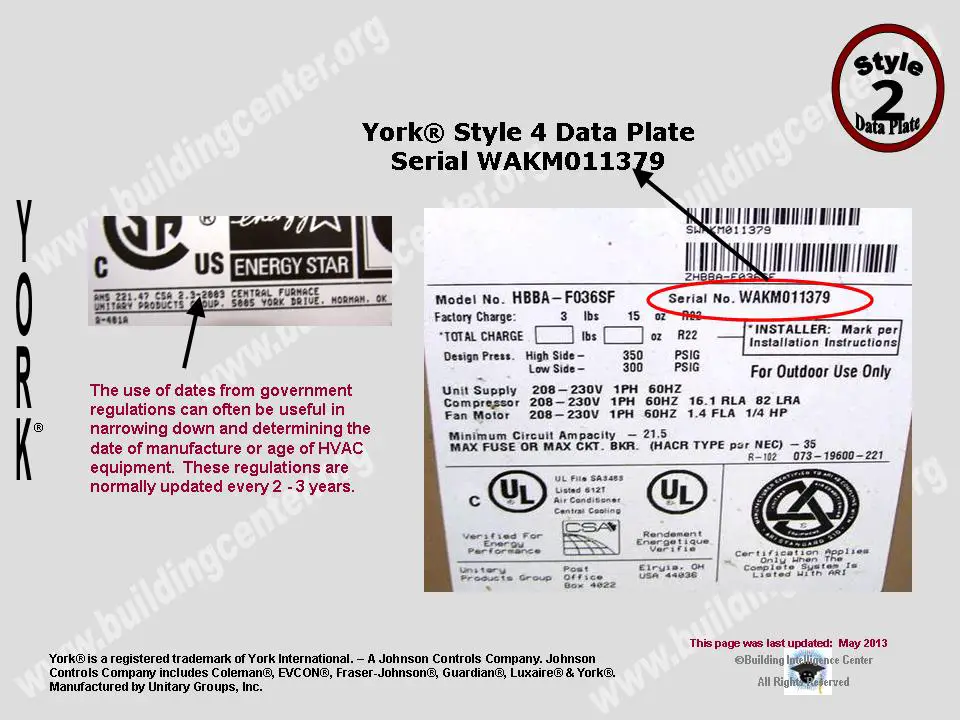
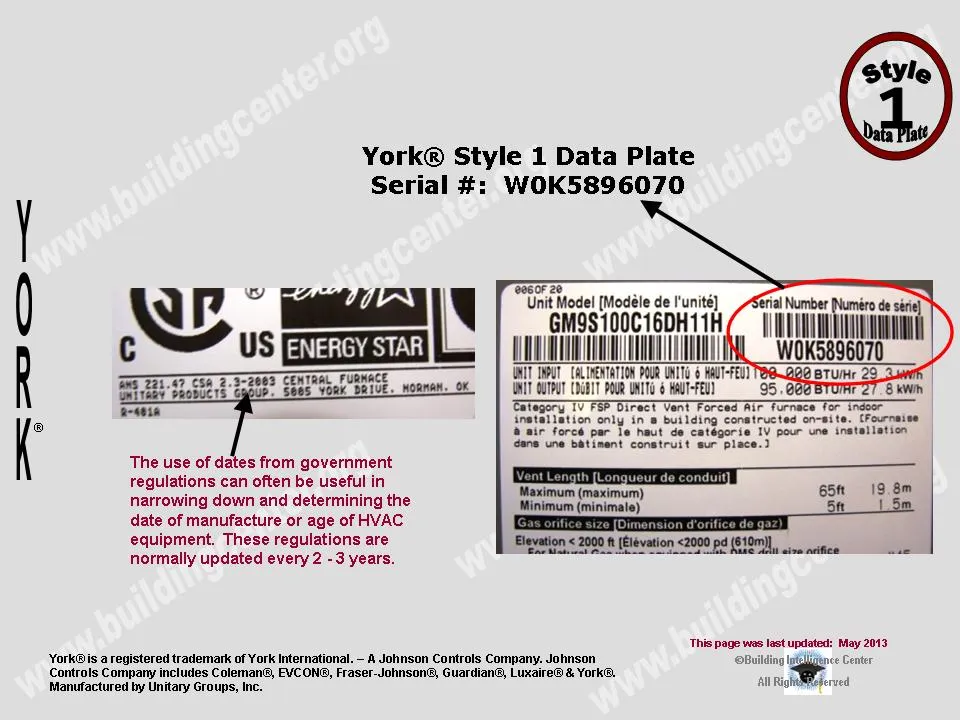
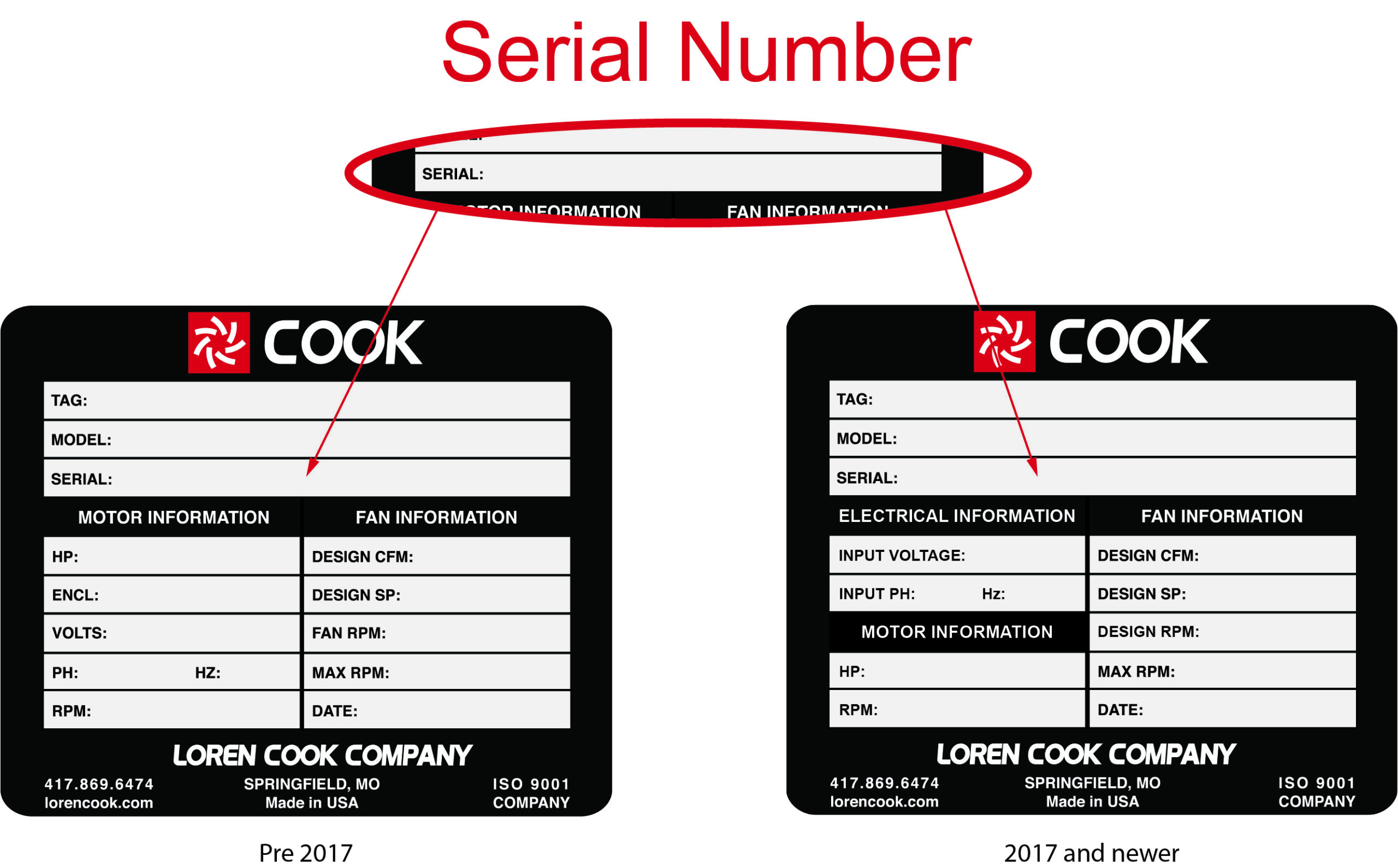
The serial number on your York unit is typically found on a rating plate or nameplate. The location of this plate varies depending on the type of equipment. Here’s a breakdown for common York HVAC systems:
- Air Conditioners (Outdoor Units): Look for a metal plate attached to the exterior of the unit, usually on the side or back panel. The serial number will be clearly printed, often accompanied by the model number.
- Furnaces (Indoor Units): The rating plate is typically located inside the furnace cabinet, often on the blower housing or near the gas valve. You may need a flashlight and screwdriver to carefully open the access panel (always turn off the power to the furnace before opening any panels). Safety First!
- Heat Pumps (Outdoor Units): Similar to air conditioners, the serial number plate is found on the exterior casing, usually on the side or back.
- Air Handlers (Indoor Units): The plate is usually located on the inside of the unit's cabinet, similar to the furnace. Power must be shut off before opening the unit.
- Packaged Units (Rooftop Units): These units, common in commercial buildings, usually have the rating plate prominently displayed on the exterior of the unit.
The serial number will be a string of letters and numbers. Note it down accurately, as even a single incorrect character can lead to inaccurate information.
Understanding York Serial Number Formats
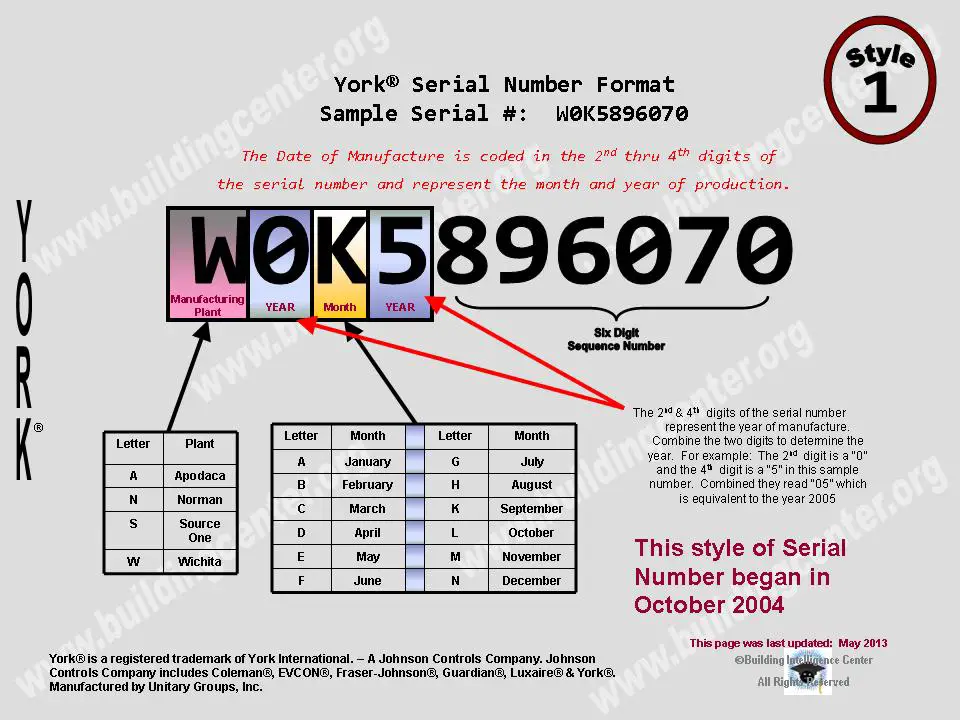
York has used different serial number formats over the years. Identifying the format helps in decoding the manufacturing date and other information. Here are some common formats you might encounter:
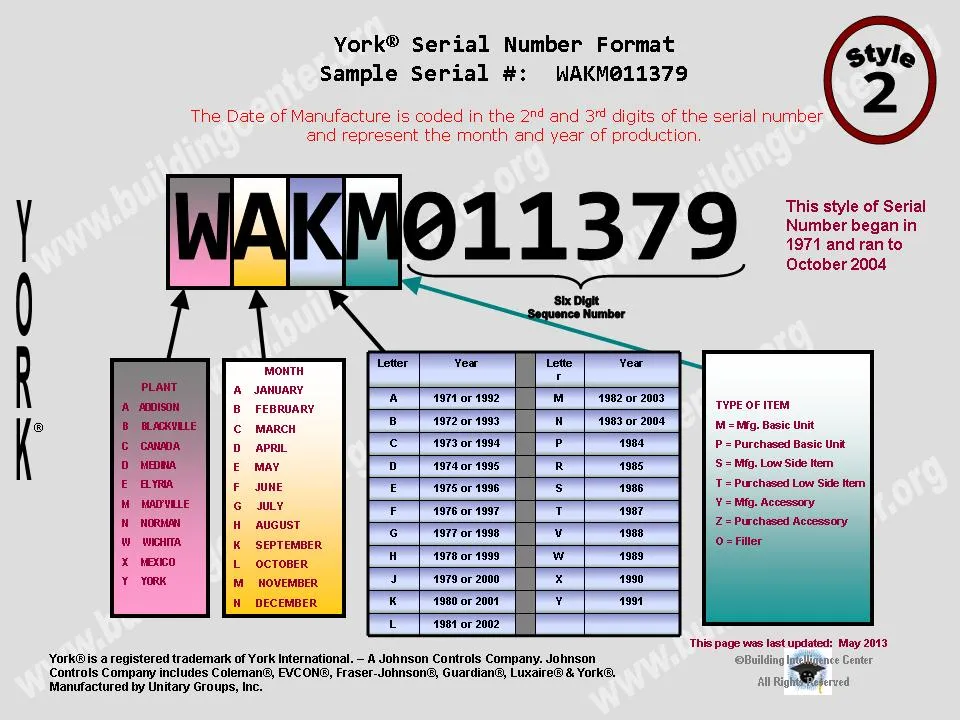
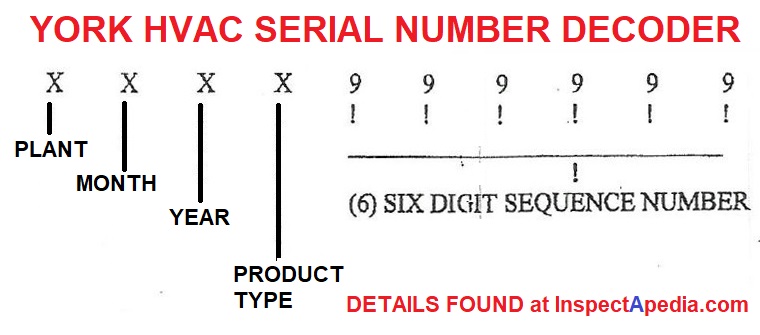
- Older Format (Pre-2000s): Often consists of letters and numbers, with the first few digits indicating the manufacturing date. For example, a serial number starting with 'WEM' might follow a specific date code. These require reference charts to decode.
- More Recent Format (2000s - Present): Usually includes a combination of letters and numbers, often with the manufacturing date embedded. A common format is four numbers, a letter, and several more numbers. The first four numbers often represent the week and year of manufacture. Example: 4807X12345. This indicates the unit was manufactured in the 48th week of 2007.
Because the formats can change, always consult York's resources or a qualified HVAC technician for accurate interpretation.
Decoding Your York Serial Number
While the precise decoding method varies based on the format, the serial number generally reveals the following information:
- Manufacturing Date: This is arguably the most important piece of information. Knowing the age of your unit helps determine its remaining lifespan and whether it's nearing the end of its operational life. Older units might be less efficient than newer models and may require more frequent repairs.
- Manufacturing Location: The serial number might provide insights into where the unit was manufactured.
- Model Number: While the serial number is unique, it's often paired with the model number on the rating plate. The model number specifies the unit's design, capacity (BTU output), and features.
- Warranty Information: The serial number is essential when registering your unit for warranty coverage and filing claims.
To accurately decode your specific serial number, refer to the following resources:
- York's Website: York's official website is the best place to start. They may have a serial number lookup tool or documentation that explains the decoding process. Look for sections related to product registration or support.
- York Dealers and Technicians: Authorized York dealers and technicians have access to specialized databases and tools that can quickly decode your serial number and provide detailed information about your unit.
- Online HVAC Forums and Communities: Online HVAC forums can be a valuable resource for finding information. However, always verify the information you find with official sources or qualified professionals.
Why is the York Serial Number Important?
The serial number is more than just a random string of characters. It’s the key to unlocking vital information about your HVAC system, impacting several key areas:
- Maintenance and Repairs: When ordering replacement parts or scheduling repairs, providing the serial number ensures that you receive the correct components for your specific unit. This prevents compatibility issues and ensures proper functionality. For example, if you need a replacement blower motor, the serial number helps identify the exact motor required for your furnace.
- Warranty Claims: When filing a warranty claim, the serial number is required to verify the unit's eligibility and coverage period. Without the serial number, your claim may be rejected.
- Performance Evaluation: Knowing the age of your unit, as revealed by the serial number, helps assess its performance and efficiency. An older unit may be operating below its original specifications, leading to higher energy bills. Comparing the unit's performance to its original specifications can help determine if it's time for a replacement. For instance, if your 15-year-old air conditioner is consuming significantly more energy than a new, high-efficiency model, replacing it could result in substantial energy savings.
- Safety Recalls: In the event of a safety recall, the serial number is used to identify affected units. Registering your unit with York or an authorized dealer ensures that you will be notified of any recalls.
- Equipment Identification: For property managers overseeing multiple HVAC systems, the serial number provides a unique identifier for each unit. This simplifies tracking maintenance schedules, repair history, and warranty information for each individual system.
Estimating Lifespan and Replacement Considerations
The manufacturing date obtained from the serial number is a crucial factor in determining the remaining lifespan of your HVAC system. Here are some general guidelines:
- Air Conditioners: Expect a lifespan of 15-20 years with proper maintenance.
- Furnaces: Expect a lifespan of 15-20 years with proper maintenance.
- Heat Pumps: Expect a lifespan of 10-15 years with proper maintenance.
However, several factors can affect the actual lifespan, including:
- Maintenance: Regular maintenance, such as filter changes, coil cleaning, and professional tune-ups, can significantly extend the lifespan of your system. Neglecting maintenance can lead to premature failure.
- Usage: Systems that are used frequently or operate under heavy loads may have a shorter lifespan. For example, an air conditioner in a hot climate will likely have a shorter lifespan than one in a milder climate.
- Installation Quality: Proper installation is crucial for optimal performance and longevity. A poorly installed system may experience more frequent problems and a shorter lifespan.
- Environmental Factors: Exposure to harsh weather conditions, such as extreme temperatures, humidity, and salt air, can accelerate wear and tear.
If your unit is approaching the end of its expected lifespan or experiencing frequent problems, consider replacing it with a newer, more efficient model. Modern HVAC systems offer significant improvements in energy efficiency, comfort, and reliability. A new system can significantly reduce your energy bills and provide a more comfortable living environment. Consider a SEER rating of 16 or higher for air conditioners and heat pumps, and an AFUE rating of 90% or higher for furnaces. These ratings indicate higher energy efficiency and lower operating costs.
Ultimately, understanding your York serial number is essential for maintaining and optimizing your HVAC system. By knowing how to locate and decode it, you can access valuable information that empowers you to make informed decisions about maintenance, repairs, and replacements. Always consult with a qualified HVAC technician for professional advice and services.